


Just a few days after Štangl retained its Michelin Guide star, we returned to the restaurant in Karlín to see what it’s like now. Martin Štangl’s cuisine continues to be built on seasonal ingredients, fermentation and meticulous attention to detail. This time, however, it was something else that impressed us most: the naturalness of the whole concept, in which every ingredient has its place and almost nothing goes to waste.
You don’t go to Štangl just to eat. You go to experience a cuisine with a clear philosophy that doesn’t need to be explained in complicated terms. All you need to do is watch what’s happening on your plate, listen to the explanation from the waiting staff or head chef Martin Štangl himself, and appreciate how the individual flavours build on one another. The atmosphere is pleasant and informal; the service is professional, yet without unnecessary ostentation. Everything feels natural, yet it’s clear how much work and thought goes into every course.
What’s more, the restaurant has a fresh reason to celebrate. On Friday 20 November, Michelin published its new guide for 2026, and Štangl retained its Michelin star, building on the accolade from the previous year. This is a testament to the long-term efforts of the entire team, not a one-off success. During our recent visit, it was clear that the award is primarily down to a well-thought-out and consistent approach in the kitchen.
Every ingredient has its own story
Compared to our last visit, one detail that had previously been a defining feature of the restaurant has changed. Štangl has moved away from growing herbs hydroponically on the premises and is now using herbs grown outdoors. The underlying philosophy, however, remains unchanged. Seasonality, local ingredients, fermentation and making the most of whatever the kitchen has at its disposal remain an integral part of its ethos.
It is precisely this approach to using the whole ingredient that is one of the strongest aspects of the current menu. With smoked eel, the trimmings are transformed into the base for the unagi sauce. Cauliflower, part of which is used in a subsequent course, is turned into a fritter. With nutmeg squash, the trimmings are processed into vinegar, in which other parts of the same ingredient are subsequently marinated. Similarly, other components are created that might otherwise end up as waste. Here, they are given a new purpose. However, this isn’t about using leftovers at any cost. As was mentioned during our interview, even sustainability must have reasonable limits and make economic and culinary sense.
The way the team handles fish also deserves special attention. In the cold store, we spotted large catfish hanging up, and it was clear that fish preparation is an important part of the craft here. The menu features smoked eel and salmon trout, but it’s not just about the choice of ingredients. What matters is how the team handles the fish, how they utilise its various parts, and how they incorporate its flavours into other elements of the dish. In this respect, the way fish is prepared at Štangl is one of the most compelling aspects of the cuisine.
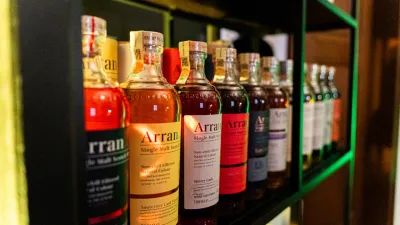
Dinner begins with Terkelica, a spirit made from grape marc by winemaker Milan Nestarec, created in collaboration with the Landcraft distillery. The marc is distilled, then aged in an oak cask, and the resulting drink is complemented by honey.
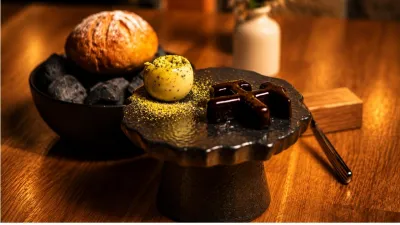
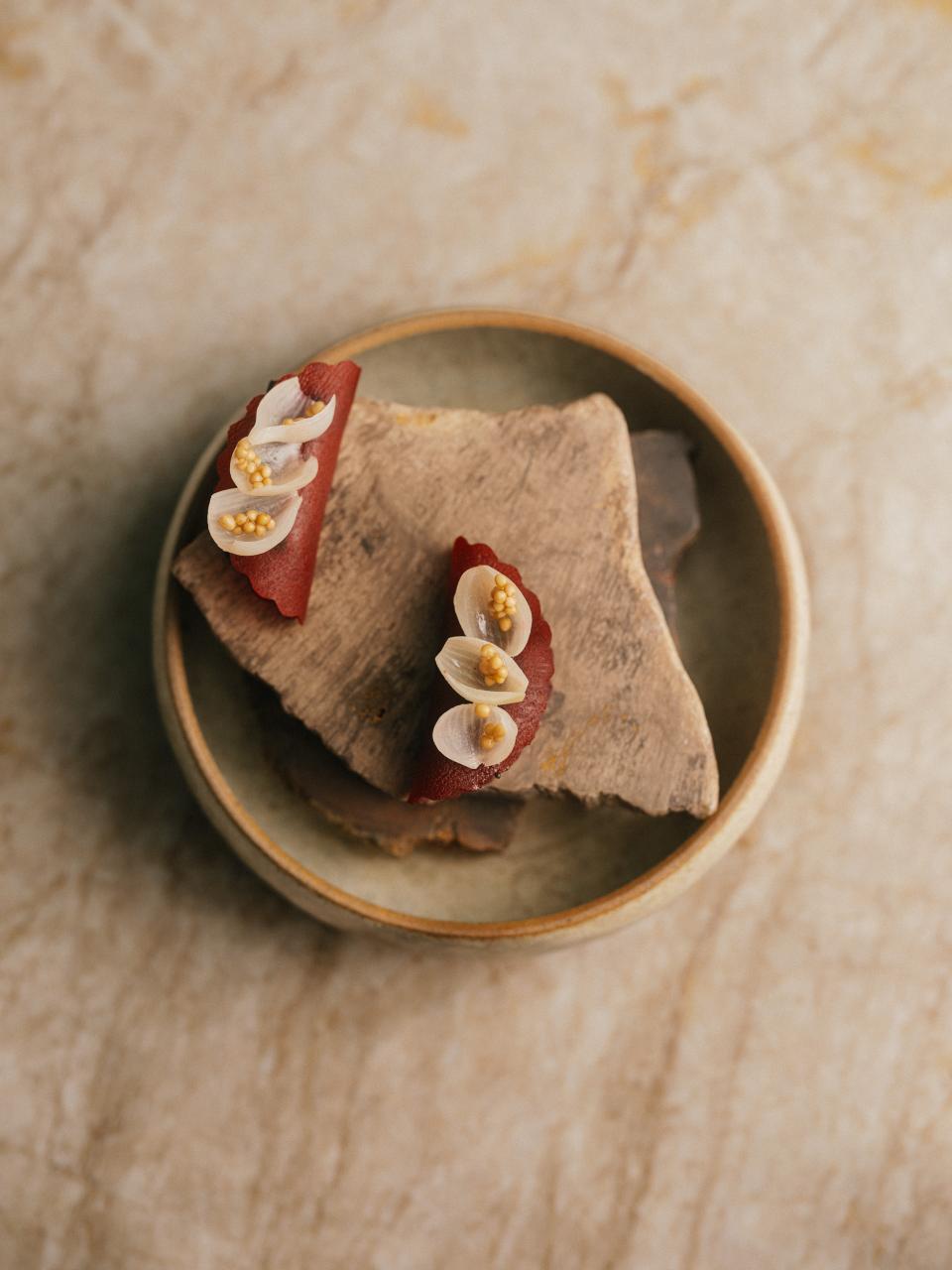
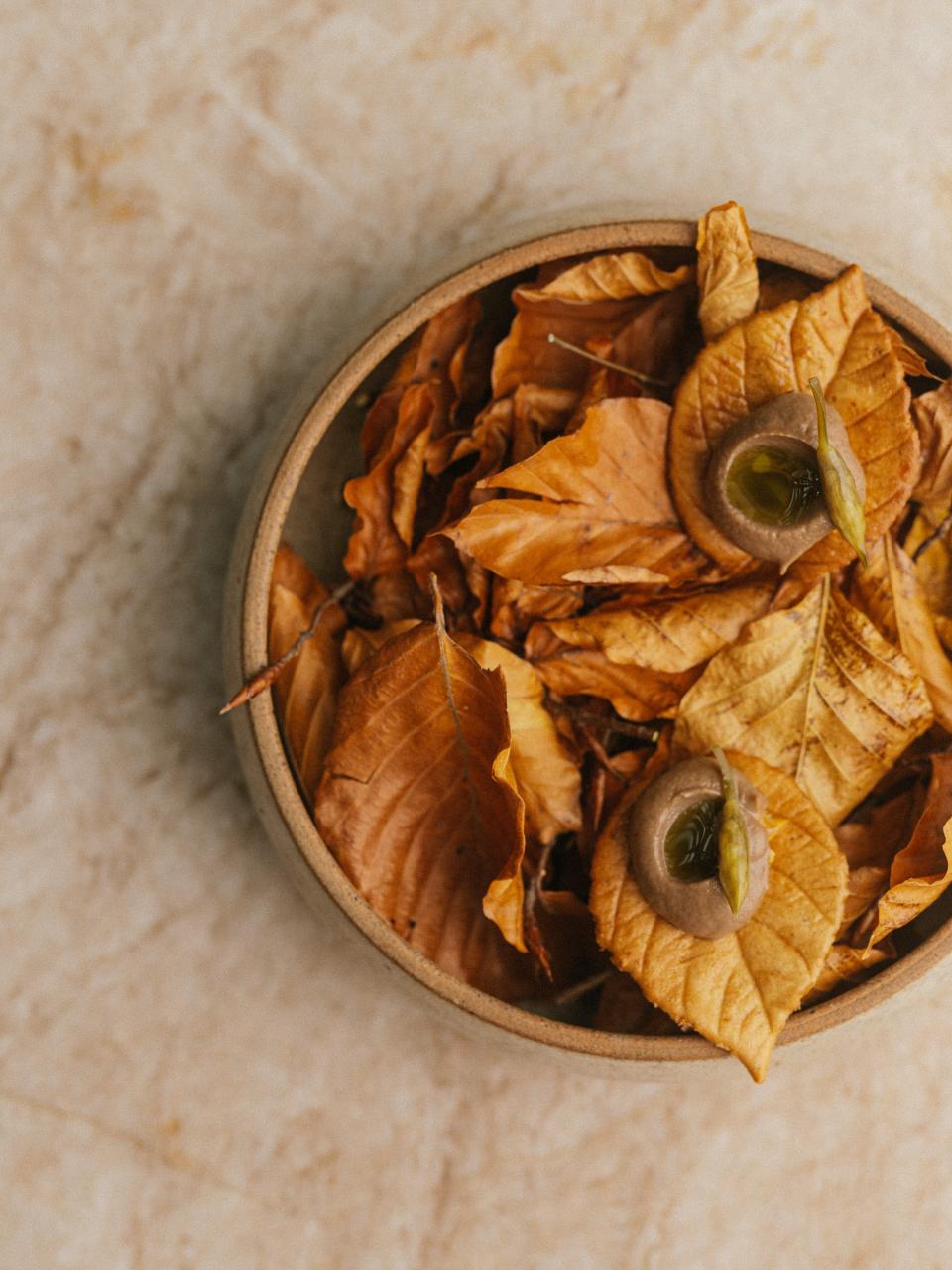
Next to arrive on the table is grilled bread with paprika salami, fermented radish and koji butter. This is followed by small but exquisite snacks: a mushroom wafer with purée, pine needle oil, pickled wild garlic and chanterelle tartare; black pudding with beetroot, plum purée and pickled onion; and a potato with smoked fish, kefir, herbs and egg yolk – a variation on the classic ‘potatoes in ash’ dish from the sister restaurant Eska. Even in these small bites, it’s clear that the kitchen doesn’t rely on combinations purely for effect. What matters is flavour, texture and context.
The first course consists of smoked eel with a cauliflower fritter, apple balsamic and hazelnuts. The eel is marinated in a sauce made from its own trimmings, complemented by shallots and chives. The cauliflower fritter, made from parts of the vegetable also used in the next course, is enhanced by horseradish mayonnaise. It is served with a 2023 Grüner Veltliner from the Austrian Fritsch winery in Wagram. Its fresh acidity and peppery notes complement the horseradish while also lightening the more pronounced flavour of the eel. A non-alcoholic alternative is a drink made from green apple and horseradish, clarified with milk, and flavoured with dill and marigold. This is not merely a substitute for wine, but a carefully considered pairing that complements the dish just as effectively.
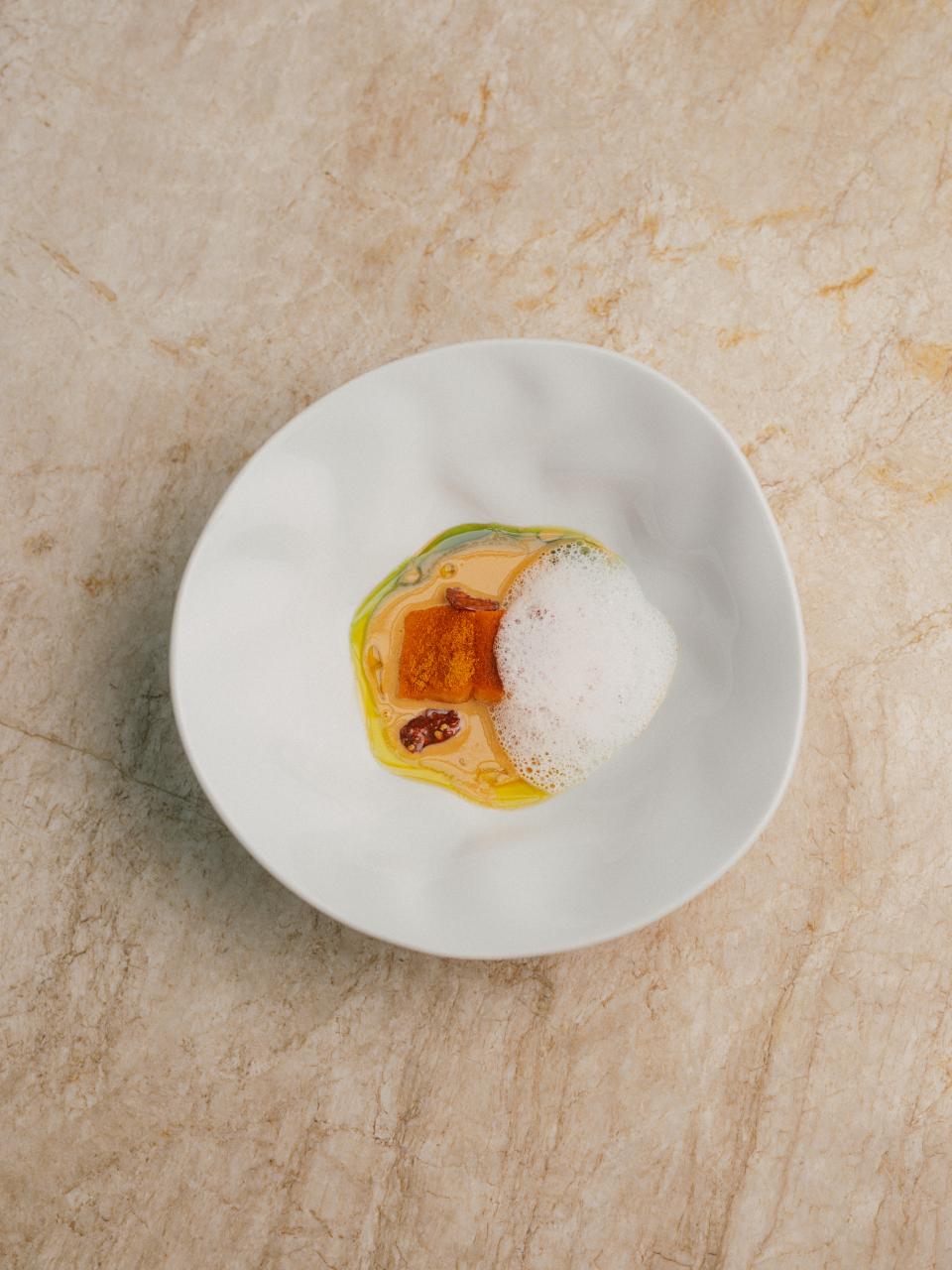
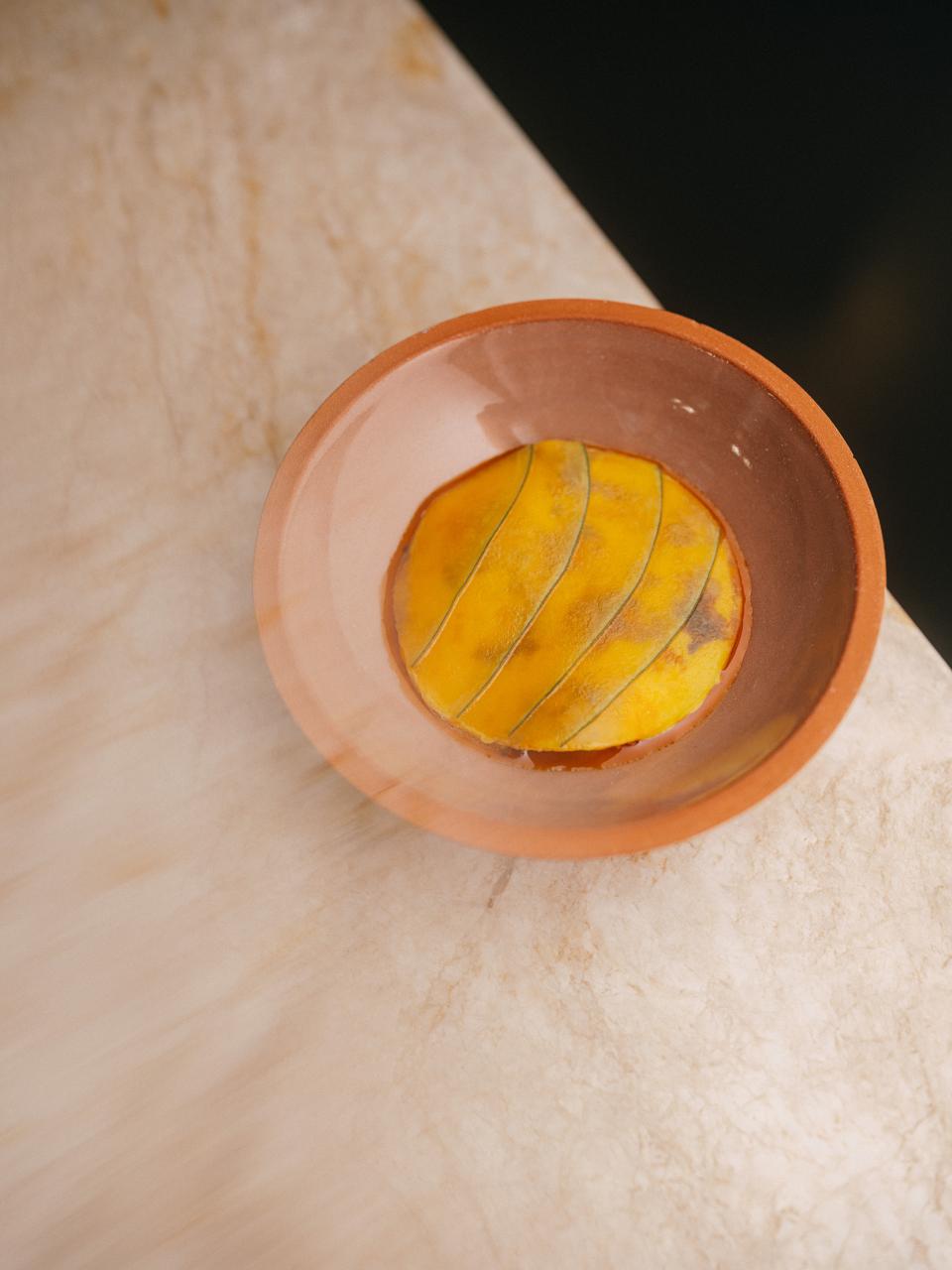
The next course is muscat squash. It is marinated in vinegar made from squash trimmings and complemented by a cheese garum foam, pickled squash, a squash seed pesto and thyme. Here, the kitchen’s ability to think in terms of context is fully demonstrated. A single ingredient takes on several different forms, which come together on the plate without ever feeling as though anything is being repeated for its own sake. To accompany the squash, the sommelier selected the 2022 Sabbra Cadabra orange wine from the Vdovjak winery in the Slovak part of the Tokaj region. Extended maceration lends it tea-like notes and earthiness that harmonise well with the character of the squash. The whisky-inspired non-alcoholic pairing consists of oak water, red grape must and hazelnuts. The hazelnuts also feature in the dish itself, and the sweetness of the drink complements the squash naturally.
From trout to venison to champagne
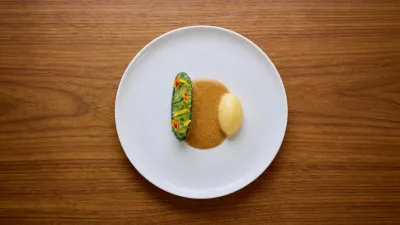
The salmon trout is served with a sauce, lentils, mustard and Prague ham. The kitchen also works with a beurre blanc, herb-infused oil and other layers of flavour that give the fish the necessary depth. This course is paired with a 2024 Marsanne Les Graviats from Sébastien Michelas in the northern Rhône, specifically from the Crozes-Hermitage region. The variety’s fuller, oily character is balanced by the freshness and minerality of the site. The wine has enough concentration to hold its own alongside the sauce and herbs, while retaining an acidity that pleasantly cleanses the palate throughout the course. The non-alcoholic pairing is kombucha made from blackcurrant leaves. Its herbal character complements the herb-infused oil on the plate and, thanks to its wine-like profile, serves as a fully fledged alternative.
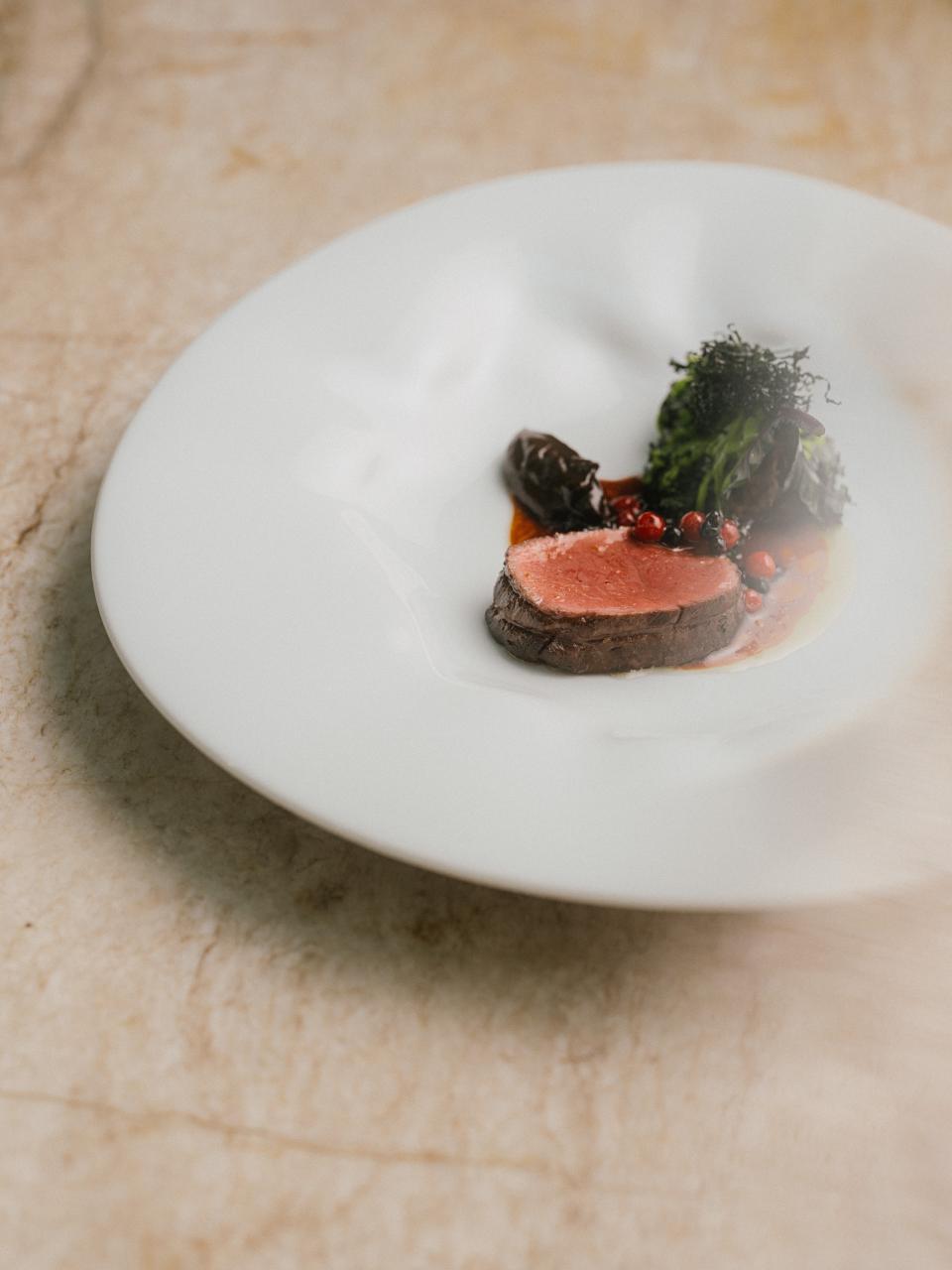
The main meat course is European red deer with Jerusalem artichoke purée, elderberries, cranberries and apple. The plate also features cabbage with rose petal powder and other autumnal accents. The game is served with a 2020 Barbaresco Muncagota from Produttori del Barbaresco. Wines from this Piedmontese region have a natural structure and more pronounced tannins; here, however, these are balanced by elegance and aromatic richness, which complement the dish’s floral and forest notes perfectly. The non-alcoholic pairing features beetroot, coffee and sour cherries. The beetroot echoes its use in the dish, the coffee enhances the earthiness, and the sour cherries provide the necessary fruity freshness.
Before dessert, a standout cheese course featuring Romadur takes centre stage. It is served with a malt bread roll, honey, walnuts, raisins and fermented pepper. To complement this distinctive cheese, the sommelier selected a Pierre Paillard Champagne from the Grand Cru village of Bouzy, based on the 2022 vintage and the Pinot Noir grape variety. And the pairing is simply perfect! The effervescence, fruitiness and more mature notes of the Champagne create an interesting contrast with the cheese. Here, it becomes clear that pairings at Štangl are not merely a matter of similar flavours; sometimes they work precisely because of the tension between the individual components.
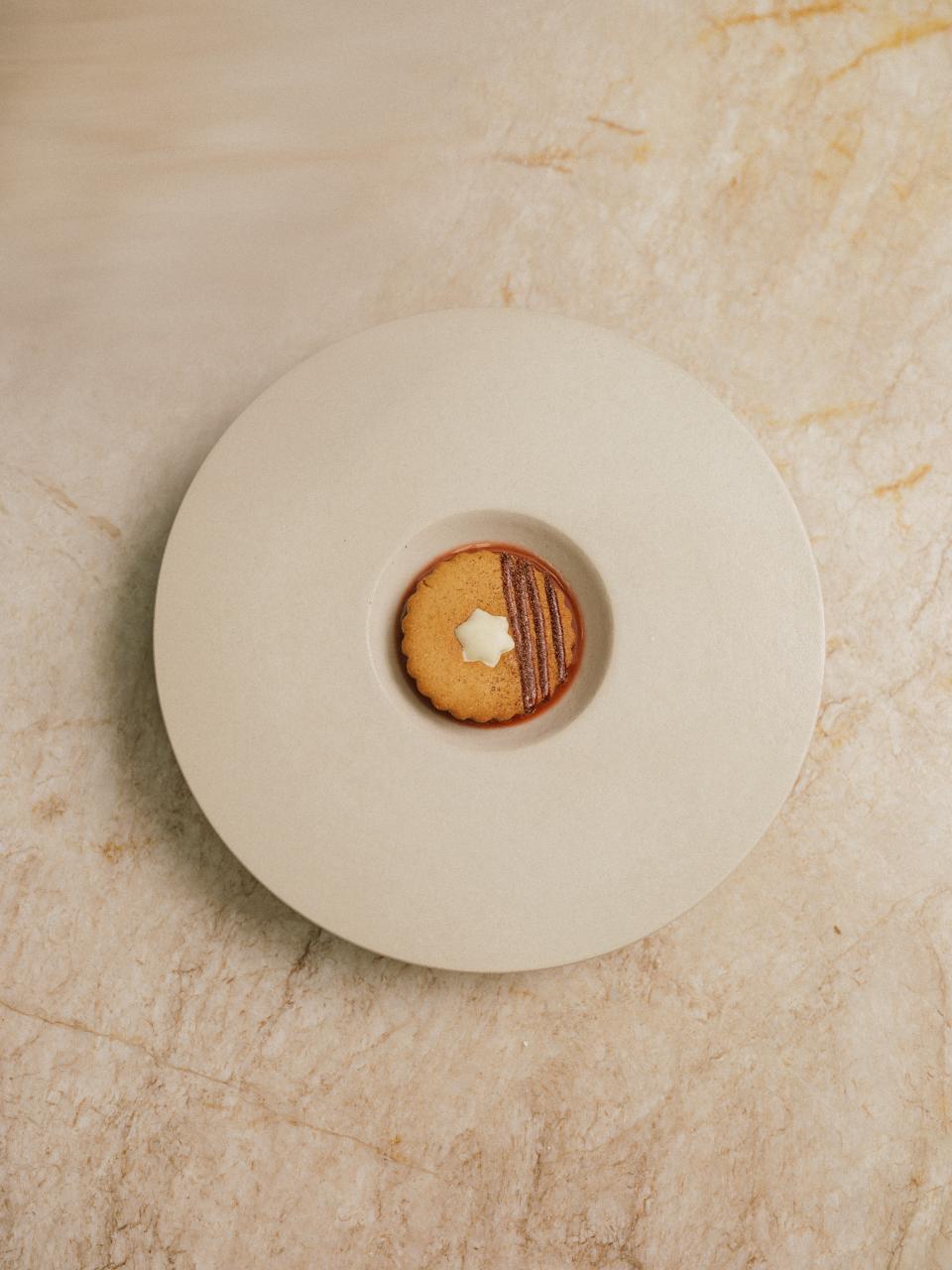
The sweet courses, created by head pastry chef Sabina Keltnerová, are dominated by dried plums with chocolate mousse, plum juice, ice cream flavoured with fig leaves, and a gingerbread biscuit. The dessert is served with Graham’s 40-Year-Old Tawny Port, a fortified wine with an average ageing period of around forty years. Its oxidative notes and caramel and chocolate character complement the dessert beautifully. The non-alcoholic alternative is an oolong tea flavoured with fig leaf juice and oat milk foam, which also carries notes of cocoa husks. Here, too, it is evident that non-alcoholic pairings have their own identity and can offer an experience just as multi-layered as wine.
A star as confirmation, not as a goal
During this visit, Štangl impressed us above all with its internal logic. The individual courses are not a showcase of techniques or ideas for their own sake. Everything has its place; ingredients are used with the utmost respect, and the resulting dishes feel natural without compromising on precision. Equally important is the service, which presents the individual components and their stories clearly, yet without unnecessary lecturing. In a pleasant, informal setting, this creates an experience that is not based on ostentation, but on honest, hard work.
The retained Michelin star is, in this case, more than well deserved. Not because the restaurant tries to fulfil a preconceived idea of what Michelin-starred cuisine should look like, but precisely because it maintains its own distinctive style, which is unmistakable in Prague. Štangl demonstrates that contemporary gastronomy can be technically precise, creative and, at the same time, respectful of ingredients—and that true quality is often recognised precisely by how naturally everything comes together.