
We expect more than just well-cooked food from Ambiente. Skô offers Slovak cuisine without Slovakia and an evening menu that makes no sense, either in terms of price or concept. Honesty is not enough this time.
A neglected part of Prague is looking forward to a brighter future. In the coming years, the new Bubny-Zátory district will offer a home for 25,000 residents in 11,000 flats, replacing what is currently one of the largest brownfields within the city, covering an area of more than 100 hectares. The Vltava Philharmonic will be added to Prague's cultural mile, and the connection between Letná and Holešovice will finally become a reality after a hundred years.
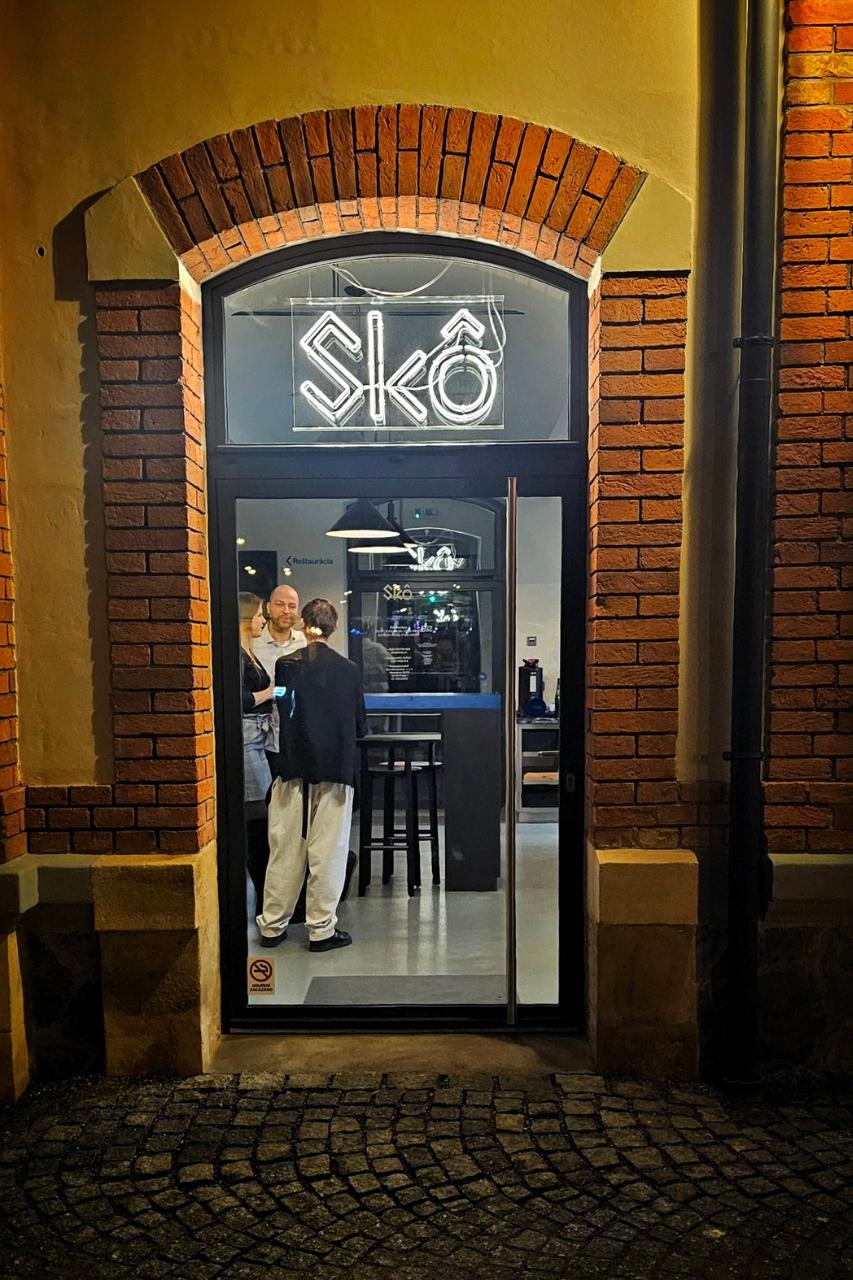
And the Holešovice Market, located in the immediate vicinity of the new district, will certainly become the new cultural and gastronomic heart of Prague. It will thus relieve the overburdened city centre and offer a vibrant space that will naturally complement the chaos that Prague has been unable to get rid of for many years. It is therefore no surprise that the big players in Prague's gastronomic scene are not waiting around and are gradually moving into this area. On the site of the former Masoprofit, Ambiente has opened further branches of its established businesses: the Naše maso butcher’s shop, the Myšák confectionery, and the Slovak restaurant Skô, which we visited for the purpose of this review.
Can't find Skô? Follow the noise
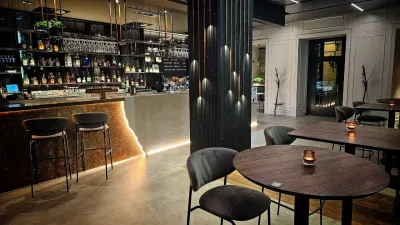
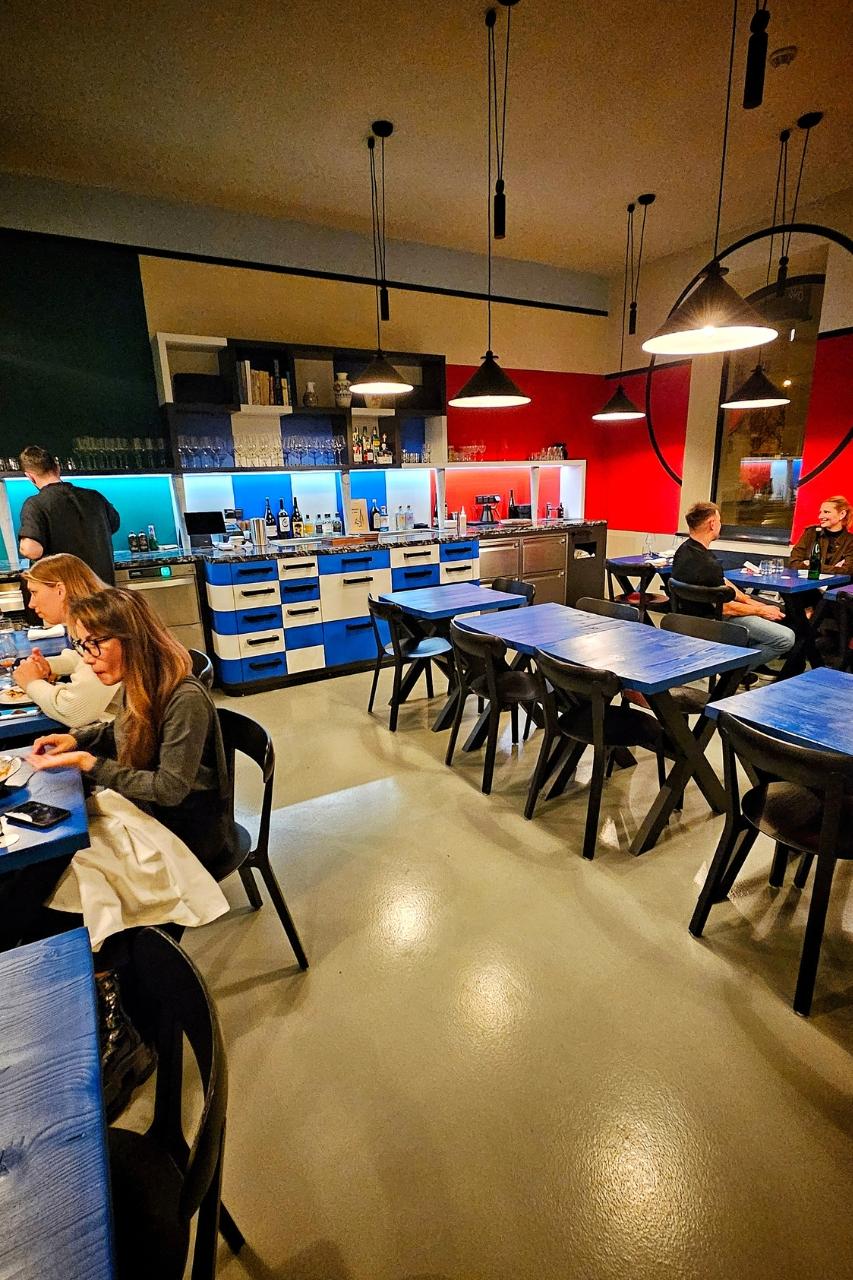
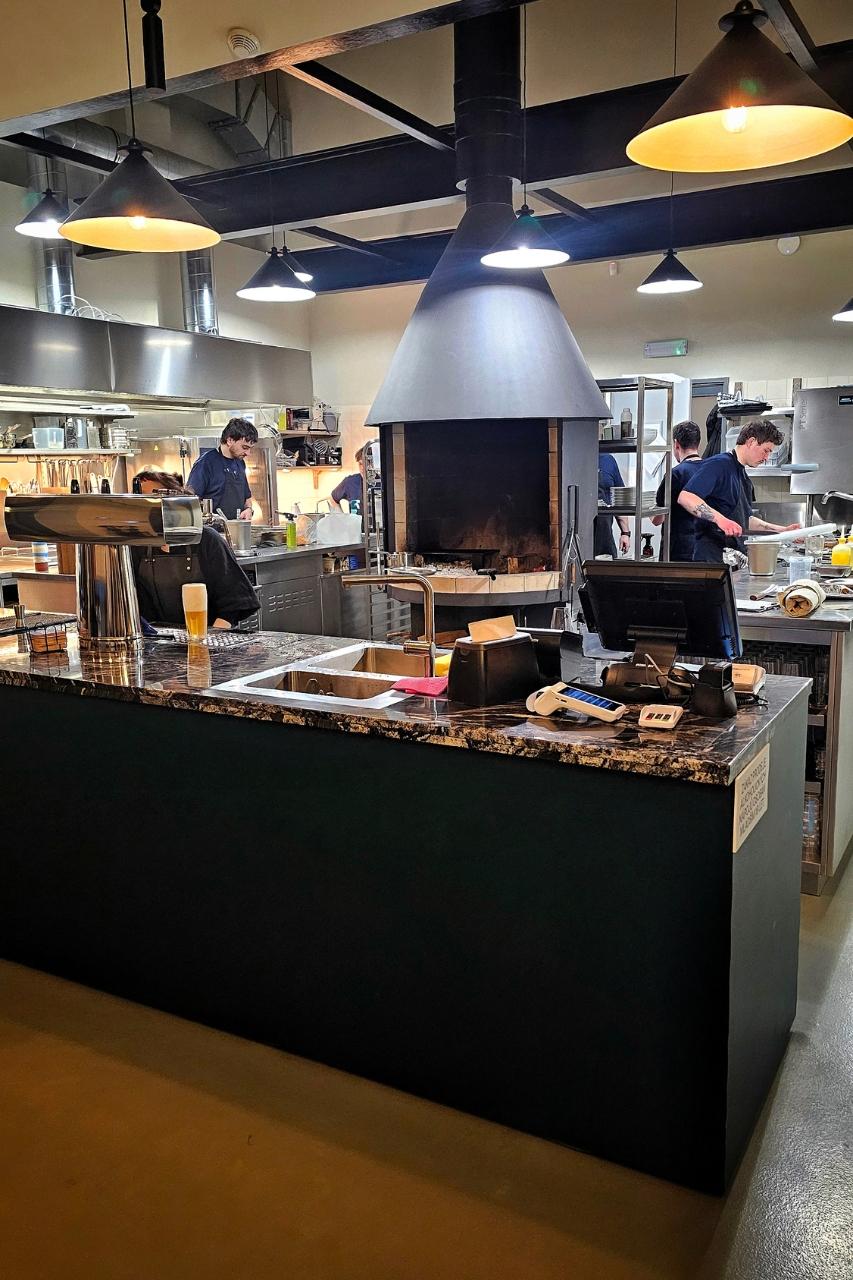
The triumvirate of businesses located on the very edge of the market and on the main axis with HolKa (Štavnická lávka) is a great achievement, both in terms of the revitalisation of the buildings themselves and as a sign that something is finally happening. If you can’t find the new Prague venue, follow the noise. It will hit you as soon as you enter the restaurant. The architect, who had to contend with the very impractical layout of the original premises - intended for use as a tripe shop, an offal shop, and a leather warehouse - did not have an easy task or many options for solving the restaurant’s layout. The unnecessarily large kitchen is dominated by an open fire, and the restaurant itself, reminiscent of a prefabricated block-of-flats dining hall, is tucked away in a small room behind a wall.
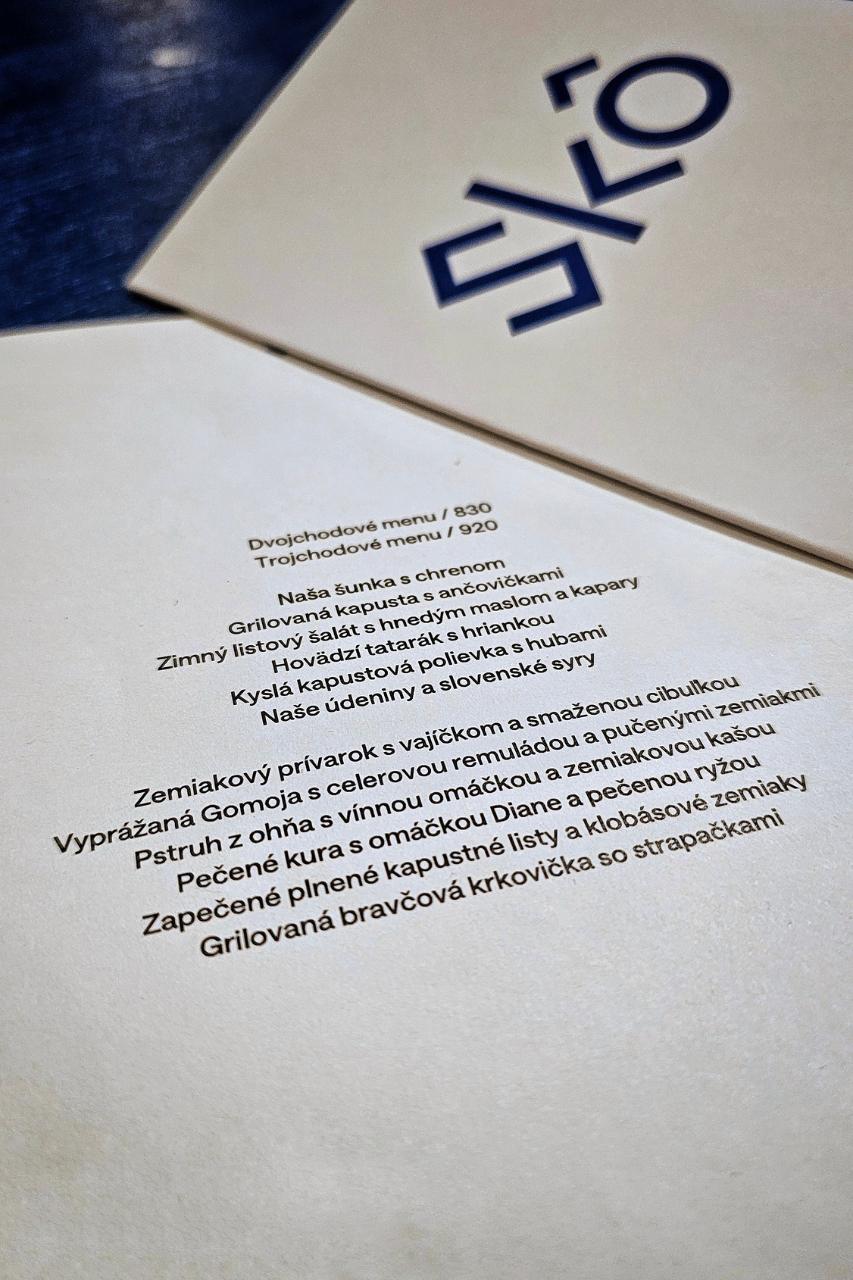
This cramped space buzzes like a beehive, guests stare at their plates, and the staff are forced to stand with their backs to the guests while preparing the food. Perhaps it is a generational difference, but we do not find such an atmosphere pleasant even for a quick lunch, let alone a tasting dinner for CZK 830 (two courses) or CZK 920 (three courses). The premises are tastefully designed, but we search in vain for Slovakia here. Yes, let’s admit it: for us, a Slovak restaurant is a koliba somewhere at the foot of the Tatra Mountains - a cottage with folklore elements and the smell of wood. The open fire in the next room does not save the day, because guests cannot see it and, fortunately (or unfortunately), cannot smell it either. It is therefore clear that we are in for a modern take on Slovak cuisine, with an original interpretation of proven classics à la Ambiente.
Don't expect Živáňská or tie cutting
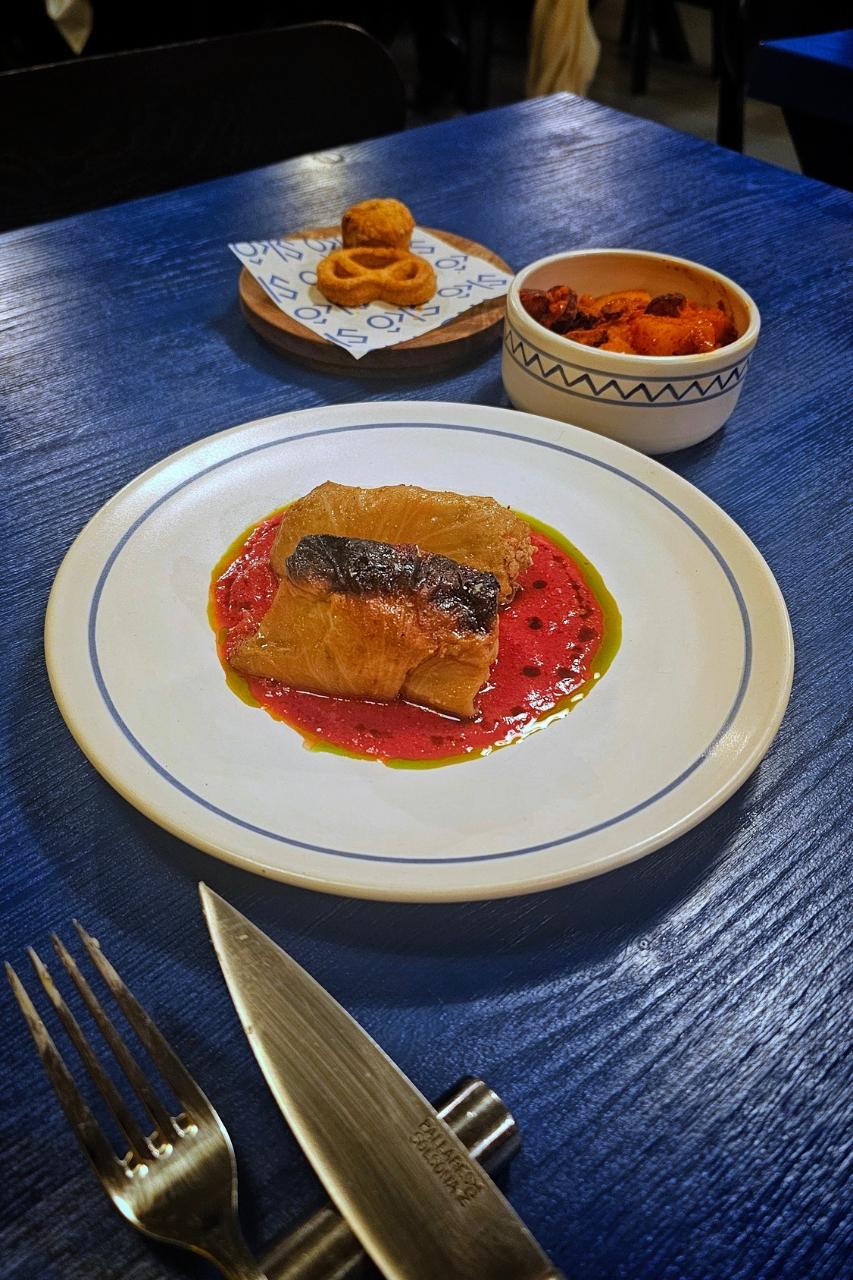
It is not difficult to choose from the menu, as there are relatively few items on the card, but it is hard to see what the individual courses have in common with Slovak cuisine - even though they do have prívarok here. We order ham with horseradish, grilled cabbage with anchovies (!!!), smoked meats and Slovak cheeses, potato prívarok with egg, baked stuffed cabbage leaves with sausage and potatoes, and Silván, which, after tasting, we immediately report to the waiter as unchilled white wine. We get the answer: “I know, someone turned off the cooling.”
The wine cellar mainly stocks Slovak natural wines, which is not a bad thing in principle - if you know when to offer which wine to which guest. In addition, many of them are in magnum format, which is appealing.
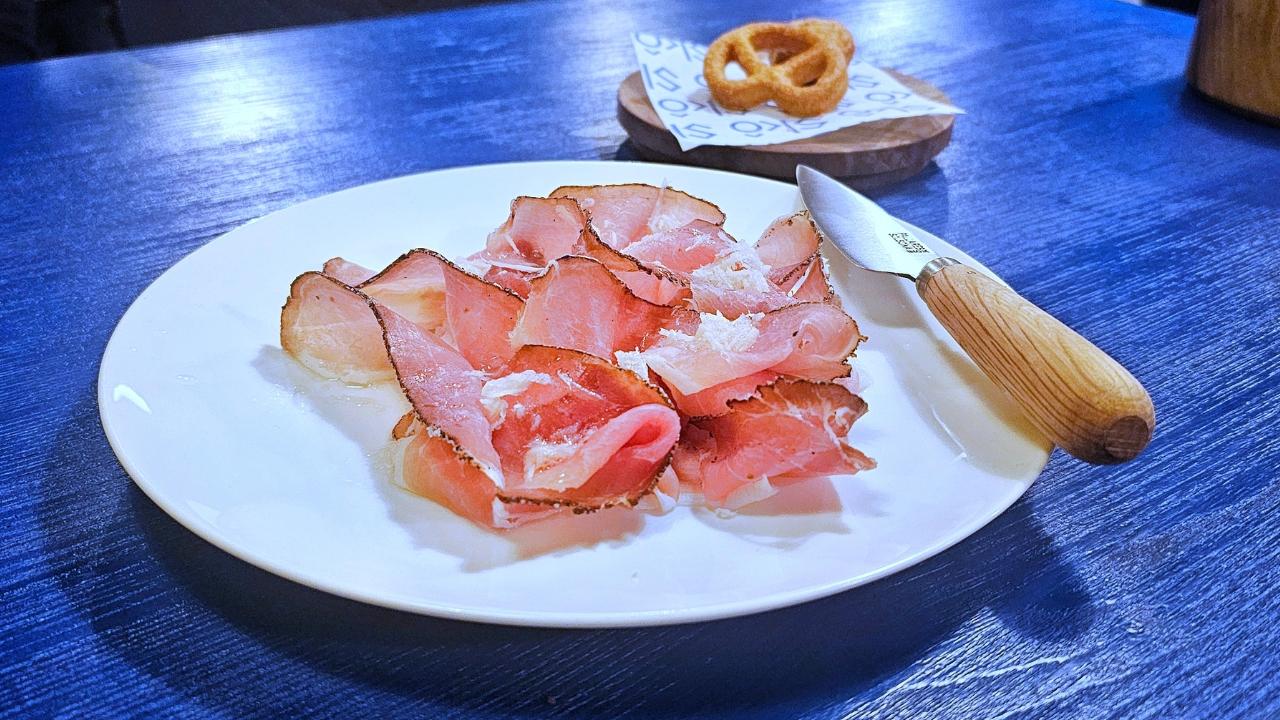
Otherwise, the very friendly and helpful staff bring the first plate with ham and horseradish. A generous portion, a rustic serving style that even a grandmother from Těkovská Kúria would be proud of, and delicious ham. Homemade - Naše maso! So not from Slovakia, not from any original supplier, and we ask: why? We can have this course just as well in Austria or Italy, but we would search in vain for it in Slovakia. Where is the oštiepok or parenica?
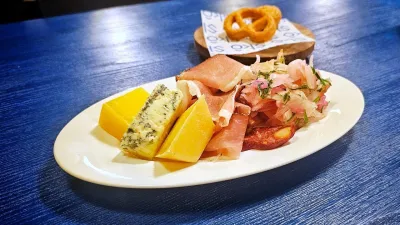
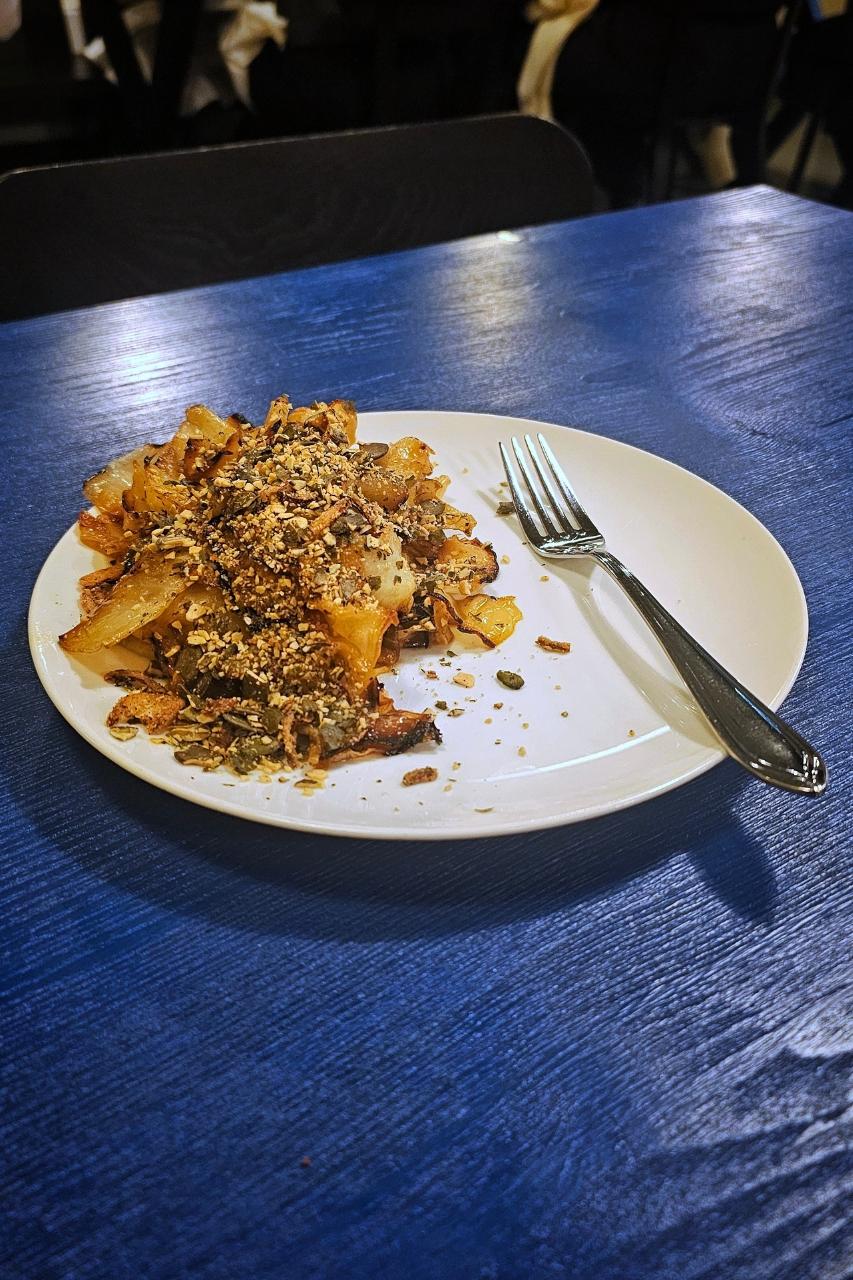
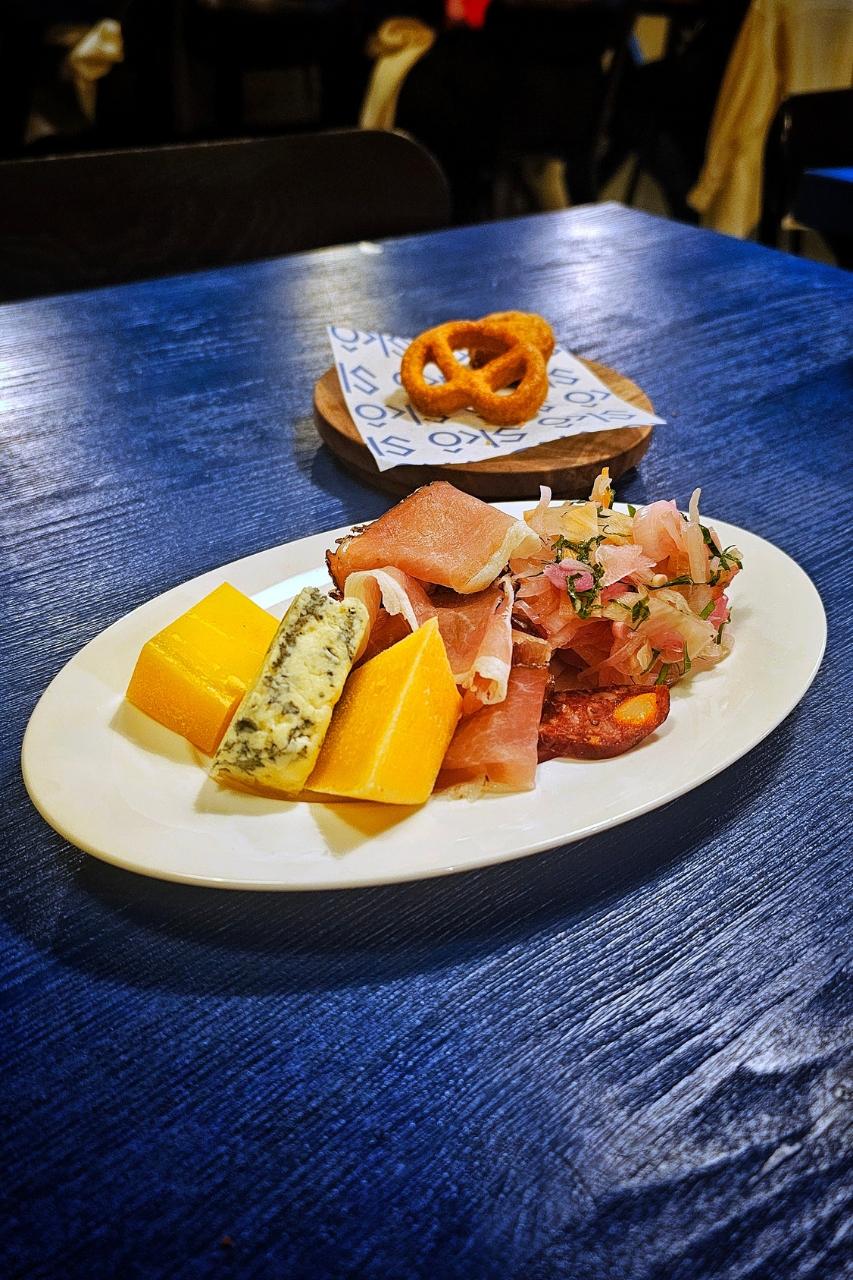
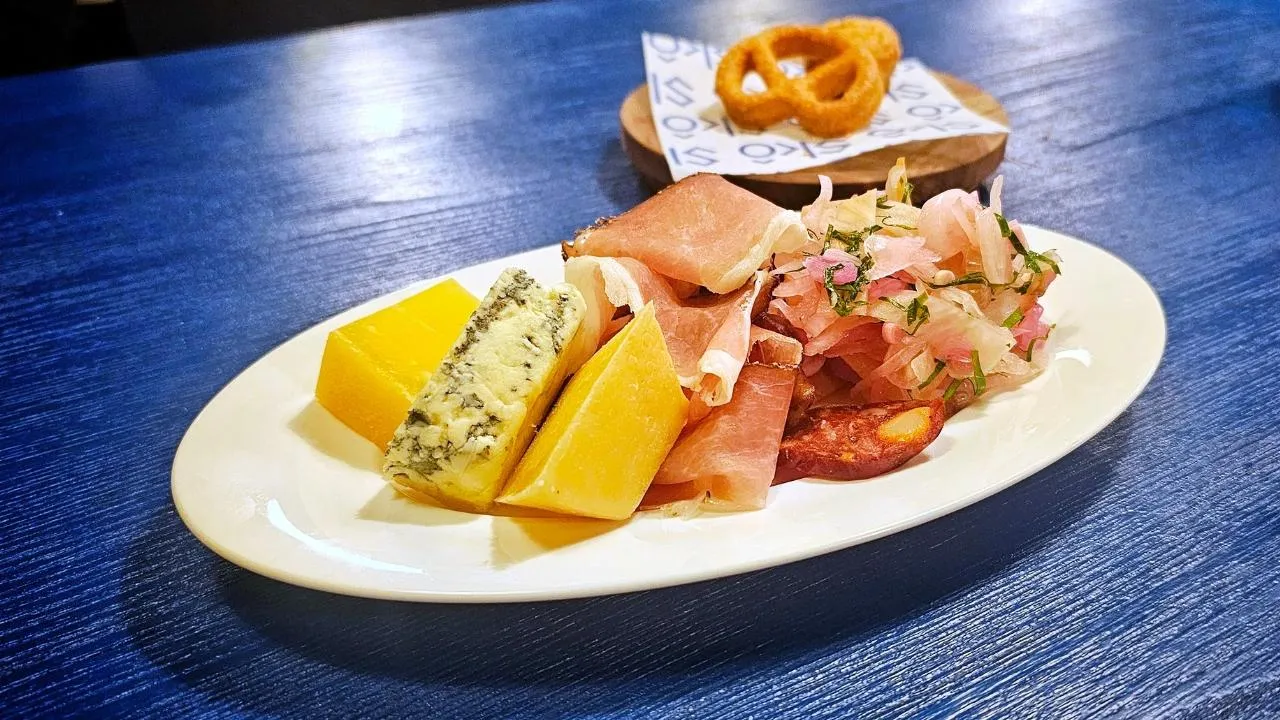
This is followed by a plate of smoked meats and Slovak cheeses. Here, we do not learn what kind of smoked meats and cheeses they are, let alone their origin. A dish worthy of a “kapourková” - perhaps with a borovička - at the end of a cheerful gathering in a wine cellar seems completely out of place to us, and we do not understand why it is on the menu at all. And even after asking, no one can explain it to us. At the very least, including such an item among the starters is nonsense. Hard cheeses are usually served at the end of the evening. Another starter, grilled cabbage with anchovies (!!!), is not offensive, but it is not worth further analysis either.
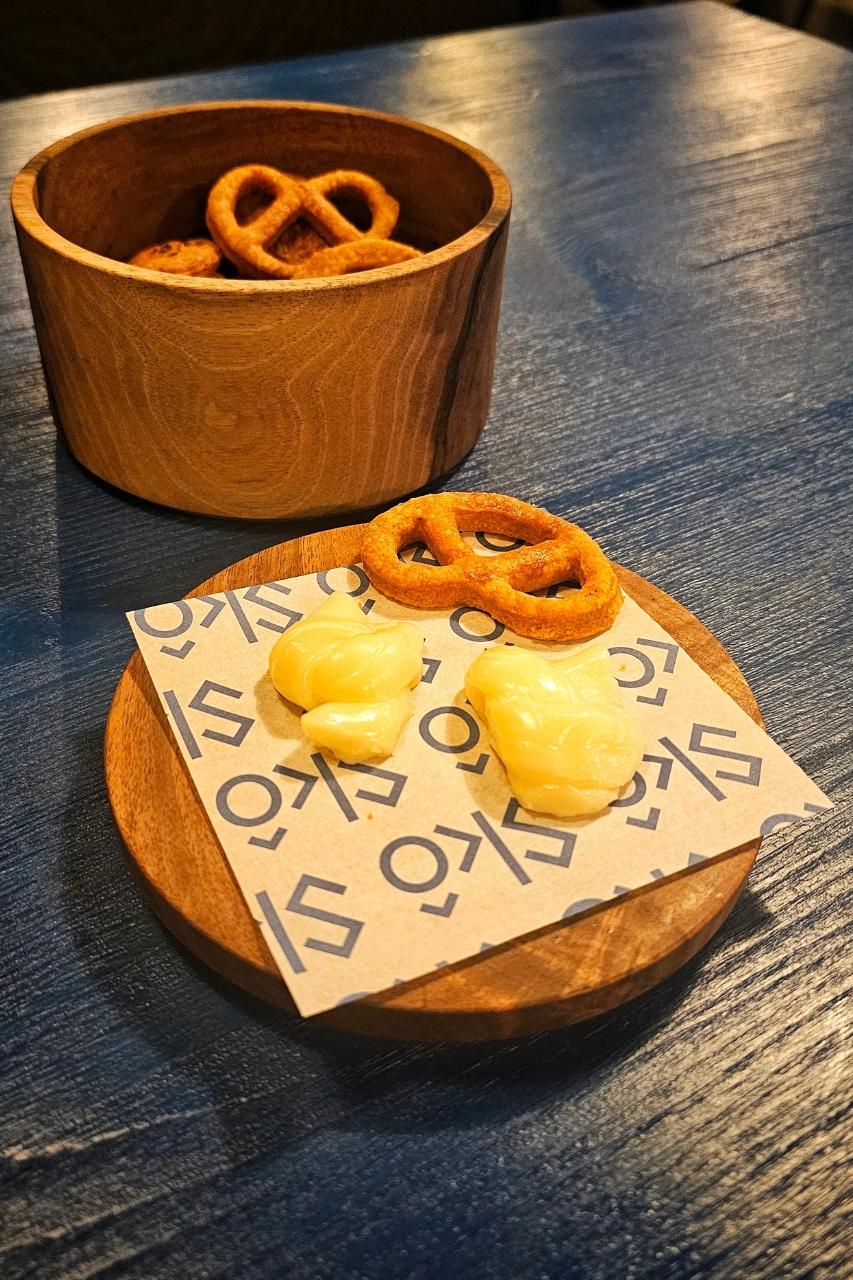
The menu comes with very tasty pagáče and crispy mini pretzels with homemade strings. The strings are not worth mentioning in terms of taste or appearance, and the bread ends up being the best item of the evening. Unfortunately.
Some national cuisines are not created to taste good, but to keep people from starving to death
It is now crystal clear to us that we cannot expect a modern take on Slovak cuisine with an original interpretation of proven classics. We accept that we are in an establishment where they serve you honestly cooked food that you would get in a better canteen, and nothing more.
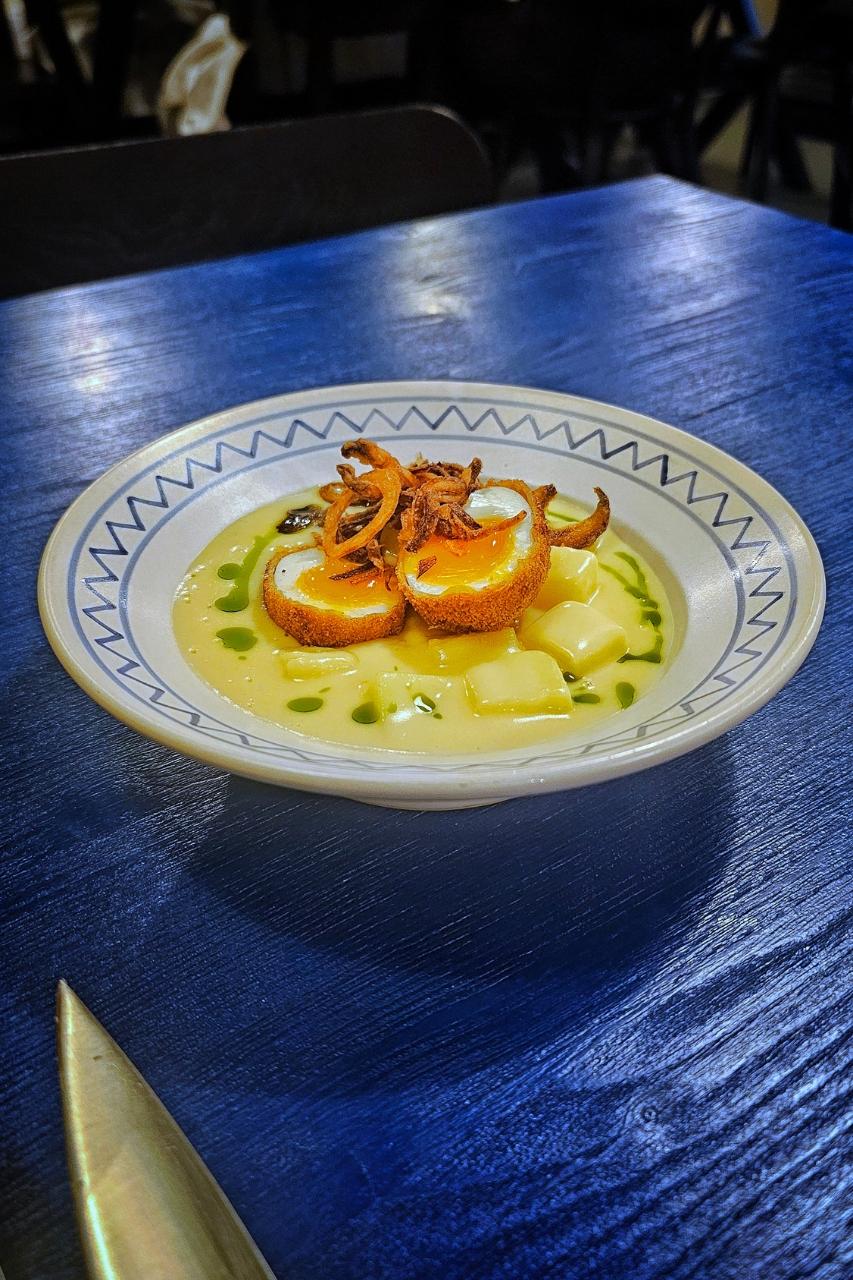
The waitress sets the bar very high, smiles, and really tries hard. She brings the prívarok, and the expected debate about what it actually is begins at the table. We won’t burden our esteemed readers with a comprehensive analysis; after all, this is not a dispute worthy of the hyphen in the name of the state, so we’ll reveal it to you: prívarok is when you thicken a vegetable sauce a little more and add potatoes or green beans to it - and prívarok is born. We ordered the potato one with an egg coated in breadcrumbs and fried onions. Very tasty, well cooked, and off to the fields. The baked stuffed cabbage leaves with sausage and potatoes were in the same vein - honest, with zero added value. We picked the sausages out of the potatoes and off to the mine.
Fill up, warm up and survive the winter
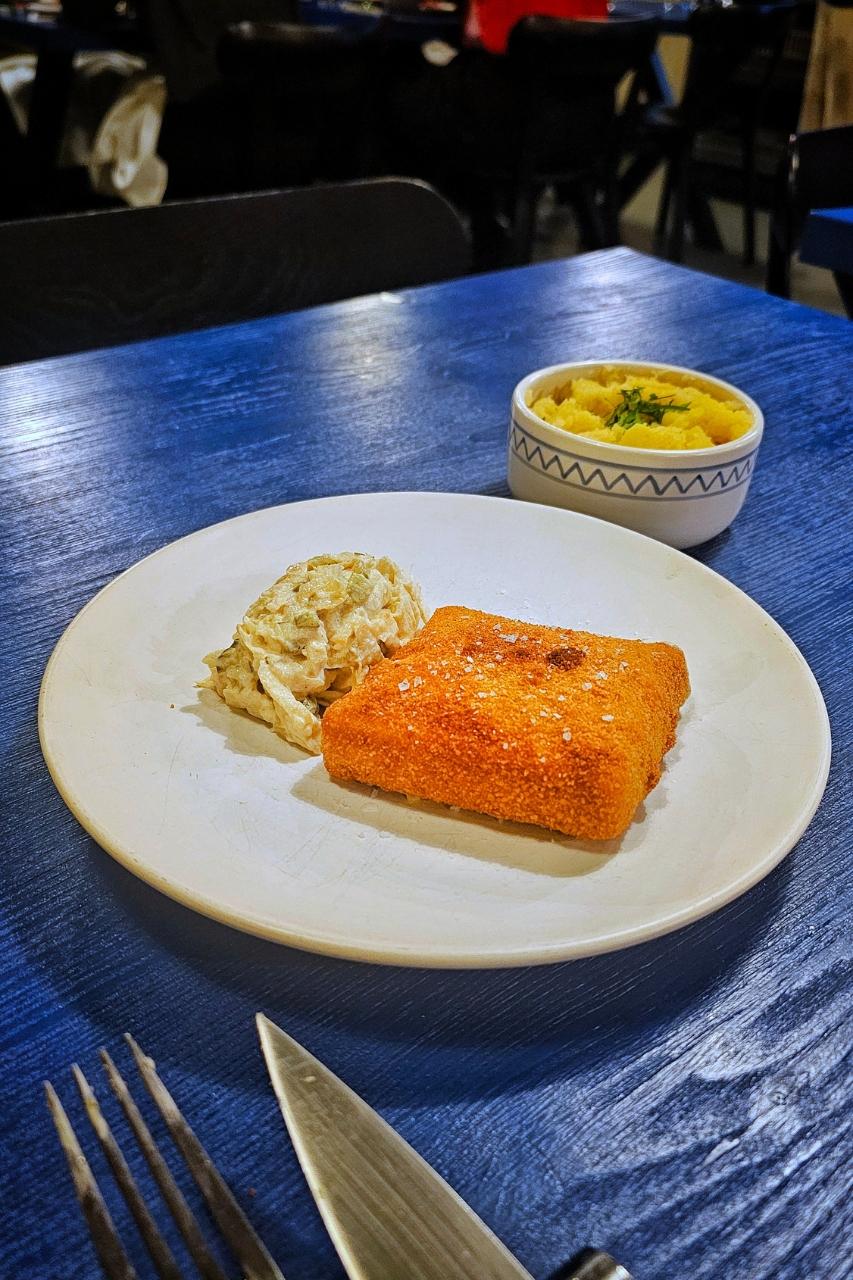
For our last main course, we ordered fried cheese with celery remoulade and sprouted potatoes. We have no idea where they got those potatoes, but they were completely tasteless. However, they could have borrowed the recipe for fried cheese from Lokál, where they do it a class or two better. Or perhaps from Sýpka u Ludvíka, not far from the turn-off to Báb. In fact, we can’t shake the impression that Skô drew inspiration from it when creating its menu. The celery remoulade tasted like a failed, bland Waldorf salad, and the cheese lacked any trace of flavour. We do not want to belittle the staff’s efforts to do their best, and we appreciate every honest effort, but we were not satisfied. The whole performance (as far as the presentation on the plate is concerned) was in the spirit of “Don’t waste time, people are hungry.”
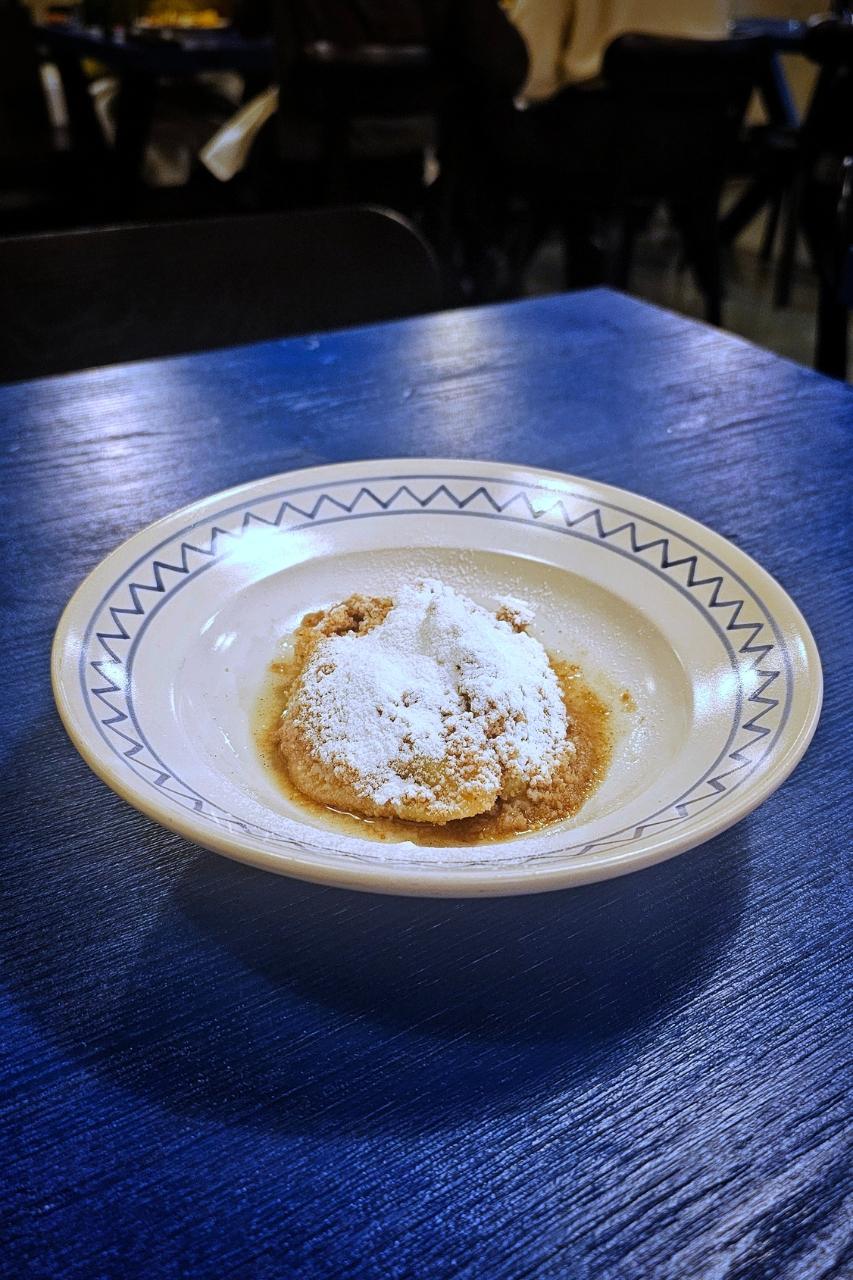
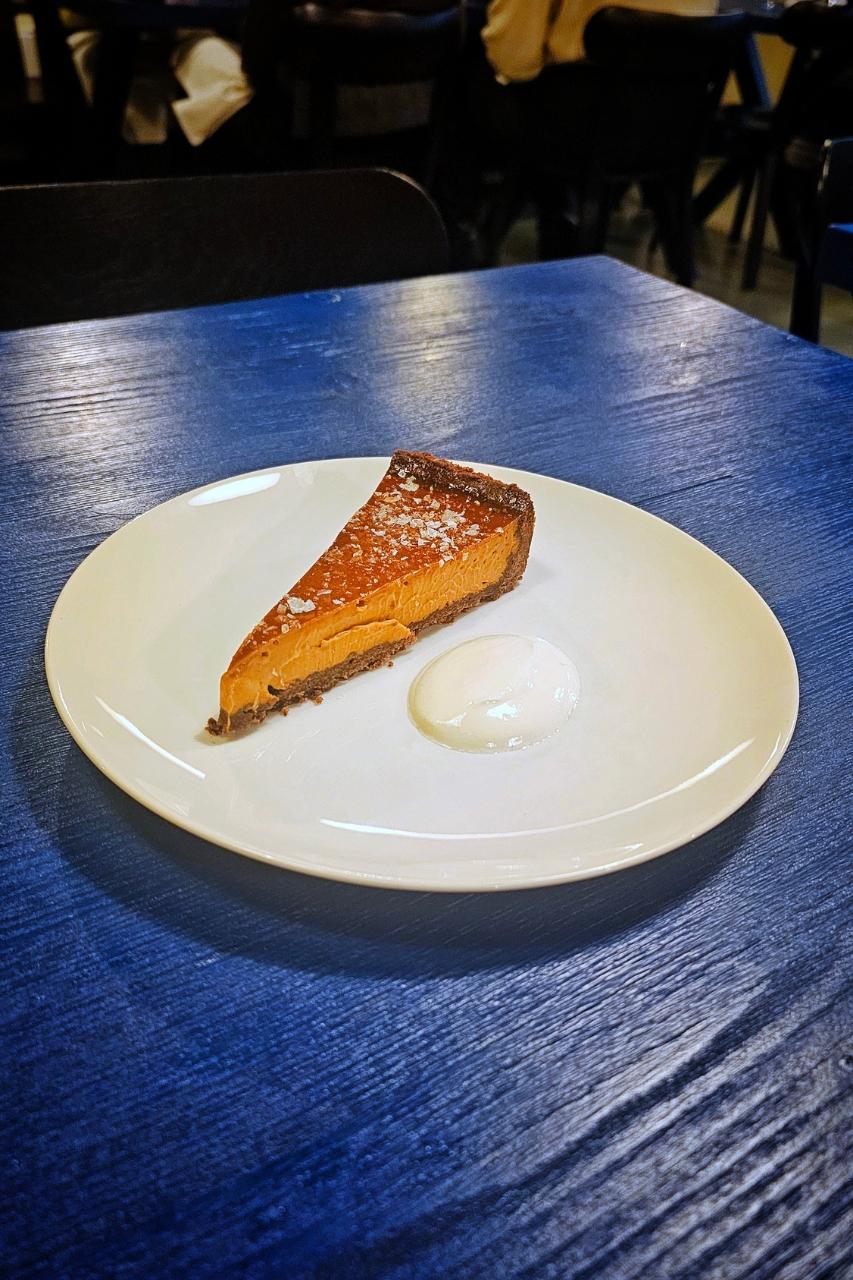
We ended the evening with plum dumplings with sweet breadcrumbs and honey cake. The cake was very good, a nice portion - but again, what was Slovak about it? We’d rather go to Myšák for that. The dumplings, or stuffed pockets, represent Slovak cuisine and were great, just like our grandmother would make them.
Skô 420 Kro Alma
What do these establishments have in common? Apart from their short names, almost nothing - except that at 420, Alma, and Kro, we get what we expect from them. Each does it differently, each has its own target group, and each has evolved in its own way. And it will be the same with Skô. In our opinion, the current concept has several shortcomings. The interior does not correspond to the menu offered, the evening menu does not meet expectations in terms of price or quality, and a Slovak restaurant should have a different setting.
There is a relatively simple solution: completely redesign the entire concept, or truly attempt a modern take on Slovak cuisine and, above all, have bryndzové halušky, lokše, and kapustnica on the menu - in an unconventional, original way, with a twist and without compromise.
The selection of draught beer can certainly be considered a compromise. Unsurprisingly, it is Pilsner Urquell, which is quite striking in a Slovak restaurant. Guests are more likely to look for beers such as Zlatý Bažant or Corgoň. But if I go to the trouble of offering such gems as Magula, Pivnica Brhlovce, or bottles from another amazing winery, Bott Frigyes, on the wine list, there is no reason not to offer guests beers from Slovak craft breweries. We recommend: ERB, Žiwell, Wywar, or perhaps the Dunajský brewery in Bratislava.
Hospitality fuck-up at the end
We can’t fault the service at all. The staff were truly exemplary, striving to provide the utmost attention and defending the establishment’s honour with genuine willingness in the face of our probing questions. The problem arose when we went to pay, when we were offered a 100% discount because we supposedly “didn’t like it”. We refused, saying that the food was fine, but that our expectations had not been met. Nevertheless, we were uncompromisingly given a bill with a 50% discount. Thank you, we appreciate it, we understand - but it can also be taken as a certain lack of self-confidence. And because this is not the first time this has happened, we feel the need to explain that when we go somewhere to write a review, we always pay for everything.