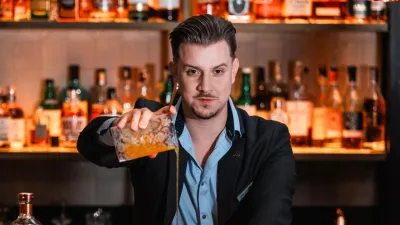

Emma Sleight, Head of Content for The World’s 50 Best Bars , observes the global bar scene from the very top. In an exclusive interview with VisitChef magazine, she explains why the world’s best cocktail bars are no longer found only in London or New York, the growing importance of local ingredients, and why bars from the Czech Republic and Slovakia may soon find their place on the global map.
Emma, could you start by sharing your perspective on where the international bar scene is headed, and how this evolution is reflected in The World’s 50 Best Bars list?
The international bar scene is shifting toward greater global diversity, sustainability and storytelling, which we have seen reflected in the list of The World’s 50 Best Bars in recent years. Traditional cocktail hubs like London and New York are sharing the spotlight with the likes of Mexico City, Bangkok, and Buenos Aires, and bars are increasingly focused on local ingredients, eco-conscious practices and immersive guest experiences. Bars from across the world are attracting international acclaim and prestige, which can’t be tied to one area, country or city. We saw this in the list of Asia’s 50 Best Bars 2025; from the style of menus, venue aesthetics, and approach to hospitality, there was so much diversity across the list.
This is part of what inspired us to take The World’s 50 Best Bars on the road three years ago, first heading to Barcelona in 2022 followed by Singapore in 2023 and Madrid in 2024. This year, we’re returning to Asia to continue our mission to showcase the world’s finest cocktail cities by hosting the awards in Hong Kong.
Has the way bars are evaluated changed over the years? Are there new criteria today compared to five or ten years ago?
We have always been very open about the fact that The World’s 50 Best Bars awards does not have any formal criteria for voting or judgement. What makes a great bar is up to each voter to decide – as everyone’s tastes are different, so is everyone’s idea of what makes a great bar experience. Bars can exceed in so many different areas, like liquid quality, hospitality, the surroundings, atmosphere and indeed the price point, but all hold different importance depending on the individual Voter. The 50 Best Academy members are carefully chosen for their insight and expertise, so we simply allow them to make up their own minds and collate their votes.
That said, we have expanded and diversified our Academy Chairs to better reflect the evolution of the global bar industry. Originally centred around Europe and North America, the Academy now includes more Chairs in emerging regions like Africa, with cities like Cape Town and Nairobi gaining stronger representation. This expansion has increased the number of local voters, ensuring the awards better capture regional expertise and trends. The voter base has grown globally and become more diverse, with Chairs regularly updating their Voters to remain relevant and inclusive. Overall, these changes have helped the awards fairly recognize bars worldwide, including those in rapidly developing markets.
In your view, what makes a bar stand out enough to be featured on the 50 Best list or in 50 Best Discovery?
As I said, we purposely don’t set out strict criteria for voters when considering bars to vote for, meaning we always have a super broad selection each year – from dive bars and beach shacks to luxury lounges and hotel bars
Things voters might consider include looking at the quality of the drinks, the hospitality and service, the ambiance, décor and lots more. But again, what makes a great cocktail is so subjective – what constitutes ‘best’ is not the same for everyone. In the end it’s up to expertise of the individual voters to decide who they should vote for. It is this diversity of opinion that allows us to trust our voters and their professional opinions, rather than giving them a list of features to tick off.
Whilst bars cannot nominate or vote for themselves on the list, they can nominate themselves for two of our special awards: Best Bar Design Award and the Siete Misterios Best Cocktail Menu Award. Further details of when applications open for 2026 will be announced through our newsletter and on our socials.
It’s also worth noting since you asked about 50 Best Discovery, that restaurants, bars and hotels appear on 50 Best Discovery based on the votes of our various voting Academies for our different lists, such as Asia’s 50 Best Restaurants, Asia’s 50 Best Bars, Latin America’s 50 Best Restaurants, Middle East & North Africa’s 50 Best Restaurants and North America’s 50 Best Bars, as well as The World’s 50 Best Restaurants, The World’s 50 Best Bars and The World’s 50 Best Hotels. This totals more than 3,000 voters overall; each of these voters is an expert in their local restaurant, bar or hotels scene. They are not voting specifically for 50 Best Discovery, simply for their best restaurant, bar or hotel experiences, and then the lists and consequently the wider 50 Best Discovery database, are born from these votes.
How important is local authenticity in a bar’s identity? Can smaller or less flashy bars succeed internationally by leaning into their cultural roots?
There are lots of different aspects of bars that can define a bar’s identity. While local authenticity can be a really interesting angle, the global bar industry is influenced by so many different cultures. That said, lots of people want to feel like the bar they are visiting is unique to that location and couldn’t be replicated somewhere else, but again here is where the individual opinion of voters comes in.
There are bars on the list that really lean into the region they are from, celebrating their finest local produce and flavours. But there are also bars that transplant one culture to another, bringing their own traditions to new cities. The important thing to remember is that smaller, paired back bars feature alongside high concept, upscale bars on The World’s 50 Best Bars list.
In Central Europe – particularly in the Czech Republic and Slovakia – we have a growing community of top bartenders and a few excellent bars. How do you perceive this region from your global perspective?
From a global perspective, Central Europe – and especially the Czech Republic and Slovakia – is an emerging force in the international bar scene, with fantastic potential. While the region has long-standing traditions in spirits like Becherovka, Slivovitz, and a brilliantly diverse beer culture, what's exciting now is how a new generation of bartenders are blending that heritage with modern mixology. Cities like Prague and Bratislava are starting to gain attention for bars that combine high-level technique, hospitality, and a deep sense of place. We’re starting to see some amazing bars coming through including Mirror Bar and Antique American Bar in Slovakia, who have both been in previous editions of the list. Currently, there are five bars from Czech Republic and five bars from Slovakia on our 50 Best Discovery collection, so definitely ones to keep an eye on!
As the international cocktail lover looks for new, authentic stories beyond the usual suspects, Central Europe has a real opportunity to shine. With the right exposure, collaborations, and storytelling, this region could become one of the next major frontiers in global cocktail culture.
There is also some incredible bar talent coming out of the Czech Republic and Slovakia, like Eric Lorinckz of Kwānt, Maros Dzurus at Himkok in Norway, Martin Siska, who used to be at Scarfes and is now heading up the bar programme at Dubai’s Atlantis Hotels, and Adrian Michalchik who won World Class a few years ago.
What can bars in cities like Prague, Brno or Bratislava do to gain more visibility among voters and the global bar community?
Bars in cities like Prague, Brno, and Bratislava just need to keep doing what they do best, focusing on their strengths, differences and expertise. Whether it's embracing their local identity, showcasing regional ingredients and stories or building strong industry connections, by focusing on what they do really well, their authenticity will shine through and attract attention.
Our voters always have their ear to the ground, so any bar that’s making noise and doing something different is always intriguing to them. Bars need to just keep doing what they do best as our voters are always looking for great new bars to consider for the list.
How important are international competitions, guest shifts, pop-ups or PR efforts when it comes to attracting the attention of the 50 Best Academy?
PR and marketing activities can be great for getting eyes on bars, particularly those that are newer to the industry or who are doing something different and innovative. However, it’s essentially up to the voters themselves as to where they visit and as their identities are kept super confidential, we honestly can’t say what exactly attracts them to a bar. Our Voter Rules clearly state that all voters are required to have attended the bars they vote for during a normal service and not during a takeover or other special event. Therefore, if they attend a guest shift at the bar, they cannot vote for it on that experience alone.
Press trips and complimentary visits at the invitation of the bars or associated brands, are still eligible for votes and can help get eyes on the bar but we trust that Voters make an independent choice and are not swayed simply by the fact that they might have been hosted by other brands that are not 50 Best. If voters have been experiencing the outstanding characteristics of a bar – whether they have been invited or went of their own accord – then it will be reflected in the results of the list.
Could you briefly explain how the voting process works? How are Academy members selected and how is regional balance ensured?
Of course. The list is compiled by votes from The World’s 50 Best Bars Academy, which comprises more than 800 drinks experts with 50/50 gender split, including renowned bartenders and consultants, drinks writers and cocktail experts from around the world. The Academy of voters is spread across 29 global regions, each headed by an Academy Chair who chooses their region’s voters, with the distribution of voters designed to reflect the development of the drinks sector in that area, and the concentration of quality bars, in each region.
The Academy Chairs each select a voting panel, updated annually, ensuring a balanced selection of drink writers and educators, bartenders and cocktail aficionados. Each voting panel is refreshed by 25% each year. We continue to encourage our Academy Chairs to select their voting panels to reflect the makeup of their respective regions, ensuring they are as representative as possible in terms of age, ethnicity, religion, disability, sexual orientation, education and national origin. We are committed to continuing our efforts to ensure our awards are enriched by encompassing experts of diverse backgrounds.
Each voter casts eight votes based on their best bar experiences during the voting period, although if they have been unable to travel, they are welcome to provide five votes from their home country. Voters are required to remain anonymous, and voting is confidential, secure and independently authenticated by professional services consultancy Deloitte.
We see many progressive bars in the rankings, with strong focus on sustainability, diversity or social impact. How much do these values influence the evaluation today?
A commonality we’re seeing across the bars over the last few years and indeed, confirmed during Asia’s 50 Best Bars recently, is the focus on sustainability throughout the list. Holistic sustainability encompasses a lot of different approaches, from implementing zero-waste procedures, sourcing more eco-friendly products or investing in education around sustainable practices and wellbeing of staff. It’s definitely something we’re seeing a lot more this year so I’m looking forward to seeing that continue to grow. It’s not only important to the industry, but to people as individuals, so we’re seeing this becoming more of a talking point when people are visiting bars.
Have you personally encountered any bars from the Czech Republic or Slovakia that caught your attention? And what would be your recommendation for local bars aiming to gain more international recognition?
Yes I’ve been lucky enough to visit the Czech Republic, which I thoroughly enjoyed, though I haven’t been to Slovakia yet (it’s on my list!) but I’ve heard amazing things – I'd love to visit Mirror Bar in Bratislava (which reached No.62 in the list of The World’s 50 Best Bars in 2024) and there are several stunning venues on the 50 Best Discovery list.
To gain more international attention bars need to focus on doubling down on what they do well. Whether there is a true sense of place from the menu through the use of native ingredients or showcasing a compelling story through the use of sustainable techniques, marketing activations, collaboration with international peers or their online presence. Bars just need to focus on what they do really well and not make awards the focus of their efforts but rather view them as a welcome by-product of all their hard work.