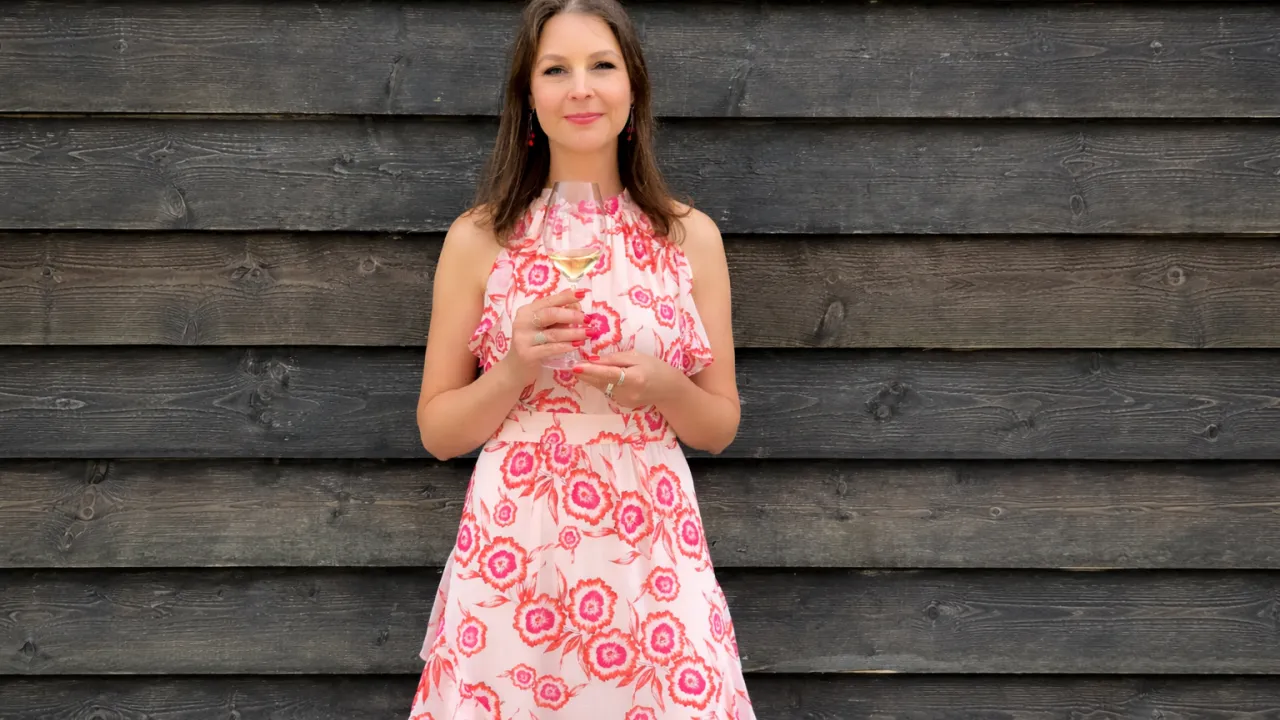

The first Czech Master of Wine speaks candidly about the pressure behind the title, the shifting global wine market, and why restaurants should put more trust in local producers. Lenka Sedláčková offers an insider’s perspective on a world where wine is becoming a luxury – and authenticity matters more than ever.
Can you tell us about your journey to becoming a Master of Wine? What did it mean for you to pass this examination, and how has it changed you professionally and personally?
The journey was long and perilous! Well, maybe not exactly. It took me 4.5 years, which is actually quite fast by the average standard. But these were years where I pretty much had to give up my personal life. All free time was spent studying, tasting wine, and writing practice essays. Every holiday was to a wine region and so I have been lucky to visit most wine-producing countries in the world as a result. There are very few places I haven’t been to. So it’s hard but rewarding at the same time. I think the greatest thing about the programme is the international network you build – friends and associates everywhere in the world. We are a very connected community and very friendly and helpful to each other.
But I am lucky in that my husband is also an MW, otherwise it would have been difficult – I have seen relationships break over this exam as it is so all-encompassing.
It was incredible to pass, not just because it meant I was the first Czech person to do it, but because at times it seemed impossible. There is a certain amount of respect this title carries with it and people certainly look at you in a different light. But there is also a lot of pressure. Everyone expects you to know absolutely everything and that’s just impossible – nobody knows everything! And once you pass, you choose what knowledge you keep up to date with and what you are less interested in. Because now you can choose!
The title has certainly helped open doors for me, but almost more internationally than in the UK. Here, we have the world’s biggest concentration of MWs, so it’s less ‘glamorous’ than somewhere else. I feel the weight of the title more when I travel than at home.
How has travelling through vineyards around the world influenced your approach to wine?
I think it’s really important to have an international view on things and understand that different regions face different challenges. Something that may work for a winemaker in Burgundy will not work in Australia or South Africa. So it’s about having an open mind. On a personal level, travelling has made me understand more about the style of wine I like the most – which is wines from volcanic terroirs and high altitudes. It’s the energy of those places that great winemakers have the ability to express in a bottle of wine.
The MW title carries enormous prestige today, but some voices suggest that its value has somewhat “devalued” in recent years. How do you perceive the current prestige of the title, and what do you think should be its main criterion?
Really? Who are those voices and why would they say that? I am not sure it has devalued, you’d need to explain exactly what you mean by that. Is it because there are more of us? We are still not that many, just over 400 in the world. I think the prestige hasn’t changed. If anything, it is much, much harder to pass the exam these days than it was, say, 20 years ago or even before that. I passed 10 years ago and the exams have only got harder – there are more established wine countries to blind taste and more grape varieties and better winemaking technology. Blind tasting is harder than it ever was. So I have only the utmost respect for anyone who passes these exams now!
From your experience, what distinguishes a truly outstanding Master of Wine from an average wine professional?
I think it is having global knowledge, not just of wine in terms of viticulture and winemaking, but also the international business of wine, understanding global trends and different markets. It’s kind of like being a ‘jack of all trades’ within the wine industry. Whilst we all have a specialty (mine being Greece), we know a bit about everything, which takes a lot of time and practice.
How should a budding sommelier or wine enthusiast approach developing their knowledge and tasting skills?
Joining a tasting group helps. Not sure if that is something that’s common in the Czech Republic, but in the UK there are plenty of opportunities: whether with knowledgeable friends, attending tastings with your local independent wine merchant or things like WSET classes. Travelling or going to wine fairs also helps, always get a perspective from lots of different people from different backgrounds. Don’t just take what one person tells you as gospel, and have an open mind.
How has the UK wine market evolved in recent years, especially after Brexit and the pandemic?
Sales of wine were very strong during the pandemic, especially in retail and online. So the challenge for many merchants is reclaiming those sales, which isn’t happening. Brexit has meant higher prices for consumers, as a result of more red tape, more paperwork etc. The market for fine wine just about collapsed and has been very weak over the past couple of years. And now the wine market in general is suffering. People are spending less in times of uncertainty and wine is a luxury, not an everyday staple.
What matters most to British customers when choosing wine – brand, origin, price, sustainability, or something else?
It really depends on the consumer, it’s not as easy as that. Where do they shop and how much cash do they have? A supermarket wine shopper will have completely different expectations than someone who buys from a fine wine merchant. Supermarket and multiple retail shoppers are mainly led by price but they can be open to experimentation if the price is right – you sometimes see wines from unusual origins sold in multiples and if they sit under £10 or £15, they have success. Sustainability is very important but often at higher price points.
Do you see room in the UK market for smaller wineries or new brands, or is it dominated by major players?
The UK market has always had room for both, that’s partly what makes it so exciting and so relevant. Everyone wants to have representation in the UK. Once you have it, it is easier to succeed in other markets, too, as many people look to what is happening in the UK wine scene. You can find every type of wine in the UK. There are few places in the world that could claim that.
How do you assess current trends in the global wine market? Which regions are currently on the rise?
Central and Eastern Europe is very hot. I have been there for the rise of Greek wine from the start and it has pretty much emerged now, certainly in the UK and other major world markets, but it is still a growing category. But other eastern Mediterranean countries and those from the former Eastern Bloc are very interesting. You can now buy Polish wine in the UK (check out Kamil Barczentewicz, very good wines). So long as they are priced well, because consumers are mainly happy to experiment on wines that are affordable. This is why countries like Serbia, which make really interesting wines, haven’t broken through yet – their wines are very ambitiously priced for an emerging country.
In terms of styles, we are in the post-Parker era of appreciating wines with less or no oak, fresh acidity and certainly lower alcohol levels – all an opportunity for countries like the Czech Republic, which naturally produce those styles.
How do you view the Asian and American wine markets? Are there significant differences in taste, expectations, or trends between these markets?
The US is a mature market and places like New York tend to set trends in the same way that the UK does. But the overall taste profile of American drinkers is still more towards richer, sweeter wines and higher alcohol reds. You just need to look at American food – it is often rich and heavier with very strong flavours. And that requires strong wines.
Asia is harder to define as there are many different countries with very different cuisines and therefore tastes. In China, you could generalise in saying that they prefer red wines, but then you go somewhere like Shanghai and it’s full of really interesting wine bars, some focusing on natural wine. Japan is quite sophisticated but Japanese cuisine is better suited to white wines, though it’s also an important market for sherry. Asia is super diverse, I would say, and still developing its taste for wine.
Which wines or wineries from around the world do you think Czech wine lovers should know about?
I may be biased as these are my favourite wines, but I think Greece and Cyprus are so exciting. These countries have so many indigenous varieties with really unique flavour profiles. The wines are always fresh with vibrant acidity and lower alcohol levels (I think that is something Czechs who are used to drinking Czech wine would understand and appreciate). I am also a huge fan of wines from Sicily, especially Etna. And from the New World, Australia now makes Chardonnays to rival Burgundy – sometimes they are even better! If you can find it, Giaconda (from Beechworth) makes one of the best Chardonnays in the world.
What does the perfect wine list look like in a restaurant, in your opinion? What should it include to be both useful and inspiring for guests?
The perfect restaurant wine list allows diners to try many different styles of wine, so it is always great to see a strong selection of wines by the glass or by Coravin – not just the usual suspects like Chablis or Sauvignon Blanc, but something a bit more interesting and challenging. Having lots of wines by the glass invites experimentation and discovery and helps consumers understand what they like and don’t like.
I also feel very strongly that if you are a restaurant in a wine-producing country, you should be championing your country’s wines. One of my great disappointments about the Czech dining scene has been how international the wine lists are, with very little representation of local wineries. Have pride in local produce! A town like Český Krumlov, which sees so many international visitors, shouldn’t have restaurant wine lists full of German or French wines. It’s such a shame and a disservice to our growing wine industry.
Do you have any personal favourite restaurants or wine lists you would recommend? What impresses you about them?
I have many, but to be honest, when I go out in London I will often bring my own bottle and pay corkage because I have so much wine at home! Or I go out with wine friends and we each bring a nice bottle to share. I like having a few good by-the-glass options or starting with Champagne and then tucking into what we brought. There are many friendly restaurants here that allow you to do that, especially if you work in the wine trade.
As for favourite restaurants, there are many in different cities – in London I spend a lot of time at OMA (a one-Michelin-star Greek restaurant with a fantastic wine list focused on Greek wine) and Mountain (a one-Michelin-star Spanish restaurant where Czech wine buyer Martina has a great selection of wines with a focus on Spain and Italy), because the food is brilliant, the service very warm and the wines complement the food so well. In Athens I love going to Ateno, their different take on Greek salad is legendary. In Mexico City, Contramar and Maizajo are amazing, but there it’s more about cocktails than wine.
I don’t know the Prague restaurant scene well – I am usually just happy to eat my mum’s cooking when I go home, to be honest!
What, in your view, differentiates a “good” sommelier from a “great” one when working with a wine list?
A great sommelier is not condescending or arrogant and listens to what the consumer actually wants. Having a wine list that showcases your personality, but also complements the restaurant’s food, takes into account different budgets and understands the audience, is very important.
I find wine lists that centre around Bordeaux, Burgundy and famous brands quite dull.
What does an ideal collaboration between a chef and a sommelier look like, according to you?
It really depends. The best restaurants will ensure that the chef and sommelier work together, taste and develop dishes and wines that complement each other. One very memorable experience I can recall from a few years ago was a meal at Mugaritz in northern Spain, where the dishes were actually crafted to complement the wines the sommelier managed to source. Many of these were very rare and special bottles.
How open is the current gastronomic scene to experimenting with food and wine pairings?
A very broad question – obviously it depends on what sort of environment we are talking about. Personally, I think wine pairings work best with a pairing menu. But if you have a broad selection of different dishes, especially sharing plates (a very trendy concept in the UK and everywhere really), it’s more about having a universally complementary set of wines – Mediterranean cuisine benefits from fresher, crunchier wines, whereas Northern European cuisine can take heavier reds and oaked whites, etc. Too many different scenarios!
Can you give examples of unusual pairings that have surprised or inspired you?
Roast lamb with herbs paired with retsina, over Easter.
How should restaurateurs approach creating bold pairings without alienating their guests?
I think this is a question for a sommelier, which I am not!
What exactly does “analytical ability” mean in wine tasting, and how can one develop it?
It means being able to understand the structural elements of the wine and how they interact, and how they reveal deeper truths about the wine. It’s looking beyond simply the sensory appreciation of flavours and scents and whether you think the wine is ‘good or bad’. During the MW process we refer to ‘BLICC’ – balance, length, intensity, complexity and concentration of a wine – to help determine quality, for instance.
Having a systematic approach to tasting helps, but it’s all about experience and also objectivity. Remove your own personal feelings in order to fully understand the wine without being judgemental.
What is your personal approach to tasting – do you use a system, checklist, or more intuition?
It depends if this is under exam conditions, whilst judging a competition, or simply on a Saturday night at home. I don’t follow a specific pattern unless it is exam conditions, in which case I would use a technical grid that focuses on the structural elements of the wine first and foremost, and which I would use to make a logical conclusion. Sometimes first instinct works and sometimes it can mislead you. The easiest question you can ask yourself is: would I drink this and is it delicious?
Can analytical wine evaluation reveal flaws in production, regional trends, or the character of the winemaker?
Yes, of course, but actual flaws don’t really require analytical evaluation – they are just there. I’ve always been very sensitive to wine flaws and I have very low tolerance for them. There are things that you learn to tolerate – like some VA in Italian reds, because that’s just how it is; a little brett in Northern Rhône is a given, etc. But I cannot deal with mousiness or overt brettanomyces in wine, I think that is simply poor winemaking.
Conversely, wines that are too perfect and feel like they were made following a recipe can be quite soulless. I like edges in wines, so long as they are clean.
The global wine market today is full of wines from all over the world. How can new or lesser-known wineries make their mark?
I think I somewhat answered that in other places – start by making good wine, have good labels.
What role do social media, tastings, influencer marketing, or awards play in promoting wines today?
Social media is very important for brand awareness, but I am undecided on influencer marketing, especially as they are more likely to endorse better-known brands.
I think awards are vastly overrated. There are too many random wine competitions in the world that nobody has ever heard of that have zero influence on your wine sales. I would only give weight to competitions like Decanter World Wine Awards or specialist competitions where you have a panel of judges selected precisely because they understand their subject material. It also depends on the judging system. I would refuse to judge a competition that uses the OIV system – I think it is a dreadful way to assess wine.
What do you think is the most effective strategy for a winemaker looking to break into markets outside their home country?
Start with understanding what styles of wine foreign markets respond well to. Understand trends and price your wines well. Attending international fairs can be helpful, but it’s also expensive. Having your wines well represented in your home market is the first step – someone will notice! I often discover new wineries on travels, by reading and testing local restaurant wine lists.
And make sure you have good packaging! Your wine can be good, but we all shop with our eyes first – if your branding and labelling is terrible, you will find it harder to succeed.
How do you perceive the growing emphasis on organic and biodynamic wines?
I think that we have so much knowledge these days of how our climate, soils, aspect, altitude, grape varieties and farming practices affect our environment. If you have the time and manpower to invest in your vineyards, there is no reason not to try and work sustainably or organically. I think often it’s the bureaucracy of it that puts people off. So many wineries are organic but just can’t be bothered to go through the certification process because it’s labour-intensive or expensive. But climate plays a role, of course – it is much easier to be organic in a dry, windy climate like in the south of Spain than it is somewhere like Central Europe.
Our customers do ask for organic wine, so I think it’s increasingly more important. Some restaurant lists are purely based on this, too.
Biodynamics is a philosophy that you need to have some belief in. Ultimately, practising organic or biodynamic viticulture means you spend more time looking after your vineyards – this can only lead to making better wines as you learn so much about your environment.
Can you share a moment when a particular wine truly impressed or surprised you?
I think I have shared this in other interviews, but a ‘wine moment’ I’ll never forget was tasting the 2016 Cuvée Evdemon Assyrtiko from Estate Argyros for the first time on an MW trip to Greece. I had such an intense reaction to the wine – the most minerally intense wine I’ve ever tried in my life, and I don’t think anything will come close. A feeling of being underwater. I still have some of that wine in my cellar, but after ten years it has put on a bit of weight, as Assyrtiko does with age.