
Champagne has taken one of the most significant regulatory steps in decades. As of 31 July 2025, Chardonnay Rosé is officially permitted within the Champagne appellation, directly in its cahier des charges. This is neither a marketing detail nor a symbolic gesture—the region has thus extended the legally recognized genetic basis of the appellation, an exceptional step in the extremely conservative environment of Champagne.
Where you may encounter Chardonnay Rosé
Growers and small domaines:
In the Côte des Blancs and its surrounding areas—particularly parcels farmed by traditional récoltant-manipulants—small sections of vineyards have been identified where the pink mutation is being cultivated as part of trial plantings, often interplanted among Chardonnay Blanc vines on some of the region’s most suitable terroirs for Chardonnay overall.
As a result, it is likely that the first wines with a more pronounced proportion of Chardonnay Rosé will come from small, family-run producers, especially those focused on biodiversity or terroir-specific cuvées. Grower Champagne (RM producers) tend to experiment with small volumes of varietal or micro-parcel wines, making them natural early adopters.
Large houses and established brands:
At present, no major Champagne house (“Maison”) has publicly announced a cuvée made exclusively or predominantly from Chardonnay Rosé. This reflects the fact that the newly authorised variety still represents only a very small fraction of total plantings, much like the other historical minor varieties.
Established rosé Champagnes—such as Pommery Brut Rosé or Mumm Le Rosé—remain classic Pinot-dominated blends, rather than expressions where Chardonnay Rosé plays a leading varietal role.
Where it is likely to appear first:
- Among family-run producers with a strong focus on biodiversity and small-scale production.
- Within the grower Champagne segment, where producers are more inclined to give space to minor varieties and fine terroir-driven distinctions (RM estates working under a terroir-driven Champagne philosophy).
- In future special releases and limited-edition cuvées, where the vinification of Chardonnay Rosé will be explicitly stated and highlighted.
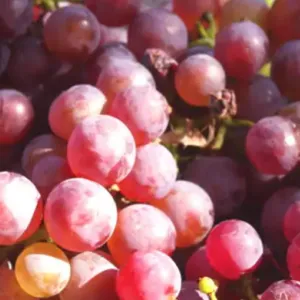
Chardonnay Rosé, sometimes also referred to as Pink Chardonnay, is neither a newly bred variety nor a response to the trend of the moment. It is a natural color mutation of the classic Chardonnay, genetically identical except for the color of the skin, which has a subtle pink hue. Historical records confirm that this mutation was already present in Champagne at the beginning of the 20th century, but gradually disappeared, mainly due to selection for yield, uniformity, and ease of vineyard work.
From a legal point of view, 2018 was a key year when Chardonnay Rosé was entered in the French National Catalogue of Varieties. Only this step made it possible to legally propagate, plant, and systematically evaluate it. This was followed by several years of monitoring the agronomic behavior of the variety under Champagne conditions: yields, susceptibility to disease, phenological development, acids, pH, and aromatic profile of the basic wines. The results were sufficiently convincing for the Comité Champagne to recommend its full inclusion in the appellation, rather than just an experimental regime.
The formal inclusion of Chardonnay Rosé in the cahier des charges means that it is considered a standard Champagne variety, alongside Chardonnay, Pinot Noir, Pinot Meunier, and four historic minor varieties (Arbane, Petit Meslier, Pinot Blanc, and Pinot Gris). This is not a trial exception or a temporary license—the appellation is counting on this variety for the long term.
From an oenological point of view, it is important that Chardonnay Rosé does not undermine the stylistic identity of Champagne. The first vinifications show a profile very close to that of a classic Chardonnay: high natural acidity, linear structure, and good lees aging ability. The differences are subtle—more subtle fruitiness, slightly different phenolic structure—and expand the palette of possibilities rather than creating a new flavor direction. For producers, this represents a new tool within the existing Champagne language, not a rewrite of it.
But the significance of this decision is primarily systemic. Champagne is sending a clear signal that the appellation is not a static museum construct but a living regulatory framework capable of controlled evolution. Particularly in the context of climate change and pressure for sustainability, a return to natural genetic diversity represents one of the most conservative—and at the same time safest—adaptation strategies.
Chardonnay Rosé vs. Voltis: Two Roads, Two Worlds
The name Voltis often comes up in debates about the future of Champagne, but its position is fundamentally different. Voltis is a modern interspecific (PIWI) variety, bred in France with the aim of high resistance to vine blight and downy mildew. It has been authorized in Champagne since 2021 under the special VIFA (Varieties of Interest for Adaptation) scheme, which allows the testing of varieties that respond to climate change and ecological requirements.
However, unlike Chardonnay Rosé, Voltis is not a full-fledged variety of the Champagne appellation. Its planting is strictly limited, its use in wine is regulated, and the whole project is time-limited—after a certain period, it will be decided whether it makes sense to keep it or remove it from Champagne for good. Voltis thus represents a technological experiment, while Chardonnay Rosé is an institutionally accepted return to its roots.
What This Means for Champagne—and Why It Is Important
The inclusion of Chardonnay Rosé in the appellation shows that Champagne is looking for answers first in its own genetic archive, not in radical external solutions. Instead of changing the style, it changes the tools with which it achieves it. For growers, this can mean greater flexibility, for the big houses, another opportunity to fine-tune their cuvées—and for the region as a whole, proof that even the world's most austere appellation can evolve without losing its identity.