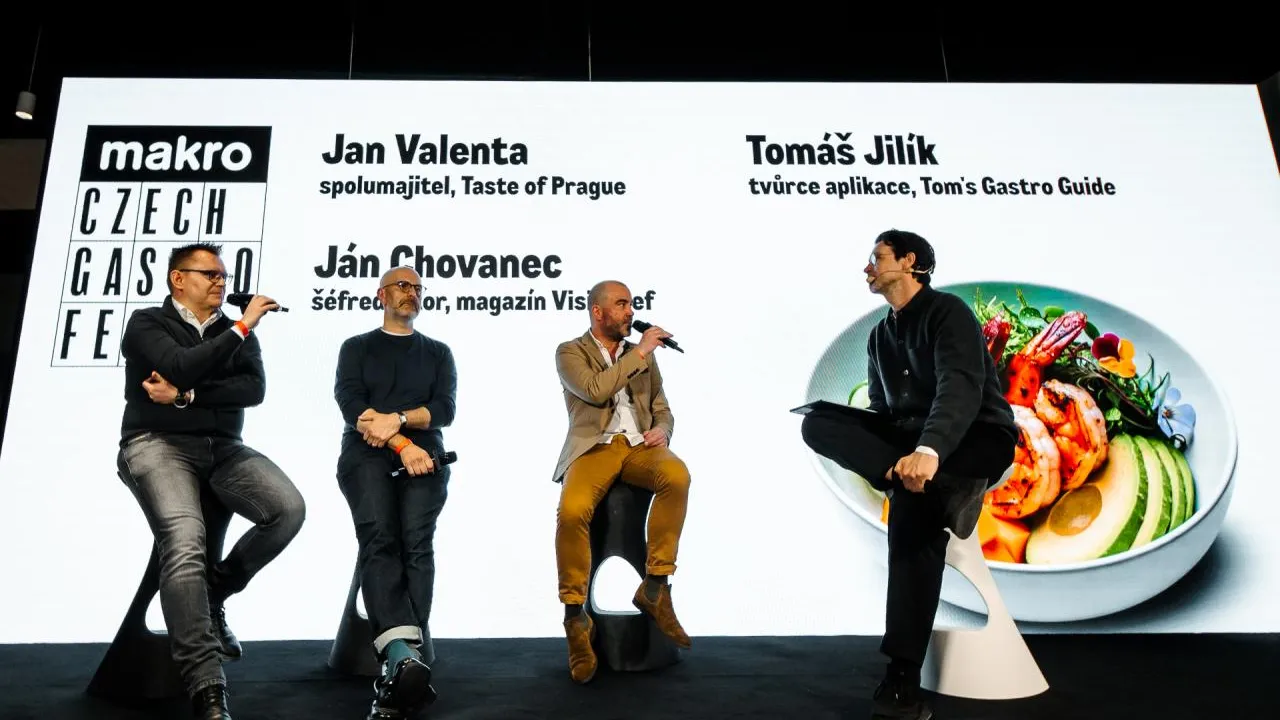

Czech gastronomy is changing. High-quality establishments are no longer confined to Prague; diners are increasingly seeking out character rather than trends, and restaurateurs are prioritising thoughtful growth over rapid expansion. This year’s Makro Forum, which took place as part of the Makro Czech Gastro Fest, revealed what further changes will shape the future of Czech gastronomy.
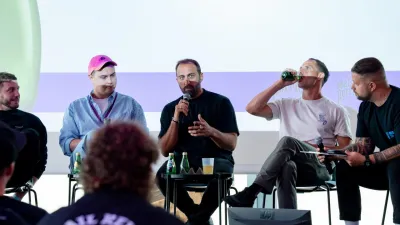
Czech gastronomy is entering a period in which a business’s success is no longer determined solely by its location, an attractive interior, or the ability to capitalise on the latest social media trends. What is becoming increasingly important is what is much harder to imitate: a unique story, genuine craftsmanship, a high-quality team, and a relationship with guests. It is precisely these values that featured prominently in the debates at this year’s Makro Forum, a discussion platform organised as part of the Makro Czech Gastro Fest. Restaurateurs, marketers, and other industry figures, in debates moderated by Lukáš Hejlík, identified several changes that are currently driving Czech gastronomy forward. One of the most striking is the changing role of the regions.
High-quality gastronomy is no longer the preserve of large cities. Inspiring establishments are springing up in Lednice, Břeclav, Olomouc, Most, Bílina, and other places, where gastronomy is becoming increasingly intertwined with tourism and the life of local communities. Guests are no longer limited to a handful of traditional gastronomic destinations; on the contrary, they are increasingly venturing to specific establishments even outside the main tourist centres. Regional restaurants can thus be a reason to visit a particular town or area while also helping to reshape its image.
Another important catalyst is the expansion of the Michelin Guide into the Czech regions. The presence of this prestigious guide increases the attention guests pay to individual gastronomic scenes, and, according to the panellists, it can also motivate restaurateurs themselves to improve quality. “It’s great that Michelin has expanded into the regions, as this should motivate people in the gastronomy sector to strive to improve. When someone in Zlín wins a Michelin star, others will say to themselves: ‘If we work hard, we can get one too.’ Guests benefit from this too, because they’ll get high-quality dining even outside the award-winning restaurants,” says Tomáš Jilík, author of Tom’s Gastro Guide. The success of an individual establishment needn’t remain an isolated story; it can spark wider change across the whole region.
Guests are looking for a story, not a copy of a trend
As the importance of regional gastronomy grows, guests’ expectations are changing too. At a time when social media can turn a particular dish or concept into a global phenomenon within a matter of days, it is becoming increasingly difficult to distinguish between an establishment that truly knows what it wants to be and one that is merely reacting to the latest fad. According to the panellists, it is precisely this authenticity that is gaining in value. Successful businesses do not build their identity on blindly copying foreign concepts, but on the ability to find their own signature style and develop it over the long term.
“We never wanted to do something just because it’s currently trendy. We wanted to create a business that we ourselves would enjoy visiting, and we believed that if we did it honestly, guests would find us,” explains Jan Valenta, co-owner of the Taste of Prague project. This emphasis on a clear vision is proving to be one of the ways to establish a firm foothold in a market where trends change rapidly and guests have an ever-increasing choice.
Authenticity isn’t just about the food, though. It permeates the entire experience, from the way the business communicates and the atmosphere of the venue to the staff’s approach. According to this philosophy, a restaurant that does not try to be something it is not can forge a much stronger relationship with its guests. The same principle applies to the business itself. Restaurant owners are increasingly prioritising thoughtful growth over the rapid opening of new branches. A new venture is only launched once there is a sufficiently strong team, well-functioning infrastructure, and confidence that the same standard of service can be maintained.
This approach could mark an important shift for the Czech restaurant industry. Rather than chasing the number of outlets, the focus is shifting towards long-term sustainability, quality, and the ability to function effectively as a team. The result should be a business that is not built on a single person or momentary hype, but on solid foundations and satisfied guests.
Technology helps with discovery, but the experience remains human
The way in which guests discover the dining scene is also changing. Alongside recommendations from friends, social media, review sites, and specialist guides, artificial intelligence is playing an increasingly significant role. It can help people find restaurants, plan trips, or discover local businesses and producers. For the gastronomy sector, this marks a further shift in the journey a guest undertakes even before they set foot in a restaurant.
However, according to the panellists, technology cannot replace what matters most. Even the best recommendation tool will not save an establishment that fails to offer quality food, service, and an overall experience. A good reputation therefore remains one of gastronomy’s most valuable assets; it is simply the ways in which guests discover it that are changing. A restaurant must be able to hold its own not only with people who visit it in person, but also in the digital space, where many future visits are decided today.
“Czech gastronomy has undergone a huge transformation in recent years. Today, it is no longer exceptional only in Prague—more and more inspiring establishments are also springing up in the regions, where they contribute to the development of local communities and tourism. Makro Forum demonstrates that the future of the sector rests on sharing experiences, the courage to innovate, and collaboration across the entire gastronomic scene,” says Lukáš Hejlík, Makro Forum ambassador.
It is precisely this collaboration and sharing of experiences, alongside authenticity, quality, and regional character, that are proving to be another key element in the future of Czech gastronomy. This year’s Makro Forum confirmed that the sector is moving away from the search for a single universal formula towards greater diversity. Every region, business, and restaurateur can build on something different, provided they can offer a high-quality and authentic experience. And while technology will continue to change the way restaurant guests discover new places, the decisive moment will remain the same: the moment when a guest sits down at a table and finds out whether the establishment has truly lived up to its promises.
The highlights of this year’s Makro Forum discussions can also be listened to as part of Lukáš Hejlík’s Gastromapa project on YouTube.
Source: