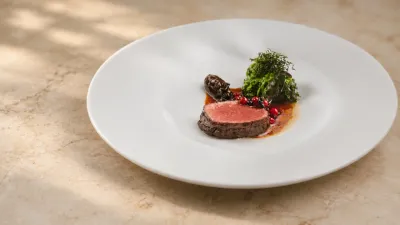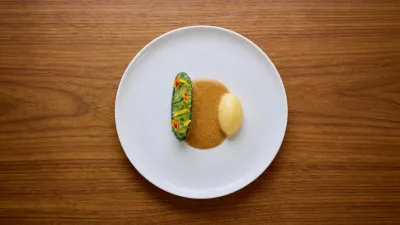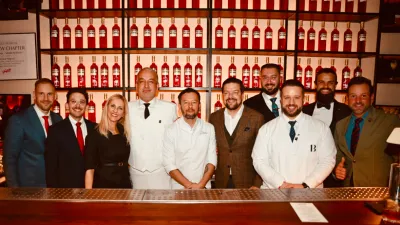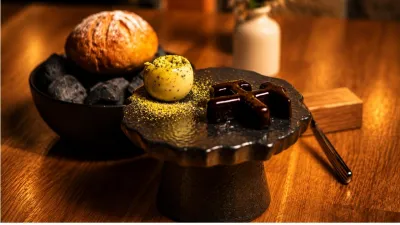

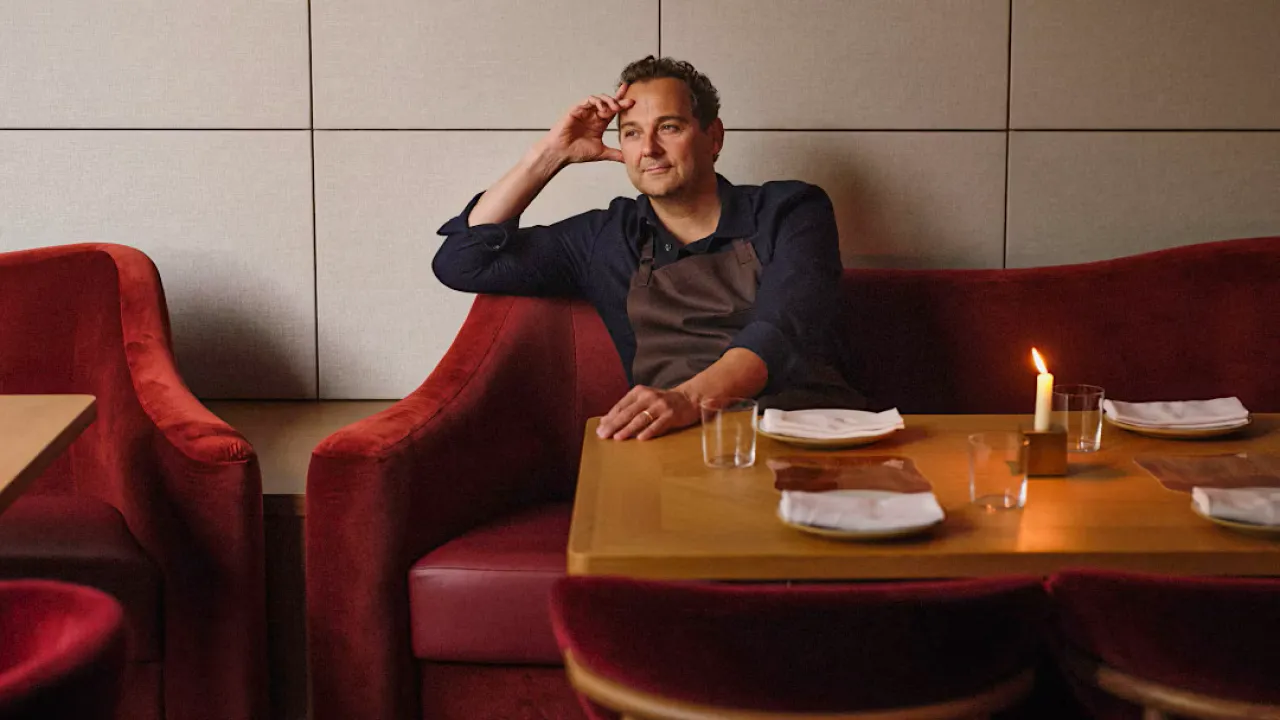

Daniel Humm, the head chef and owner of the legendary New York restaurant Eleven Madison Park, is expanding his portfolio with a new venture: HUMM. Located in the West Village, the restaurant focuses on modern American cuisine, wood-fired cooking, seasonal ingredients, and striking interior art. Instead of a lengthy tasting menu, it offers à la carte dishes, plates designed for sharing, and an atmosphere intended to be more accessible than traditional fine dining.
Practical information and bookings
HUMM is located at 435 Hudson Street, on the corner of Hudson Street and Leroy Street, in the West Village neighbourhood of Manhattan, New York. According to its official website, the restaurant is open daily from 5:00 pm to 10:00 pm. It accepts bookings via the Resy platform and, according to the official FAQs, these become available at midday three weeks before the desired date. Guests can also turn up without a booking and try to secure a seat in the bar area, subject to availability. The main dining room offers a full à la carte menu, whilst the bar and lounge offer a smaller selection of dishes and snacks.
Official website: https://www.hummnyc.com/
Menu: https://www.hummnyc.com/menu
Bookings: https://resy.com/
A new chapter for Daniel Humm
New York is gaining another restaurant associated with the name Daniel Humm. His new venture, HUMM, opened on 10 October 2026 at 435 Hudson Street in Manhattan’s West Village. It builds on the experience of the team behind Eleven Madison Park, but introduces a different concept: a less formal one, based on individual dishes and communal dining. Eleven Madison Park is one of the most prominent names in contemporary American gastronomy and, under Humm’s leadership, has earned three Michelin stars. However, HUMM is not intended to be a smaller version of it. Its ambition is to offer a different perspective on the chef’s craft—food that reflects how Humm himself likes to eat and spend time with friends.
According to Eater, the restaurant opened in the premises previously occupied for more than two decades by En Japanese Brasserie. The new establishment is thus entering an established gastronomic district, but with its own identity and distinctive style. The key difference lies in the dining experience: HUMM is based on an à la carte menu, so guests are not bound by a fixed sequence of courses on a tasting menu. They can choose several smaller dishes, put together their own dinner, or focus on one of the main courses designed for sharing. This format gives guests greater freedom while bringing the experience closer to a natural evening with friends—without the restaurant compromising on its emphasis on ingredients, technique, and attention to detail.
The fundamental principle of HUMM’s cuisine is to let the natural flavours of high-quality ingredients shine. The restaurant’s official website highlights seasonal produce, fish, and meat, whose character should not be overshadowed by unnecessarily complicated preparation. A key partner is Magic Farms, a farm in Hoosick Falls, New York, whose produce also supplies Eleven Madison Park. The menu is designed to change according to the season, current market availability, and the harvest. A large wood-fired oven, which forms part of the open-plan kitchen, plays a central role. Here, fire and direct heat are not merely practical cooking methods, but defining elements of the overall concept.
One of the most distinctive dishes on the opening menu is a roast chicken served for two. According to Time Out, it is inspired by Humm’s mother’s cooking—a personal memory of home-cooked food that the chef brings to life in a contemporary restaurant setting. The chicken comes from Amish farms in Lancaster, Pennsylvania. A mixture of breadcrumbs, butter, lemon, thyme, and garlic is tucked under the skin, followed by several stages of roasting and a final finish in a wood-fired oven. The dish is served with chicken jus and brown butter. This dish captures the essence of HUMM: instead of a technically complex tasting menu, it offers straightforward food to be shared at the table, built on quality ingredients and precise execution. Simplicity on the plate does not, however, mean a lack of technical skill; on the contrary, the multi-stage preparation demonstrates how much attention a seemingly familiar dish can require.
The introductory menu also includes a whole branzino (European sea bass) and a range of smaller dishes. Time Out mentions, for example, crispy feta with sesame and sweet-and-sour shallot agrodolce, tuna crudo, a chicory and mandarin salad, or fried aubergine with pickled green tomatoes. The menu is designed to accommodate various dining styles: guests can start with a few smaller plates, share vegetable dishes, and then order fish or roast chicken. Eater also lists a milk-and-honey dessert among the items on the introductory menu. However, the menu is subject to change; the restaurant notes that published menus are examples only, and their contents are adapted to current ingredient availability.
Gastronomy, art and hospitality
A key feature of HUMM is its interior, created in collaboration with designer Pierre Yovanovitch and artists Francesco Clemente and Rashid Johnson. The space is also complemented by works by Louise Bourgeois and Roni Horn. According to Time Out, the restaurant covers approximately 5,000 square feet—roughly 465 square metres—and features natural materials, simple forms, and artistic elements created specifically for the space. Francesco Clemente contributed to the ceiling mural and the design of the private dining room. Here, art is not intended merely as decoration, but as part of Humm’s broader vision of the restaurant as a place where food, architecture, design, and personal relationships intertwine. The open kitchen with its wood-fired oven also brings a sense of live action to the main dining room.
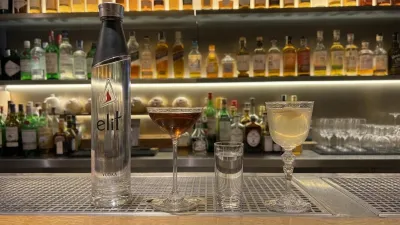
The restaurant offers several different dining options: the main dining room with the full menu, and a bar and lounge with a more limited selection of smaller dishes. This means a visit can vary depending on whether guests are coming for a full dinner or simply for a cocktail and a few bites. The drinks menu is also worth noting, particularly the mobile martini trolley highlighted by Time Out. The cocktail thus becomes part of the tableside service and adds a certain theatrical dimension to the evening, without the restaurant having to base the entire experience on a complicated tasting menu. The bar menu combines classic cocktails with seasonal variations and smaller dishes. According to available information, the wine list includes established wine regions as well as smaller producers; the restaurant’s official presentation also highlights responsible agricultural practices among some of the featured winemakers.
This new venture can be seen as the next chapter in Humm’s professional development. Eleven Madison Park remains synonymous with the pinnacle of contemporary fine dining, featuring an extensive menu and exceptionally well-thought-out service. HUMM, by contrast, shows how the same experience can work in a different format. It is not merely a matter of reducing the number of courses, but also of changing the guest’s relationship with the menu, the way orders are taken, and the emphasis on sharing. The restaurant aims to offer dishes that can form part of a natural evening with friends, while maintaining high standards in terms of ingredients, technique, and attention to detail. Works of art, architectural design, and a well-considered cocktail service remain key elements of the experience. HUMM does not, therefore, seek simplicity by minimising everything surrounding the food, but rather a more accessible way of presenting gastronomy and hospitality.