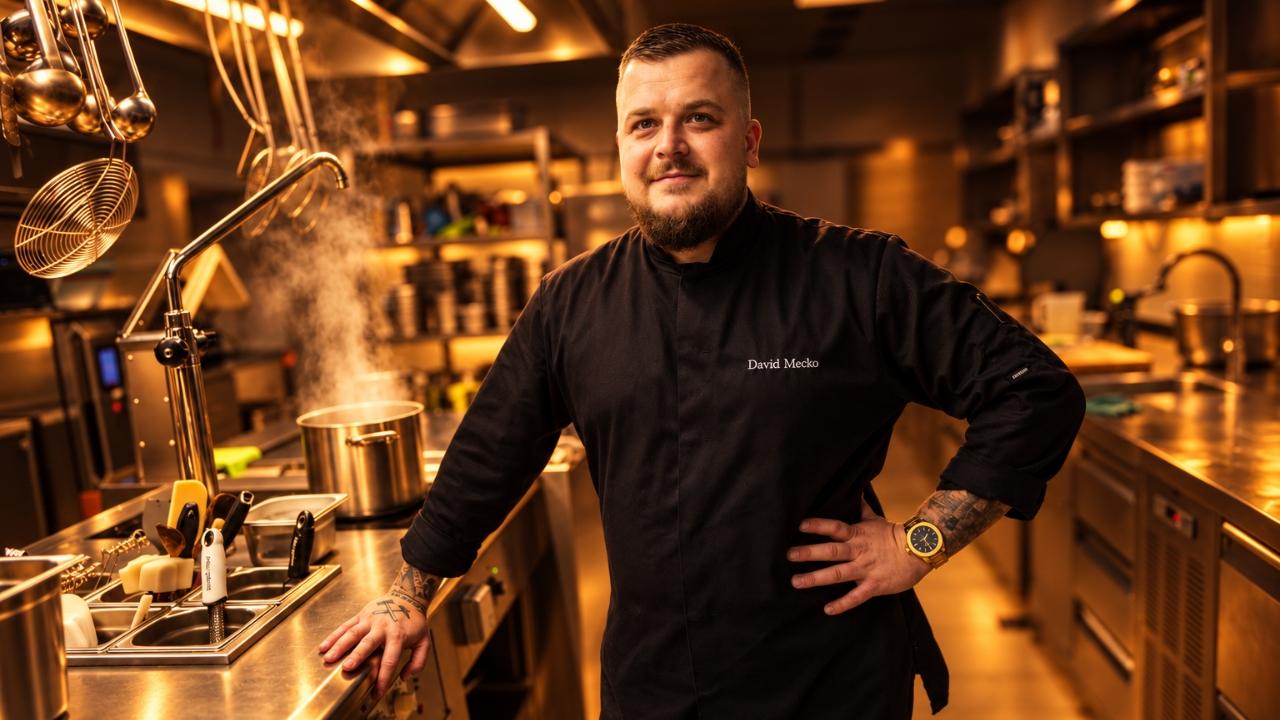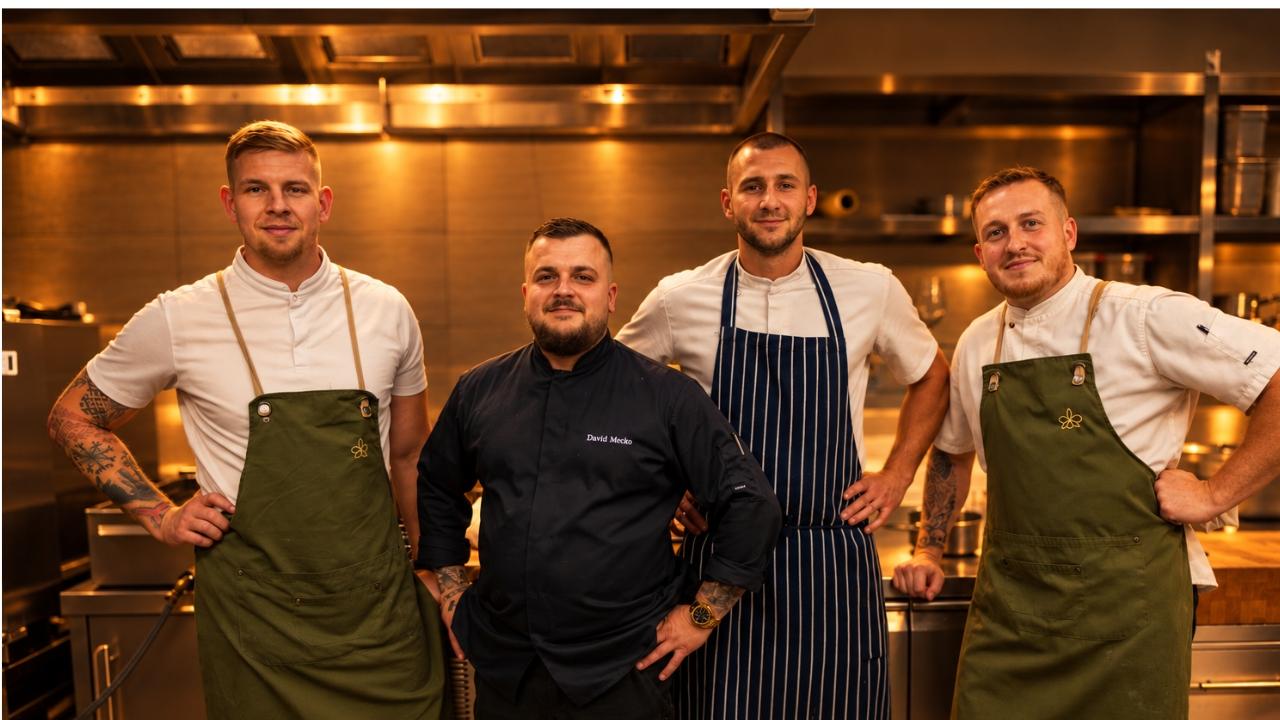


A miner’s hammer stuffed with Bulgarian spread, venison consommé with slivovitz, duck aged for twenty-four days, or a poppy seed dumpling with marzipan. The new tasting menu at the Cattaleya restaurant in Čeladná is once again seeking to forge its own identity, drawing on regional heritage, traditional cooking, and contemporary gastronomic techniques. David Mecko, however, does not rely solely on spectacular presentation. Behind each course lies a careful interplay of flavours that have their place both in the Czech landscape and in the region’s personal history.
Víno jako další vrstva degustace
Součástí degustace je také vinné párování, které kombinuje evropské vinařské regiony s různými styly a odrůdami. Už u úvodního chodu se objevuje moravské Veltlínské zelené z vinařství Gurdau, které doprovází srnu, slivovici a horský sýr v amuse-bouche. U pstruha se servíruje Riesling N.V. od Aronn, zatímco houbový chod s droždím, koprem a cibulí doplňuje italské pecorino Camillo Zulli. Kachní prso s hruškou a foie gras dostává společnost jihoafrického Pinot Noir od vinařství Anders Sparrman. U telecího masa se objevuje francouzské Château Fombrague, cuvée založené na odrůdách Merlot a Cabernet Franc.
Párování tak vedle sebe staví Moravu, Francii, Itálii a Jižní Afriku a rozšiřuje chuťový záběr degustace za hranice samotného talíře. Závěr menu navíc počítá i s nealkoholickou variantou párování, což dává možnost absolvovat celý večer v různých podobách.
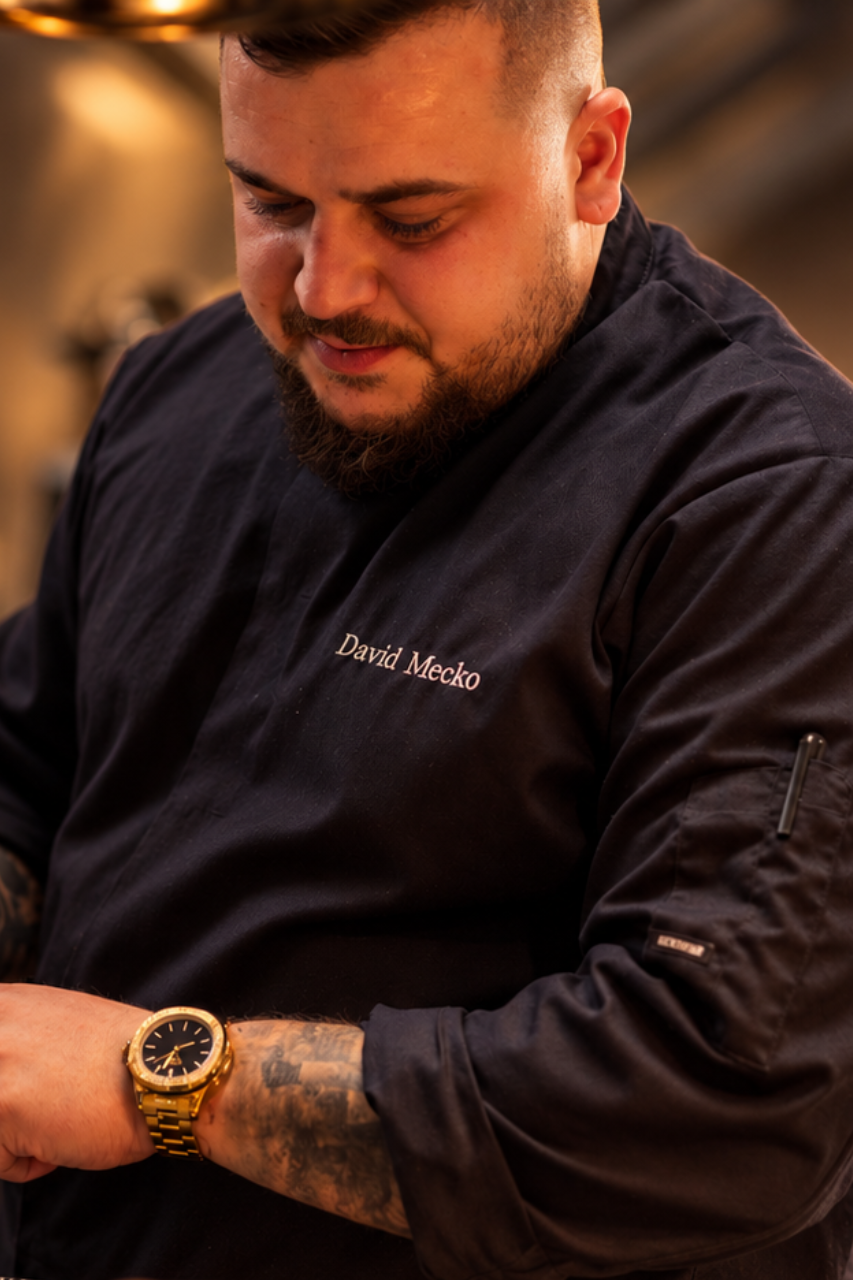
At Cattaleya, the Ostrava region isn’t portrayed in a superficial way. It’s not about turning every ingredient into a reminder of the mining past or building the menu around a few nostalgic references. Far more interesting is the way the local cuisine translates regional themes into the language of contemporary gastronomy - sometimes through a specific memory, at other times through an ingredient, a technique, or a combination that seems unexpected at first glance but begins to make sense on the plate. Head chef David Meck’s new tasting menu builds on this philosophy. At the same time, it is heavily based on game, mushrooms, fermentation, long maturation, and the use of sauces, which lend depth to the individual courses.
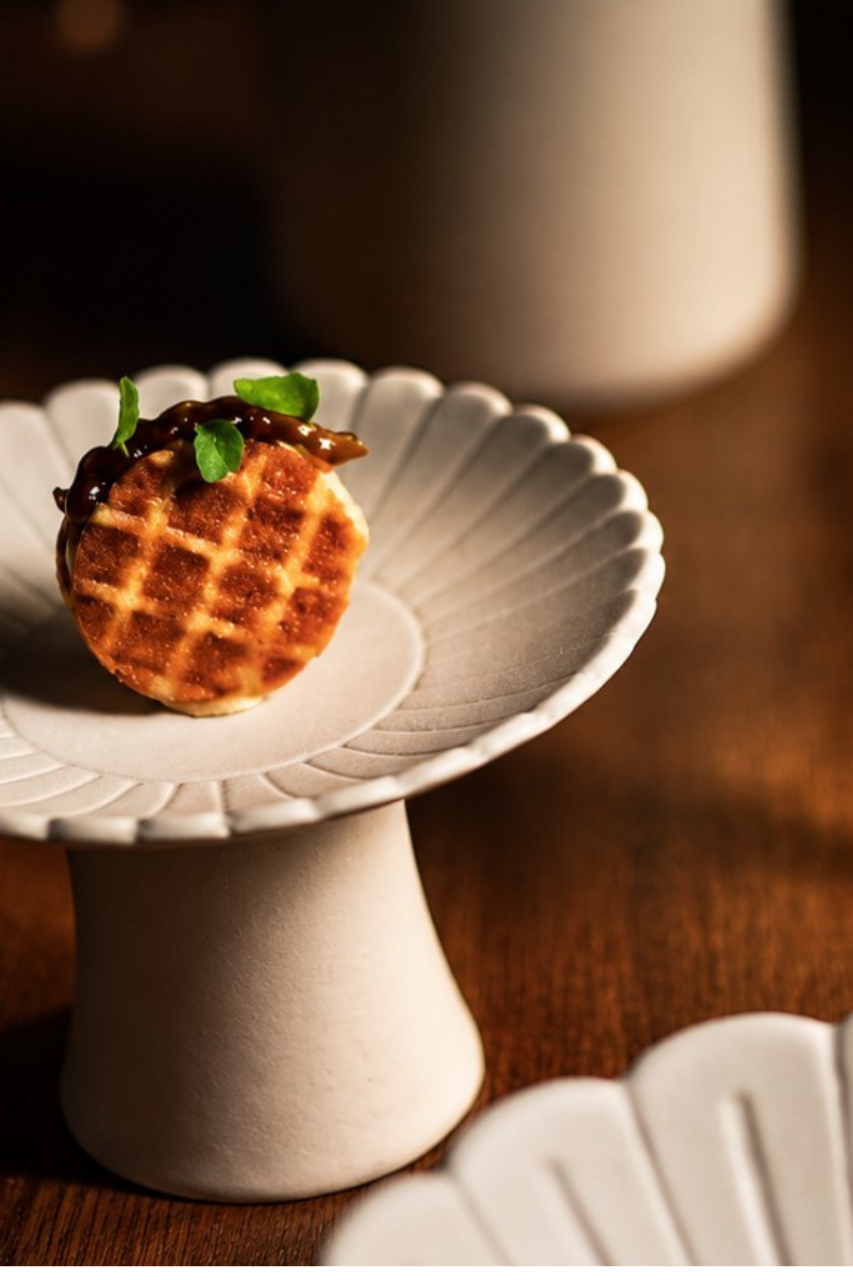
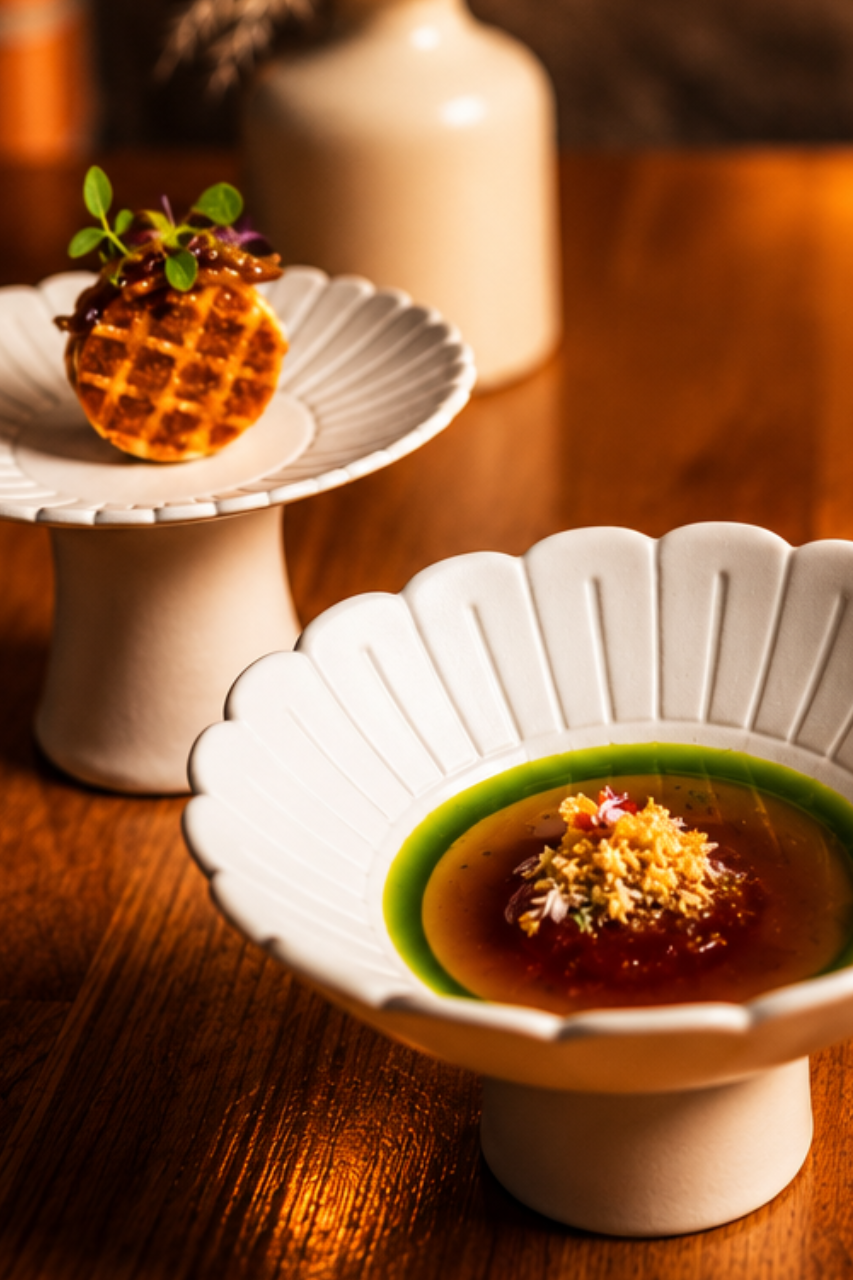
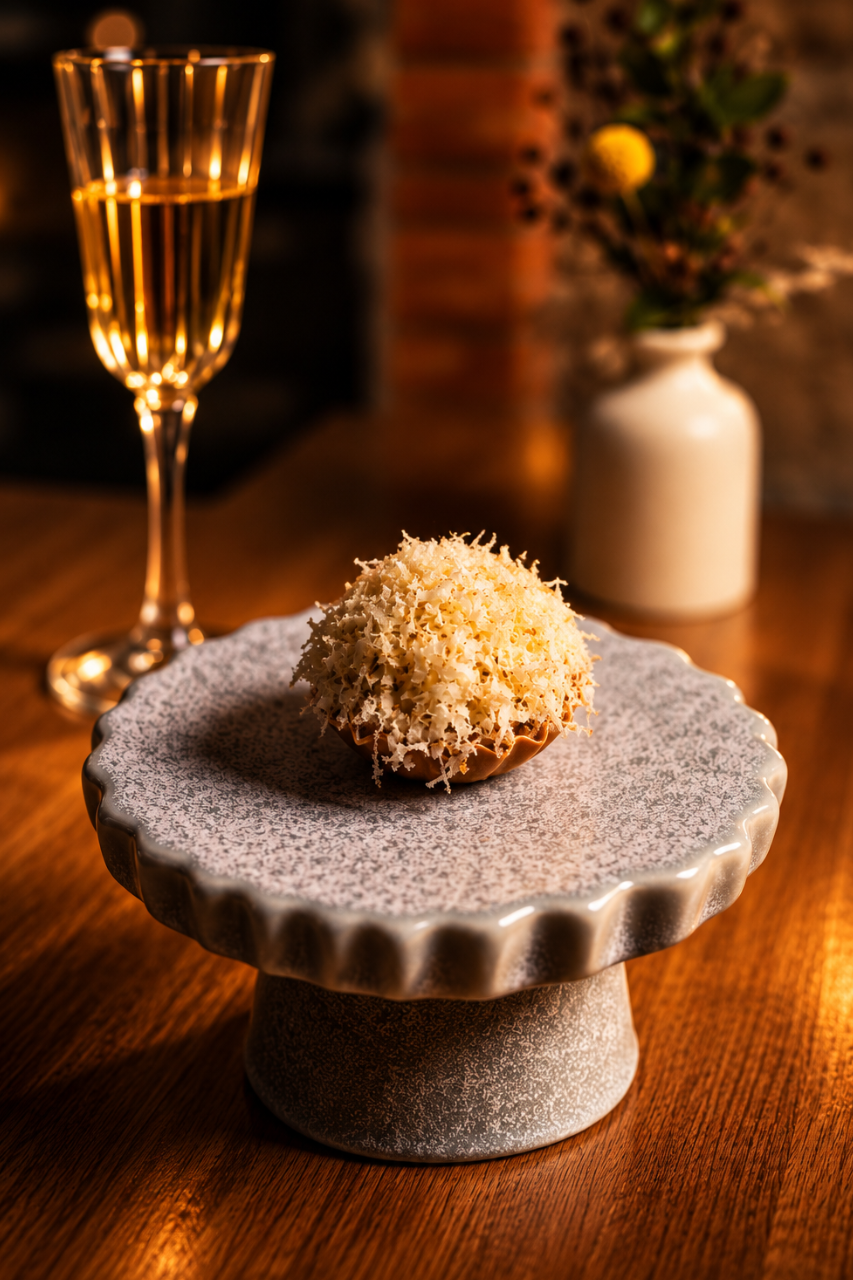
The start of the evening is therefore not merely a succession of small amuse-bouches from the kitchen. Even the very first bites suggest that the menu will feature smoke, bold flavours, and contrasting textures. Tomato marmalade with shallots and smoked celery takes on a new dimension thanks to herb-infused oil, dried smoked celery, and a tea made from smoked tomatoes and celery. It is a combination that builds on a familiar foundation but gradually reveals further layers. An onion wafer with whipped, lightly smoked bryndza and a stout reduction then adds saltiness, smokiness, and a subtle bitterness. This is followed by a crispy tartlet filled with a creamy quail pâté, sprinkled with walnuts and almonds. The third bite returns to game: the pâté is complemented by foie gras, a cranberry glaze, pickled cranberries, cranberry gel, and pickled spruce shoots. The sweet-and-sour fruitiness here contrasts with the earthiness of the meat and the forest aromas of the spruce. Each bite is different, yet together they form a clear opening theme.
A miner’s hammer and memories that have a taste
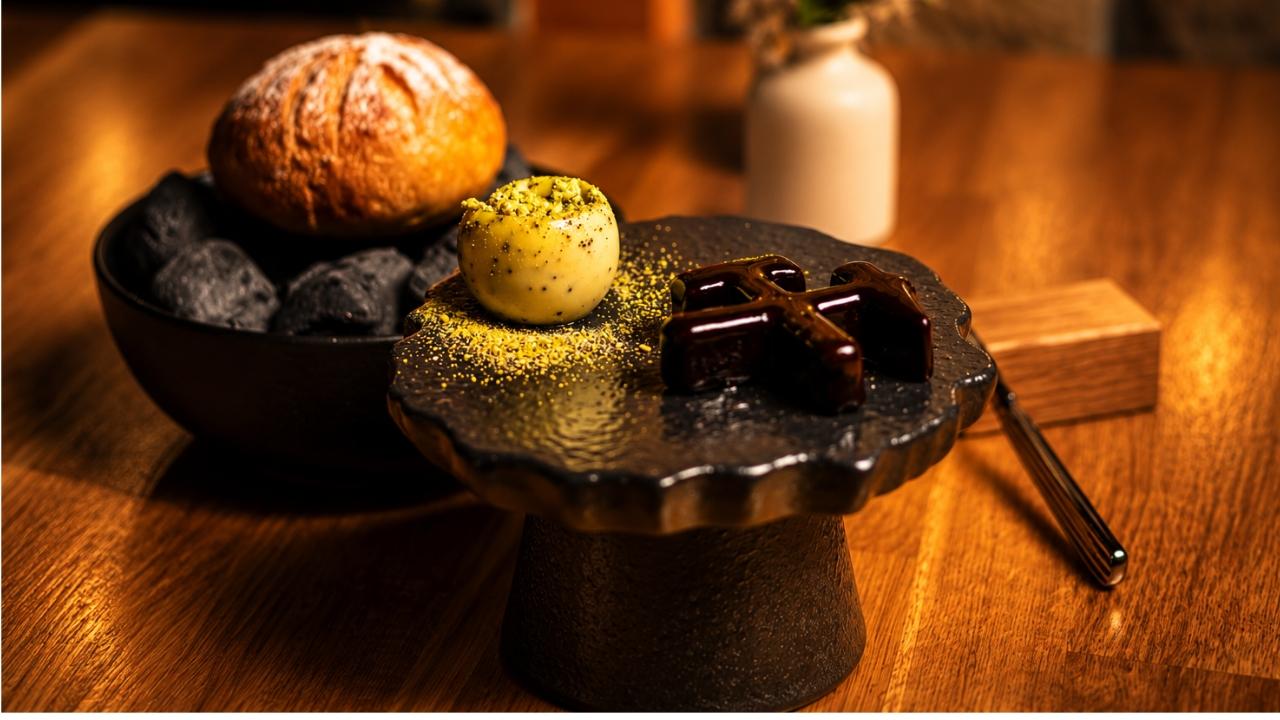
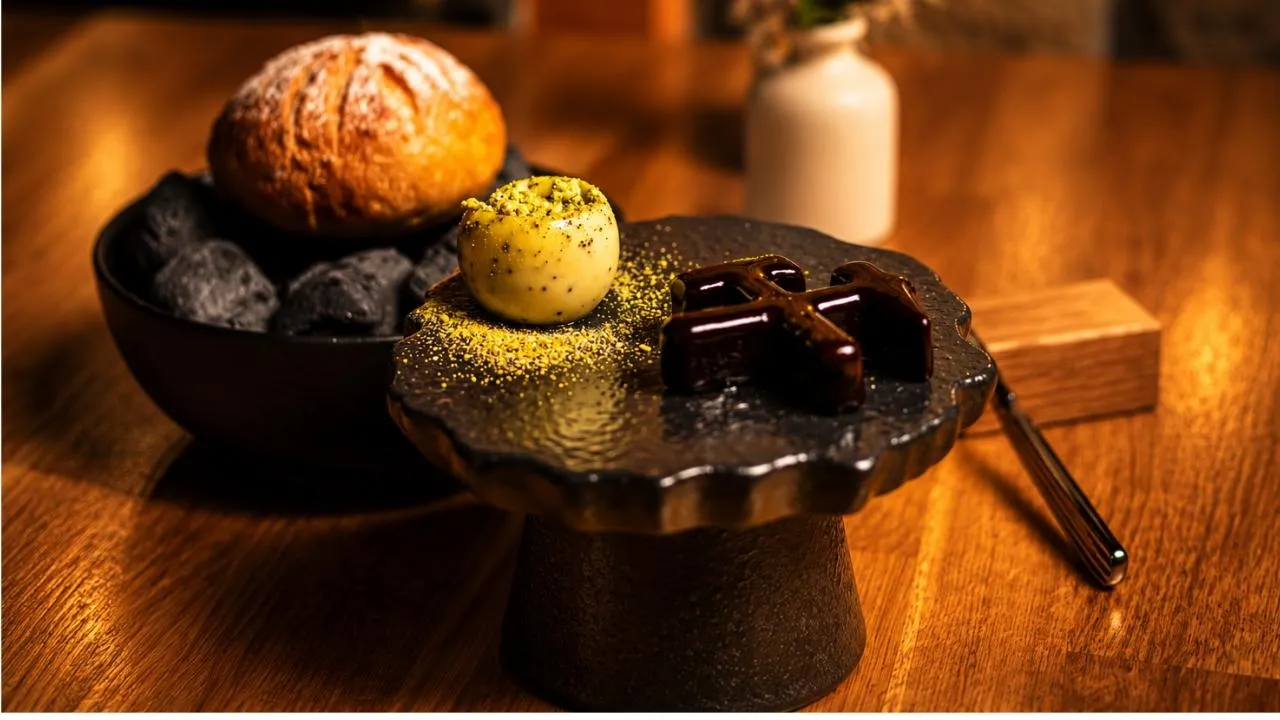
One of the most striking elements of the menu is the bread - not because it is a showy dish, but because of the story the kitchen has woven into it. The “miner’s hammer” refers to Ostrava’s miners and their favourite Bulgarian spread, which used to be part of their snacks and lunches during long shifts. In its edible form, the motif takes the shape of bread filled with this very spread, glazed with lovage. It is served alongside sourdough wheat bread and poppy seed milk butter sprinkled with poppy seed crumble. Here, even the butter functions as a standalone amuse-bouche, not merely as an accompaniment to the bread. It is a small detail that shows how regional heritage can be celebrated without sentimentality: all it takes is a specific memory, good ingredients, and a chef who knows why he is bringing it back to the plate.
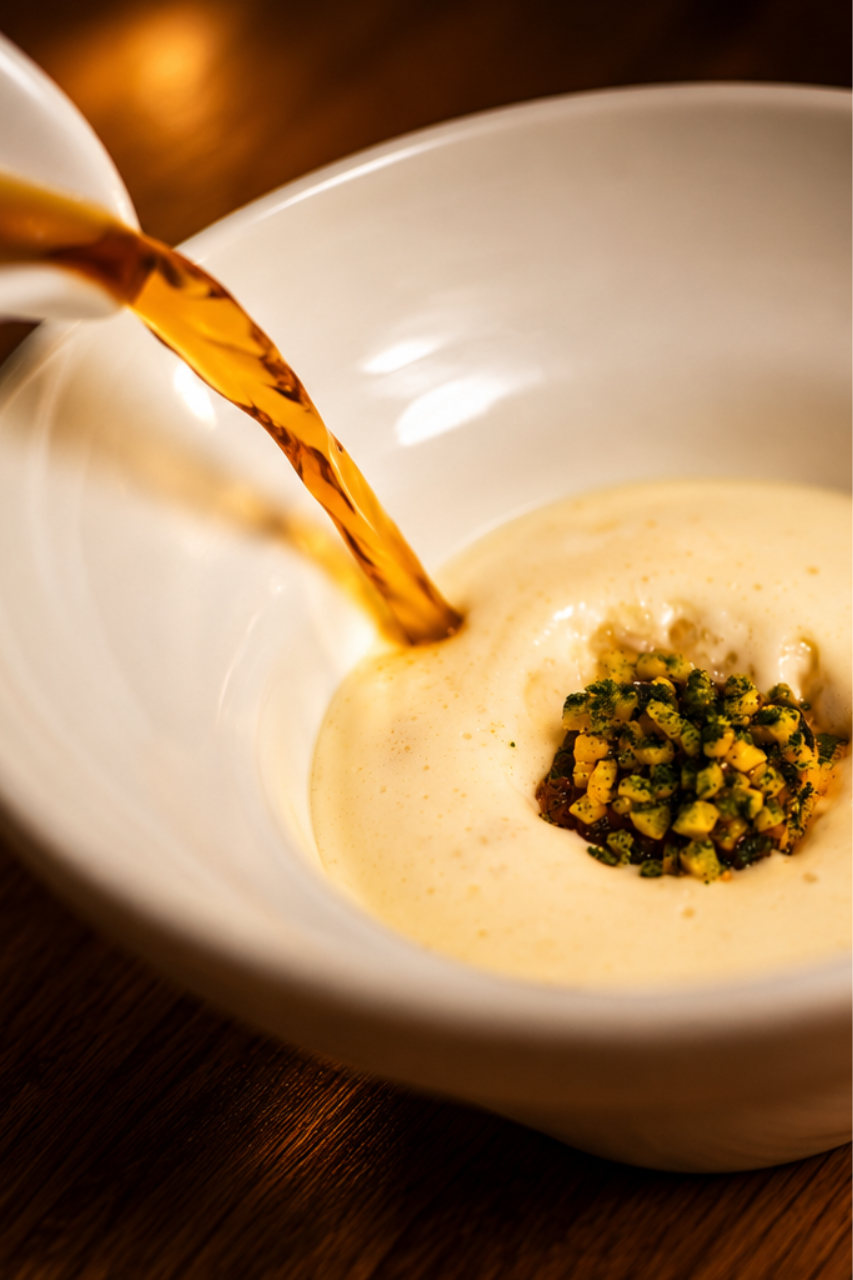
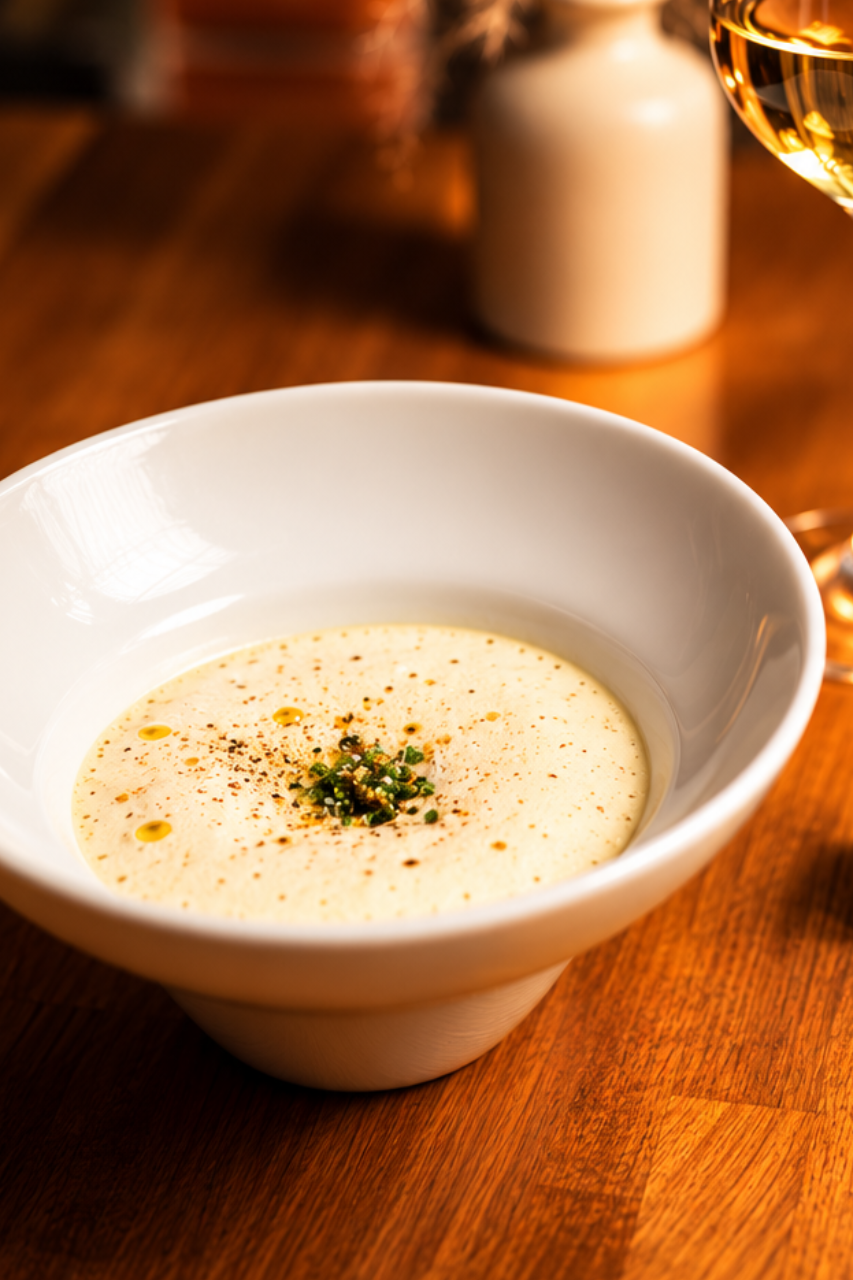
The first full course then continues in the forest-and-game theme. A venison consommé prepared with slivovitz and ginger is accompanied by a Gruyère cheese foam and a pancake filled with game ragout and root vegetables. The dish is complemented by bacon, while the consommé itself binds the individual components into a harmonious whole. It draws inspiration from traditional cuisine, yet does not compromise on precision or the complexity of its flavours. Slivovitz adds a subtle fruity note, ginger brings a warming spiciness, and the cheese provides a creamy counterpoint to the robust stock.
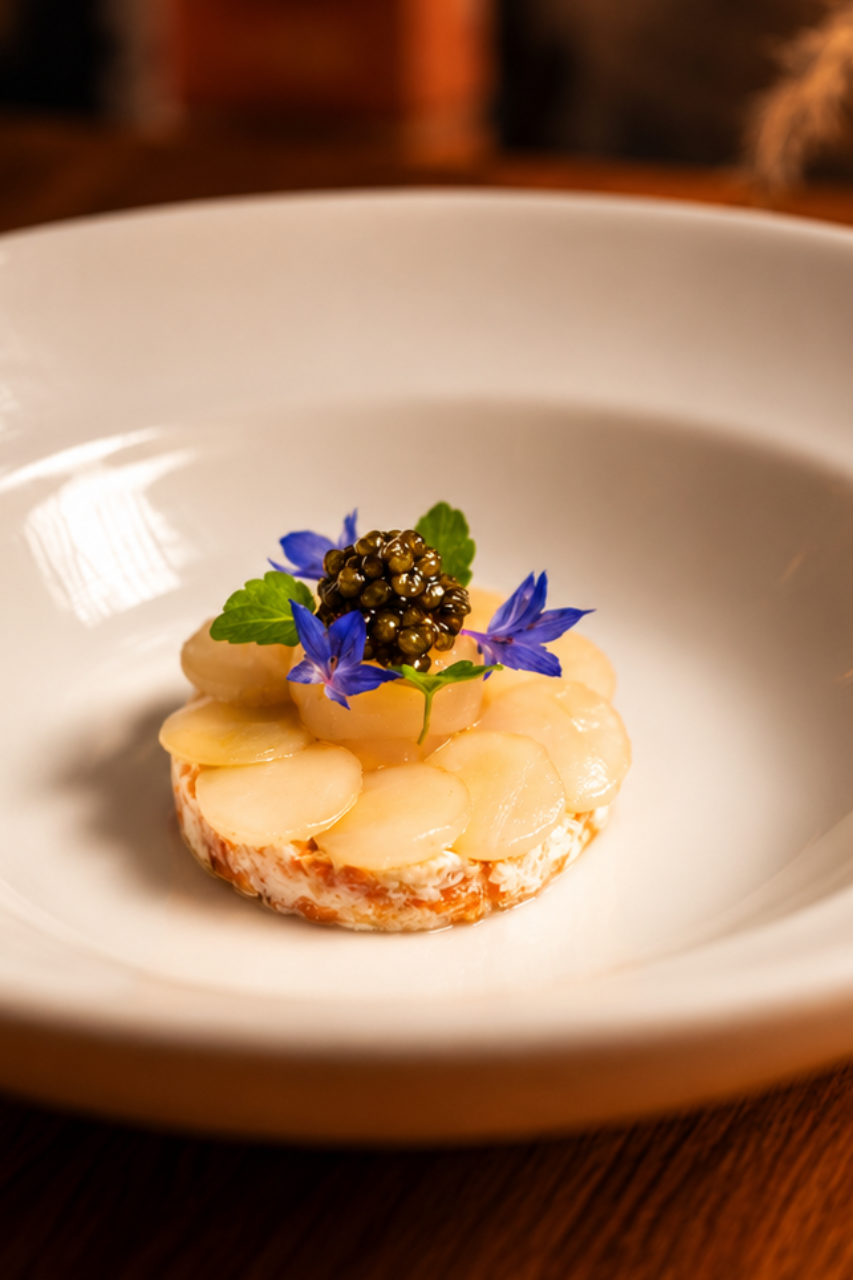
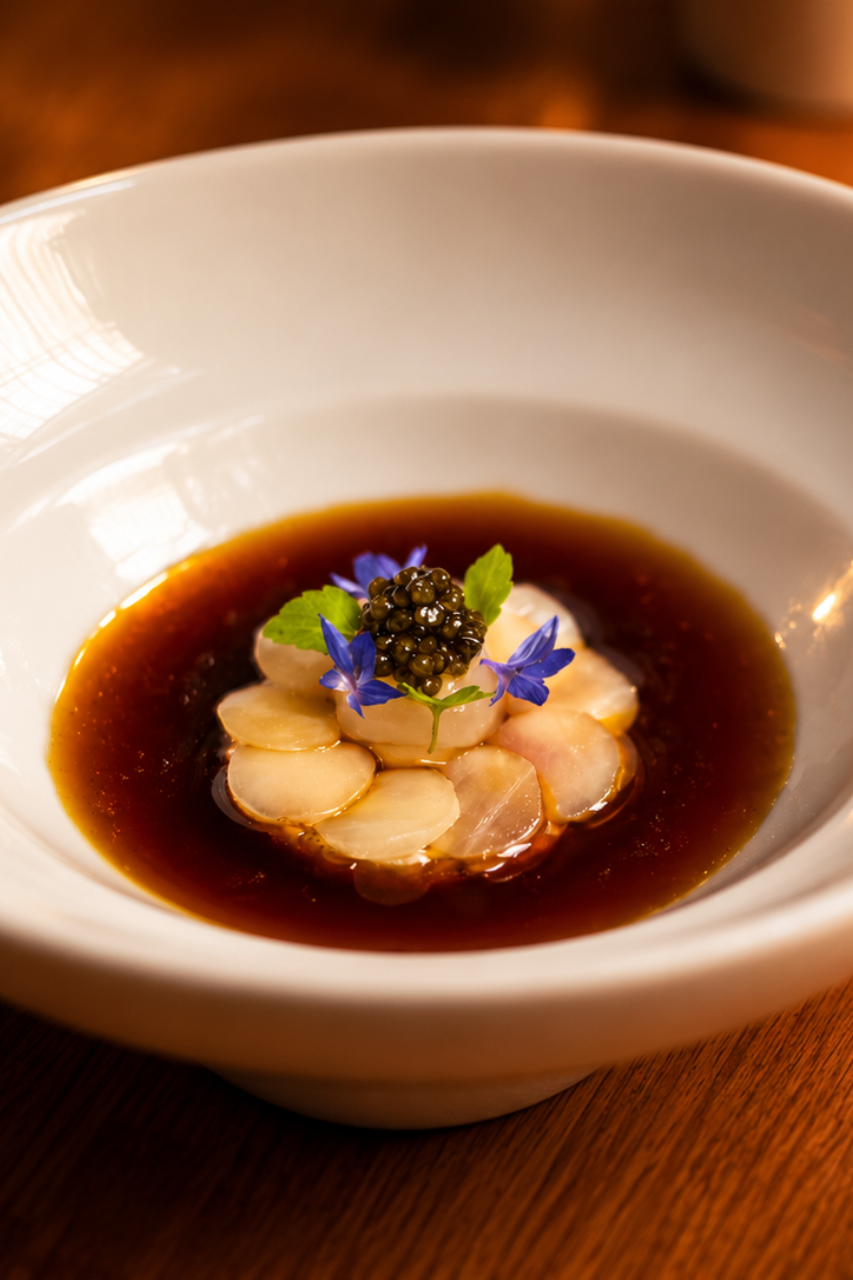
Following this warming start comes lightly smoked trout served as a tartare with crème fraîche. On top are pickled white cabbage and sturgeon caviar, while the dish is rounded off with a distinctive sauce made from charred cabbage. It is precisely the use of cabbage here that is an interesting detail: an ingredient that is usually associated primarily with side dishes in Czech cuisine takes on several forms and becomes an active part of the flavour composition. The acidity of the pickled cabbage, the delicacy of the fish, and the smoky character of the sauce create contrast without any single ingredient dominating unnecessarily.
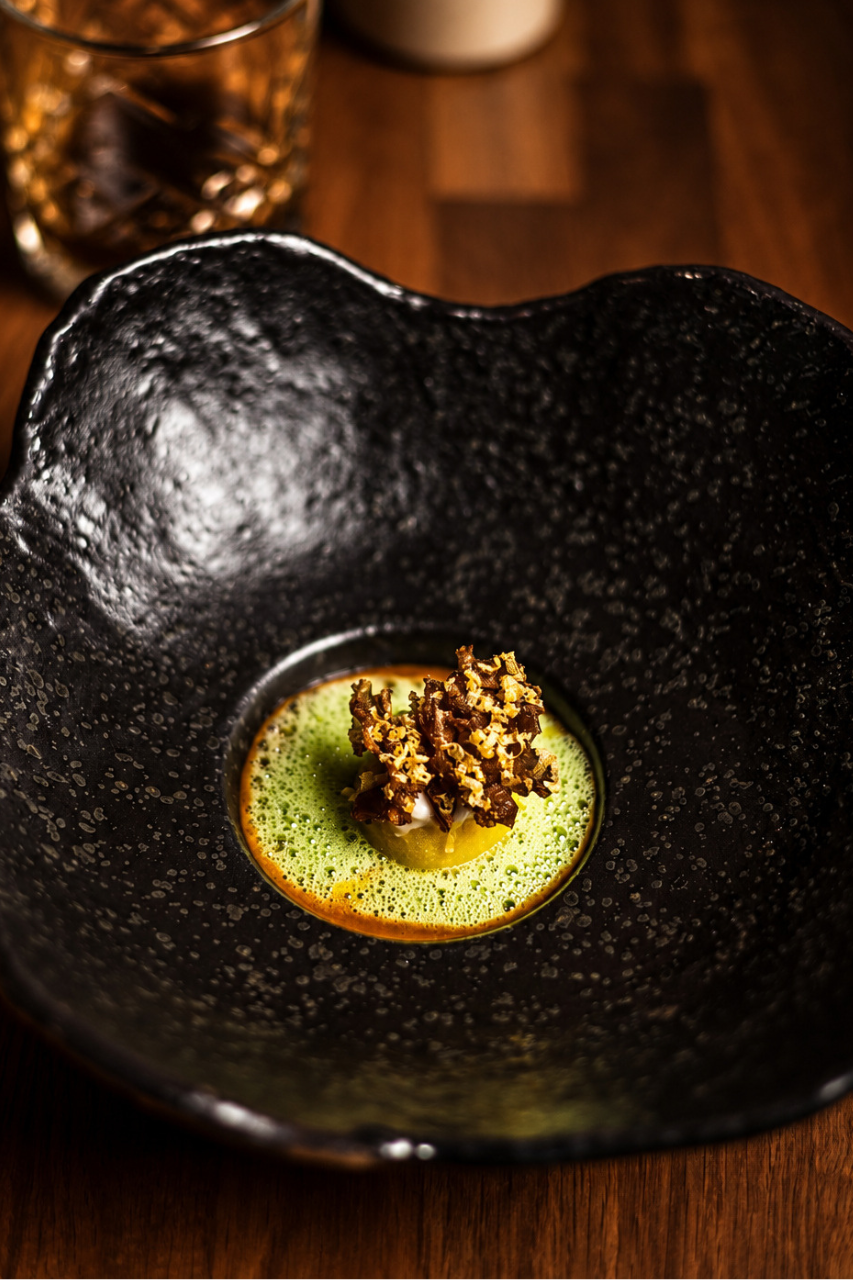
The next course turns the focus to mushrooms and yeast. A delicate potato dumpling stuffed with mushrooms and yeast is served on a bed of caramelised onions, with sautéed chanterelles and dried egg yolk. A sauce made from roasted yeast and a dill foam add further layers of flavour. At first glance, these are ingredients that go well together: potatoes, mushrooms, onions, and egg yolk form a familiar Central European combination. What makes it interesting is their new arrangement and the emphasis on umami - that rich, distinctive flavour the cuisine develops primarily through mushrooms and roasted yeast.
Dry-aging, game and a sweet finale with a Czech twist
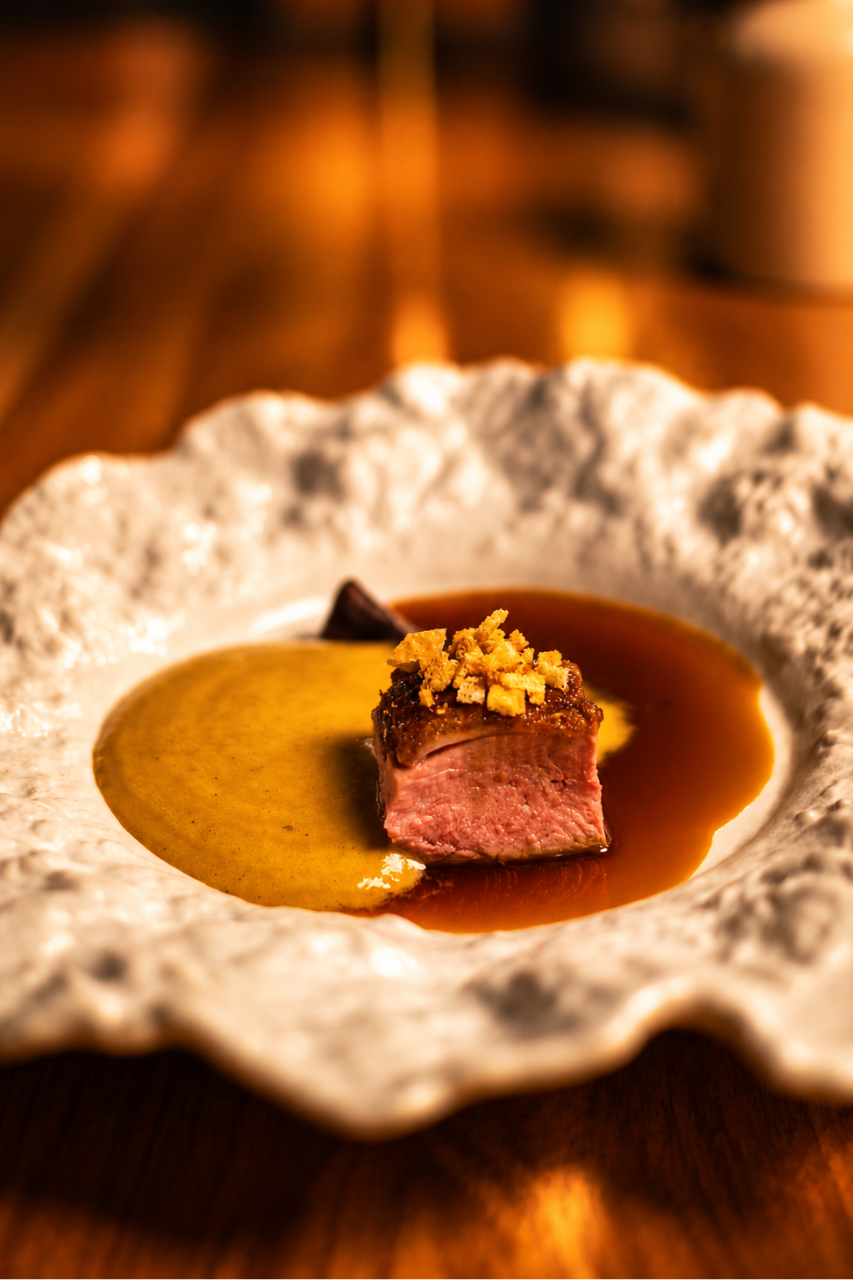
One of the highlights of the tasting is the duck breast, which has undergone a twenty-four-day dry-aging process. The meat is accompanied by Štramberské ucho, a barbacoa-style cream, and a purée of slow-roasted, caramelised pears. Two distinctive sauces come together on the plate: a concentrated duck jus and a sauce made from rich duck livers with wine and cognac. The sweetness of the pears and the spicy character of the Štramberské ucho provide a counterbalance to the intense flavour of the duck, while the long maturation brings its own aroma to the fore. This is where Meck’s approach really shines through: a regional motif need not be the main theme of a dish to give it its distinctive character.
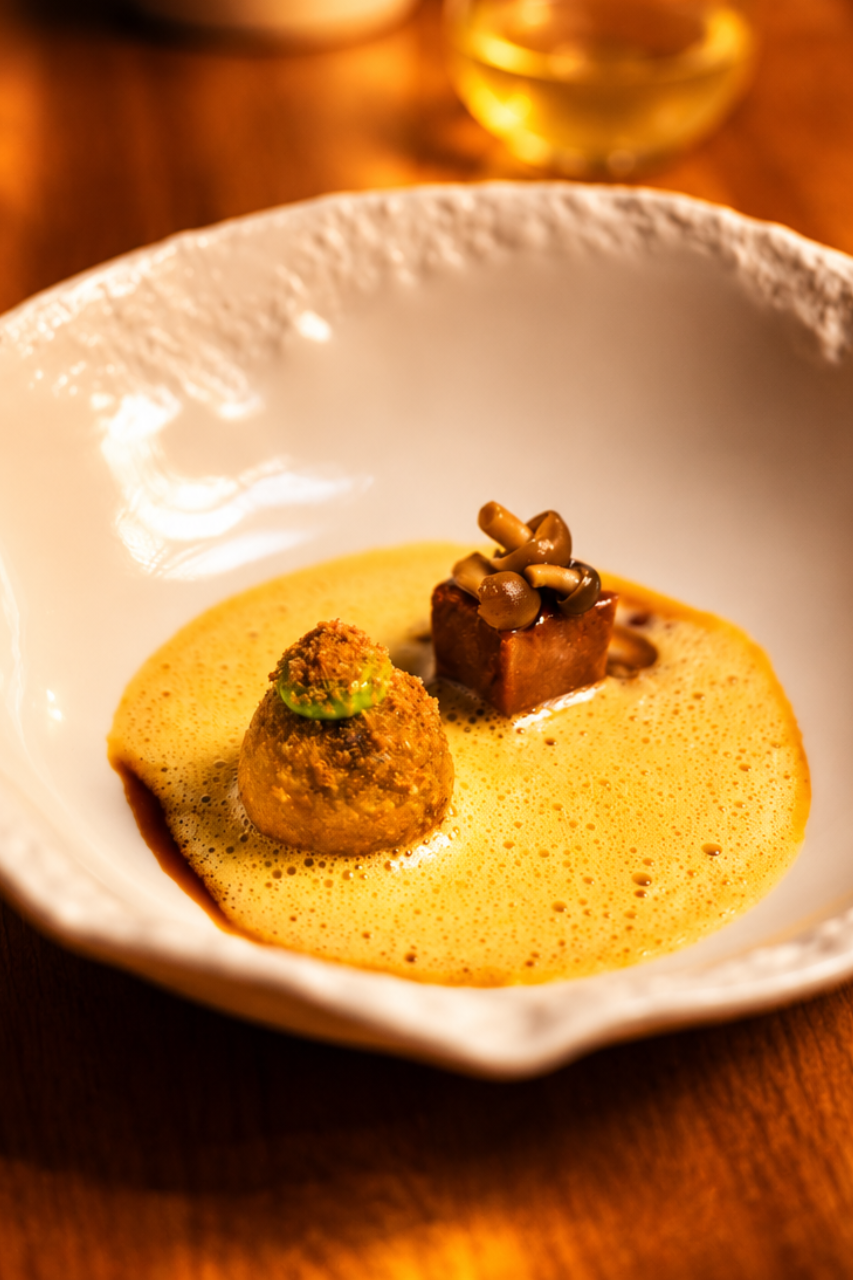
Next come confit veal cheeks served with confit veal shanks. The pulled veal is tucked inside a langoš, complemented by chive mayonnaise and dried beef. The whole composition is rounded off with a rich meat sauce. After precisely composed courses featuring fish, mushrooms, and duck, this marks a return to rich, meaty flavours and the textures created by slow cooking. Confiting lends the meat its tenderness, while the langoš gives the dish its familiar, almost street-food-like appearance. The contrast between the simple format and the more labour-intensive preparation is precisely the sort of interplay that contemporary tasting menus know how to utilise without unnecessary ostentation.
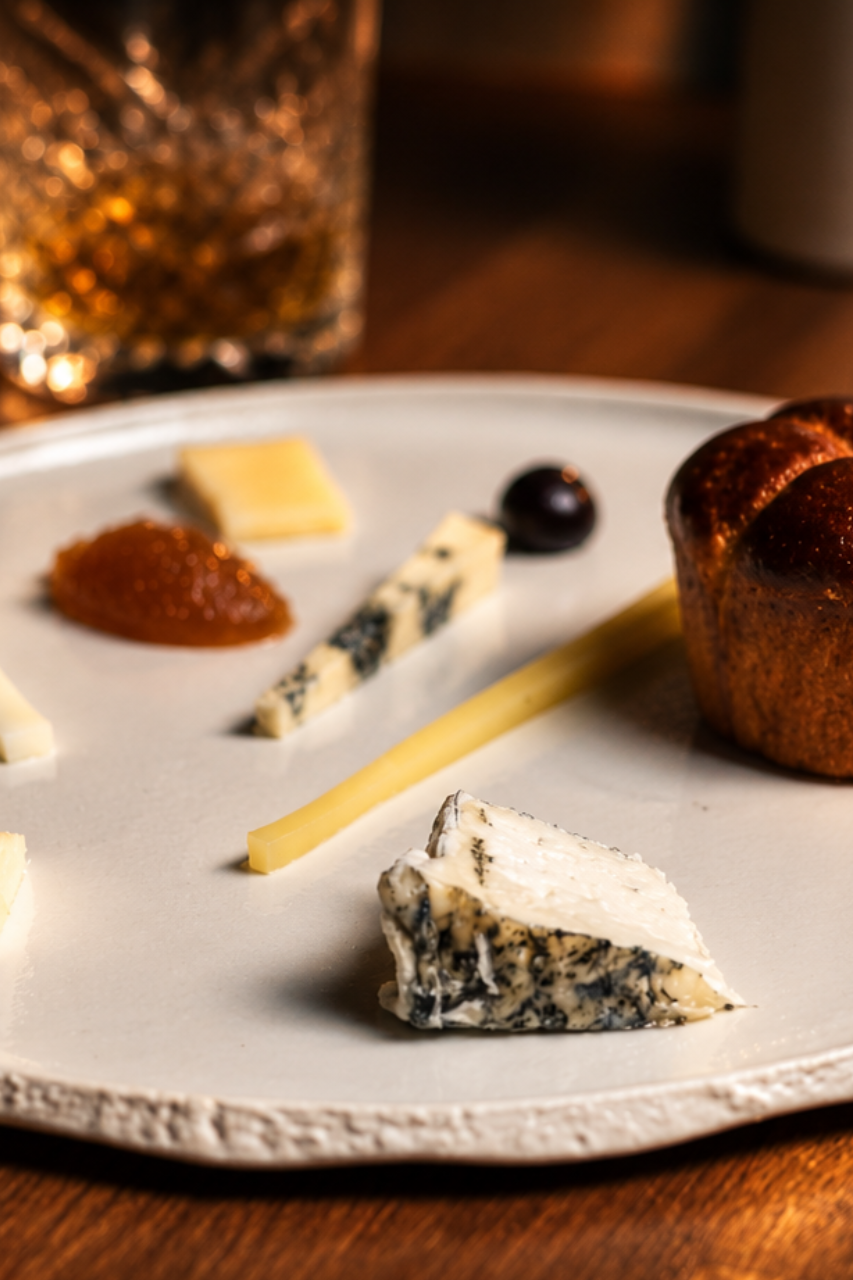
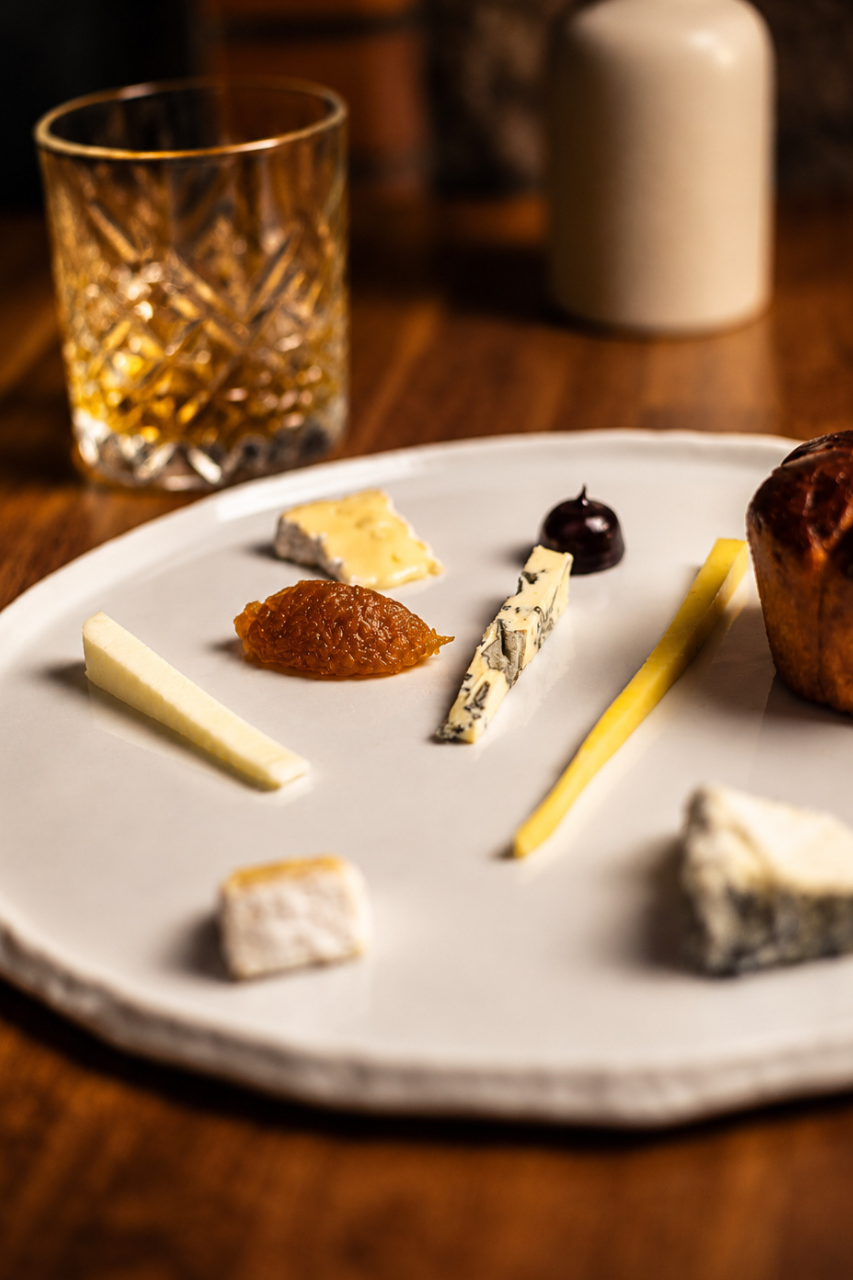
Cheeses take centre stage before the sweet course. The selection combines Czech goat’s cheeses from the Tomšíčkovi Farm in Neubuz with French classics. It includes ash-coated Valençay, a young goat’s cheese; matured Morbier with its characteristic layer of ash; Petit Camembert; Triple Crème; and the distinctive Bleu d’Auvergne. These are accompanied by a mead and apple chutney, a eggplant and cardamom marmalade, and a milk bun. The cheese course here serves not merely as a transition between the main course and the desserts; it also serves as a reminder that a good tasting menu doesn’t have to be based solely on complex culinary constructions. Sometimes, a well-considered selection, suitable accompaniments, and space are all that’s needed for the individual cheeses to shine on their own.
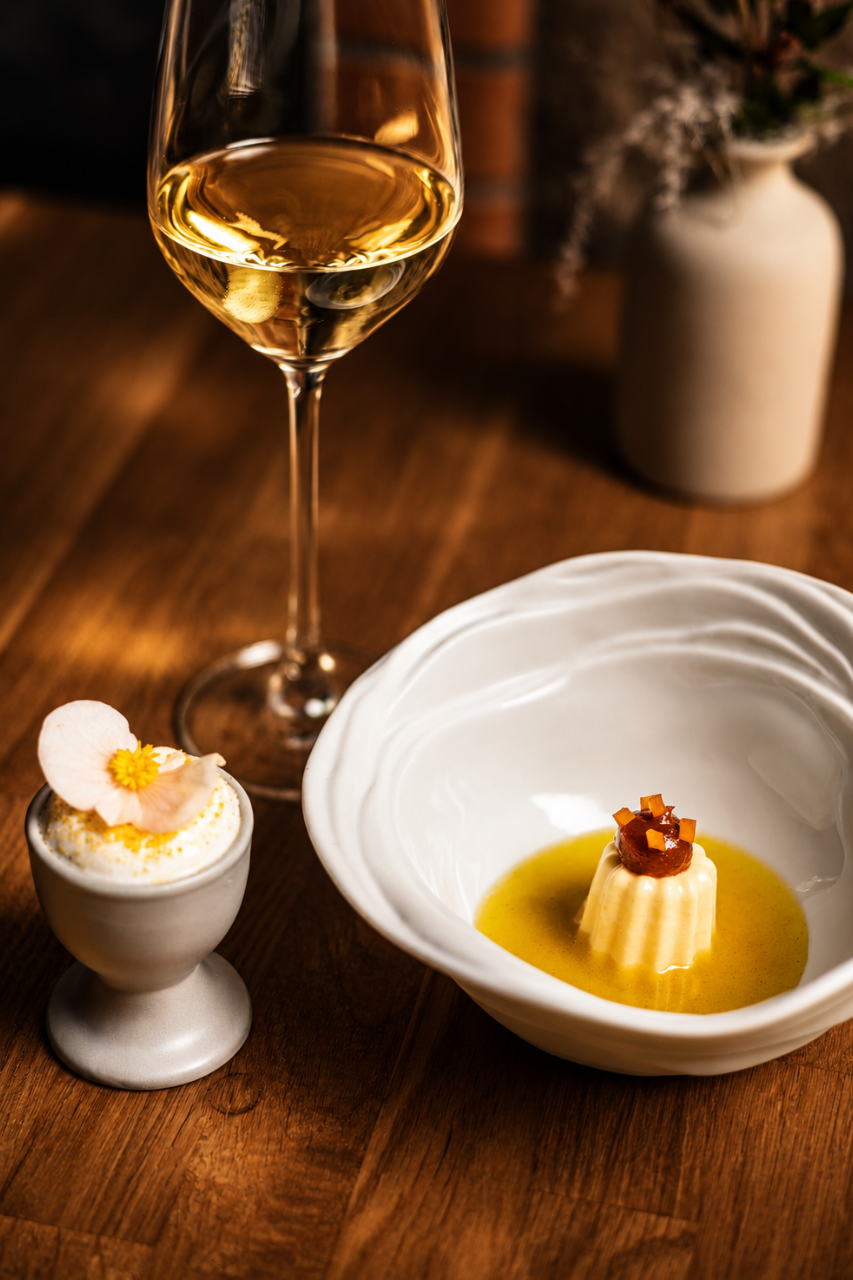
The pumpkin section of the menu then brings together several forms of a single ingredient. Panna cotta with goat’s cheese is paired with caramelised, pickled, and jammed pumpkin, and a dressing made with pumpkin oil. Alongside this is a goat’s milk espuma, another layer of caramelised pumpkin, pumpkin ice cream, and a roasted apple from the garden. The result is not merely a sweet dish, but a thoughtful interplay of different textures and the intensity of the pumpkin’s flavour. The goat’s milk adds a subtle tang, while the apple brings a fresher, fruity note.
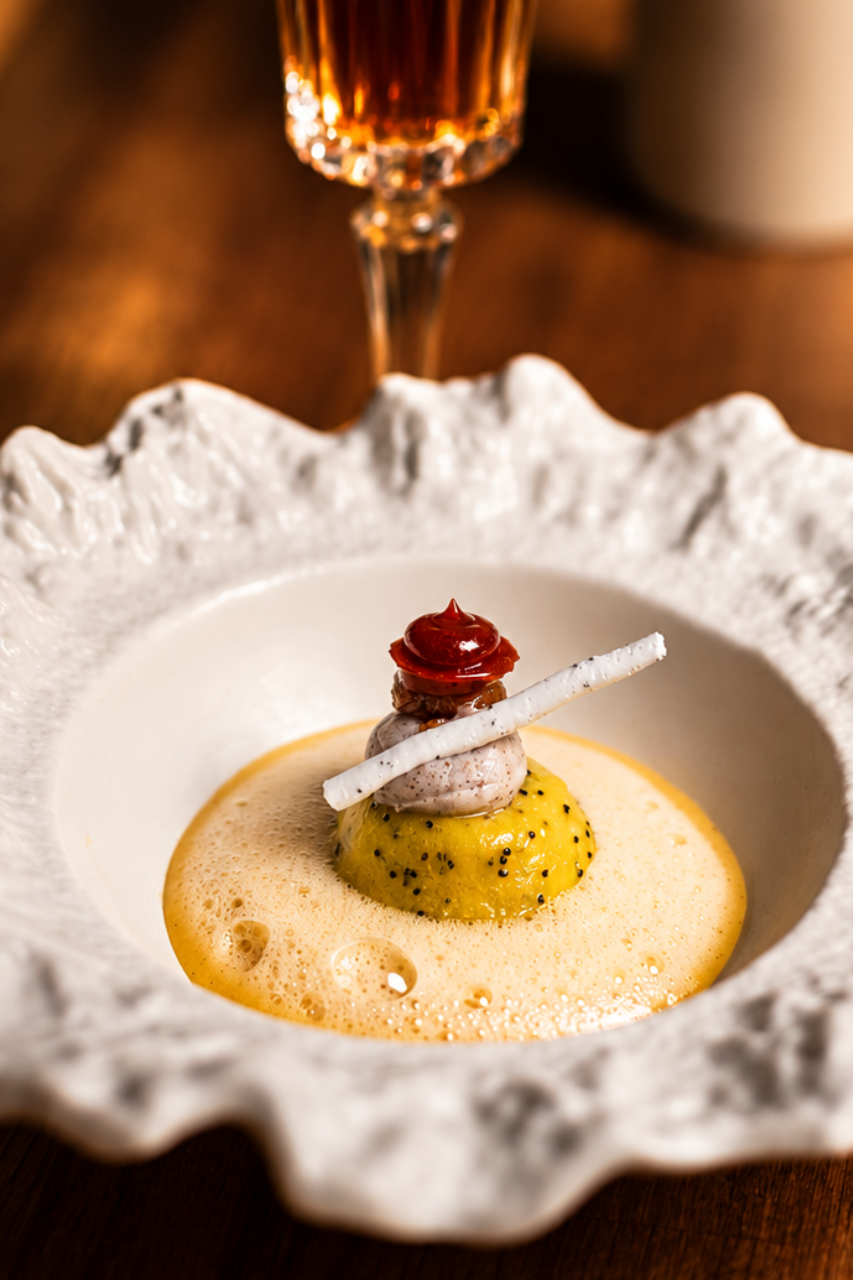
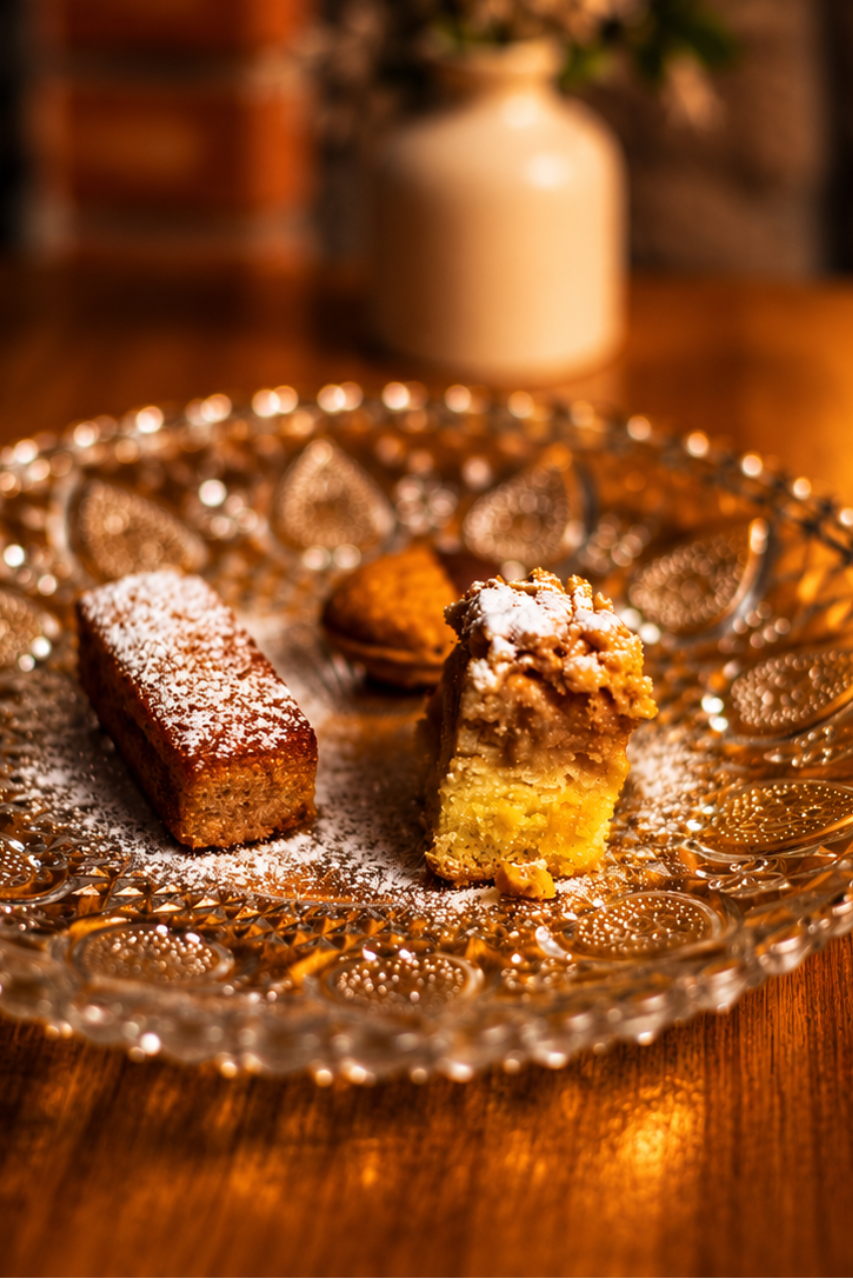
The finale is a poppy seed dumpling filled with marzipan, made from a delicate potato dough. It is accompanied by caramelised grapes, poppy seed sauce, vanilla sauce, and poppy seed mousse. The poppy seed flavour thus appears in several forms, ranging from a full-bodied, earthier taste to a lighter, foamy texture, while the marzipan and grapes add sweetness and fruitiness. The menu concludes with pralines in the form of a “Countess’s slice,” a French financier, and shortbread biscuits with a nutty, buttery filling, partially dipped in chocolate.
Cattaleya’s new tasting menu is built on contrasts that have a clear direction: forest and smoke, game and fruit, long aging and delicate textures, regional memories and contemporary culinary techniques. Its greatest strength lies in its ability to combine distinctive ingredients with specific references to the region, without allowing them to become mere decoration. The miner’s hammer served with Bulgarian spread remains a personal touch, the aged duck demonstrates a focus on craftsmanship, and the poppy seed dessert reminds us that Czech culinary tradition can also serve as inspiration for modern gastronomy. Cattaleya thus continues to develop its own perspective on the Ostrava region—not as a backdrop, but as a living source of stories that can also be told through a tasting menu.