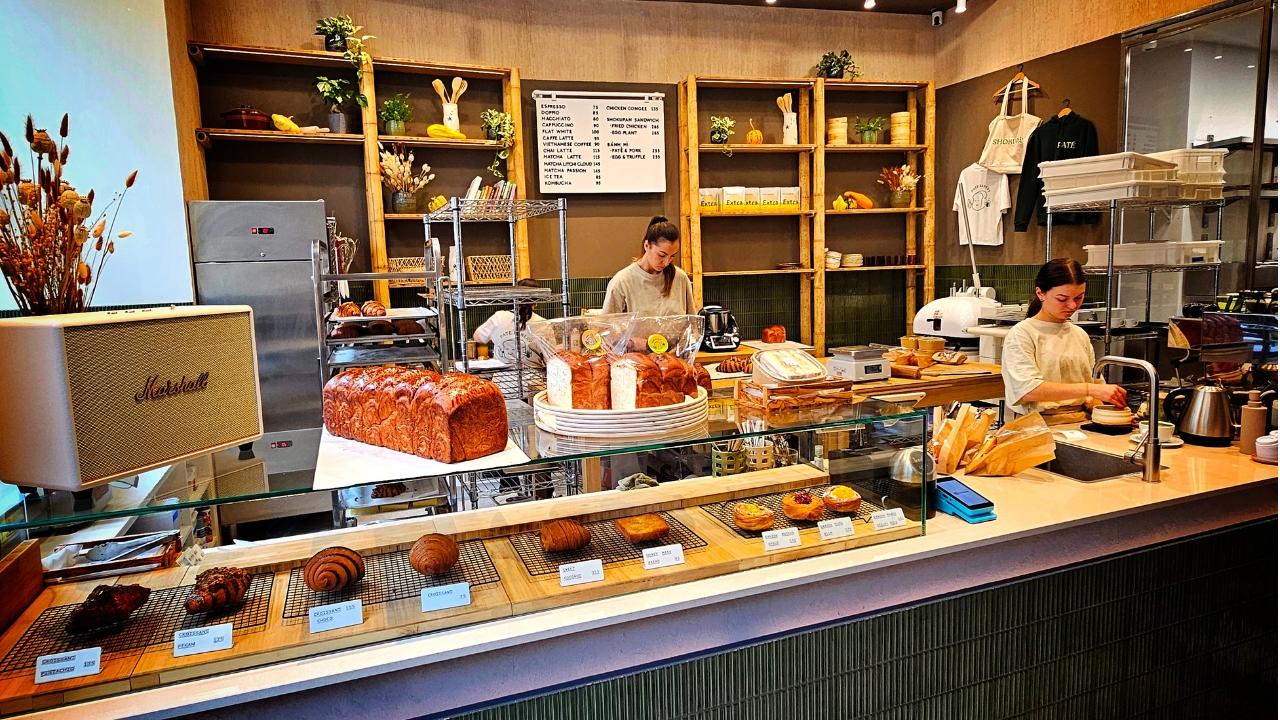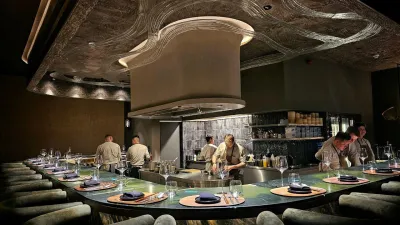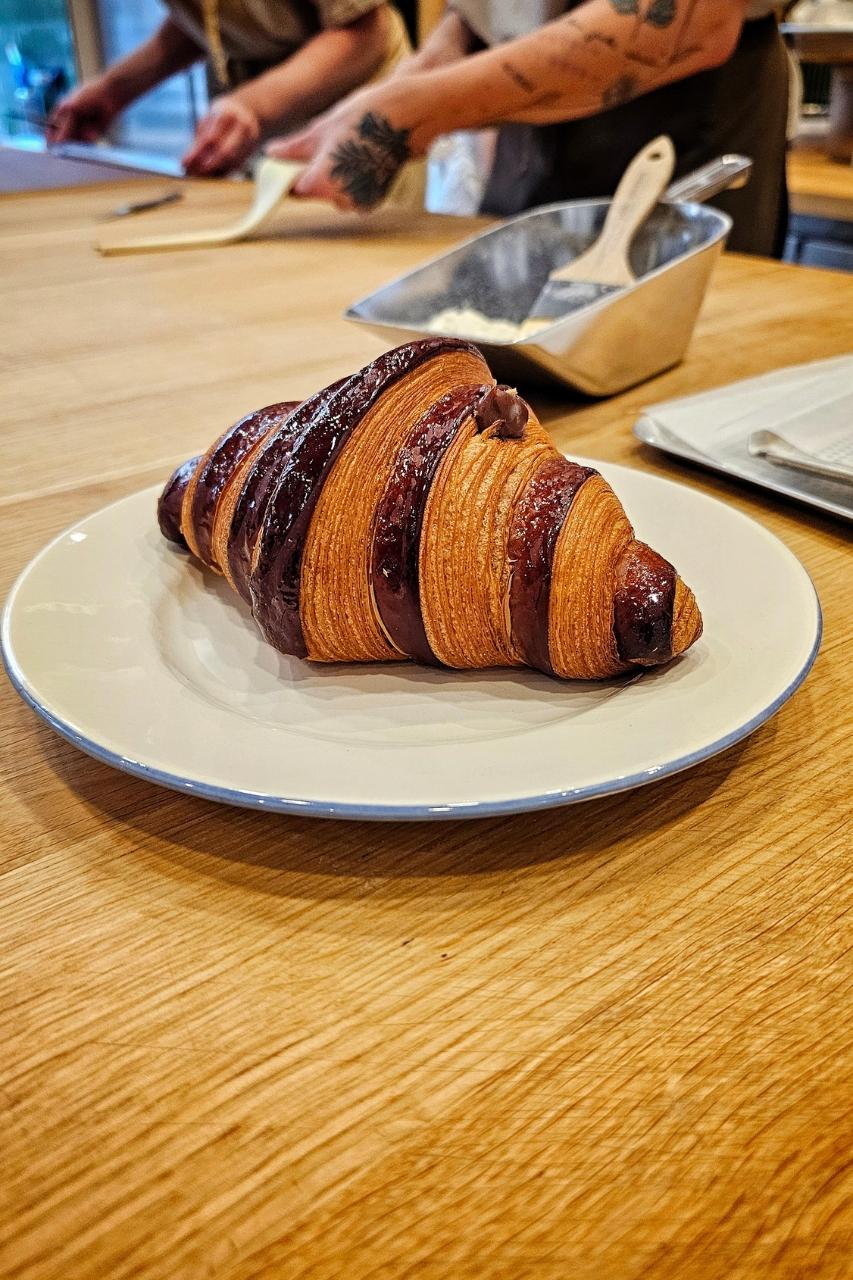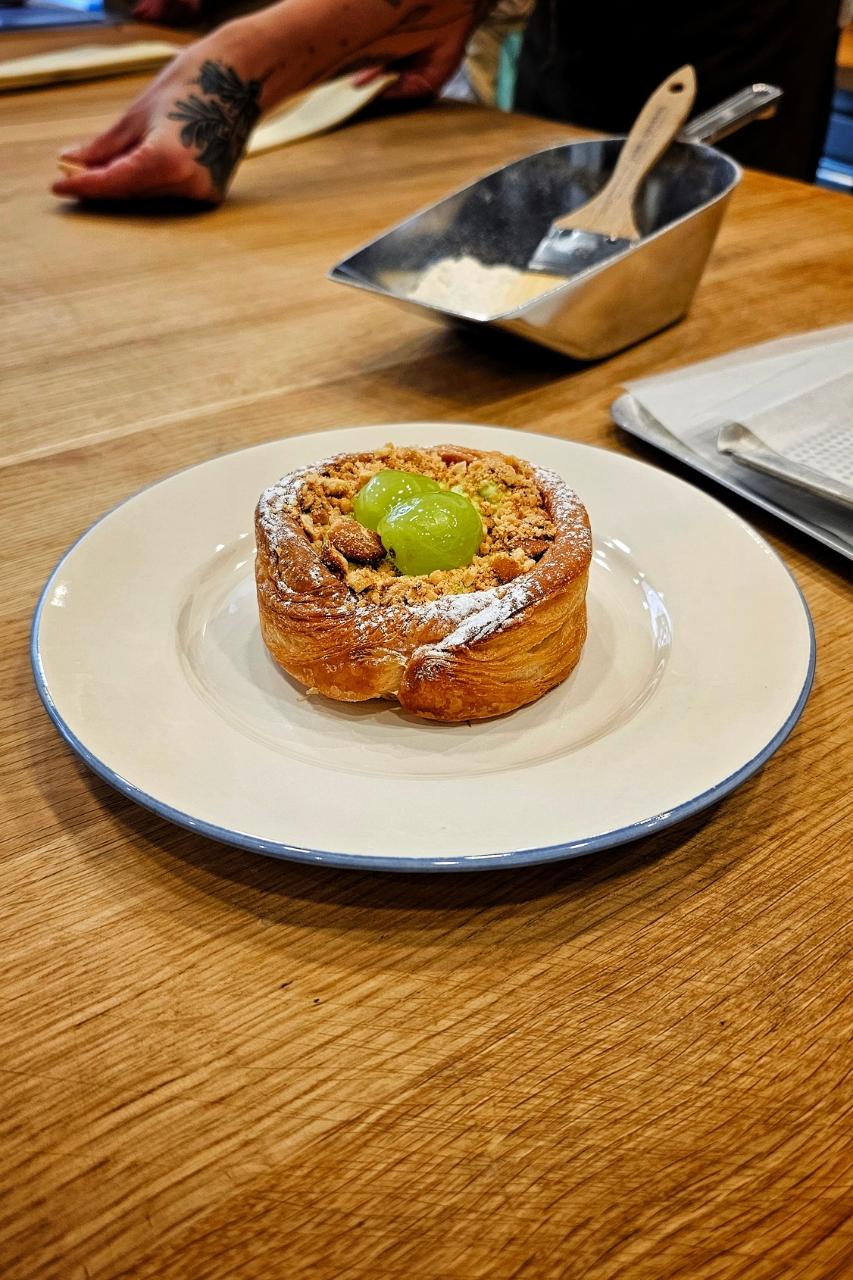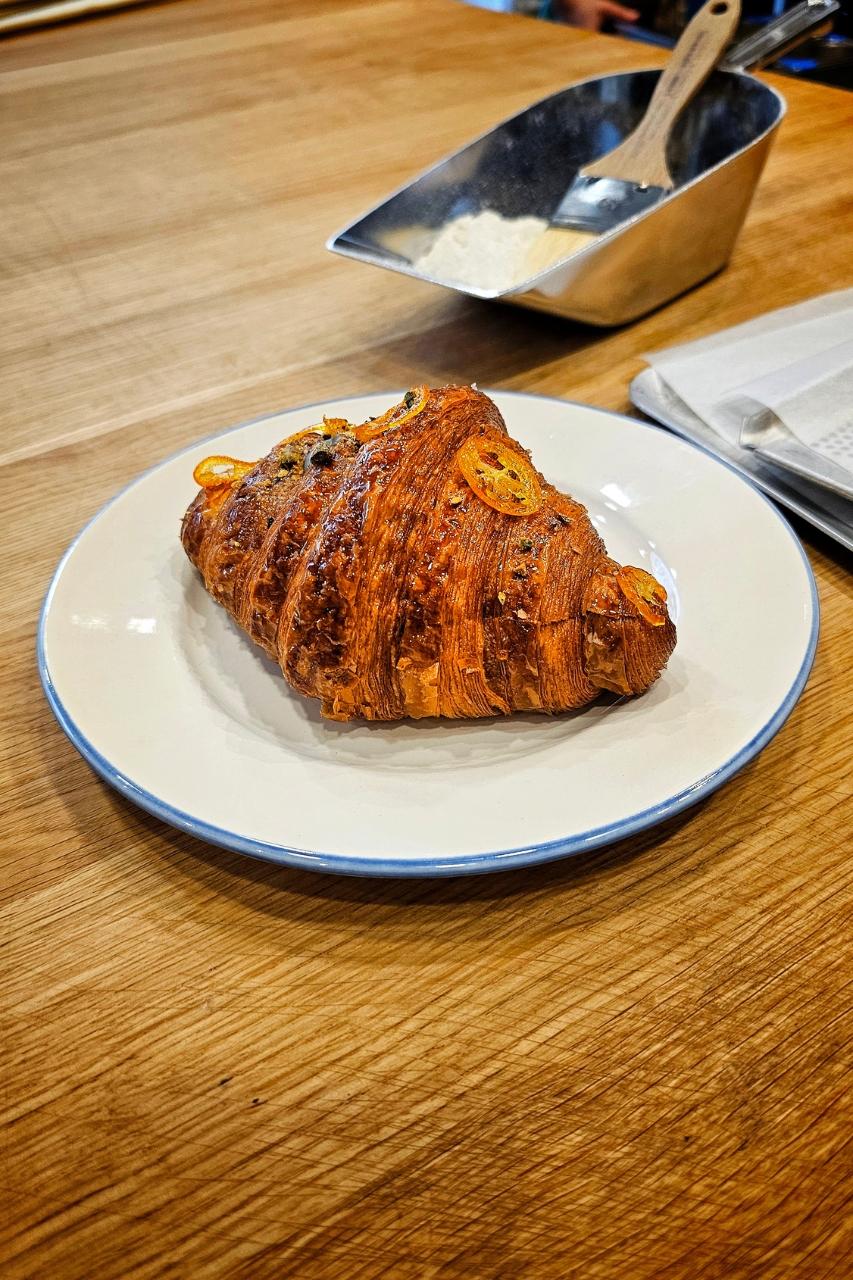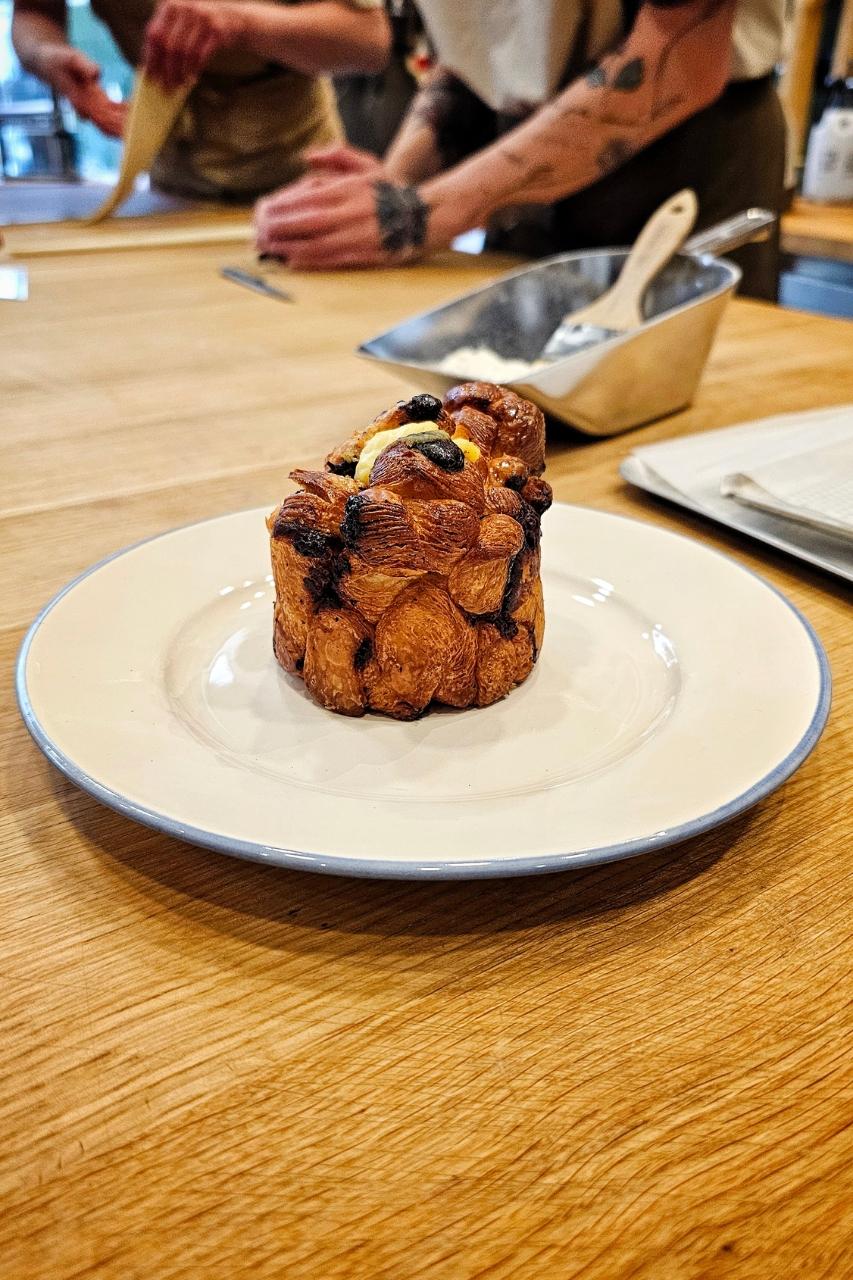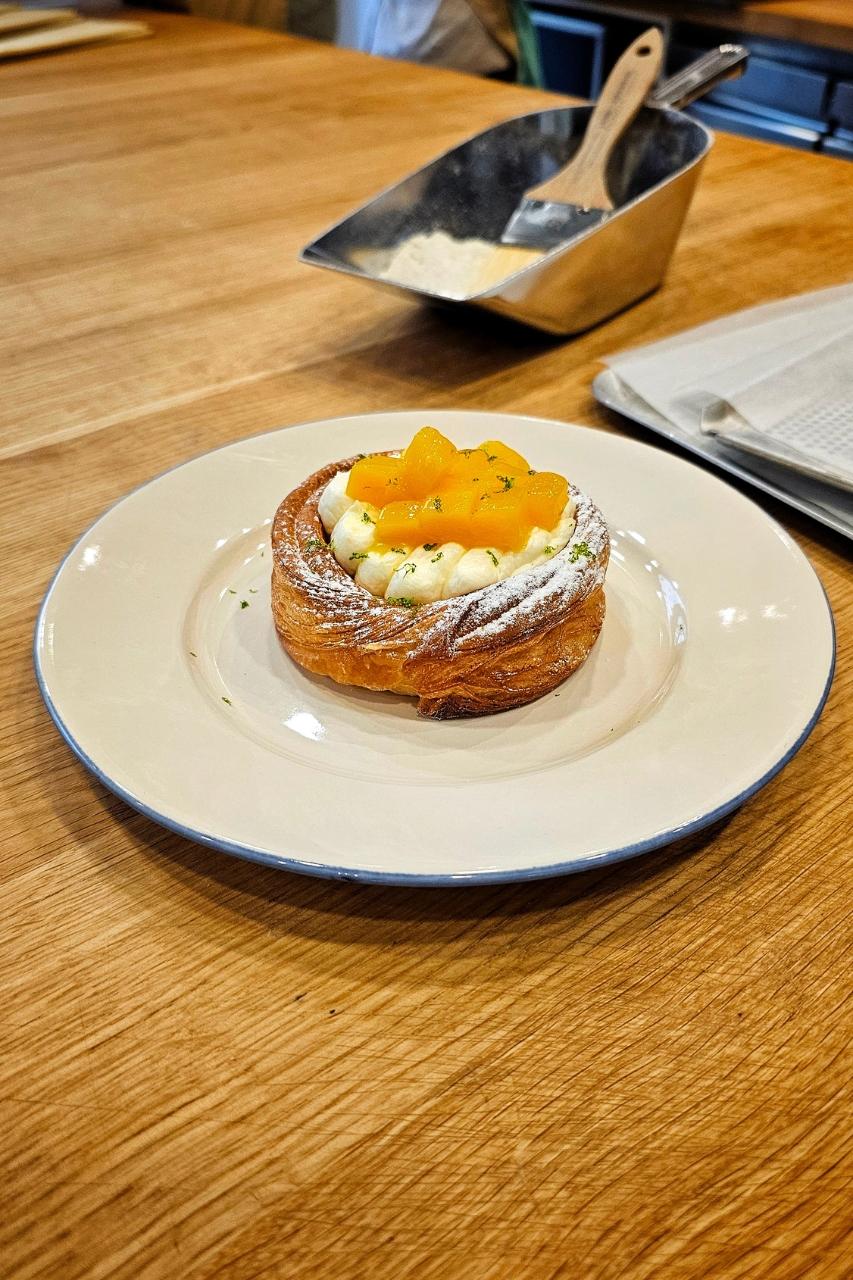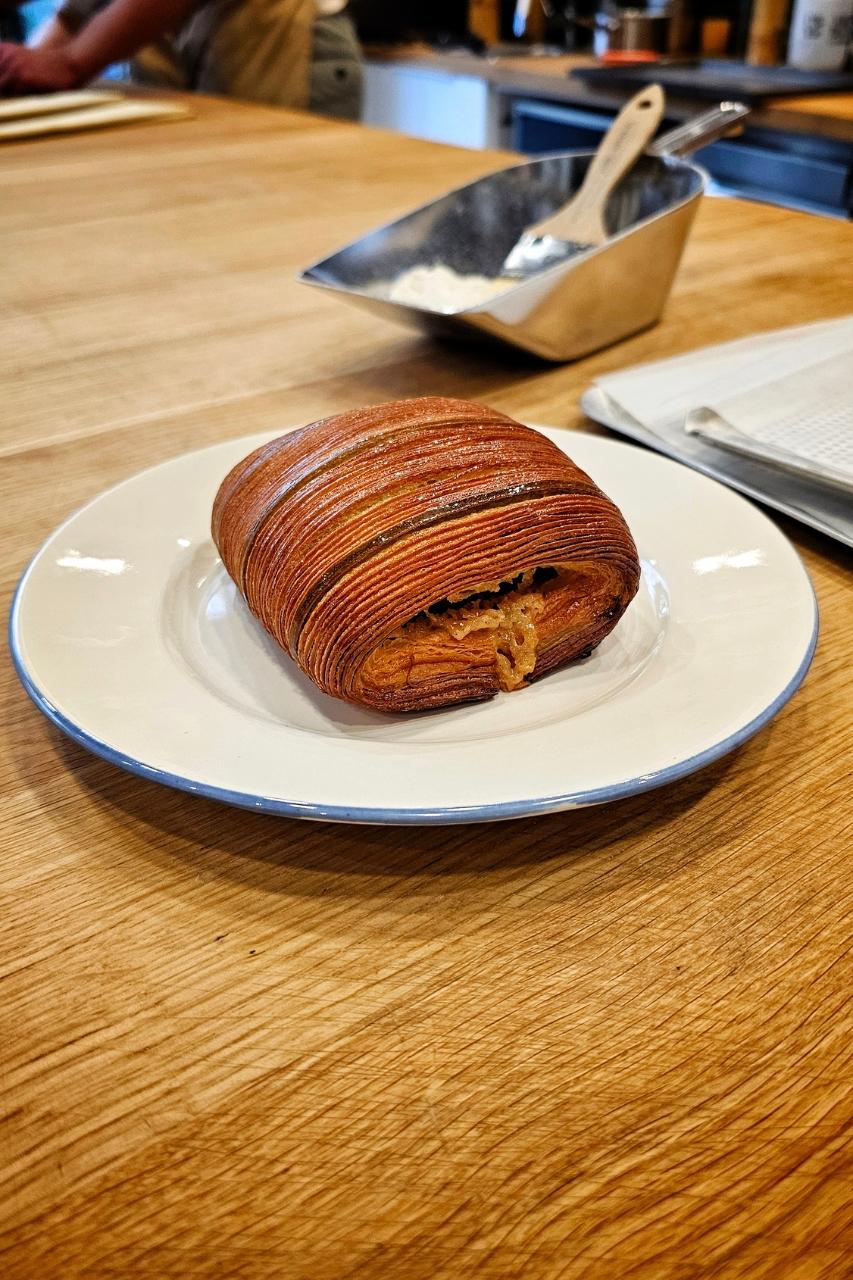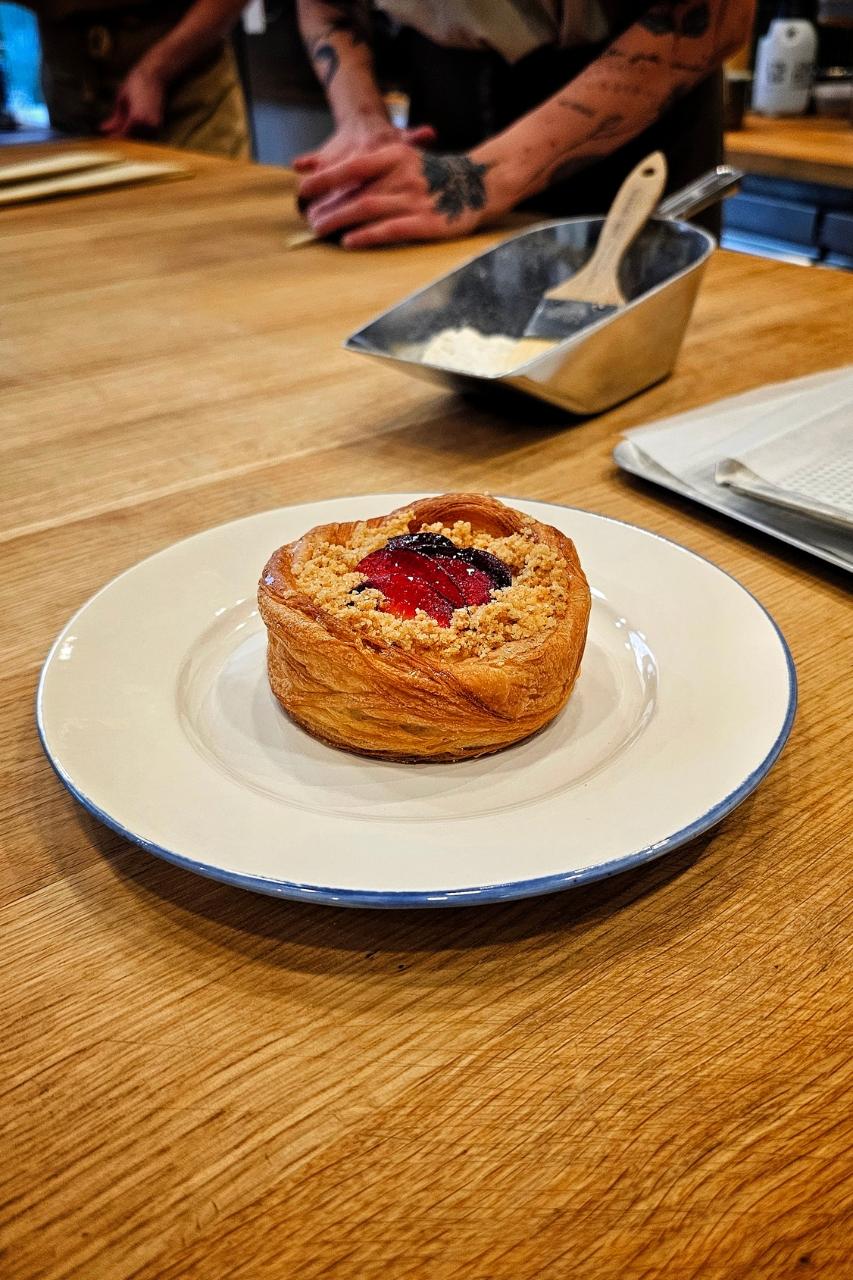


A bakery, redolent with the aromas of butter, pâté, and coconut pandan cream, has opened on Prague's Národní třída. Brothers Khanh and Giang Ta, known for their restaurants Taro and Dian, have launched Patê, a venture that marries the precision of French baking with the flavors of Southeast Asia.
From the moment you walk in, you'll be captivated by the Nordic style of presentation, with only one piece of pastry on display, making each piece prominent, distinctive, and equally important. The display case has a minimalist yet thoughtful feel - each pastry has its own place and attention.
The interior of Patê is more than sparse, with an emphasis on space for production. Three tables for twelve suggest that Patê is not a café for long sessions. "There's still a lack of space for production," laughs Khanh. The bakery is currently in the soft opening phase, with the menu and recipes being tweaked, yet already surprisingly fluffy pastries are coming out of the oven.
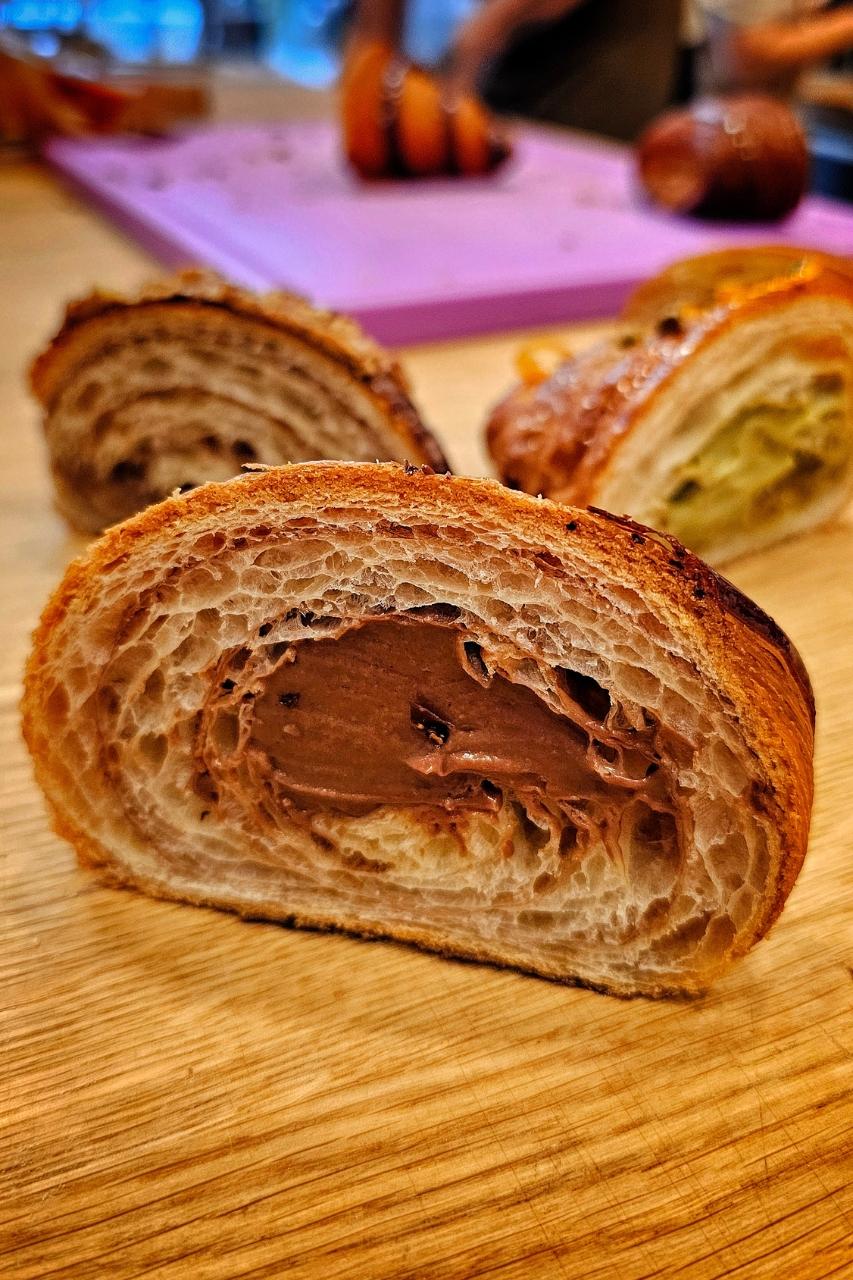
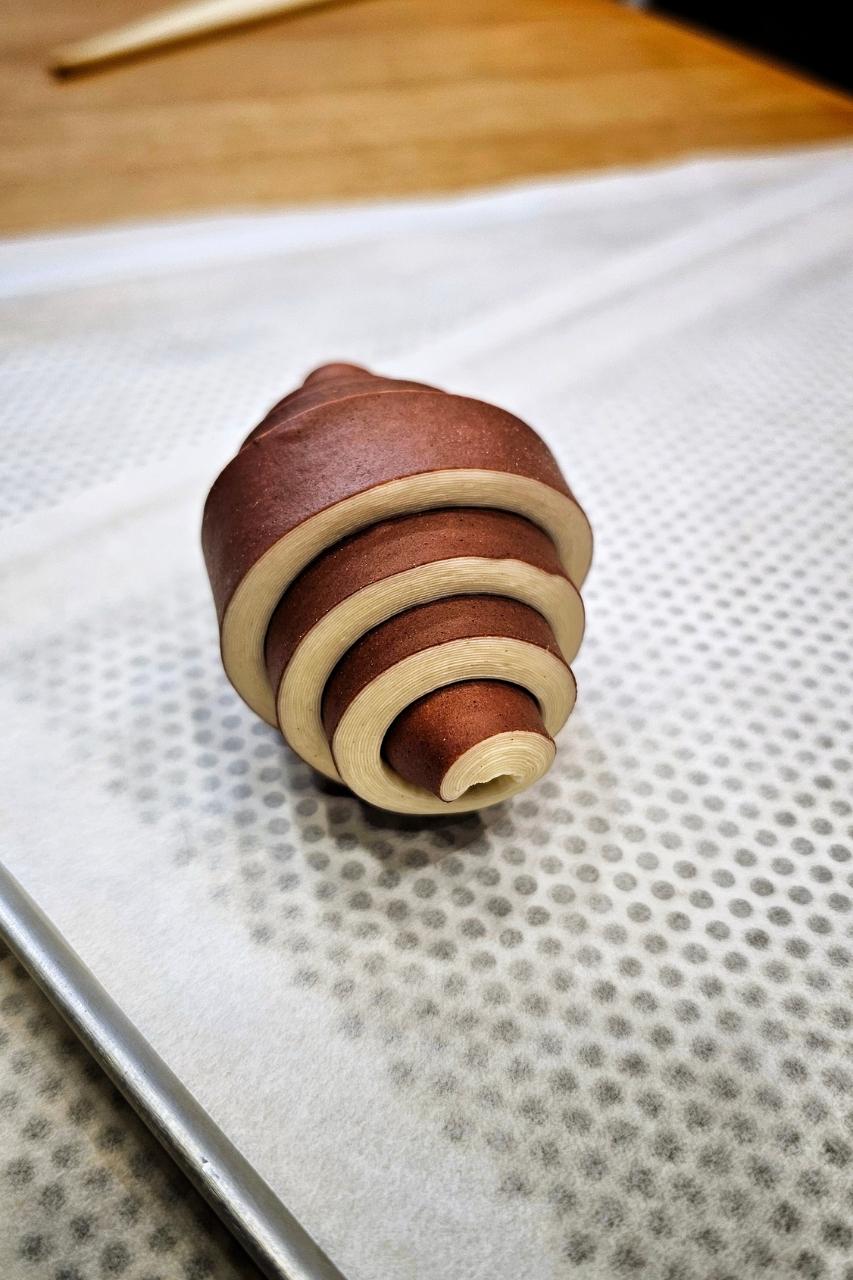
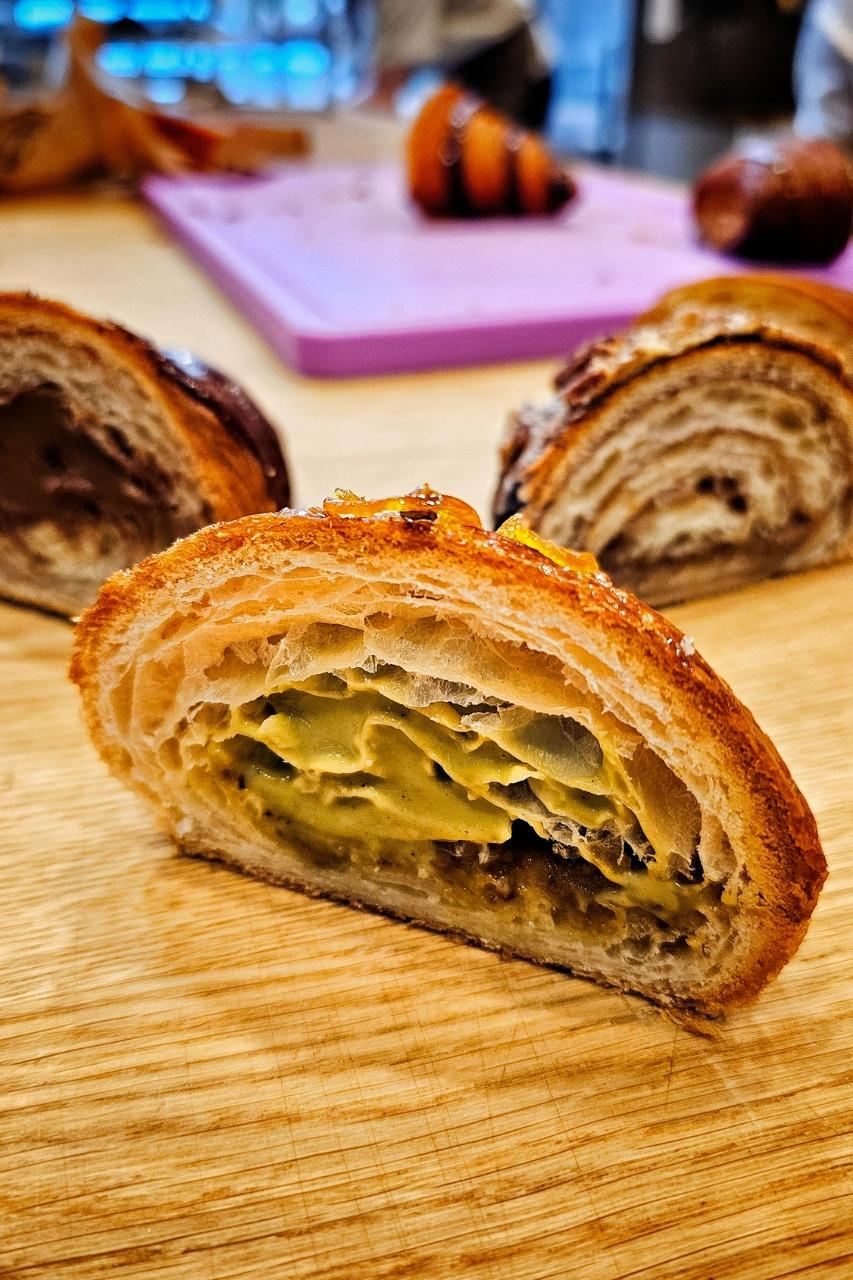
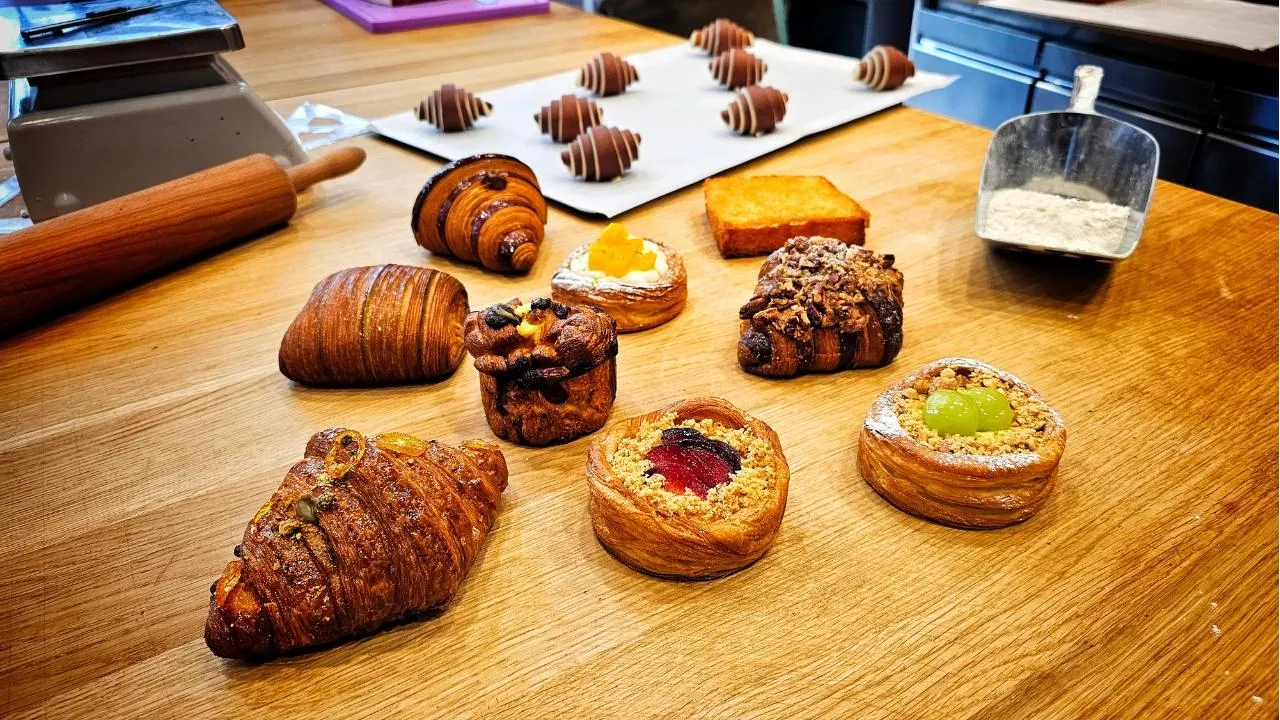
"We were lucky enough to be approached by Ales Heinz, who taught us croissants and other doughs," recalls Khanh. "Croissant is such a common pastry, and they make it everywhere, so our recipe probably won't be too different from other bakeries, but it's all about what flour or what butter you use. And then, of course, the fillings."
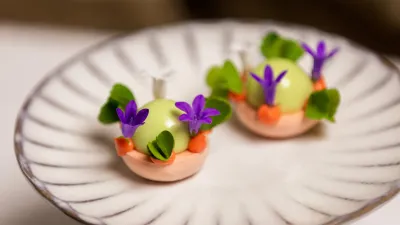
And it's in the fillings that Patê shows what sets it apart from the rest of the Prague scene. "To avoid being like everywhere else, the pastries look Nordic, but inside there's an exotic filling - coconut filling with pandan, or mango sticky rice, or yuzu cream," says Khanh Ta. Rounding out the menu is the iconic Vietnamese baguette bánh mì, whose presence makes sense from the name of the place. "When it's called pâté, the bánh mì baguettes are offered on the first goodie that has the pâté inside."
The name itself was coined with a light-hearted flourish. "Why Patê? Because Taro," laughs Khanh. "We were looking for a name that was both Vietnamese and French. And Patê simply struck us as the most resonant word. The Vietnamese took pâté from the French, and it also translates to pâté in Vietnam."
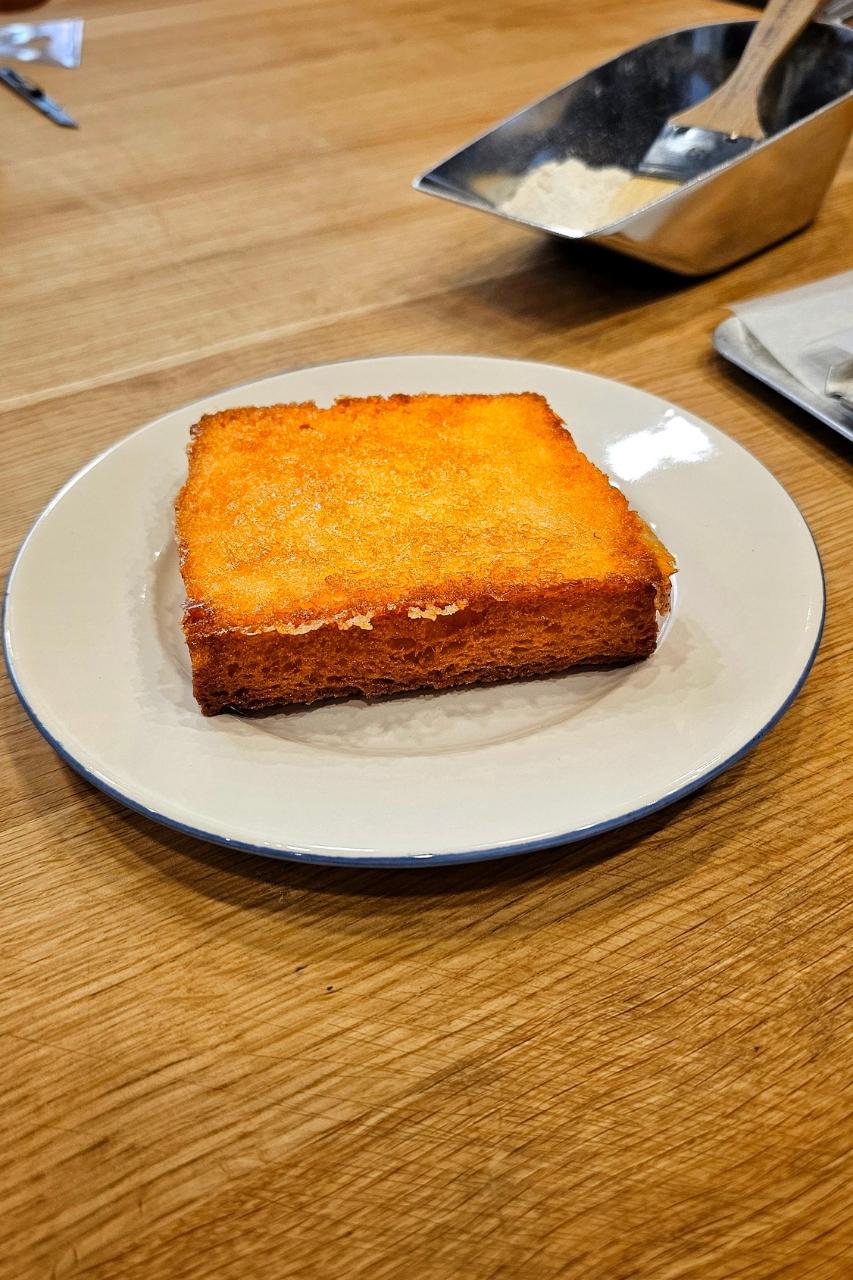
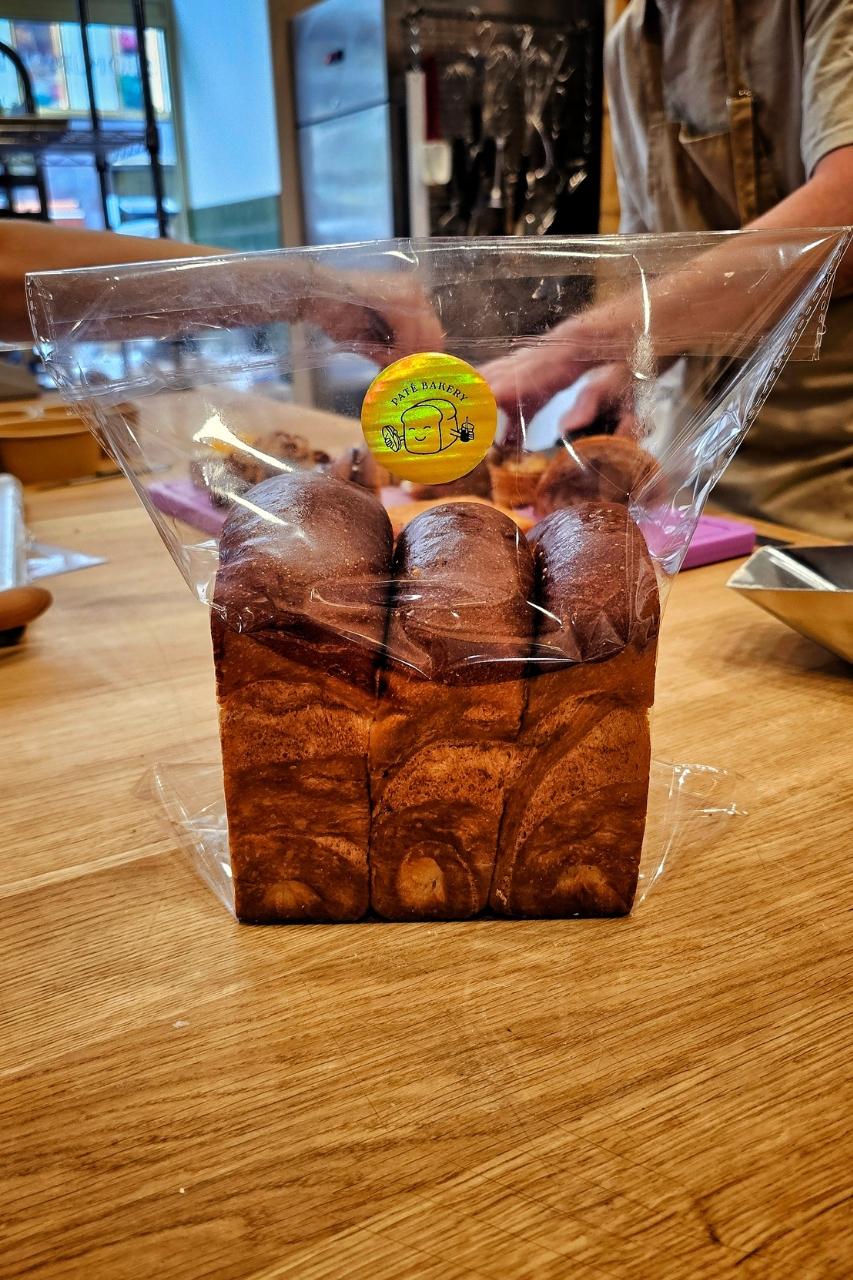
But there's also a less expected product on the menu - shokupan, a Japanese toasted bread that Patê bakes to its own recipe. "We use the Tangzhong method; we prepare something like a porridge that you heat to a certain temperature. This mixture allows the dough to be more hydrated, and the more hydrated the dough is, the more supple it is. That way, it will stay fresh longer," explains Khanh Ta. "If you don't heat the mixture, you'll just end up with a kind of mud, and you can't work with it."
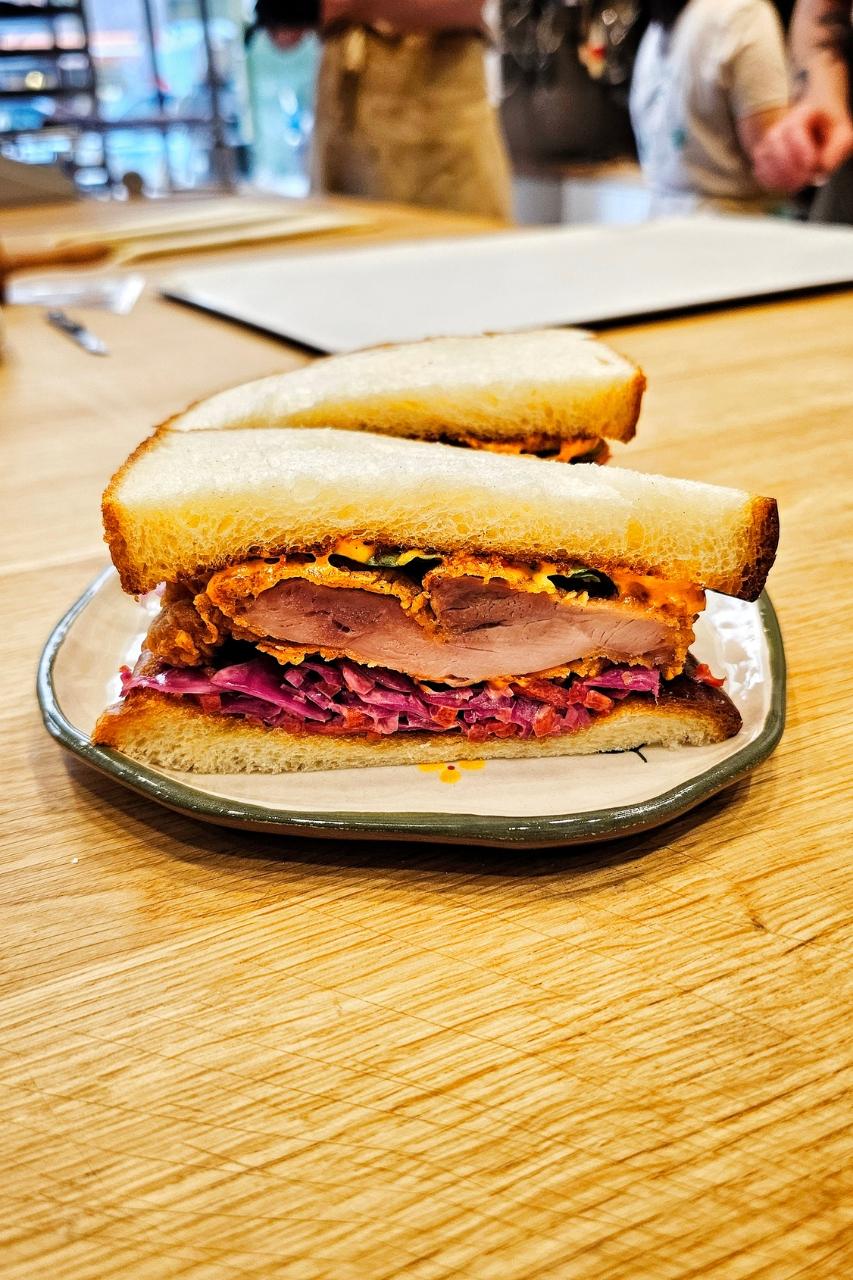
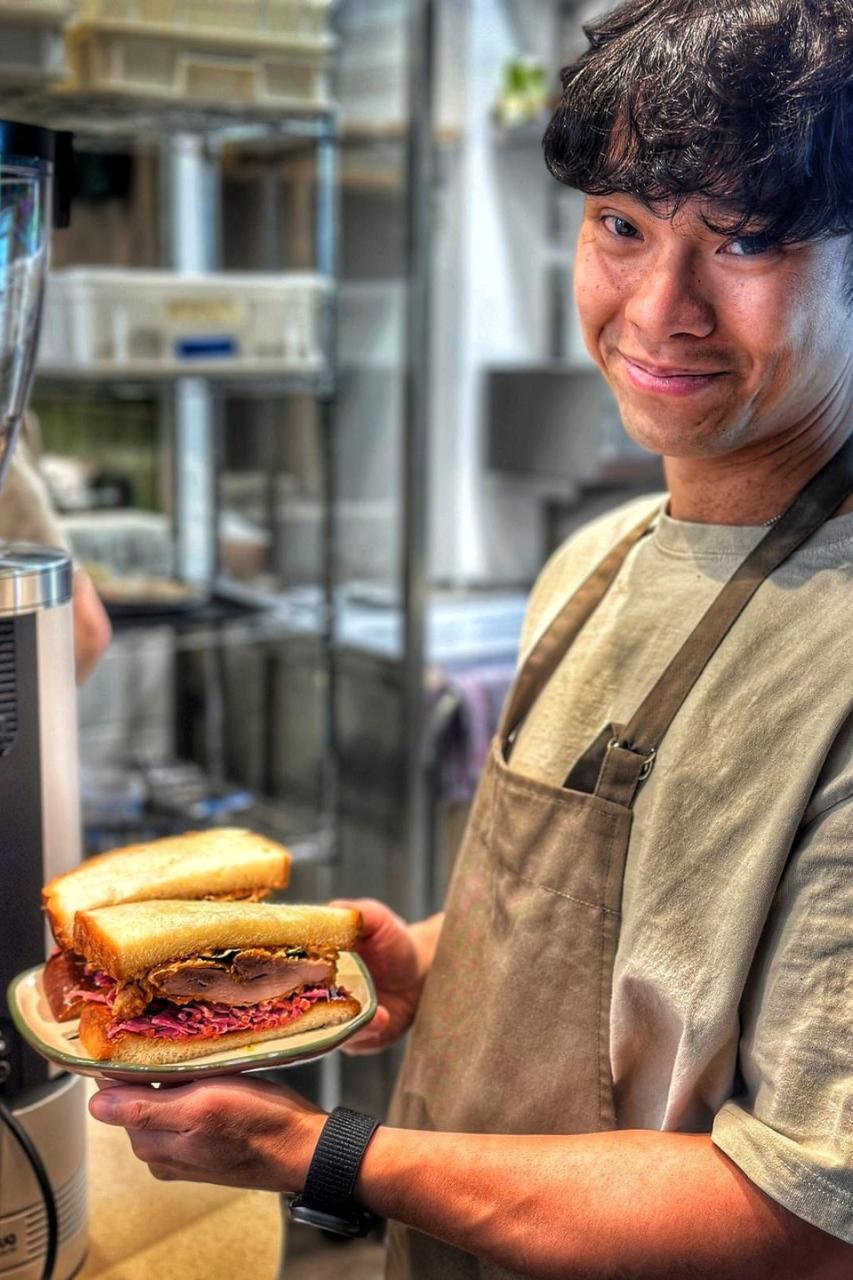
Shokupan is sold at Patê not only on its own but also in sandwich form - the chicken version with spicy coleslaw and coriander is the best seller, and there's also a version with egg. "For me, it's best to just fry it in butter," Khanh adds.
The Ta brothers see Patê as a natural extension of their gastronomic journey. "We're trying to look for holes in the market, something that's not being done here. This space was a great opportunity. It felt much more natural to us to have a bakery next to Taro, rather than, say, a bistro or another restaurant."
So Patê is not just another Prague bakery. It's a place where French technique meets Vietnamese soul, where tradition learns new flavors - and where even ordinary toast can have character.