
The Zlatá Praha restaurant has returned to the top of the gastronomic scene after a year since reopening. Head Chef Maroš Jambor and Pastry Chef Romanka Zelinová present a menu that blends technical precision, seasonal local ingredients, and playful desserts, with wines perfectly paired to complement each course. From the first aperitif to the final petit fours, it is a sensory experience — sight, smell, taste, and texture create a harmonious story that any gourmet will enjoy.
In the past year, Zlatá Praha has soared to the highest echelons of Czech gastronomy, becoming a must-visit destination not only in Prague but throughout the Czech Republic. However, it's not just about the scenic view of the Old Town or the exquisite interior design. The expectations of gourmets are equally strong, and Chef Maroš Jambor's team strives to meet them with remarkable confidence. The Michelin Guide award is a natural association with Zlatá Praha, as the prestigious guide has already awarded the Fairmont Golden Prague two keys, representing the highest recognition in the Czech hotel industry. Zlatá Praha also collaborates with another significant guidebook, Gault&Millau, for events like the Dinner of the Year, held in the Czech region.
Each dish crafted by Maroš Jambor and Romanka Zelinová is complemented by a top-notch wine selection and service, which is expected and delivered seamlessly.
Bubbles, Bread, and Small Bites
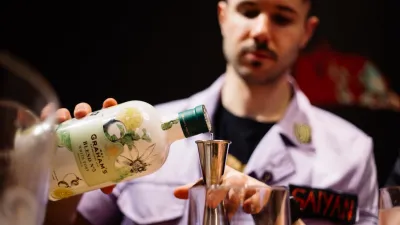
The opening glass of Veuve Clicquot Yellow Label serves its purpose perfectly: as an elegant palate refresher. Gentle, persistent bubbles wash away fatigue, while citrus freshness and a slightly toasty undertone prepare the palate for the first finesse. It's a classic that doesn’t offend but, more importantly, doesn’t overwhelm, making it an ideal start that highlights the delicacy of the opening canapés.
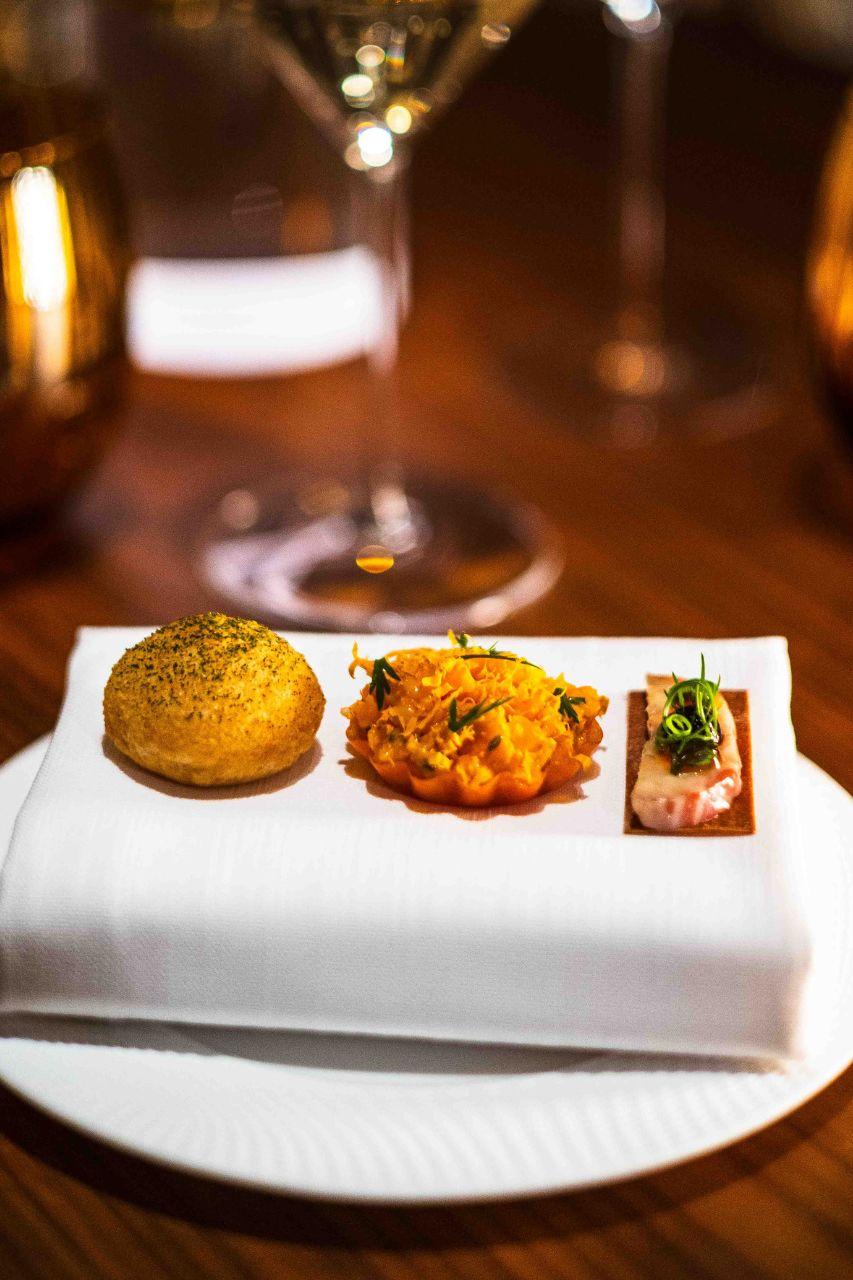
We begin with a buckwheat cracker topped with smoked eel, black garlic, and rice vinegar. The earthy buckwheat complements the rich, almost buttery texture of the smoked eel. The black garlic adds a balsamic sweetness with a subtle spicy undertone, while the rice vinegar brightens and freshens the bite. Herbs like chervil, dill, and chives bring a green, aromatic freshness. This opening bite is surprisingly complex yet remains light and refreshingly deft.
Carrot tartare with rosemary follows. The carrots here develop sweet and spicy notes, with pleasant juiciness and great creaminess. The rosemary adds a distinct aromatic character, lending Mediterranean tones to the dish. This vegan 'tartare' derives its depth from the natural sweetness of the root vegetable and its concentrated, aromatic essence.
The gougère concludes with Olomouc cheese and lovage. The batter is fluffy and slightly supple, but the flavor intensity lies in the combination of distinct 'chewy' acidity and aromatic lovage, resulting in a surprisingly refined pairing. It's a little Moravian flavor set on a French base — a fun, quirky, and delicate bite.
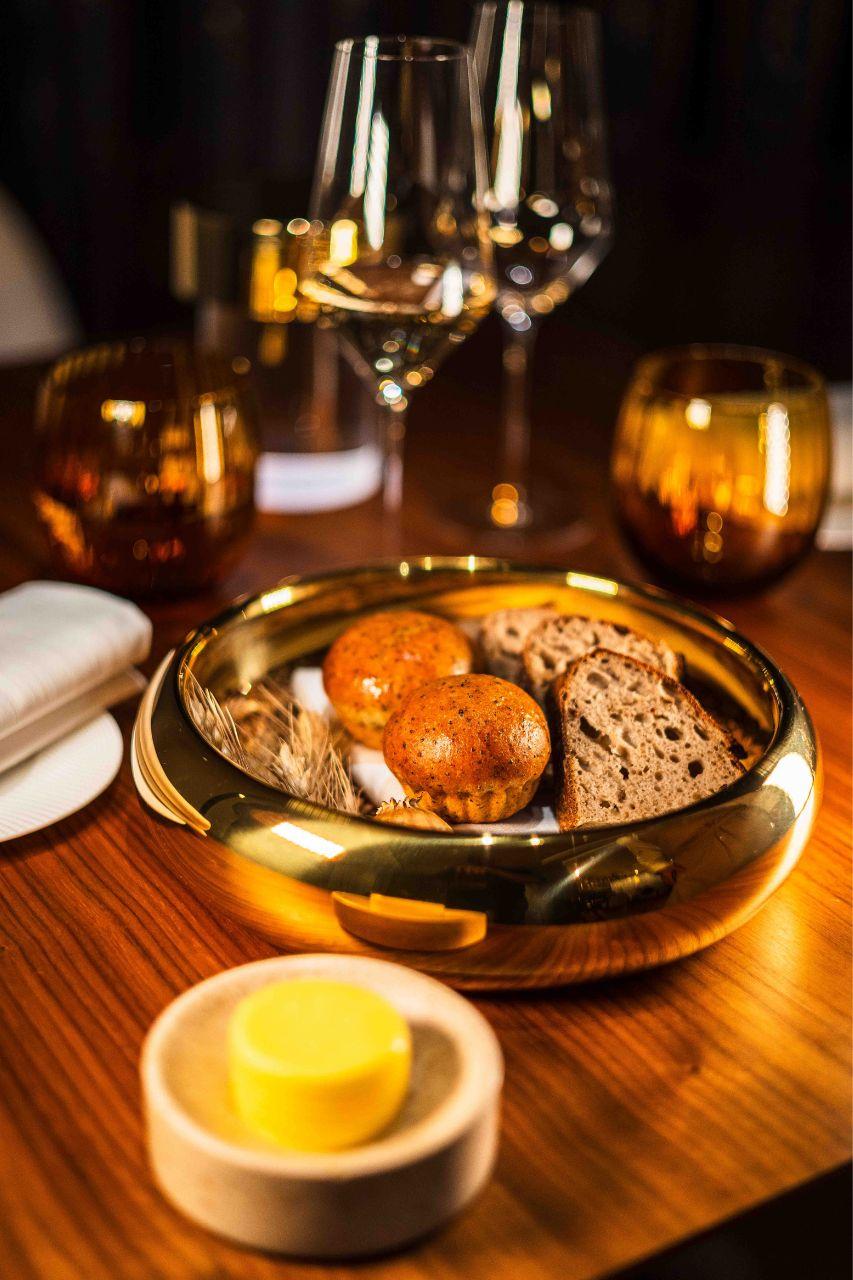
The bread service begins with Sourdough Sumava bread, featuring a rye-wheat character, potato, and caraway, offering a dense, rustic flavor with a supple crumb. The light brioche-style milk bread is softer, slightly sweet, with a delightful aroma of thyme, poppy seeds, and fried onions. Both breads are complemented by salted butter with a culture that enhances both the bread and the flavors of the other courses, thanks to a slightly sour note. The bread service acts as a bridge between the canapés and the first course — light yet with character.
The Magic of Herbs
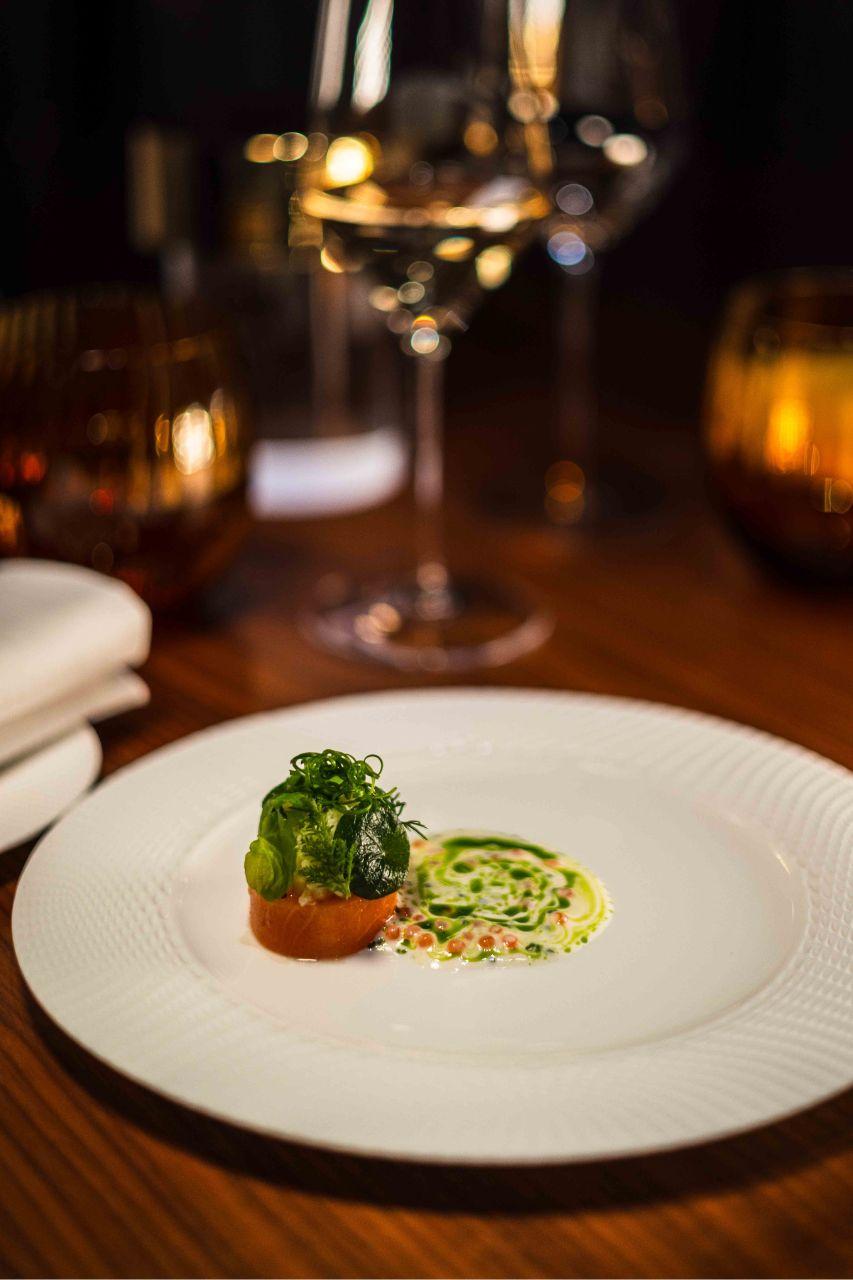
The cold starter features marinated lamb, cooked at a low temperature to retain an almost silky texture. "On the lamb's lettuce are sorrel, a mixture of cultivated and wild herbs," explains Chef Maroš Jambor. This green layer sets the tone for the entire course — fresh, slightly tart, and distinctly aromatic, yet without overpowering the fish. The buttermilk sauce, served on the side, offers a light lactic acidity that links the mineral character of the fish with the herbs. The subtle spiciness of horseradish and the salty iodine touch of trout caviar throughout the composition create a small but important counterpoint.
The handling of herbs is noteworthy — Jambor speaks passionately about their origins. Cultivated herbs are supplied by the Edible Sprouts of Budějovická project, which has a garden outside Prague specializing in micro-herbs with exceptional aromas. Wild herbs come from two sources: Tomáš Reisinger, who collects them in woods and meadows for several Prague restaurants, and Vítek Janouš, who has greenhouses outside Prague that open during spring and summer, allowing the herbs to seed naturally. The result is a unique combination of wildness and sophistication, translating into a layer of flavors that are light yet unexpectedly deep.
The Sauvignon Blanc Grafenberg 2023 from Kuba Smrčky's winery, chosen for this course, supports everything on the plate. Its higher acidity gracefully cuts through the roundness of the buttermilk, while the gooseberry and grassy aromatics connect well with the herbs and the slightly spicy touch of horseradish. The wine doesn’t take the lead here; rather, it illuminates the entire course — like opening a window to the garden after a summer rain.
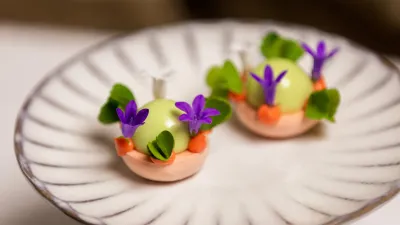
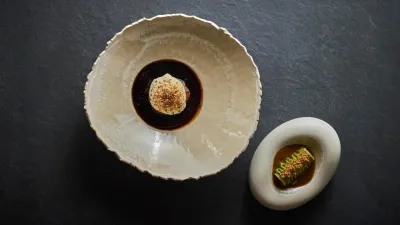
The warm appetizer arrives as a small yet expressively unexpected meditation on pumpkin. It's a delicate, steamed egg custard — a technique the Zlatá Praha kitchen uses for seasonal improvisation. From last month's pea version, they've moved to an autumnal flavor: the base is roasted Red Kuri, or Hokkaido pumpkin, whose flavor doesn’t translate directly into the pudding. The vegetables are simply basted and rested for 24 hours to draw out pure aromas without unnecessary thickness. The resulting custard is almost insubstantial, light as steam, with a slightly sweet, rounded trace of pumpkin.
Sea buckthorn enters this velvety base — not as decoration but as a little explosive hit. "The sea buckthorn on top breaks the dish up considerably," explains the chef, and indeed: the small orange berries burst in the mouth, bringing dramatic acidity that awakens the entire course. Pumpkin seeds, a little brown butter, and a few drops of pumpkin seed oil give the dish a nutty depth and a slightly toasty accent. The ginger in the background adds slight spiciness and aromatic heat, barely perceptible but important. The only note that brings a slight umami impression close to fish is a tiny amount of bonito — just a touch, used to round out the flavor, not as a main ingredient.
It's an appetizer that rests on the illusion of simplicity while being technically precise and flavorfully surprising. Silky softness, nutty earthy notes, and an almost electric sea buckthorn acidity meet in one bite.
To accompany such a subtle yet contrasting dish comes a glass of Viognier from the French Rhône, the 2022 vintage, specifically a cuvée called Contours de Deponcins from a winemaker renowned as the uncrowned king of this varietal. Viognier shows its typical face here: minimal acidity, yet opulent aromatics and fullness enhanced by maturation in French oak barrels. Fermentation and barrel aging give the wine a honeyed character and a soft, round structure that resonates with the lightness of the custard, while its ripeness and wood help to tame and frame the wild acidity of the sea buckthorn. The pairing relies not on contrast but on harmony — the wine as a soothing, ripe counterpart to an energetic, fresh dish.
The Fish Can Be Served at Any Time
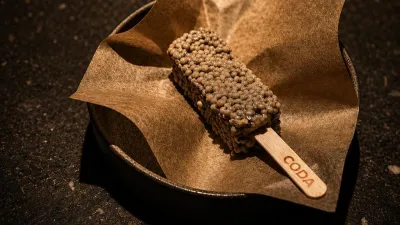
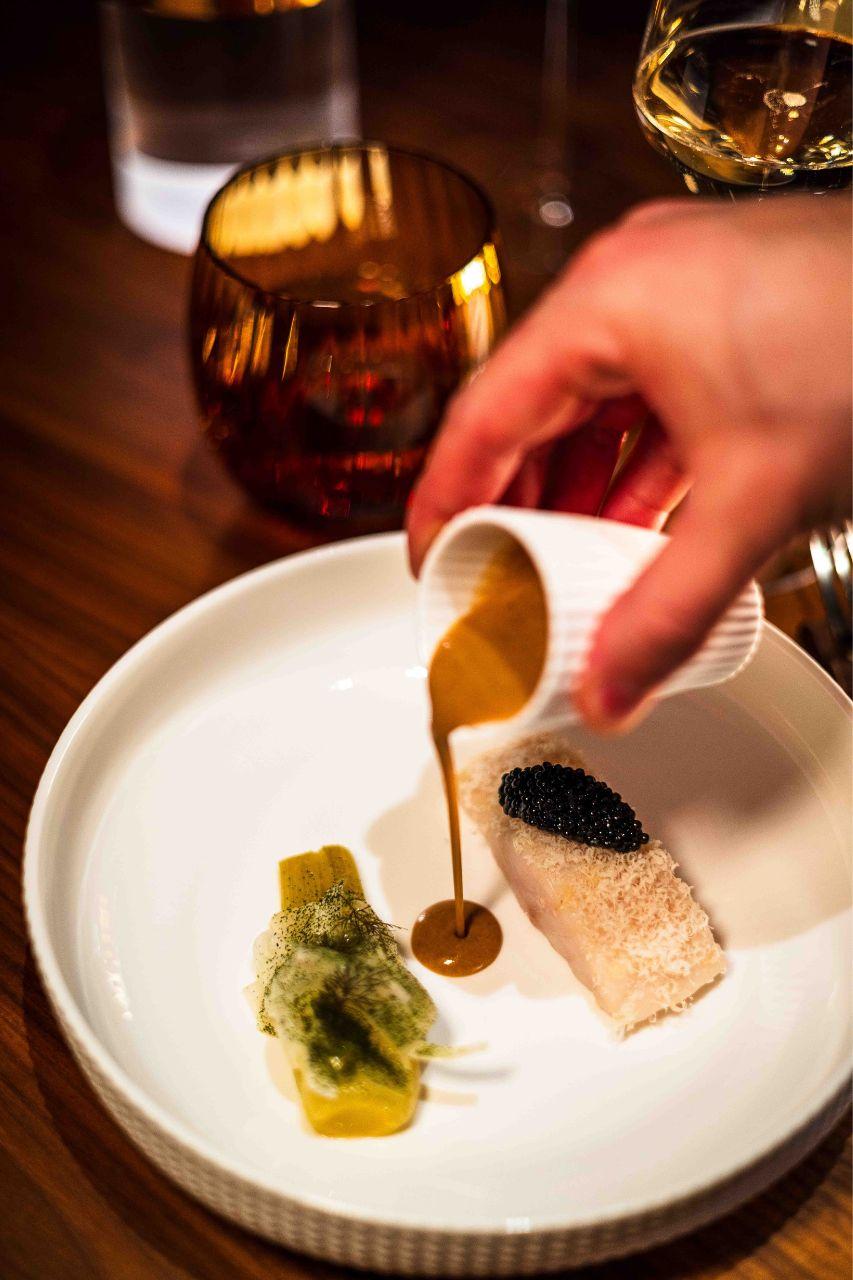
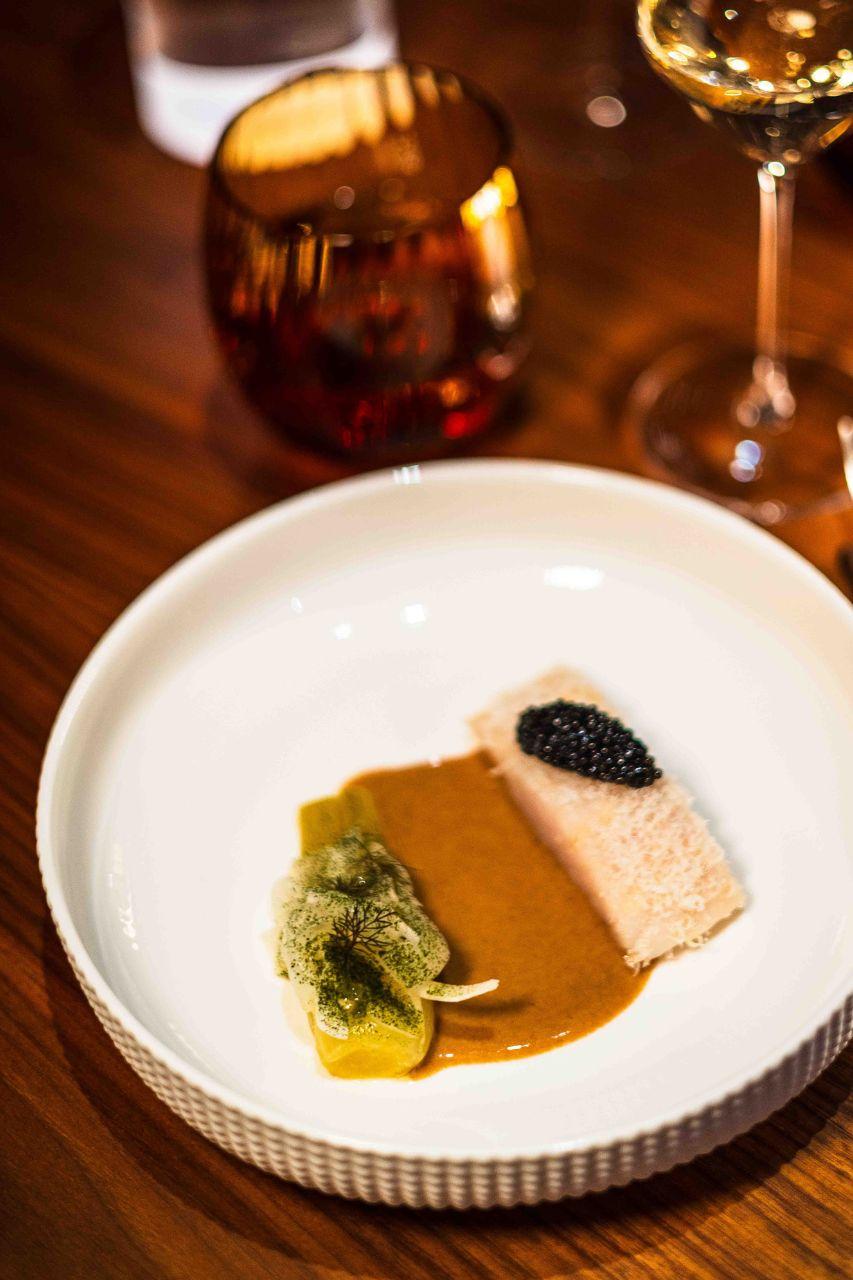
...which is why we love the sturgeon that serves as the main fish course. It is one of the most delicious moments of the evening — a meaty, firm fish with an almost white meat character. It comes from Mr. Kalenda at Chabrybarna, tracing its origins back to the Holohlavy fishery, giving it a clean, pleasantly mineral profile. In the kitchen, the sturgeon is poached in tarragon butter, imparting an herbaceous line and elegant succulence without compromising the natural density of the meat. The surface of the fish is sprinkled with grated smoked almonds, whose smoky, slightly sweet aroma immediately connects with the fishy notes. A subtle amount of caviar also appears on top, just enough to add an iodine accent and salt, not to overpower everything.
Poached fennel on the side balances the richness of the entire composition. Its gentle aniseed note connects to the tarragon butter, allowing the flavors to blend seamlessly. The whole course is then topped with a caramelized cream sauce — a liquid with a warm, almost dessert-like aroma, yet it feels surprisingly light. Its sweetish flavor creates a bridge between the fish and the almonds, imparting a pleasant winter character to the entire dish.
This combination — the meaty fish, the smoky notes of the almonds, the light sweetness of the cream sauce, and the aromatics of the tarragon — opens the way for something unexpected: red wine. The sommelier explains that the choice of Barolo to accompany the fish is not whimsical but a logical step. The sturgeon is firm, structured, and the sauce is intense; plus, we're in the middle of the winter season, which calls for fuller, warmer wines. Trediberri Barolo Berri 2021 comes from a small, relatively young winery on the hill of La Morra, the highest point of Barolo. The sandstone-rich soil gives the wine unexpected elegance and, particularly, beautifully refined tannins — allowing Barolo to pair with fish without distracting astringency.
The result is surprisingly harmonious. The Barolo brings notes of red fruit, rose, and spiciness that play well with the caramelized cream and smoked almond, while its structure keeps pace with the fleshiness of sturgeon. It's not a rebellion against convention — it's a demonstration that the right red wine can not only complement but elevate a fish course.
Winter Plate and the Aroma of Spices in Wine
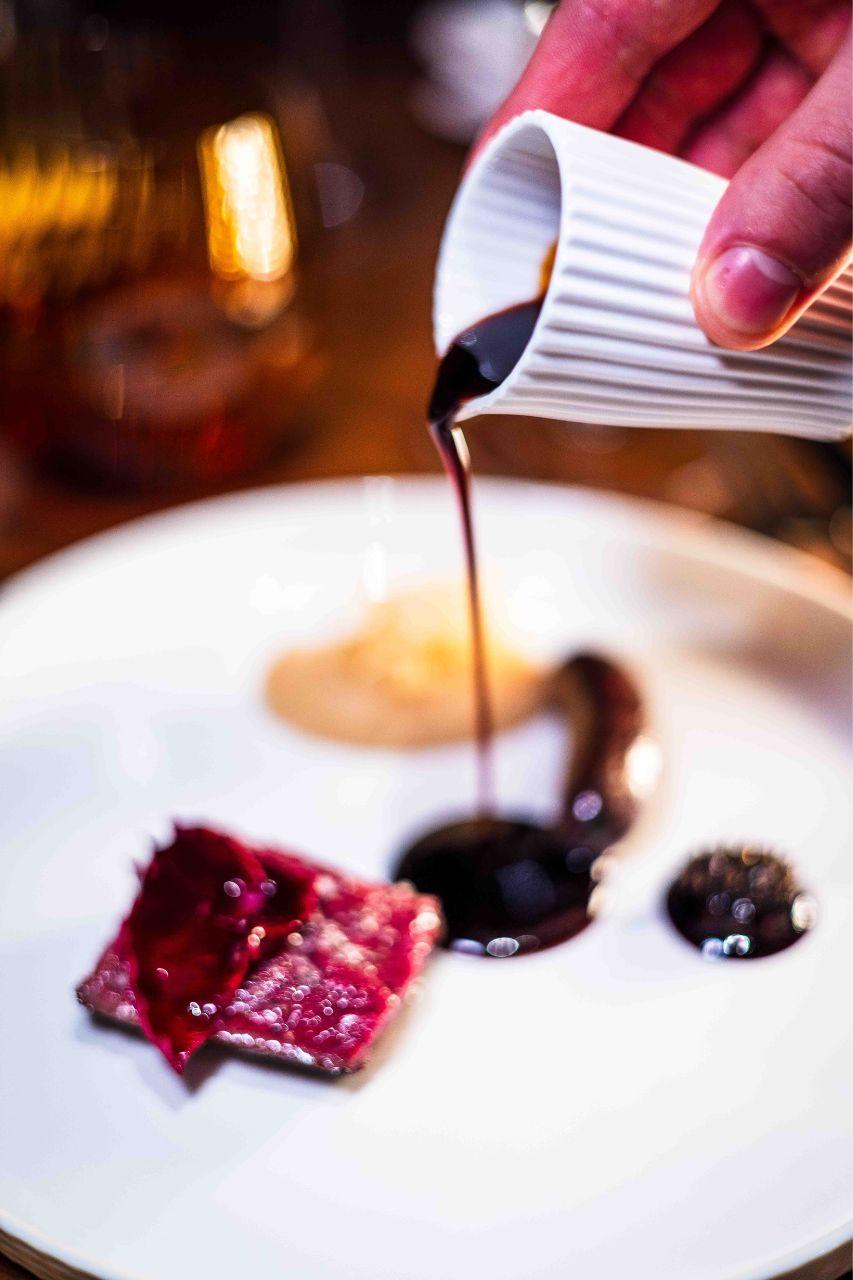
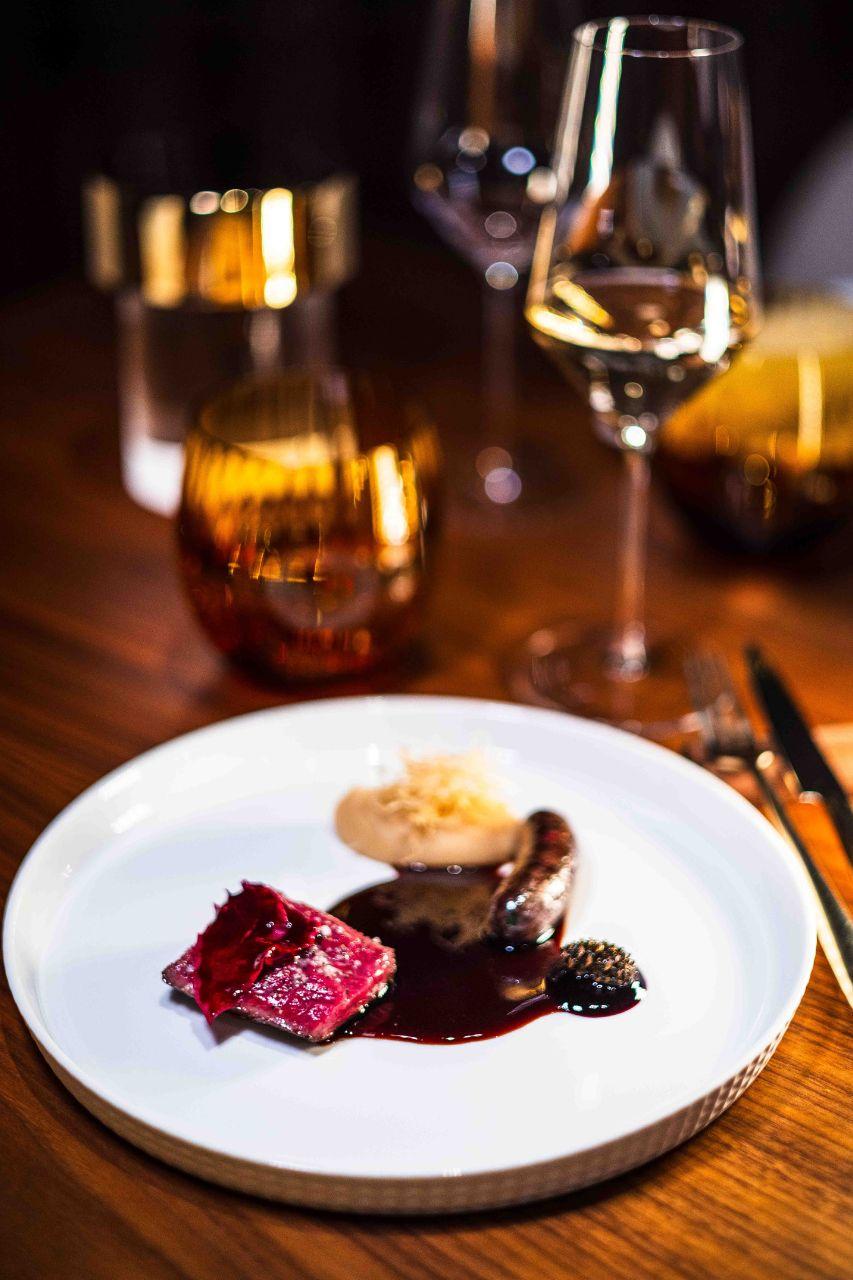
The main meat course features fallow deer, presented in two forms: a clean, juicy loin and a tiny, handmade sausage from the leg. The loin is prepared to retain its distinct gamey yet elegantly soft texture. The sausage is a technical detail worth noting — the kitchen crafts it themselves, using the finest casing they can find. The mixture from the fallow leg includes chives, rosemary, and juniper, spices that enhance the meat's natural woodland aromas. To this, they add a fatty portion of Prague ham for juiciness and umami, and a splash of brandy to give the meat a noble, slightly caramel depth.
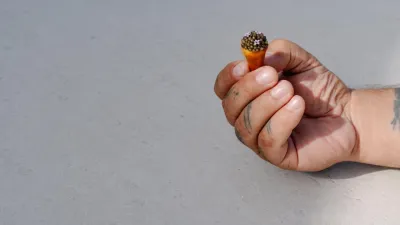
The plate is accompanied by celery in two forms — a fluffy puree and crispy "straw," or thin fried strips that add texture and a slightly earthy flavor. At the bottom right, a candied pine cone appears, a tiny detail that stands out not as decoration but as a concentrated carrier of flavor: sweet, resinous, spicy. Underneath lies Pontack — elderflower ketchup, dark, aromatic, with the scent of the forest after the rain. It's an element that combines sweetness with game, giving the dish an interesting, almost mysterious line. The whole course thus feels like a tale of a winter forest — layered, aromatic, full of warmth yet with austere elegance.
A red wine from Moravia is served with this dish, a pleasant surprise. The Nepraš winery has significantly enhanced its reputation for red wines in recent years, and their Good Vintage 2019 confirms this. It is a Bordeaux coupage with a smaller proportion of Merlot, spontaneously fermented, unfined, and unfiltered. It was aged for two years: first in a 2,500-liter barrel, which gives the wine its intensity and subtle vanilla-wood line, and then in a classic barrique, which lightens the structure and adds elegance. The result is a wine with deep, dark aromatics, firm but smooth tannins, and beautiful juiciness.
It pairs perfectly with the fallow deer: it mirrors its woodsy, spicy character, complements the juniper and herbs in the sausage, and supports the sweetness of the celery and the resinousness of the pine cone. It's a pairing that doesn’t come across as pretentious but is extremely well thought out — a combination that tastes like autumn in Moravia and winter in the woods simultaneously.
The Dessert Is Not Meant to Be Extra Sweet
The first dessert is a quince cooked for six long hours, during which it gradually darkens to a deeper, almost ruby shade. "The longer it cooks, the redder it gets," explains Maroš Jambor at the table, pointing to the layer of intense quince sorbet that forms the base of the plate. The sorbet is made entirely from boiled quince, giving it its pure, full aroma — something between rose, honey, and autumn fruit. Soft, slightly supple pieces of cooked quince lie on top of the sorbet, providing structure and a natural sweet and sour line to the dessert. The foam from the broth in which the quince was cooked is infused with dried cherry blossoms, cornflower, and pink peppercorns. It's almost perfumed, yet with surprising lightness — the aromatics are floral, delicate, almost Japanese in their purity.
The dessert is crowned by a vegetal meringue, fluffy and ethereal, giving a modern, playful, and very "chef's table" character. It is a dessert that does not rely on sweetness but on extracts and long, layered fruit flavors.
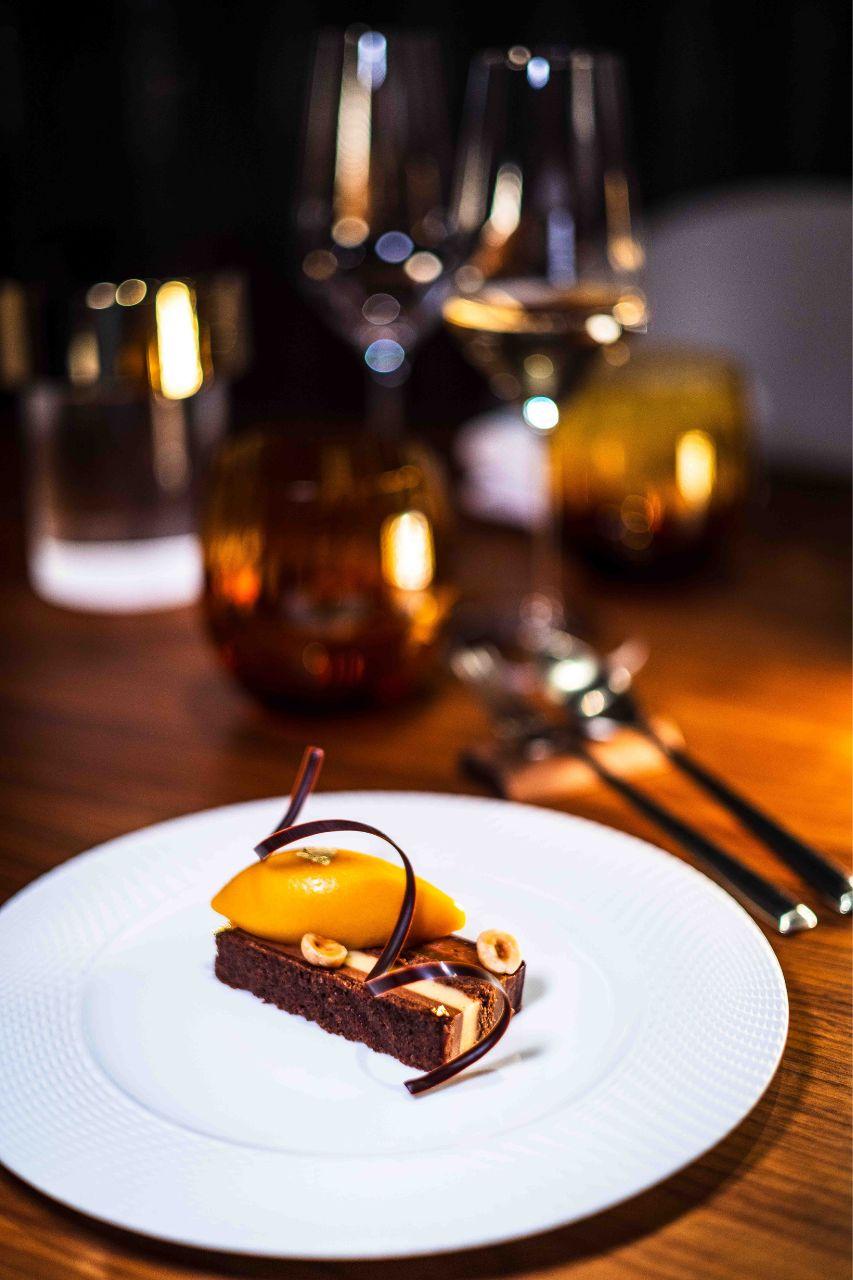
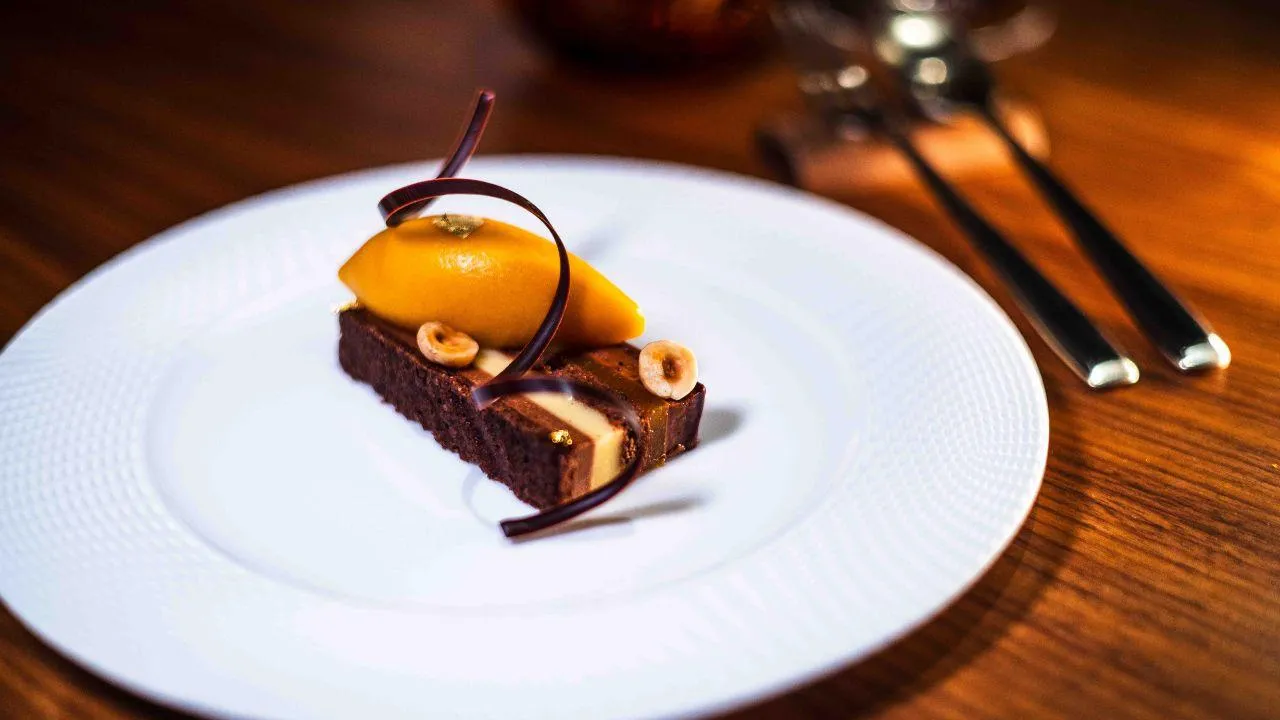
The main sweet spot is the elegant Czech cuts — délices, which, with their slightly retro look, refer to the era when the Zlatá Praha restaurant ruled the Prague gastroscene. The dessert is based on several creamy layers combining to form a smooth, almost refined profile.
On the surface lies a chocolate garnish, hazelnut, and a touch of apricot. In the middle is a chocolate sponge with a subtle lemon note that adds freshness to the dessert, and rounding it off is an apricot sorbet that brings a fruity acidity, beautifully balancing the denser layers. The 'Golden Prague' motif is complemented by a subtle application of edible gold, acting as a slight throwback to old-school hotel gastronomy — but this time with a modern twist.
Desserts are served with Ben Ryé Passito di Pantelleria 2022 straw wine from the island of Pantelleria, the iconic wine of the Donnafugata winery. Made from the Zibibbo (Muscat of Alexandria) grape variety, the grapes are dried on straw, concentrating the sugar (around 120g) while retaining lively, tangy fresh acidity that keeps the wine in perfect balance. Ben Ryé is renowned for its apricot, orange, and honey notes, making it an ideal accompaniment to both desserts: it elegantly builds on the quince's floral and fruity aromas without overpowering them, and for the Bohemian cuts, it works with the apricot line and citrus acidity to 'brighten' the dessert while supporting its retro-elegant character.
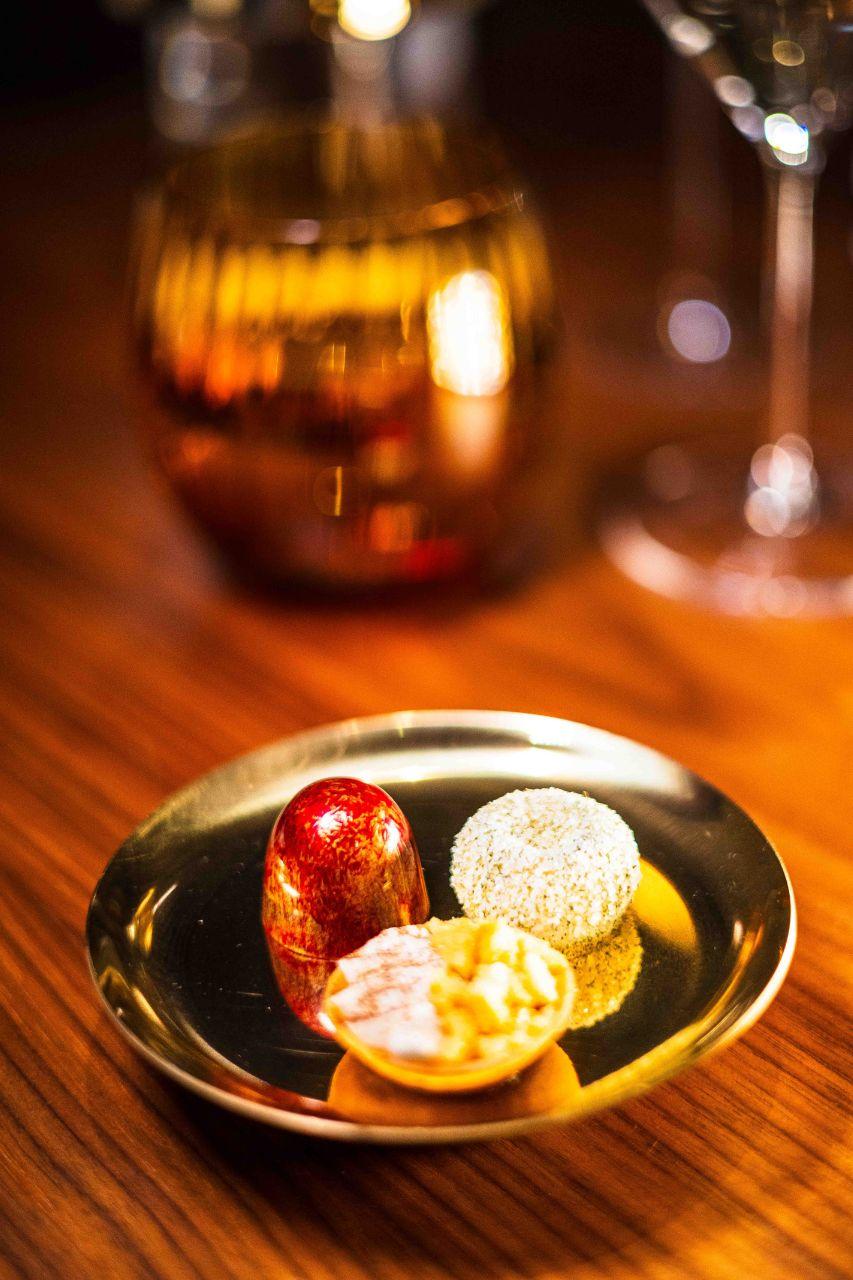
The final sweet chord of the evening is the Petit Fours, served in an elegant Dragebox, which acts not only as a visual punctuation but also as a little digestif after the main menu. A pear tartlet with vanilla cream, honey, and a hint of clove is placed closest to the guest on a small etagere — a combination of sweetness, floral fragrance, and a light spicy hint that nicely rounds off the previous desserts. Alongside this is a chocolate praline with cranberry and cinnamon, the fruit and spice adding a seductively contrasting acidity and a hinted savory line that awakens the palate and prepares it for the final experience.
Then, at the top right, the signature local morsel, Becher jelly in lemon balm sugar, is left to melt on the tongue to fully release the herbal liqueur aromatics. Each bite feels like a tiny, subtle explosive moment — the sweetness of the honey, the spiciness of the cloves and cinnamon, and the liqueur notes combine to create a small but perfectly balanced final symphony.
The Petit Fours at Dražébox are not just a candy at the end but the last experience of the Zlatá Praha menu — they play with flavor, aroma, and texture, elegantly closing an evening of layered, thoughtful combinations.
Dinner at Zlatá Praha is a complex experience that engages all the senses. From the first bubbles of champagne to the meticulously layered appetizers, meat courses, and playful elegant desserts — every moment is carefully considered, every detail has its place. The combination of locally sourced ingredients, seasonal ingredients, technical precision, and thoughtful wine pairings creates an evening that lingers in the memory long after the last bite.
Zlatá Praha thus confirms that it is not just an address with a panoramic view but a restaurant that offers a true culinary story. Maroš Jambor and Romanka Zelinová present a cuisine with a clear identity — modern, creative, yet with a deep respect for tradition and ingredients. For any gourmet seeking a blend of elegance, playfulness, and precise technique, a visit to Zlatá Praha is both an obligation and an inspiration.