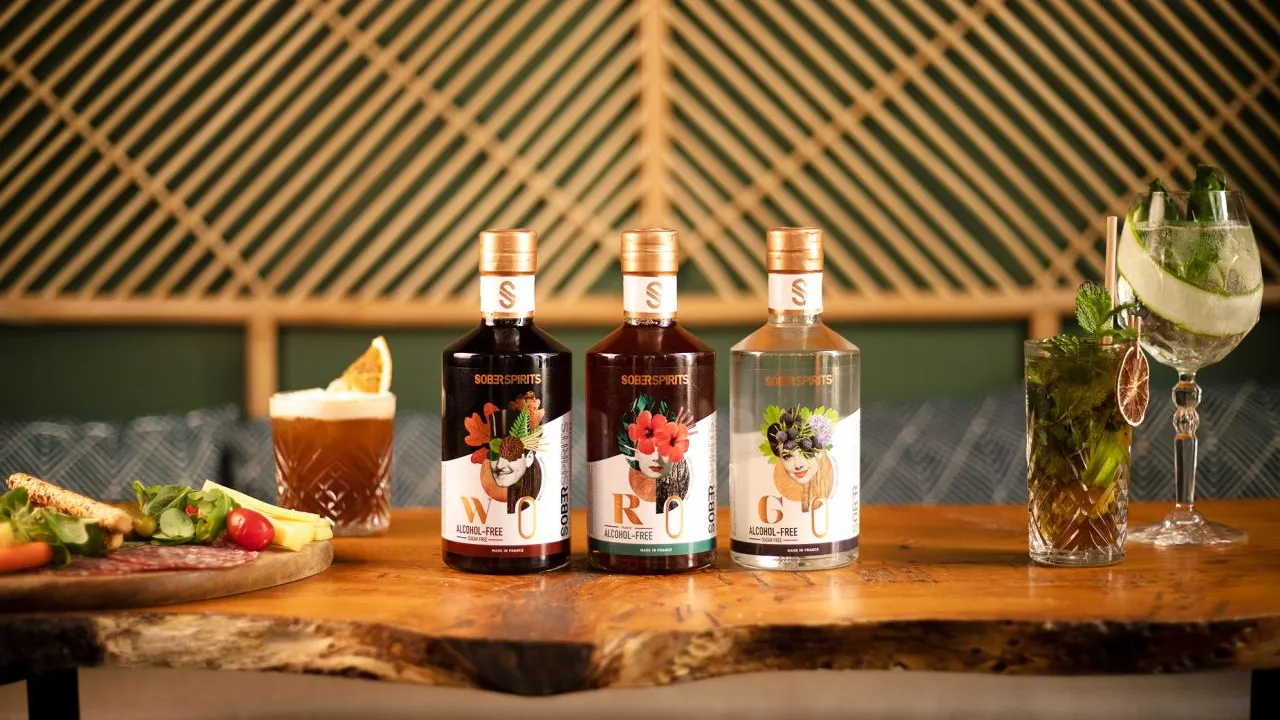

A non-alcoholic spirit produced in the capital of French and global perfumery and matured in traditional distilleries? It sounds like a paradox until you discover that it is in Grasse that alcohol is separated from real spirits so that the aroma, depth and character remain. What others consider impossible has become the new standard at Sober Spirits – thanks to century-old copper stills, collaboration with perfumers and technology that has rewritten the definition of alcohol-free spirits. It is no coincidence that Sober Spirits has been named the world's best non-alcoholic spirits brand four times in a row, confirming its absolute dominance in this rapidly growing category.
February is usually a month when people talk about alcohol differently. Dry February, a conscious break. It is a short period of the year, but one that very accurately reflects a long-term trend: the younger generation drinks less alcohol, much more selectively and with greater emphasis on quality, health and the overall experience. Not because they have lost their taste for bar culture. On the contrary – they want to get more out of it than just the alcohol in their glass.
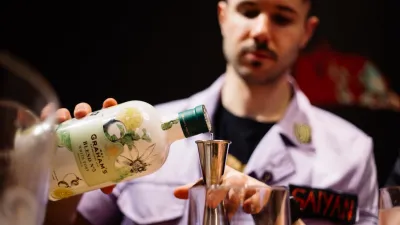
Just a few years ago, the phrase "non-alcoholic spirit" would have sounded like a contradiction. Today, it is a reality that is increasingly appearing in the world's best bars. One of the few brands that has not only legitimised this concept but also given it clear rules is Sober Spirits. Not as a compromise. But as a fully-fledged alternative.
Behind the brand are Calixte Payan and his brother Viktor – bartenders, innovators and people who have long been involved in the world of luxury events. With more than four hundred events a year, they increasingly noticed the same problem: guests wanted non-alcoholic cocktails, but were only getting sweet mixtures of juices and syrups. For clients such as LVMH, Rolex and Porsche, this was not a level that matched the rest of the experience. And that's where the idea was born to create a non-alcoholic spirit that would taste, function and behave like a real spirit.
Distillation without alcohol, but with character
The brothers' approach was radical from the outset. If a non-alcoholic alternative to rum, gin or whisky was to be created, it had to be based on the original. Not on aromas, not on herbs steeped in water, but on real spirits. The first step was purely practical – purchasing simple distillation equipment and years of experimentation with herbs, roots, fruit, texture and structure.
The turning point came when he decided to take a different path than most of the market. Instead of conventional dealcoholisation, he chose to collaborate with perfumers in Grasse, who are able to extract alcohol from the distillate in such a way that the aroma, depth and complexity remain. The alcohol is used to make perfumes, while Payan is left with a pure extract containing 0.0% alcohol. This process, complemented by repeated distillation in century-old copper stills in a distillery founded in 1875, gave rise to something that had never existed on the market before.
The first product was Sober Spirits Rum 0.0%. Two years of fine-tuning, testing and comparing with the competition culminated in a moment that definitively defined the brand. Even before its official launch, the rum won the title of the world's best non-alcoholic spirit at the IWSC in London. This was followed by repeated Double Gold medals at the San Francisco World Spirits Competition. Not as a marketing ploy, but as proof that even without alcohol, world-class quality can be achieved.
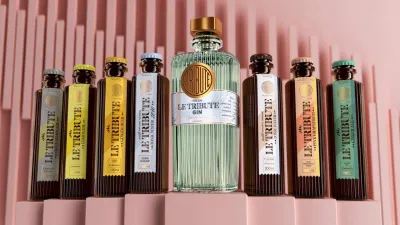
Gradually, other products were added. Gin 0.0%, based on the classic London Dry profile with distinctive juniper and cardamom, won Double Gold at the SFWSC in 2024. Amaretto 0.0% scores with its gourmet character of bitter almonds, morello cherries and wood, and Bitter 0.0% brings a serious aperitif bitterness that the bar scene has long lacked in its non-alcoholic version.
All products have one thing in common: no alcohol, no added sugar and a taste that needs no apology.
A new chapter in bar culture
Today, Sober Spirits are sold in more than thirty countries around the world – from the Maldives to Singapore to South Korea. The non-alcoholic wave is not a short-term trend, but a structural change in bar culture. Guests want real cocktails without the negative effects of alcohol, bartenders want to work with complex ingredients, and bars don't want to lose customers who don't want to miss out on an evening without alcohol.
It is in this context that Sober Spirits makes sense on the Czech market.
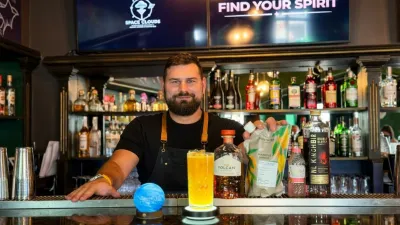
"Non-alcoholic spirits were never meant to be drunk on their own – their true character and flavour can only fully develop in a cocktail. I remember a time when, as bartenders, we simply took a classic cocktail and removed the alcohol when preparing non-alcoholic drinks. This resulted in non-alcoholic Mojitos, Piña Coladas and others – but in doing so, we took away the very essence of these drinks. In the best case, we replaced it with flavoured lemonade or juice, but often with nothing at all. In terms of taste, such a cocktail could never come close to the original, and we were understandably disappointed," says Kryštof Hordina, brand manager of Sober Spirits for the Czech market.
"Then came the first generation of non-alcoholic spirits, but with most of them – just like the founding brothers of Sober Spirits, Calixt and Victor – we encountered the same problem: they lacked texture, were too watery, and the drink tasted as if the ice had melted long ago. The technological process used by Sober Spirits today added the final piece to the puzzle. Suddenly, we have a dealcoholised spirit that behaves like real alcohol in a cocktail, both technically and in terms of taste. And so, after many years, we can return the depth, structure and intensity to classic drinks that we previously had to sacrifice, creating only a half-baked version of the experience," adds Kryštof Hordina.
The brand has been distributed in the Czech Republic for three years by Ultra Premium Brands. The complete Sober Spirits portfolio can be purchased not only on the Warehouse#1 website, but also in the store of the same name in Prague's Karlín district, which has long served as a meeting place for professionals from the gastronomy, bar scene and world of premium beverages, and where it is also possible to taste the products before purchasing them.
Sober Spirits are not the answer to the question of why not drink alcohol. They are the answer to the question of how to enjoy a cocktail without compromise. And that's why they make sense not only in February, but throughout the year. If bar culture is truly moving towards quality, conscious choice and authentic experience, then non-alcoholic spirits have their place.
Not as a substitute. But as a new discipline and a full-fledged part of home and professional bars.