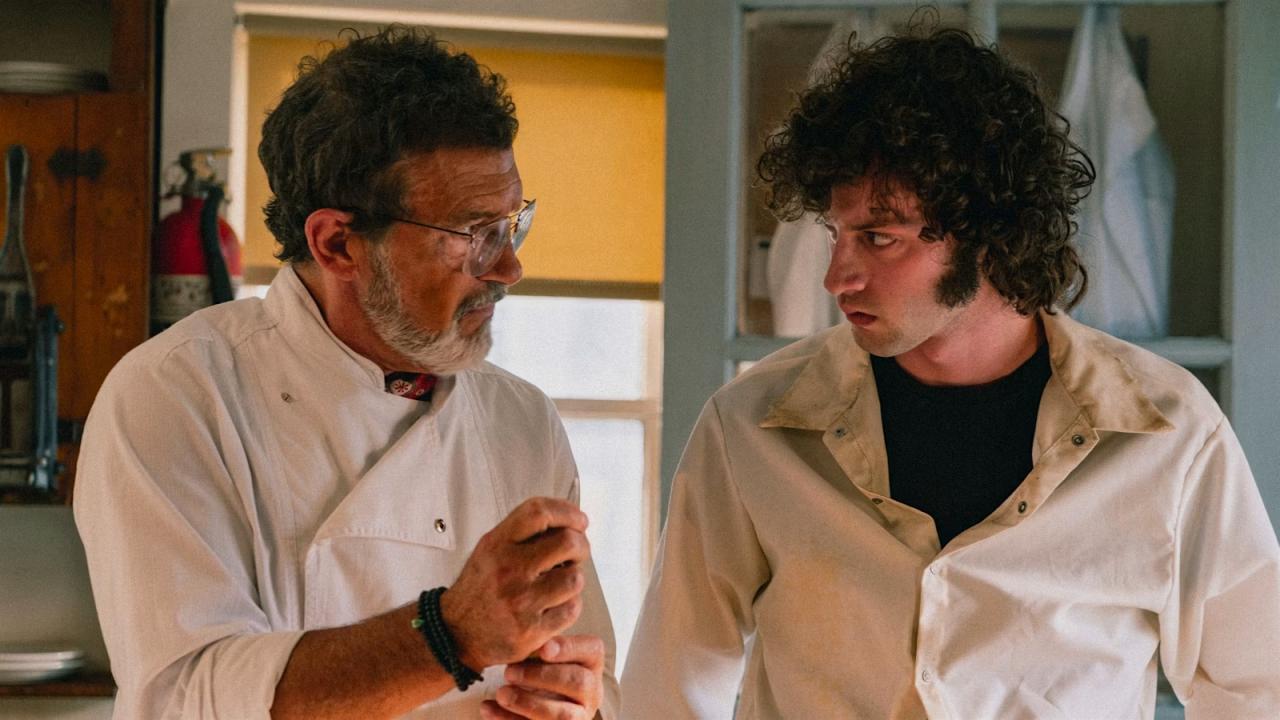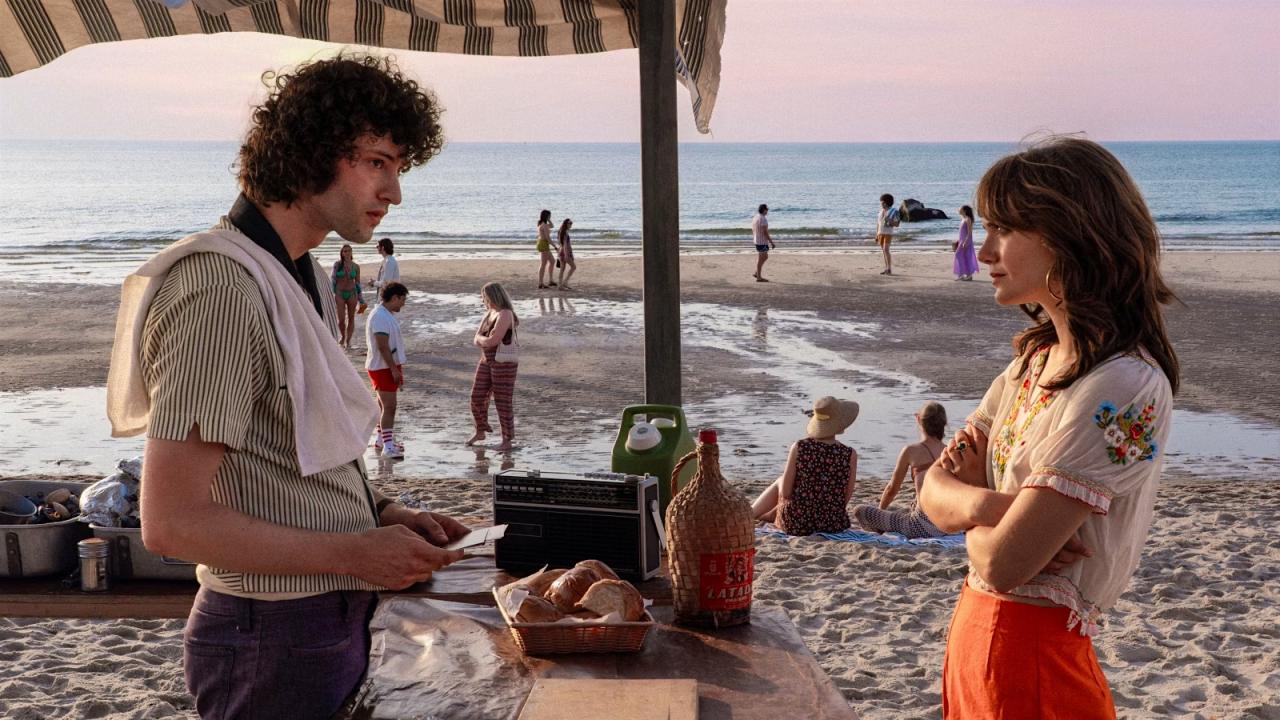


Anthony Bourdain was one of those people who changed the way we look at food, restaurants and travel. He wasn’t just a chef. He was a writer, a television presenter, a traveller and, above all, an extraordinary storyteller who used food to tell stories about people, cultures and places. His story is now returning to the big screen. The new film Tony, directed by Matt Johnson and produced by A24, was released in cinemas on 7 August, with Dominic Sessa playing the young Bourdain.
Yet the film takes a completely different approach from traditional biopics. It does not attempt to recount Bourdain’s entire life in two hours, from his first culinary experiences to his television fame and tragic end. Instead, it focuses on a single summer in 1975, when Bourdain was nineteen. The man in the leather jacket, whom the whole world would later come to know, does not yet exist. He is not famous, he is not successful, and he is certainly not a hero.
Quite the opposite. The film opens with Bourdain’s own confession from the book Kitchen Confidential, in which he describes himself, as a young man, as spoilt, unhappy, narcissistic and self-destructive—someone who desperately needed a life lesson. And that is precisely the Bourdain the film portrays: a young man who convinces those around him that he’s won a scholarship to Vassar College, even though in reality he hasn’t. When he finds out that the girl he’s fallen in love with is spending the summer in Provincetown, he steals money from his gullible father and sets off to join her. When he discovers she has a boyfriend, he gets drunk, ends up in a restaurant, eats oysters, attacks a waitress and gets a proper beating. One of the chefs then steals his money, and Bourdain finds himself penniless.
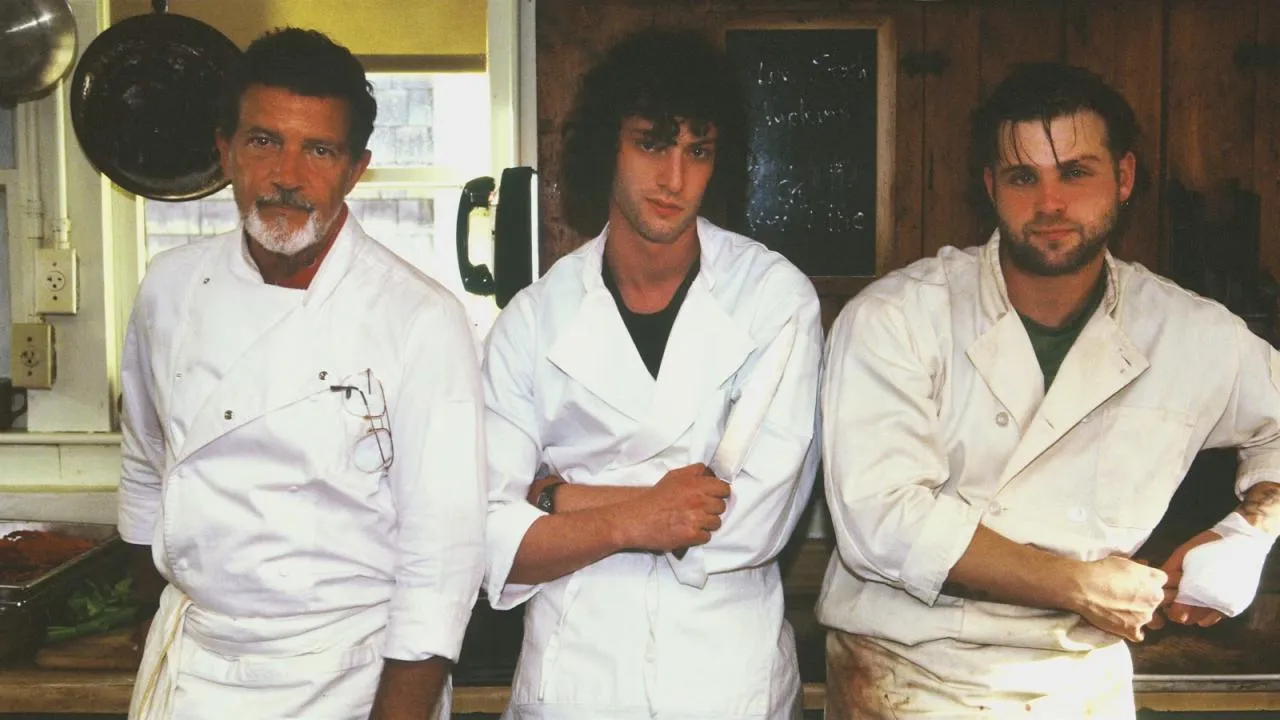
Eventually, he gets a job at the same restaurant as a dishwasher. He lies about his experience; the lies gradually pile up, and he enters the world of professional cooking for the first time. He meets people who are perhaps even bigger scoundrels than he is, but at the same time he learns discipline, hard work and responsibility. A standout character is the head chef, played by Antonio Banderas, who becomes a sort of mentor to the young Bourdain and a figure of order that he has been lacking in his life. The film is therefore not a fairy tale about how a young rebel became a famous chef. Rather, it shows all the mistakes, failures and unpleasant aspects of a man who is still searching for himself.
From chef to global storyteller
Bourdain’s real journey was, of course, much longer. After years of working in restaurants, he gradually worked his way up to head chef, but the real turning point came in 2000, when his book Kitchen Confidential: Adventures in the Culinary Underbelly was published. In it, Bourdain described, without embellishment, the world of professional kitchens, which until then most people had known mainly through romanticised notions. He wrote about chaos, alcohol, drugs, sex, exhaustion, hierarchy and the peculiar kind of camaraderie that develops in kitchens. The chef became a writer and, very quickly, a prominent television personality.
Programmes such as A Cook’s Tour, No Reservations and, above all, Parts Unknown turned him into a global phenomenon. Bourdain travelled the world, ate local food and met people, but his programmes were never just about gastronomy. For him, food was a gateway to something much bigger: to people, their lives, history, politics, culture and places that viewers might otherwise never have discovered. He was able to sit down at a table with a chef, a fisherman, a taxi driver or the owner of a small restaurant and let them tell their stories. It was precisely this ability that transformed him from a mere “celebrity chef” into one of the most distinctive cultural storytellers of his generation.
His life, however, was not without its dark moments. Bourdain spoke openly about his addiction to heroin, alcohol and other drugs, about the problems he carried with him from his younger years, and about his complicated relationships. In 2018, at the age of 61, he took his own life while filming Parts Unknown in France. His death marked the end of a life that, in the public eye, was associated with constantly exploring the world, but at the same time it highlighted even more clearly what a complex and flawed human being Bourdain was.
And perhaps that is precisely why Tony is more interesting than yet another film about a famous figure. It does not attempt to recreate Bourdain as an icon. According to a review in Wine Spectator, its greatest strength lies precisely in its refusal to portray the young Bourdain as “cool”. It shows the man before fame, before television, before books, and before he had crafted the image we associate with him today—a man who was far from perfect and who was gradually shaped by the people, work and places he encountered.
And that is precisely why his story is so remarkable for VisitChef too. Behind every chef we see today on a menu, in a restaurant or on social media, there is a story: the first kitchen, the first head chef, the person who showed them the ropes, the place where they made a crucial mistake, the city they travelled to in order to learn something new, the restaurant where they first realised what they actually wanted to do—and sometimes, too, the place they return to years later to start afresh.
Bourdain reminded us that food isn’t just what’s on our plate. It’s a way of discovering the world and, above all, the people who create it. The film Tony takes us back to the moment when this story was just beginning. And perhaps that’s precisely why it’s worth watching.