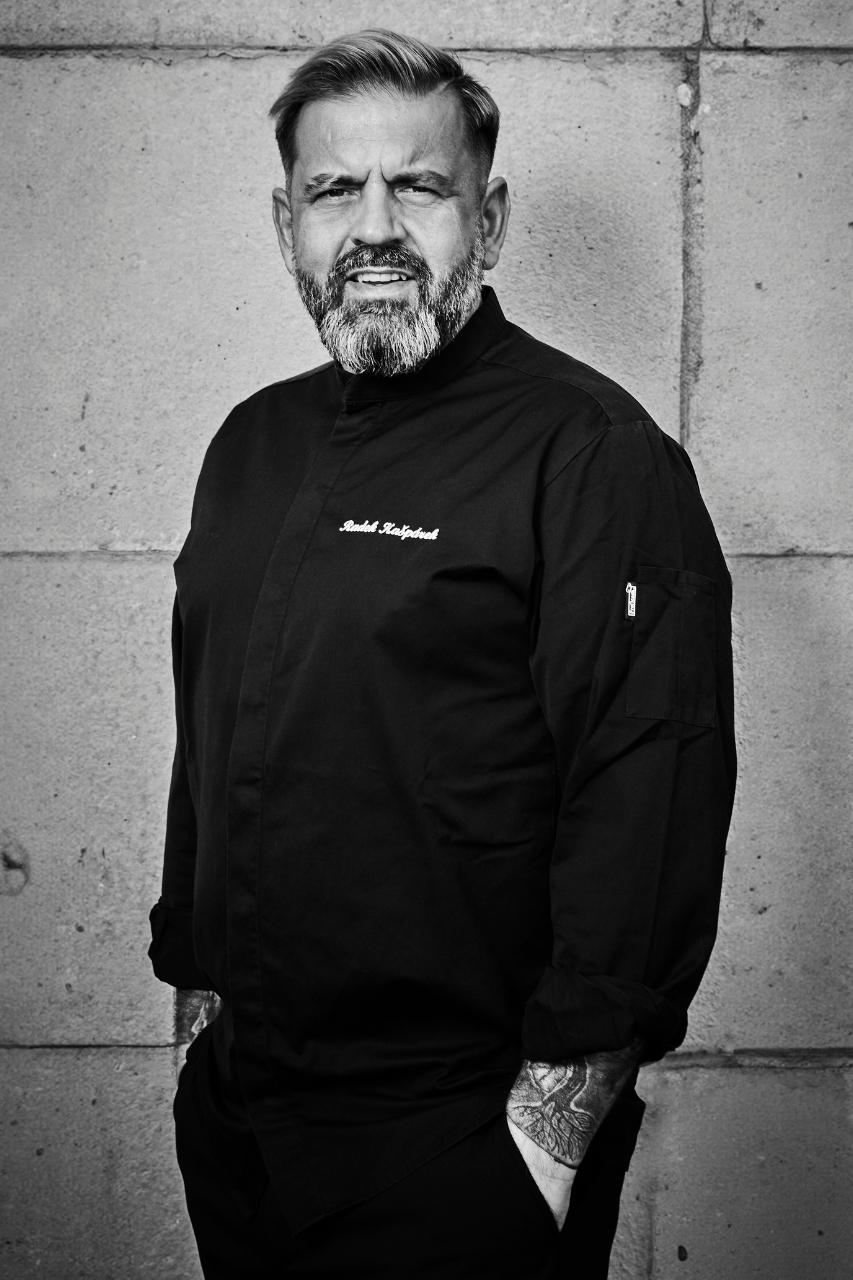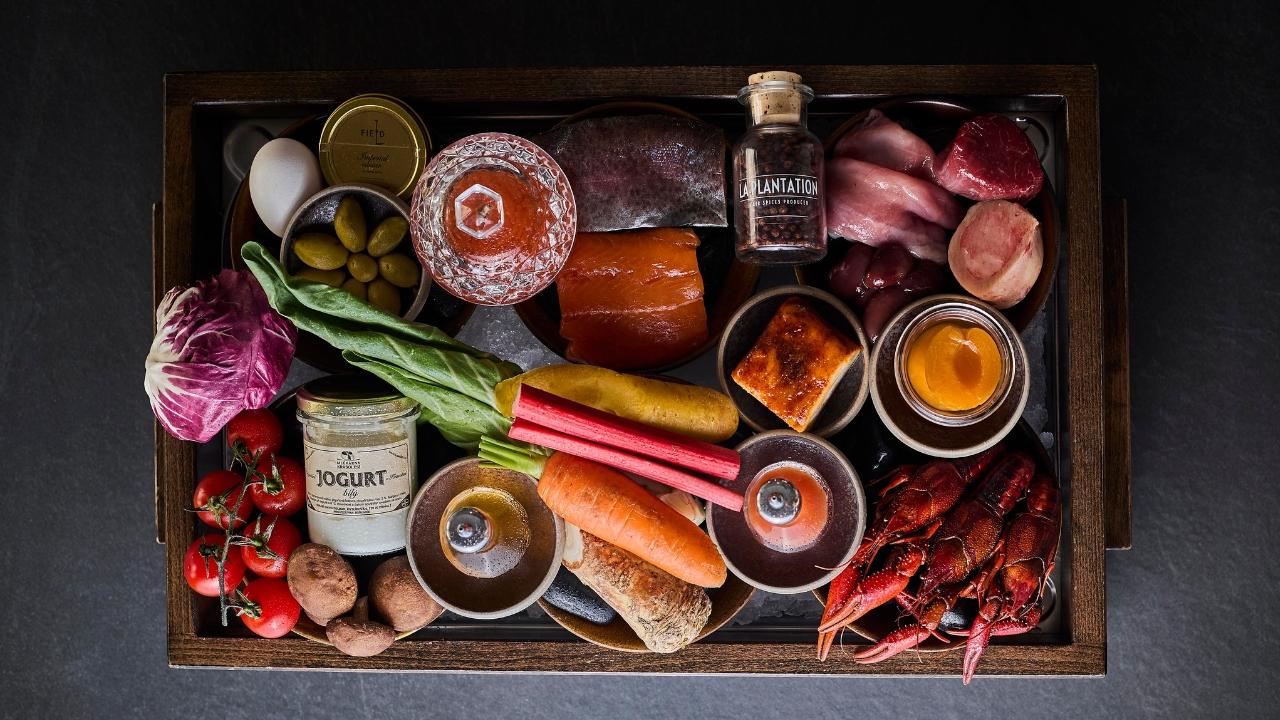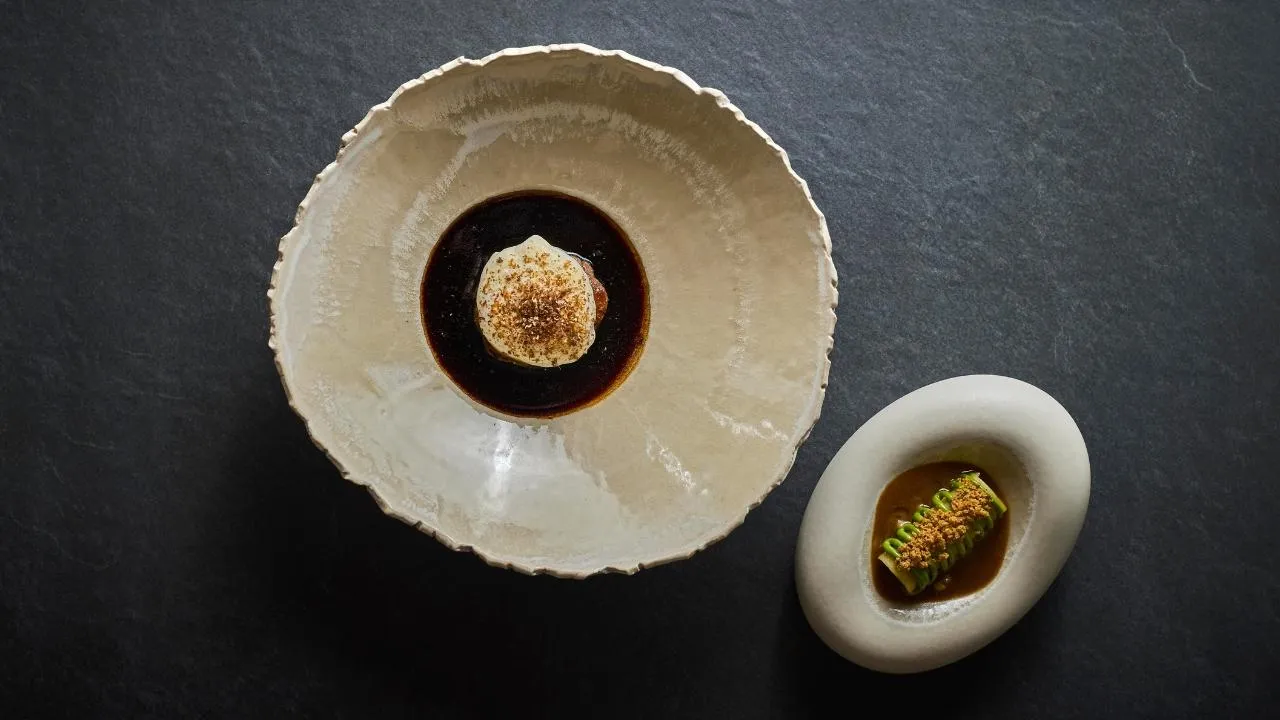

Radek Kašpárek’s Michelin-starred restaurant Field presents a new tasting menu that is firmly rooted in Czech ingredients, yet certainly doesn’t stick to the ordinary. Trout, crayfish, char, rabbit and veal come together on the plate with rhubarb, Swiss chard, spruce shoots, caviar, fermented ingredients and smoke. The result is a summer menu that feels fresh, yet beneath its lightness lie deep, distinctive and, at times, surprisingly bold flavours.
Vinné a nealkoholické párování
Field’s summer menu is accompanied by two carefully considered pairings. The wine pairing focuses on distinctive European wines, served in succession to accompany the fish, meat, and dessert courses of the tasting menu. The selection culminates with the 2006 Brunello di Montalcino Riserva Biondi Santi, followed by N.V. Princes de Venoge Blanc de Blancs to round off the meal.
Equally interesting is the non-alcoholic option, which is not merely an alternative to wine. Here, too, unique flavour combinations are created, such as gooseberry with tarragon, quince with verjus, apple with Genmaicha tea, rhubarb with wild herbs, or aronia with oak. The pairings mirror the logic of the kitchen and demonstrate that, even without alcohol, individual courses can be accompanied with equal complexity.
Wine pairing
- Trout: 2023 IDDA Bianco, Angelo Gaja & Alberto Graci
- Crayfish: 2023 Grüner Veltliner Schloss Gobelsburg Renner Erste Lage
- Char: 2021 Verdicchio Classico Riserva Il Cantico Della Figura, A. Felici
- Rabbit: 2021 Chiavennasca Valtellina Superiore Riserva Inferno, Rainoldi
- Veal: 2006 Brunello di Montalcino Riserva, Biondi Santi
- Yoghurt, apricot: N.V. Princes de Venoge Blanc de Blancs
Non-alcoholic pairings
Gooseberry & tarragon · quince & verjus · apple & Genmaicha · rhubarb & wild herbs · aronia & oak · carrot & basil
At Field in Prague, the new menu doesn’t change the underlying principles. Radek Kašpárek’s restaurant, which holds one Michelin Guide star, continues to build on seasonal ingredients, their natural character and distinctive flavours. He describes his cuisine as straightforward and unpretentious, while not shying away from unexpected combinations.
And it is precisely this focus on local produce that is one of the first things guests notice during the summer tasting menu. Most of the ingredients come from the Czech Republic. Yet this is not merely a general claim about using local produce. During the tasting, the service specifically highlights their origins – trout from Pepa Kalenda at Chabrybárna, rhubarb from Abasta, or yoghurt from David Kolman. There are exceptions, such as crayfish imported from Germany, but there is a specific reason behind even these.
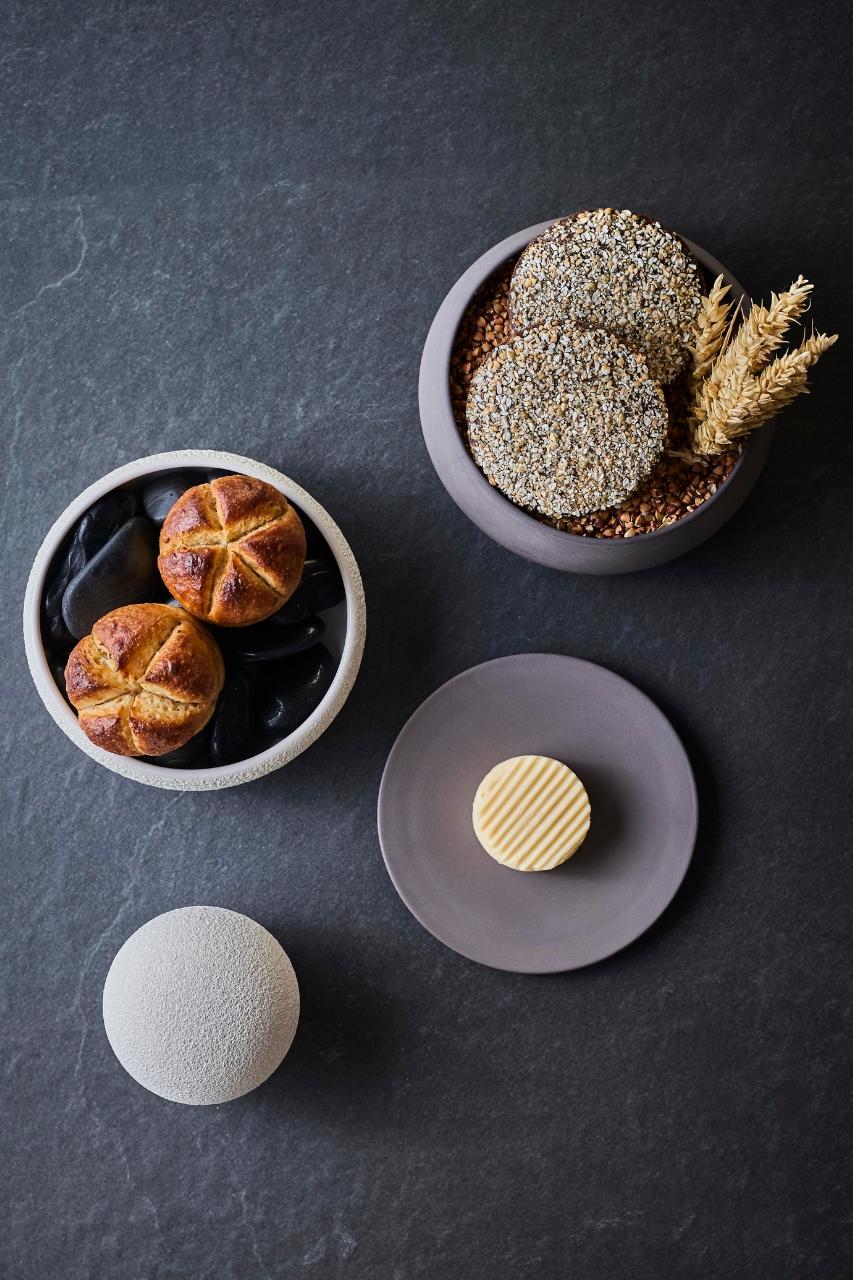
Even before the main courses are served, a butter-and-onion brioche and wholemeal rye bread are brought to the table. These are accompanied by butter made from baked yeast and homemade cottage cheese with sour cream, complemented by a herb vinaigrette with sun-dried tomatoes and raspberry vinegar. Fried buckwheat and dried sheep’s cheese add a contrasting crunch and saltiness to the softness of the bread. The very first bite thus suggests that Field, once again, will not confuse summer cuisine with simple cuisine.
From carrots and fish to char
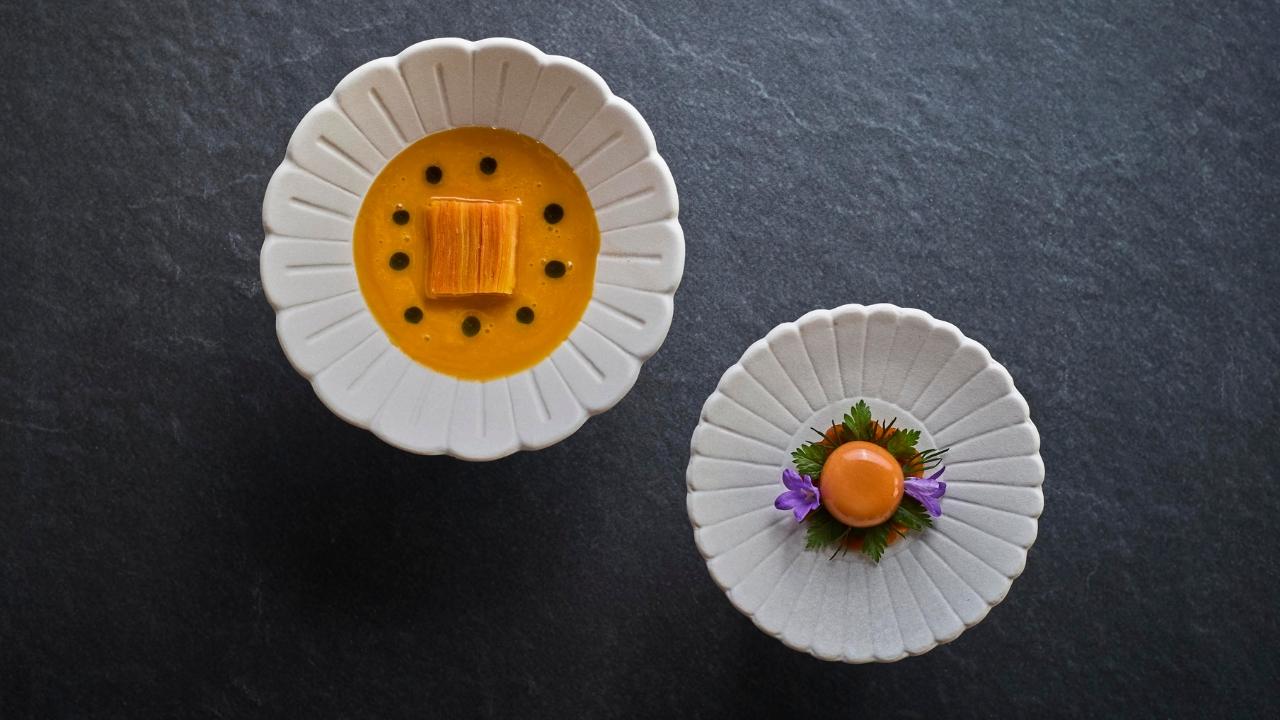
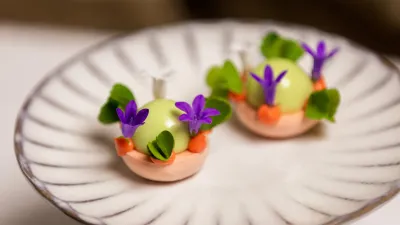
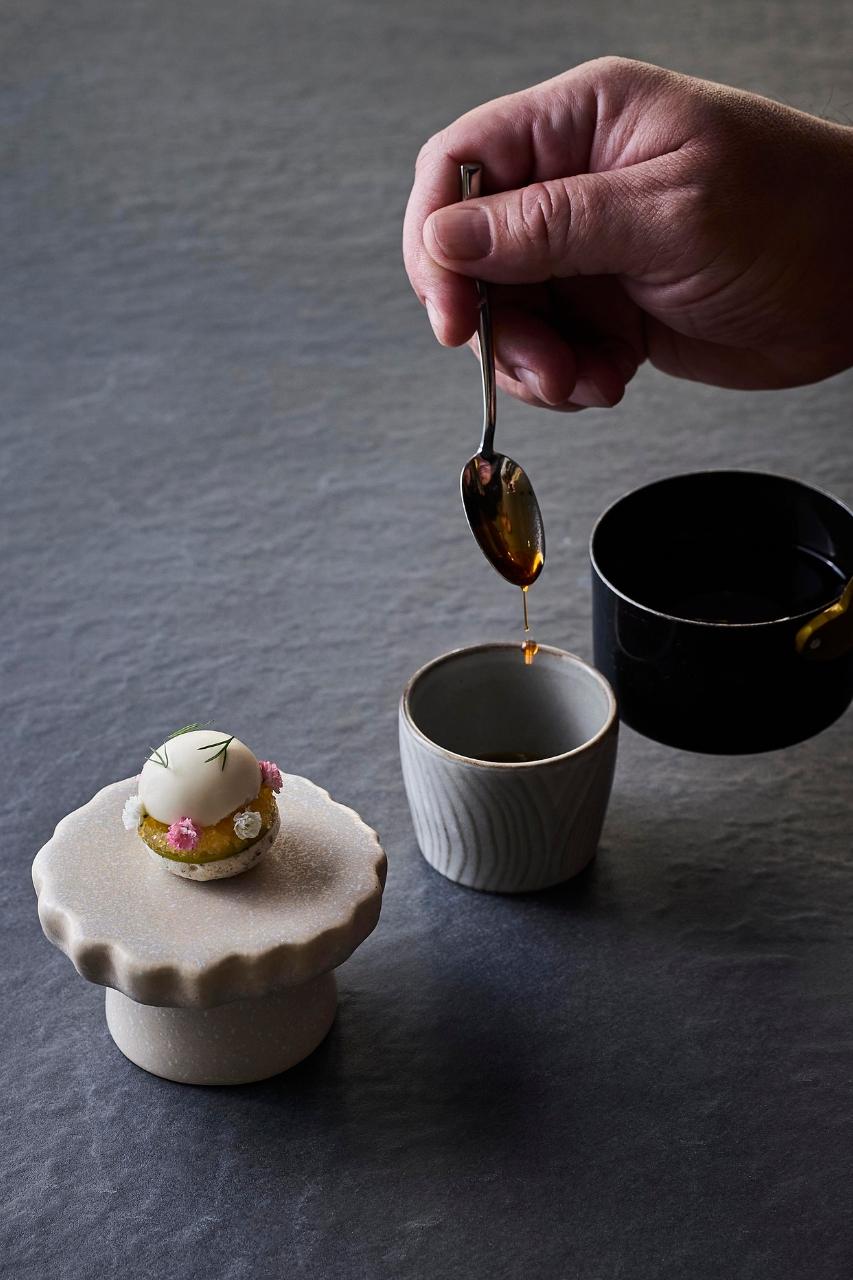
The opening trio of amuse-bouches progresses from vegetables, through fish, to meat. The first puts the carrot in the spotlight, this time in a form the guest may not yet have tasted. A terrine of two-coloured carrots is complemented by a light cream of carrot and fermented tomatoes, and tarragon oil. Alongside it is a carrot tartlet with apple gel and a bonbon made from roasted carrots and crème fraîche. A simple root vegetable is thus transformed into a precise and multi-layered bite.
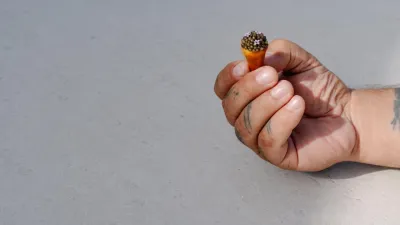
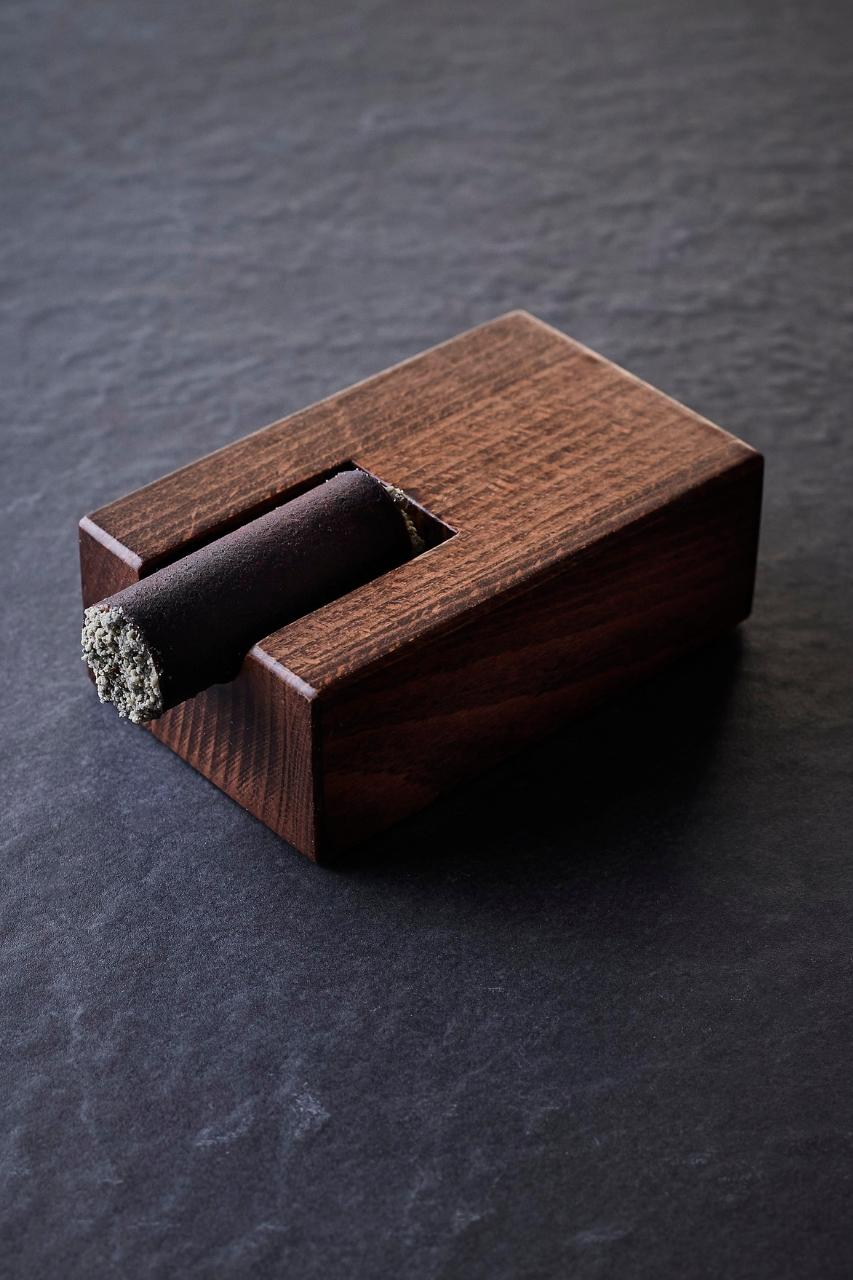
The second amuse-bouche returns to fish. A fish bonbon in a cream-and-dill glaze is complemented by cucumber jelly, whitefish caviar and a green tea and seaweed macaron. Before the main course, there is a crayfish shot with cucumber and crayfish butter which, according to the waitstaff, is intended to stimulate the palate. The third and final amuse-bouche really steps it up: veal tartare with wild garlic capers and a gel made from roasted tomatoes with green pepper is encased in a crispy black pudding tube and accompanied by edible ash made from wholemeal seeds and white poppy seeds.
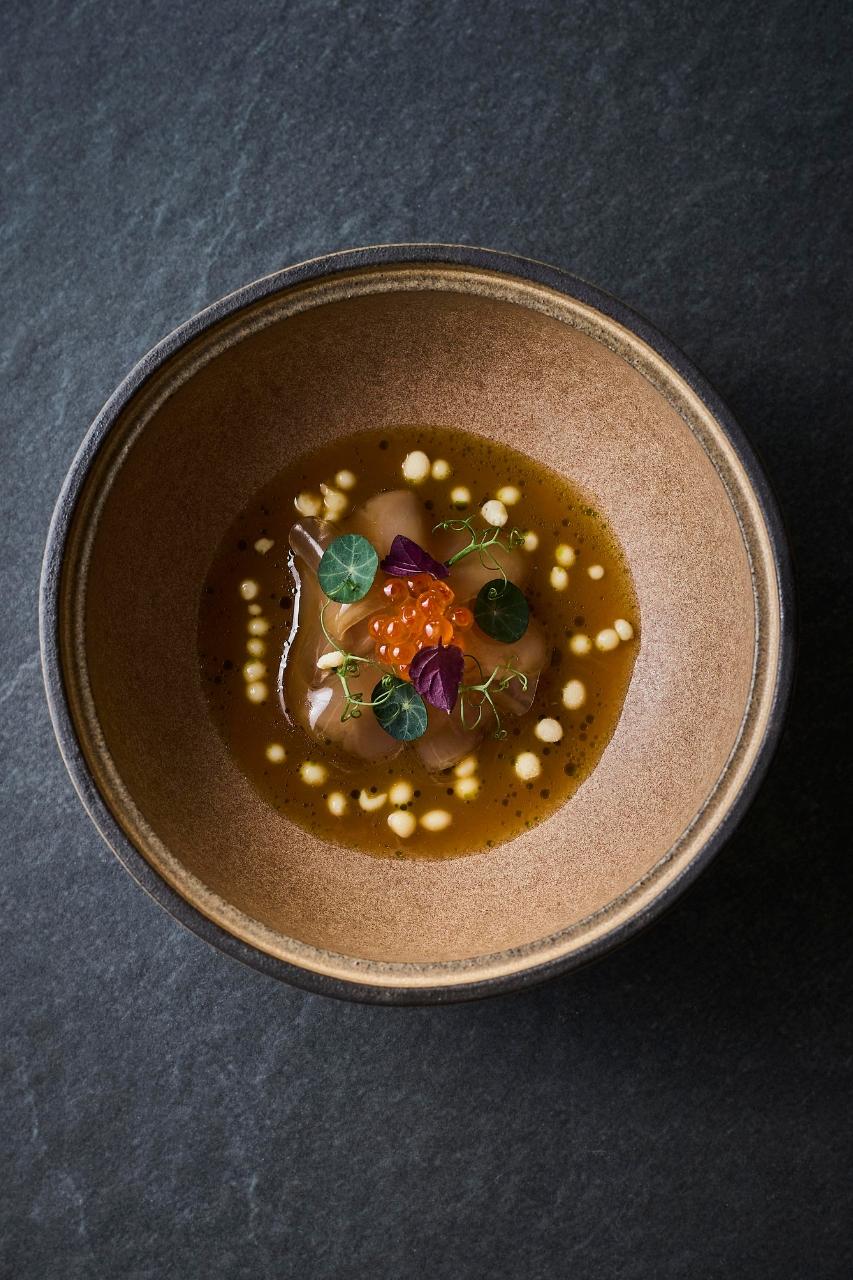
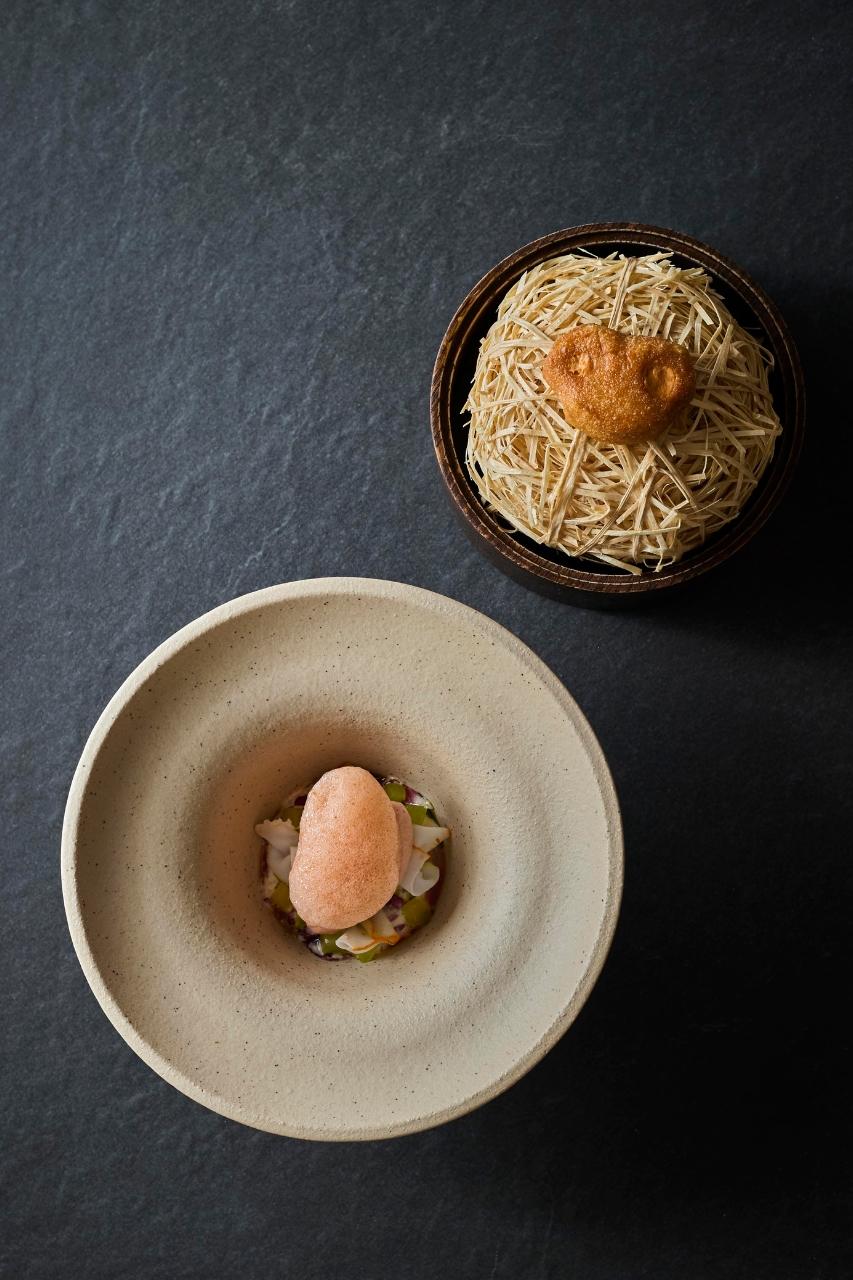
The first main course features marinated trout. Its flavour is complemented by a glaze of pea tamari and mirin, homemade sour cream, trout caviar and rhubarb jelly. There are also frozen pearls of smoked trout ice cream, nasturtium and shiso cress. The whole composition is tied together by rhubarb juice with citrus and tamari, and finally spruce shoot oil. On a single plate, the freshness of rhubarb, the smokiness of the fish, acidity, umami and a distinct herbal note all come together.
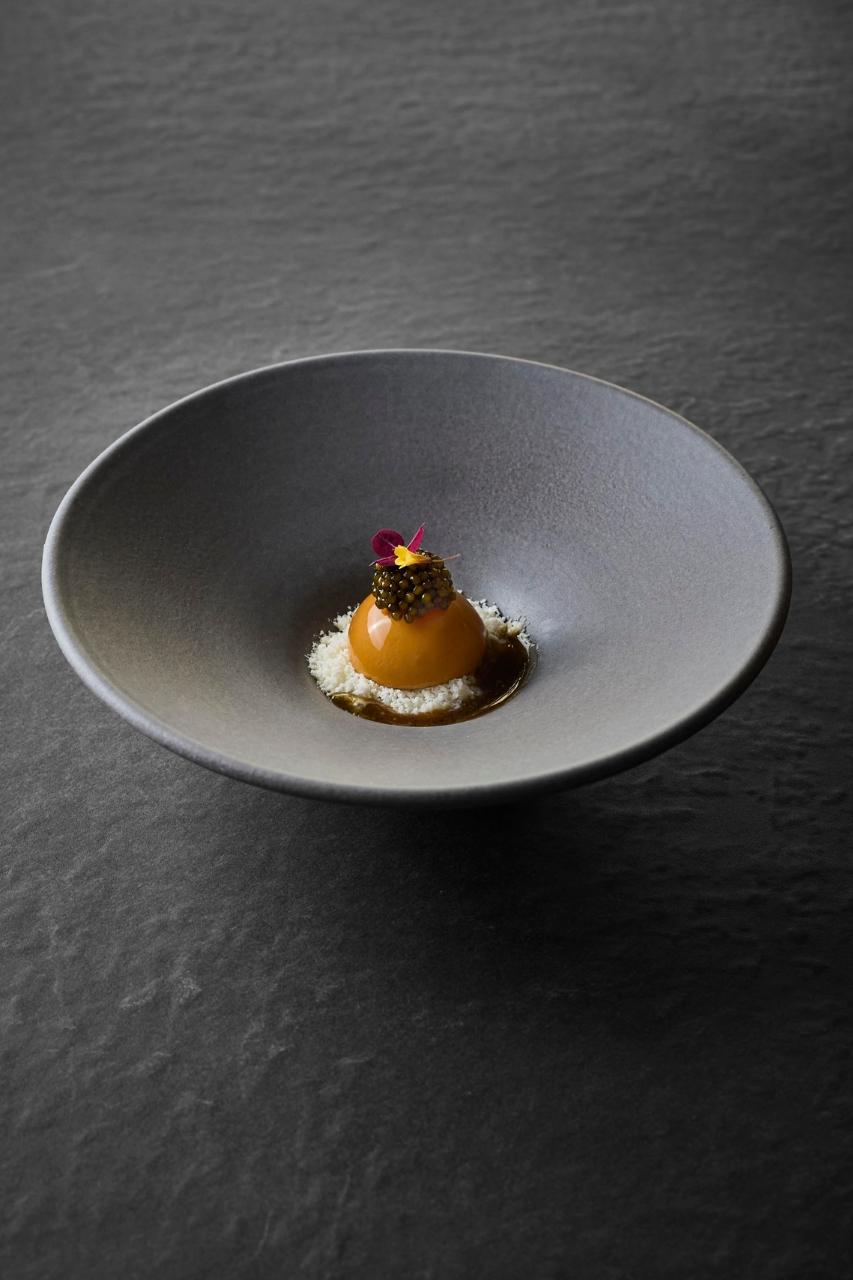
This is followed by crayfish with caviar, cream and brown butter, the foundation of which is the delicacy of the crayfish tails. At the bottom of the plate lies a salad of young almonds, topped with a granita of fermented cream and a light crayfish mousse, glazed with crayfish consommé. The crowning glory is Imperial caviar. The dish is complemented by a Noilly Prat sauce and sprouted pea oil. It is here that Field’s ability to work with contrasts is once again evident – the cool granita, the delicate crayfish, the saltiness of the caviar and the aromatic sauce do not try to drown each other out.
The caviar comes from Pearl Caviar, whose Kaluga sturgeon are farmed in Latvia and Poland. The fish are not killed during the harvesting process, but are anaesthetised, and the caviar is gently extracted. Radek Kašpárek personally selected this particular batch for Field. The result is caviar with a creamy, buttery character and a subtle nutty undertone.
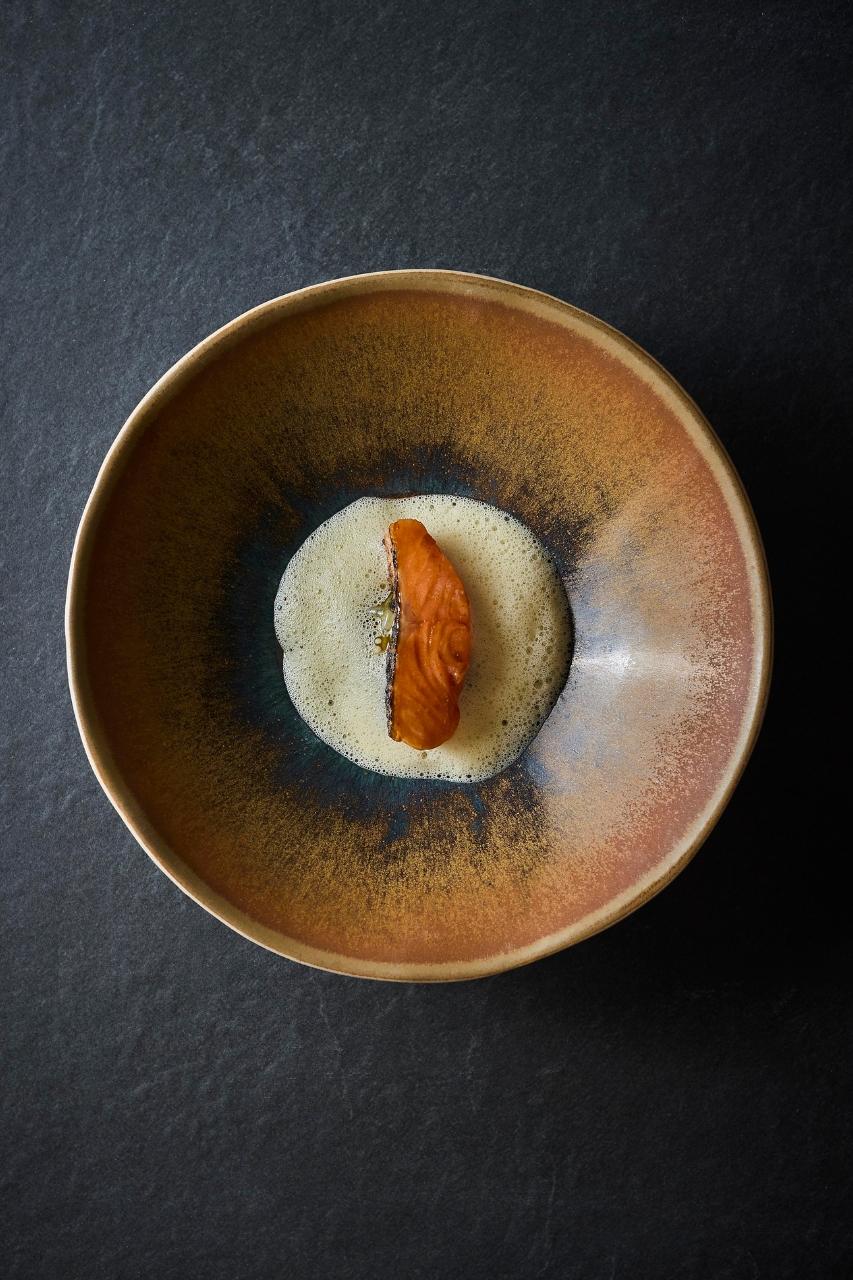
Following the delicacy of the crayfish comes a more distinctive fish course. Fire-roasted char is served with a Swiss chard salad featuring fish garum and guanciale, and a broth made from smoked fish bones with tapioca and wild garlic. The dish concludes with a fish mousse made from pickled dill gherkins and horseradish. The fish is thus not confined to the safe realm of delicacy, but is infused with smoke, fermentation, fat, acidity and a distinct piquancy.
From rabbit to veal, via fire and charcoal
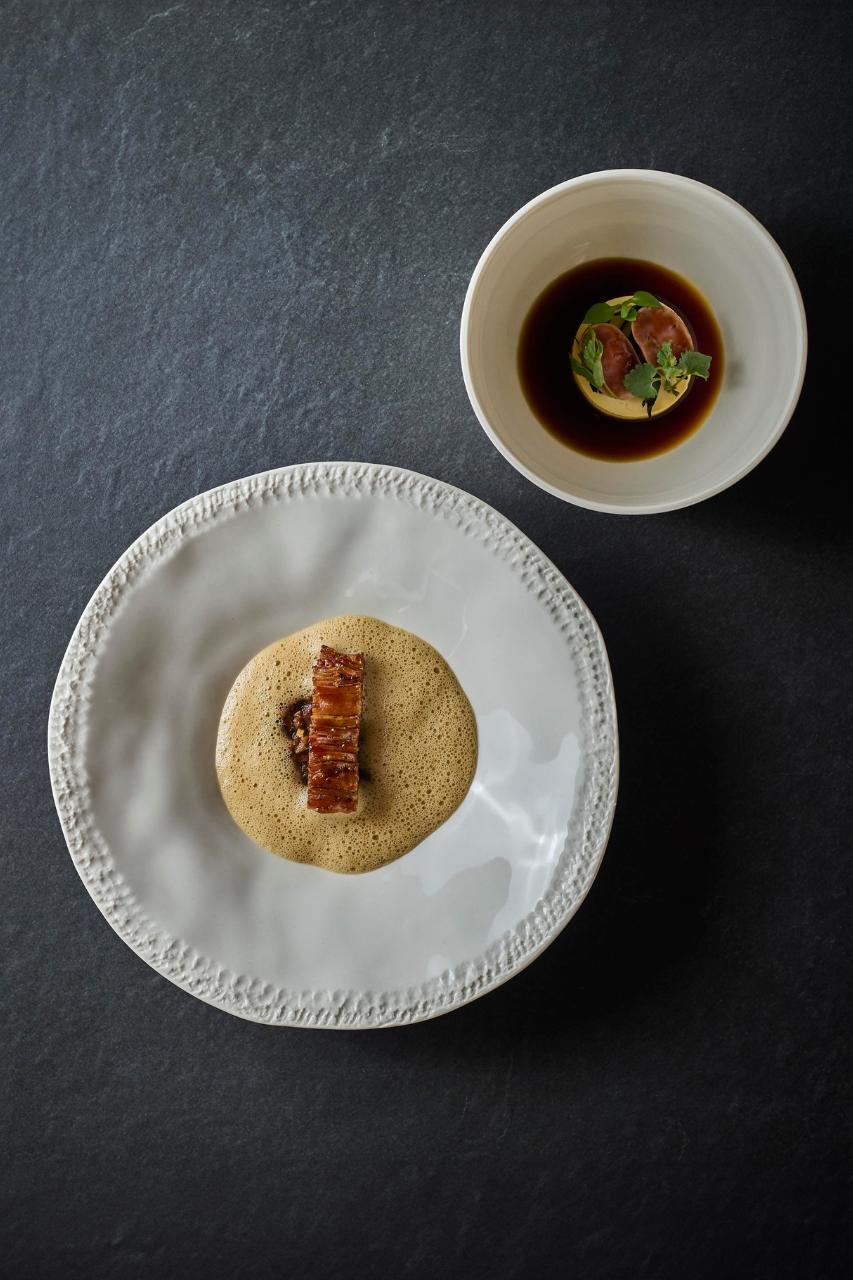
The flavours deepen further with the meat section of the menu. The rabbit is served as bellies grilled over an open fire, accompanied by a veal’s head ragout and a rabbit velouté with sour cream and fresh turmeric. The second part of the course consists of rabbit kidneys with horseradish foam, pickled stroček and a rabbit and tarragon consommé. Here, the offal is not merely a garnish, but a fully fledged part of the dish, adding another layer of character.
Before the main course, the pace slows down for a moment. Mangalica pork, radicchio, tomatoes and gazpacho serve as a refreshing interlude. Sorbet and roasted tomato sauce are combined with radicchio in an emulsion of homemade kimchi, pickled gherkin and tomato juice. They are accompanied by Mangalica lardo and topped with chilled gazpacho foam. Next comes fried turnip with turnip pâté and nduja, homemade kimchi and black garlic. This is another moment where Field demonstrates that haute cuisine needn’t be overly formal – part of the dish is simply eaten with your hands.
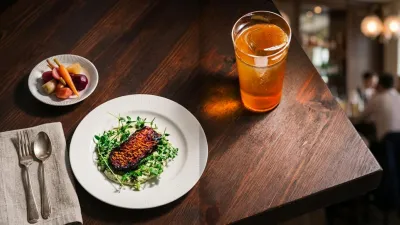
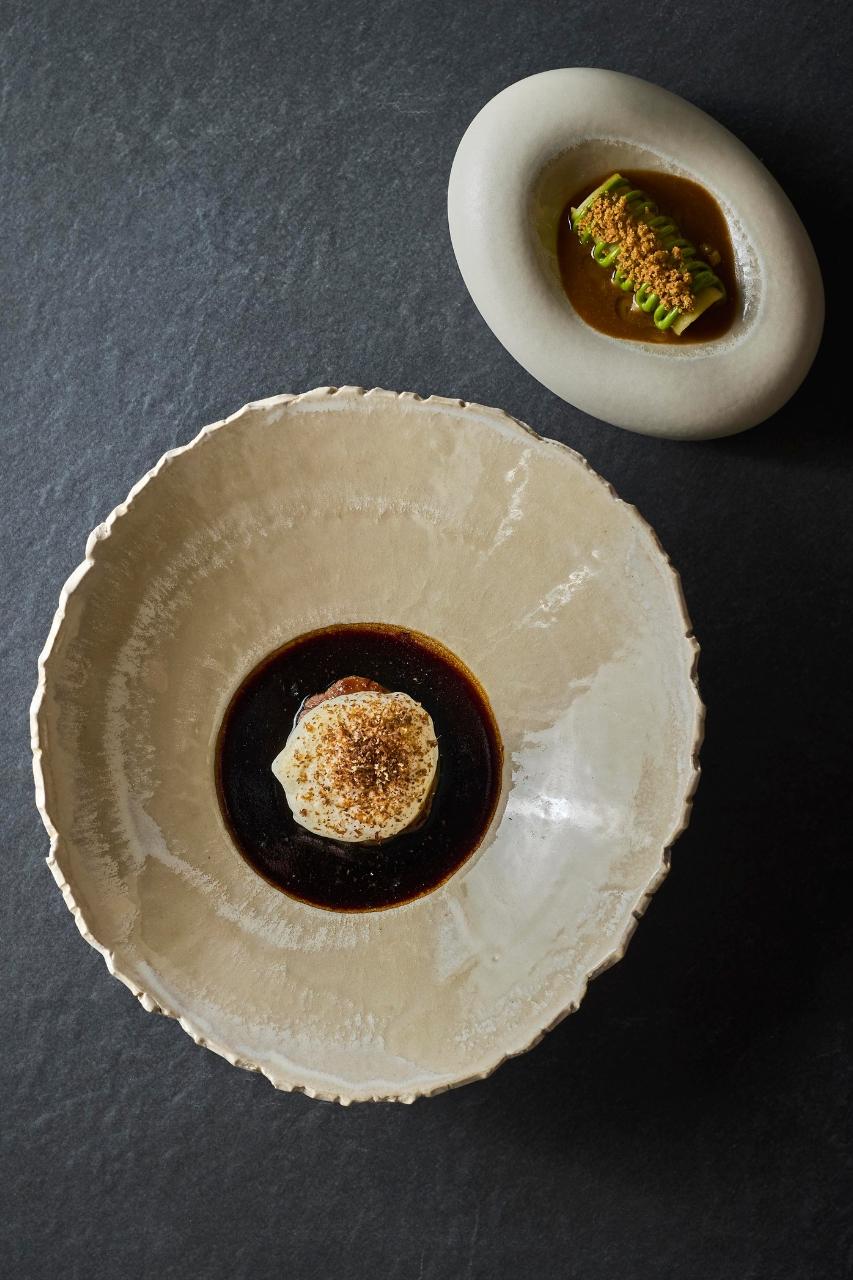
The main course then focuses on a shio koji-marinated veal loin, flame-roasted and infused with charcoal butter. A warm veal vinaigrette is combined with a marrow sabayon, topped with dried, smoked veal liver and red Kampot pepper. Even the side dish is no afterthought. Light veal cannelloni is complemented by a shiitake miso cream with Wagyu fat and crackling, while pickled shiitake and a chive emulsion add a touch of freshness.
It is one of the most compelling moments of the entire menu. Fire, charcoal, marrow, fermentation, fat, mushrooms and pepper create a distinctive flavour profile, yet one that remains centred around a single main ingredient. Here, Kašpárek’s cuisine does not attempt to soften the veal or mask its character. On the contrary, it allows it to shine through and builds further layers around it.
This is precisely what makes the current Field so easy to understand. Kašpárek’s cuisine does not attempt to smooth out the ingredients to the point where their origins are unrecognisable. The smoke from the fire, the acidity of fermentation, fat, meat or vegetables all remain distinct. Yet their contrast does not result in chaos, but rather a carefully considered whole.
The finale features peach, apricot and four pralines
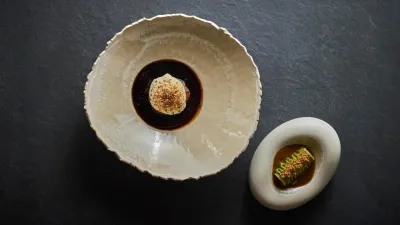
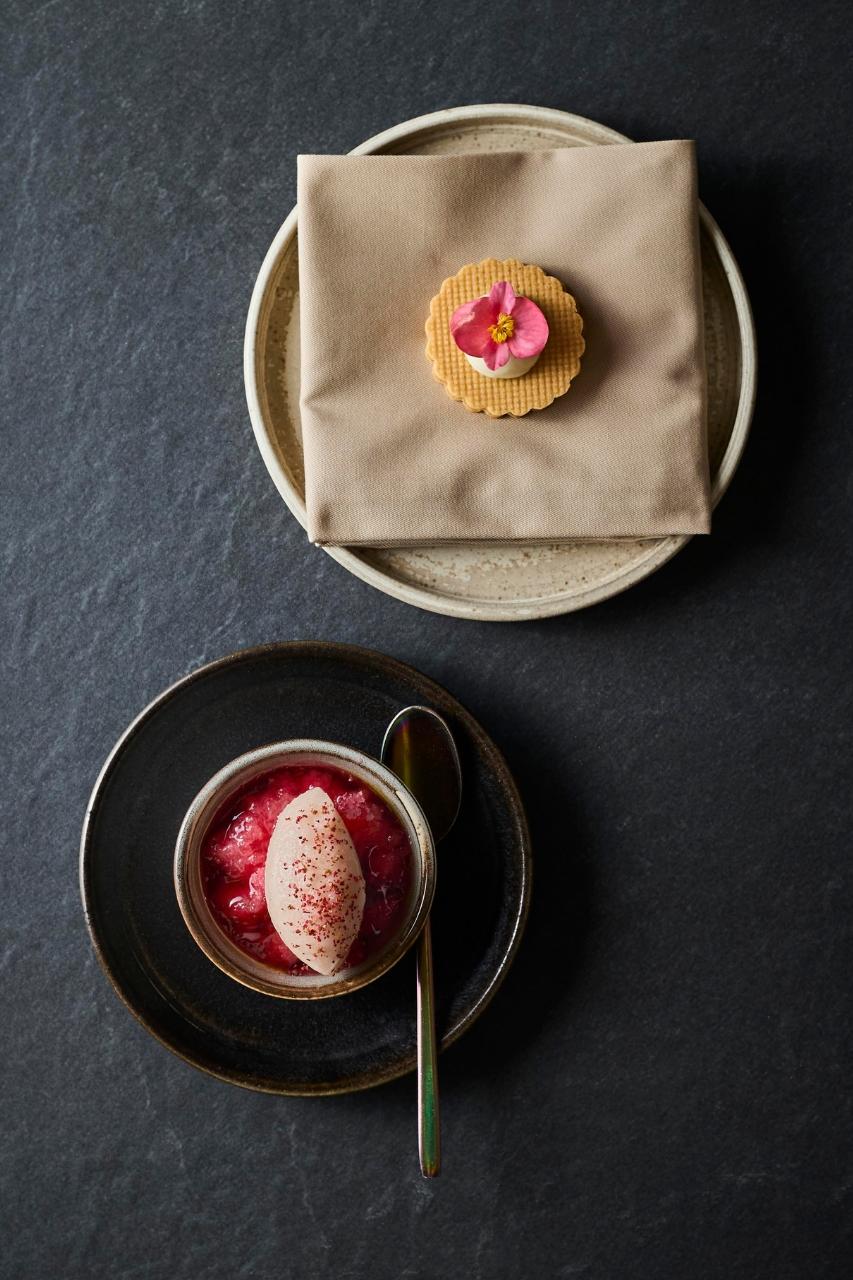
The transition to the sweet course comes in the form of grapefruit, peach, goat’s cheese and pink pepper. In a chilled bowl, grapefruit granita is served with peach sorbet, pink pepper and a citrus and raspberry dressing. Beside it lies a delicate wafer with raspberry jelly and a light goat’s cheese cream. The tartness and chill prepare the palate for the sweet finale.
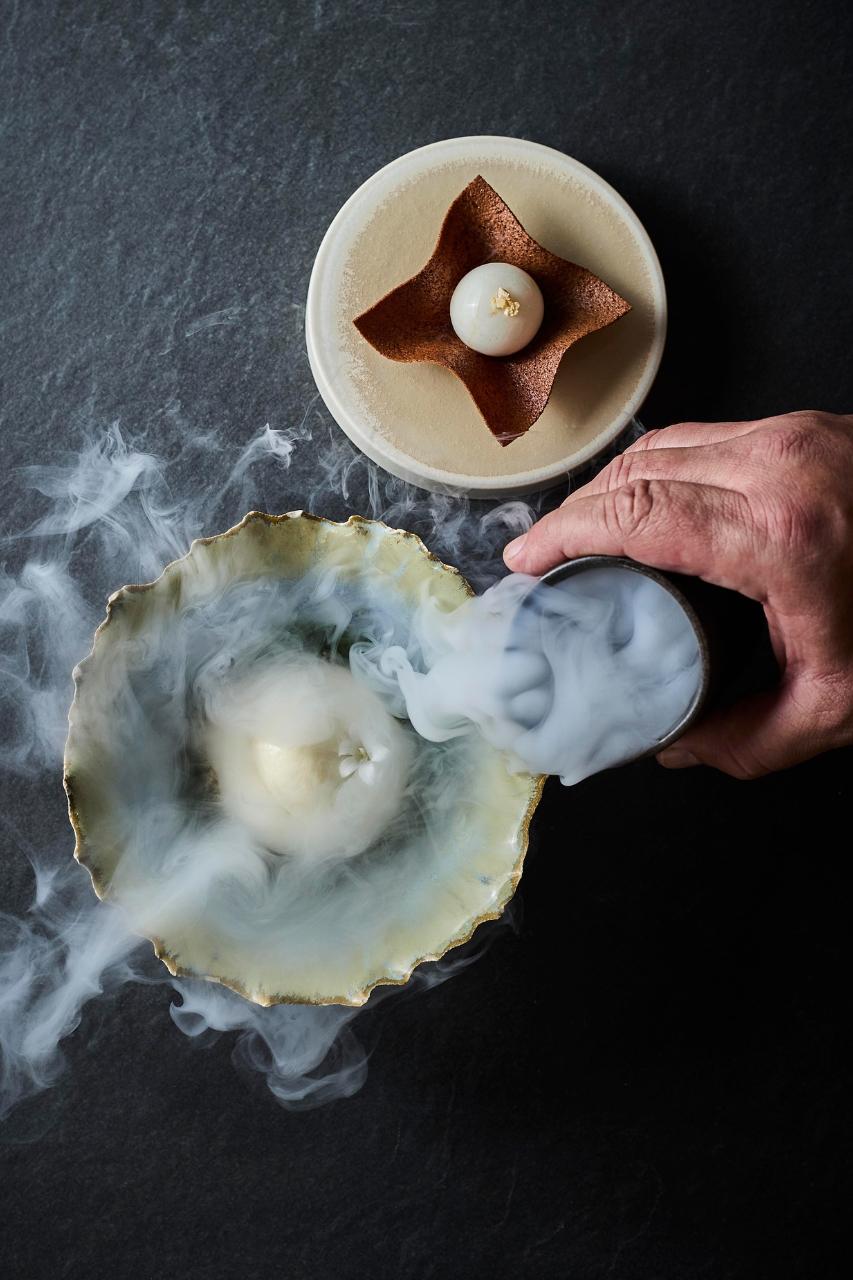
This comes in the form of yoghurt, apricot, lemon balm and olive oil. At the bottom of the bowl lies chilled apricot compote with honey made from wild raspberry nectar, crumble and yoghurt espuma. The olive oil and thyme ice cream brings an unexpectedly green and aromatic note, while everything is topped with chilled lemon balm soup infused with thyme oil. On the side is a crisp tartlet with yoghurt mousse and apricot-and-lemon curd. The finish is provided by an essence of lemon thyme and lemon balm, which brings the scent of the herbs back into the whole composition.
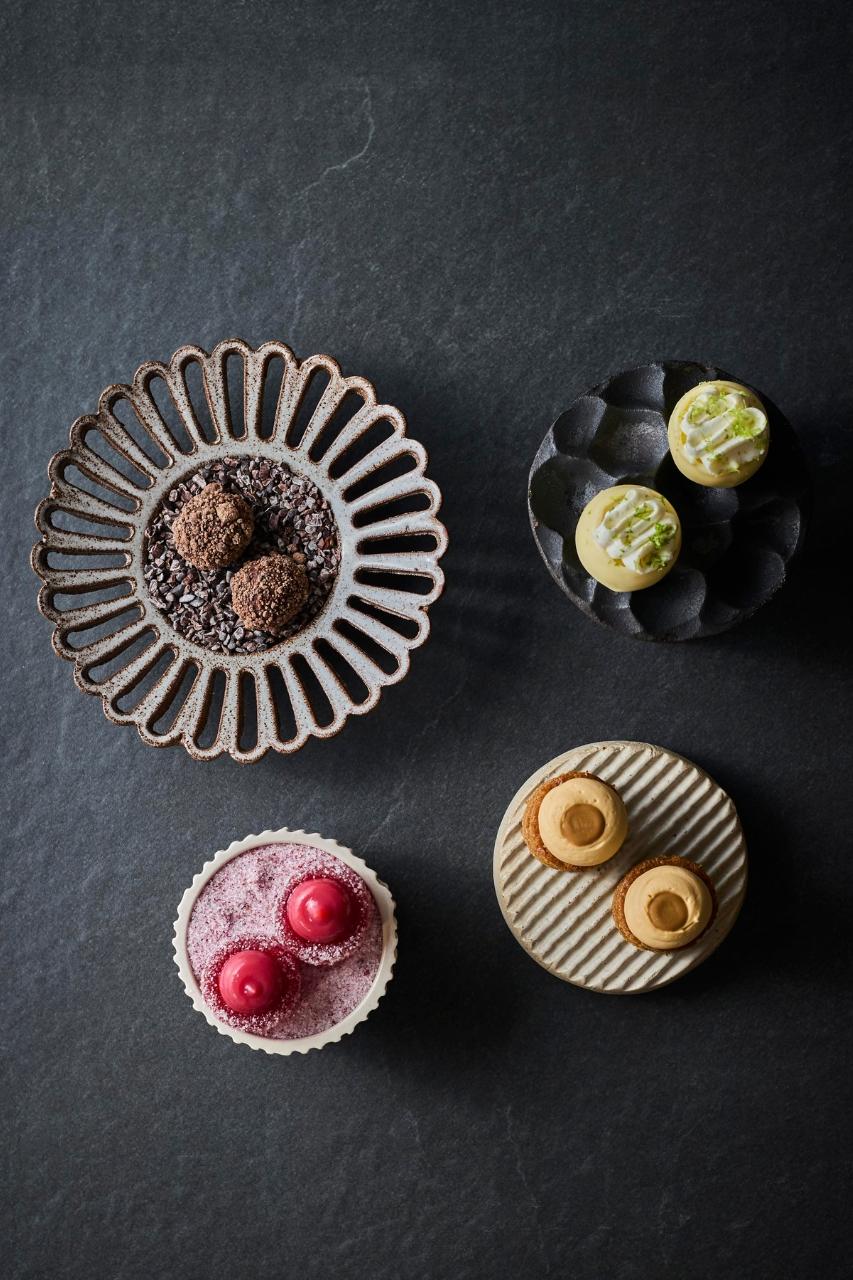
Even the very end is not merely an afterthought. The four pralines have their own narrative. A delicate honey cake is complemented by a smooth ganache and a sauce made from Brunost cheese. This is followed by a roasted hazelnut marinated in caramel and vinegar, served with a nougat ganache and crunchy chocolate. The third bite consists of pickled sour cherries with green tea gel, and a baked ganache made from white chocolate and yoghurt. The final bite is a redcurrant jelly with redcurrant gel and Campari, encased in lemon sugar and pink pepper.
The entire menu thus takes a remarkable journey during the tasting. It begins with carrots and pastries, continues through trout, crayfish and char to rabbit and veal, before finally returning to peaches, apricots, yoghurt and herbs. Summer is present at Field, but it isn’t the main focus. It is in the rhubarb, Swiss chard, tomatoes, peaches and apricots. Underneath these, however, lies a cuisine that isn’t afraid of smoke, fermentation, offal, fat or bitterness.
And that is precisely why the new menu does not feel like a seasonal detour, but rather the next natural chapter in Field’s story. Even with a single Michelin Guide star, Radek Kašpárek’s restaurant retains its signature style: Czech-sourced ingredients, bold flavours, technical precision and, above all, a willingness to surprise. The current menu is also accompanied by carefully considered wine and non-alcoholic pairings, which bring the same philosophy to the glass.
So, once again this year, Field isn’t presenting a vision of what the perfect summer should look like. It offers its own interpretation of the season – one in which Czech ingredients meet fire, fermentation, boldness and precision. And it is precisely thanks to this that Radek Kašpárek’s cuisine remains instantly recognisable from the very first bite, even after all these years.