
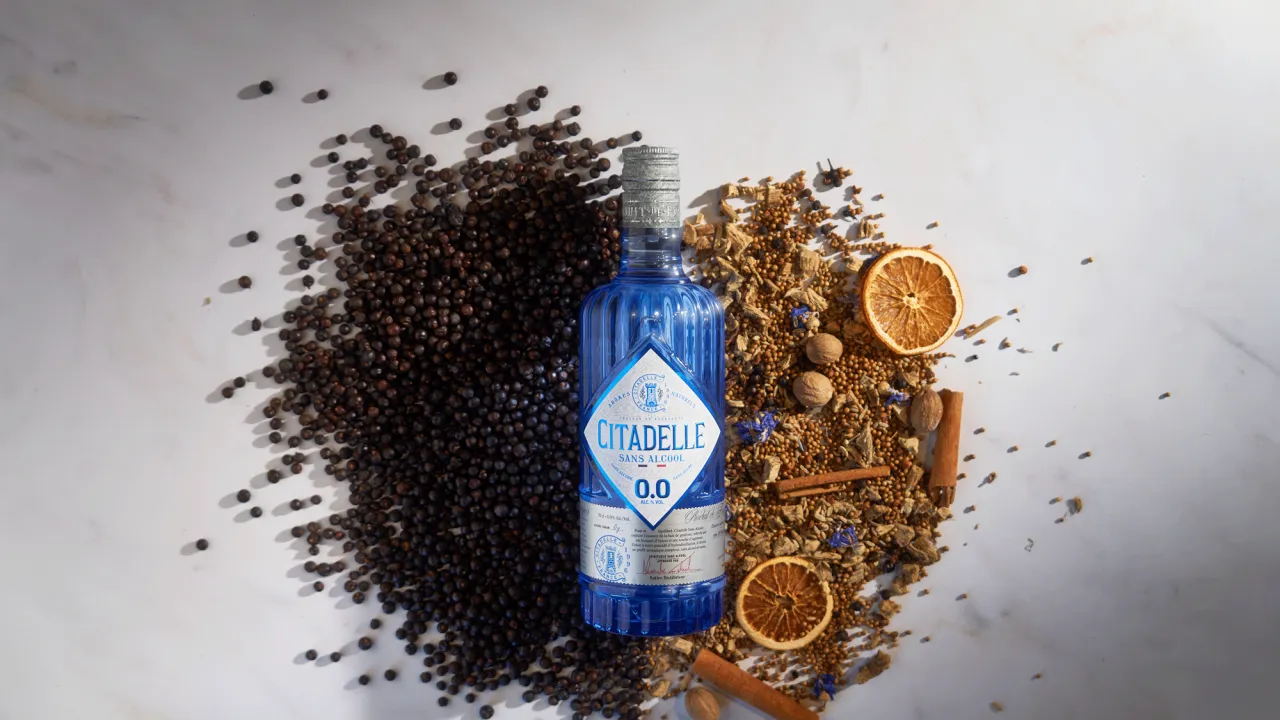

Citadelle 0.0 is a pioneer in modern craft gin – a non-alcoholic spirit created using technologies inspired by the world of haute parfumerie.
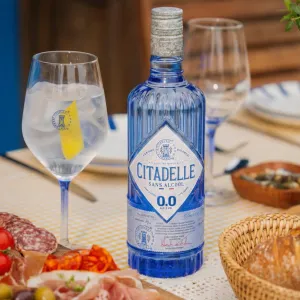
Citadelle Zero & Tonic
- 5 cl Citadelle 0.0
- 10 cl Fever-Tree Mediterranean Tonic
- lemon zest
Pour 5 cl of Citadelle 0.0 into a glass filled with ice, then top up with 10 cl of Fever-Tree Mediterranean Tonic. Stir gently, squeeze the lemon zest over the drink, and serve.
Just a few years ago, most non-alcoholic spirits were seen as a necessary compromise: products designed for those who, for whatever reason, could not drink alcohol but still wanted to hold a glass that resembled a cocktail. Taste often took a back seat to function, and the experience itself was a secondary consideration.
Today, the situation is changing. The non-alcoholic spirits category is maturing, and with it, guests’ expectations are evolving. It is no longer about the absence of alcohol, but about the presence of flavour, complexity and craftsmanship. And this is precisely where Citadelle 0.0 comes in. The brand, regarded as one of the pioneers of modern craft gin, is responding to changing consumer habits in its own distinctive way – without compromise and with an emphasis on technology, innovation and respect for ingredients.
The next chapter in the story
When visionary Alexandre Gabriel revived the production of Citadelle French gin in the 1990s, he was bucking the trends of the time. At a time when gin was nowhere near as popular as it is today, he believed in a return to craftsmanship, authenticity and the art of working with botanicals. The result was a product that is now often cited as one of the first modern craft gins. More than three decades later, the brand faces a new challenge.
Alcohol consumption is changing, particularly among younger generations. More and more guests are looking for the option of enjoying a non-alcoholic cocktail without having to compromise on quality or the social experience.
“At Citadelle, we have always believed that great flavour should know no bounds. With Citadelle 0.0, we wanted to offer an authentic experience to everyone seeking an alcohol-free alternative,” says Alexandre Gabriel, founder of the Citadelle brand.
Citadelle 0.0 is therefore neither a by-product nor a marketing response to a trend. It is a logical continuation of the brand’s philosophy, which has long been built on a meticulous approach to flavour.
Not dealcoholisation, but a new method of distillation
The biggest difference compared with many competing products lies in the production method. Many non-alcoholic gins are produced by removing alcohol from a finished distillate. Although this is a technically viable solution, the result is often a loss of aromatic complexity and characteristic structure. The Citadelle brand, however, has taken a different approach. Instead of dealcoholisation, it uses hydro-distillation inspired by the world of haute parfumerie. Here, the botanicals are not processed using alcohol, but with water, which allows their aromatic components to be captured in a pure and precise form. The result is not a product from which alcohol has been removed; it is a spirit designed to be non-alcoholic from the outset.
The art of progressive maceration
However, the key to Citadelle’s character lies not only in hydro-distillation itself. The method of progressive maceration, which has been a hallmark of the brand for many years, also plays a crucial role. Each botanical is processed separately during production and at a precisely defined moment. The duration of contact, temperature and timing are all tailored to the specific raw material.
This is not merely a technical detail intended for production documentation. It is a working philosophy that enables the ideal aromatic profile to be extracted from each ingredient. In practice, this means greater precision, greater depth and, above all, a significantly more distinct final flavour. It is precisely this that gives Citadelle 0.0 its unusually complex character within the non-alcoholic spirits category.
Nineteen botanicals, no alcohol
Just like the classic Citadelle gin, its non-alcoholic variant features nineteen carefully selected botanicals. Juniper retains its dominant role, accompanied by citrus notes, spices and delicate floral aromas. The profile builds on the character of the original gin, while also incorporating some of the freshness and lightness of the Jardin d’Été variant.
On the nose, Citadelle 0.0 is airy and elegant. It reveals herbal and floral nuances, complemented by a fresh citrus accent. On the palate, it surprises with its fullness. The initial taste is fresh, gradually giving way to spicy notes and a subtle hint of pepper. The finish remains long, lively and well-defined – a characteristic that is often problematic in non-alcoholic products. This is not an attempt to imitate alcohol; the aim is to offer the same level of aromatic complexity, texture and length of flavour.
We have a choice
The growing popularity of non-alcoholic cocktails and alternative spirits is sometimes interpreted as a rejection of alcohol. In reality, it is more a matter of expanding the range of options. These days, guests are increasingly combining alcoholic and non-alcoholic drinks over the course of a single evening. They do not want to drink less simply because they have to; they want to have a choice. This is precisely why non-alcoholic spirits are becoming a staple on the menus of top restaurants, hotel bars and modern cocktail bars. A high-quality non-alcoholic drink is no longer a marginal item, but a fully fledged part of the drinks programme. Citadelle 0.0 perfectly illustrates this shift. It was not created as a substitute for those who cannot drink alcohol; it was created for everyone who wants a high-quality taste experience, regardless of alcohol content.
A new generation of luxury
While luxury was once often associated with exclusivity and inaccessibility, today’s premium brands are increasingly working with a different definition. Luxury means the freedom to make choices according to one’s own rules. Citadelle 0.0 embodies this philosophy. It retains the artisanal precision, technological sophistication and brand character that have helped define modern gin culture – just without the alcohol.
And perhaps that is precisely where its greatest significance lies. It is not just another product in a rapidly growing category. It symbolises the moment when non-alcoholic spirits finally cease to justify their existence and begin to be judged on the same terms as their alcoholic counterparts: by their quality, character and, above all, taste.