

For decades, a simple rule applied in the world of wine: ice has no place in Champagne. It was not merely a question of etiquette, but above all of sensory perception. Low temperatures suppress aromas, whilst melting ice alters the wine’s concentration, causing a classic brut Champagne to lose some of its elegance and complexity. Yet today, even among the most prestigious producers of Champagne and sparkling wines, we find cuvées whose makers recommend the exact opposite: pour them over ice cubes, add a slice of citrus, and serve in a large wine glass.
At first glance, this may seem like a marketing ploy in response to the summer season. In reality, it is a well-considered shift in technological approach. Wine is not the same at eight degrees as it is at two, just as it is not the same when it is slightly diluted by melting ice over the course of a few minutes. Producers therefore do not simply create standard sparkling wines that are merely recommended to be served differently. They design the flavour profile from the very beginning, knowing that the wine will only reach its final form once it is in a glass with ice.
This is a fundamental difference that is often overlooked. In gastronomy, we commonly consider how serving affects the final experience: a steak tastes different after a few minutes’ rest, just as the aromas of great Burgundy wines develop differently in a wide-bowled glass. With sparkling wines intended to be served over ice, the same philosophy is reflected right from the production stage. A glass with a few ice cubes is not a compromise, but the final step in the winemaker’s work.
Ice is not a mistake. It is part of the recipe
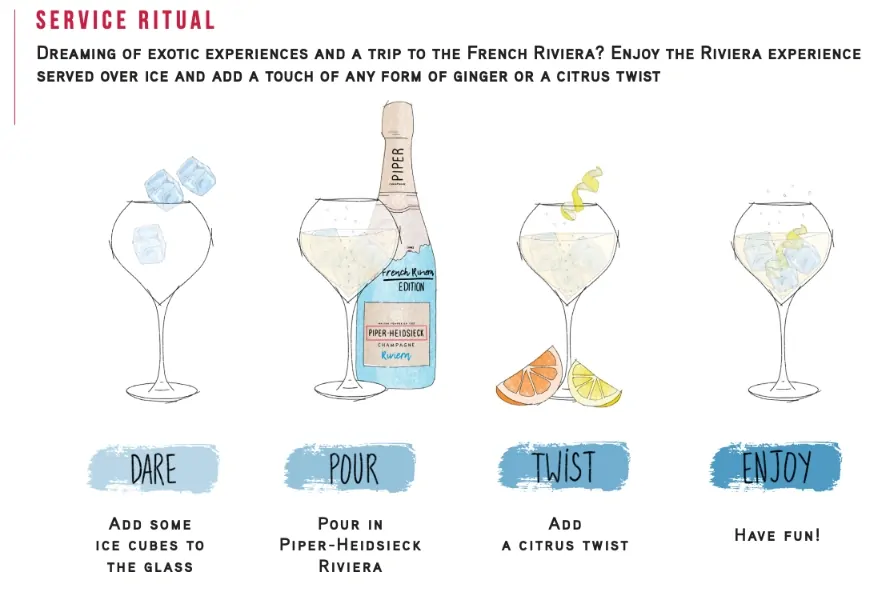
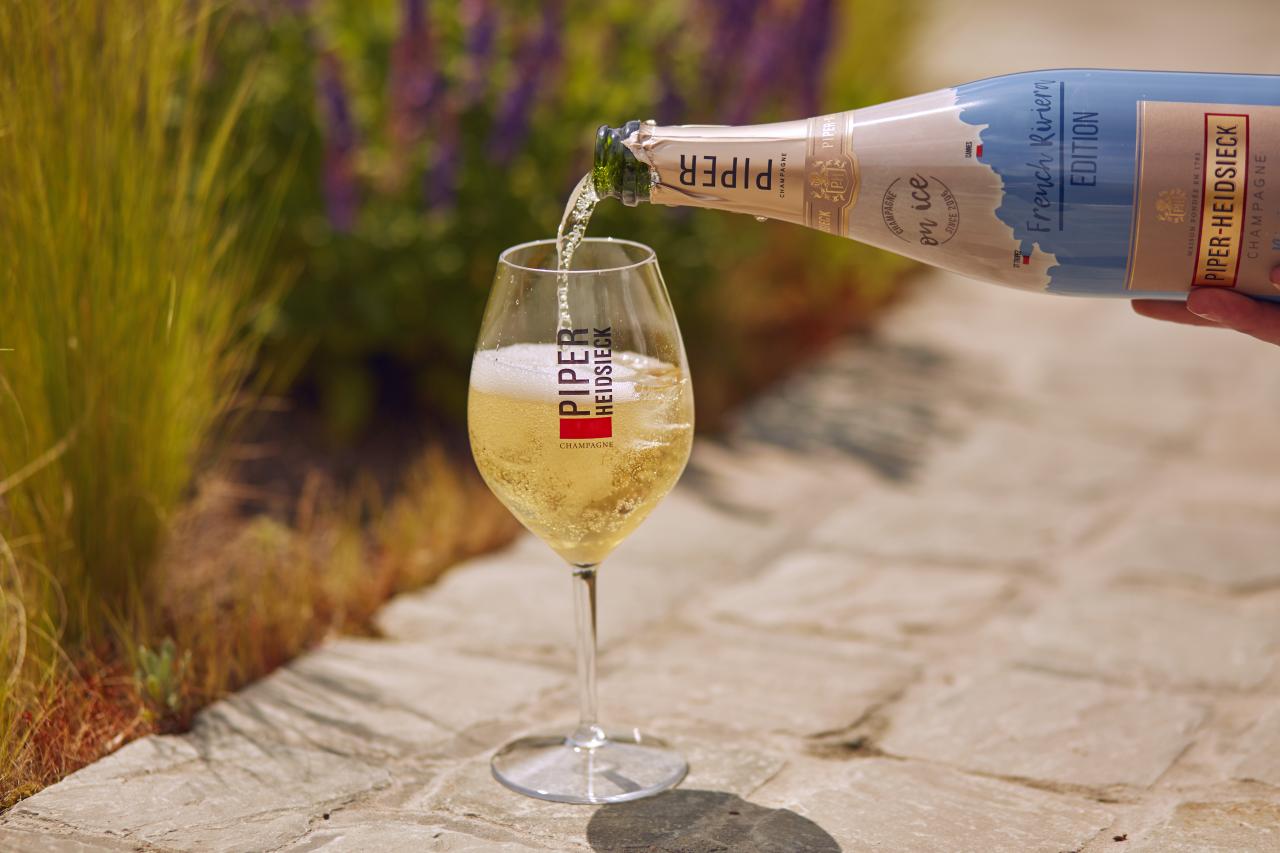
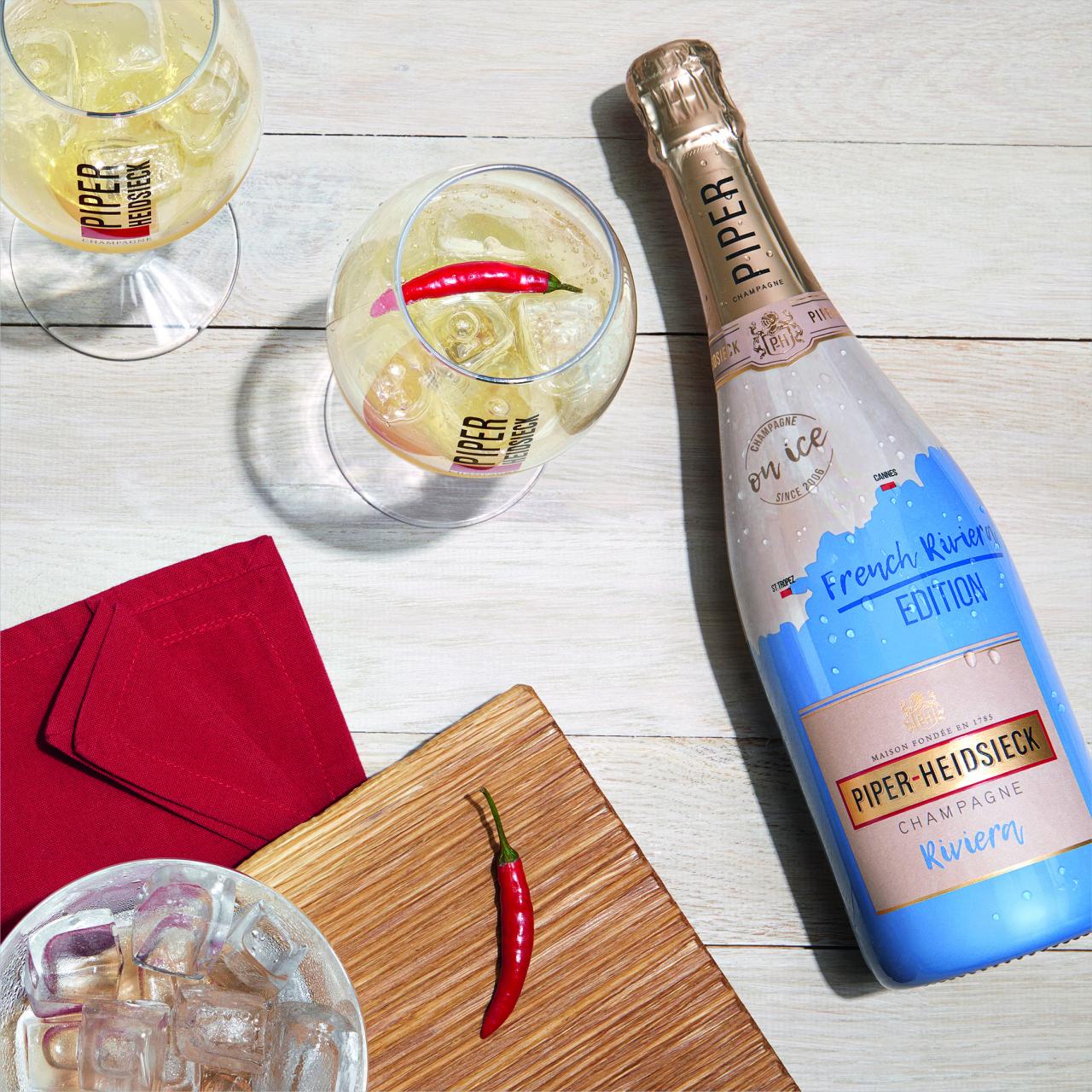
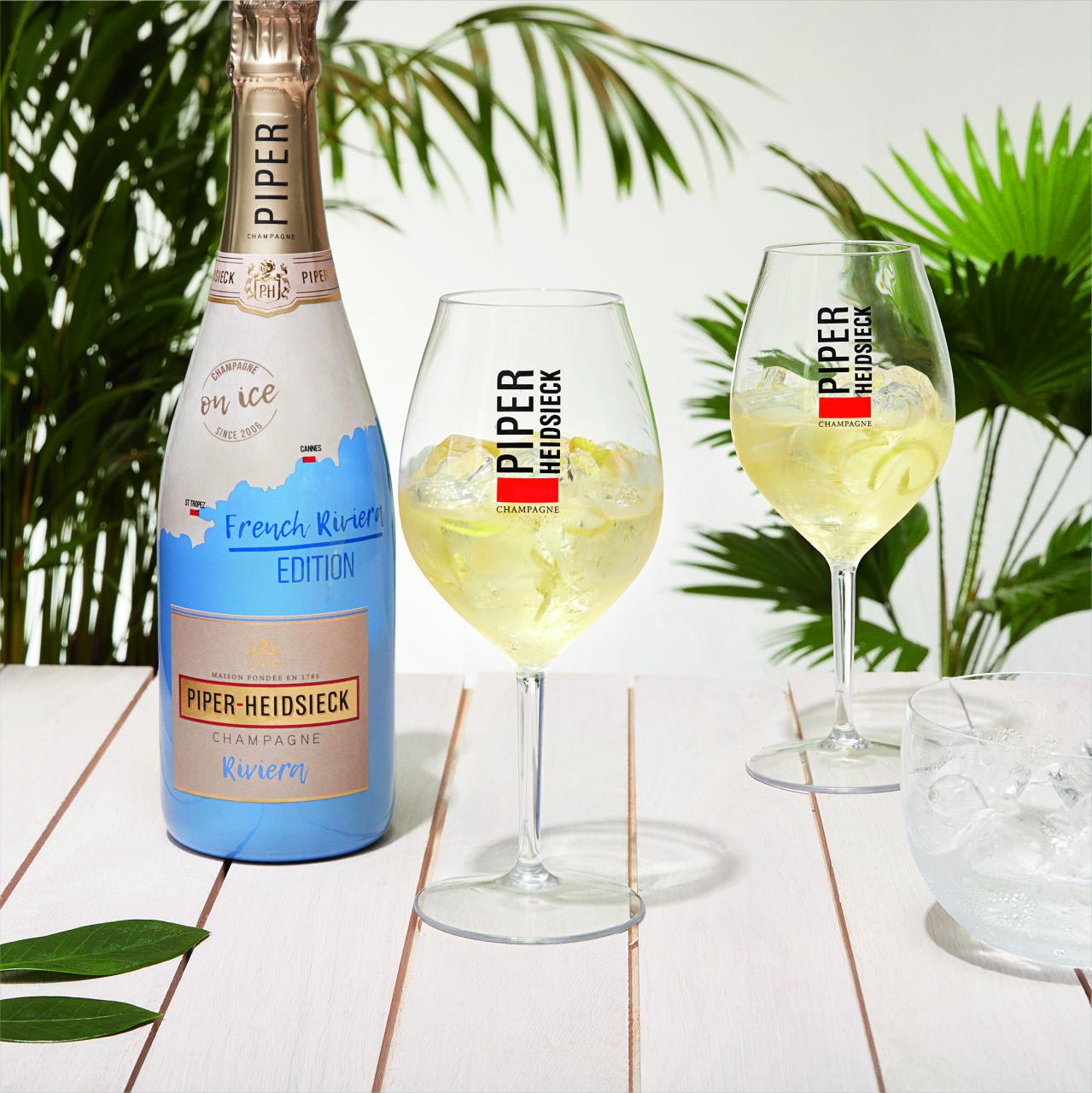
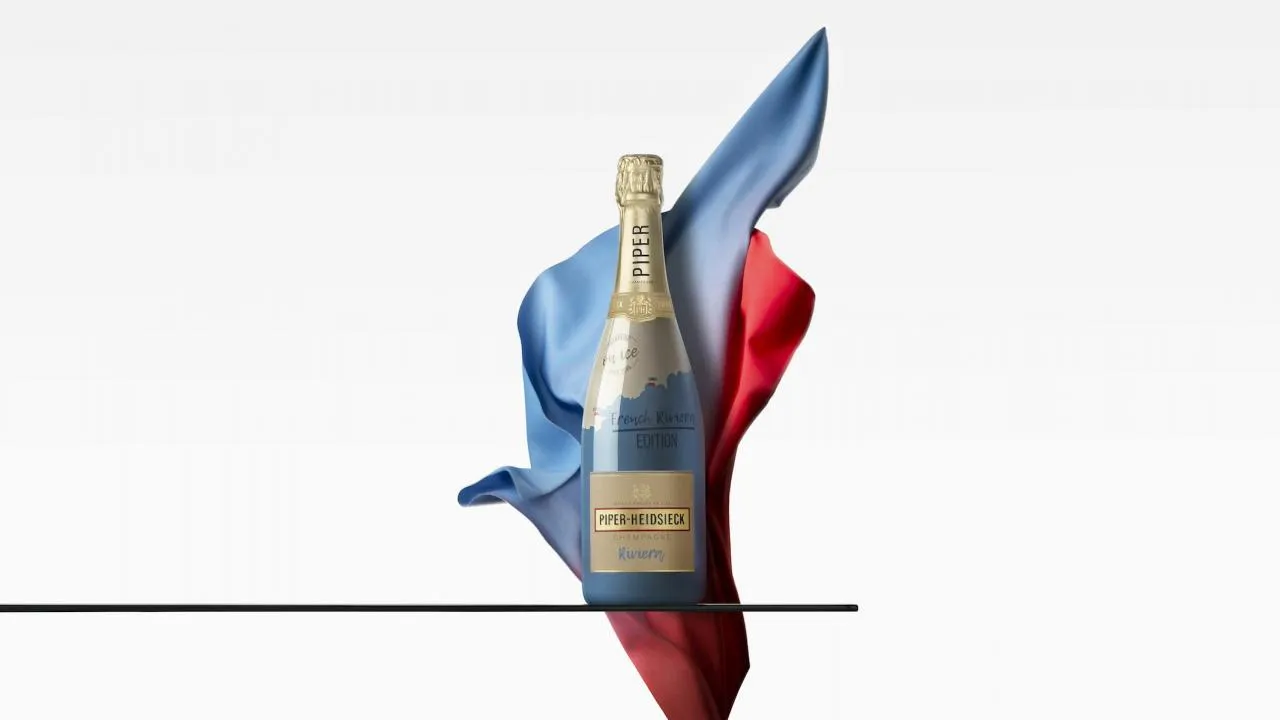
The most interesting example of this philosophy is Piper-Heidsieck Riviera Demi-Sec, a cuvée that was not created as yet another variation from the famous Piper-Heidsieck house, but as a standalone concept for a summer Champagne. The producer describes it as a celebration of the Mediterranean lifestyle. The recommended ritual is simple: serve over ice with citrus zest, as this is when aromas of frozen orange, lychee, yellow peach, pineapple, grapefruit, and white flowers are released. The aim is not to create a cocktail, but to change the way in which individual aromatic components are gradually released.
Demi-sec makes more sense on ice than brut
This brings us to the question of why Riviera is labelled as Demi-Sec. For many Champagne lovers, this category is associated more with the past. Modern gastronomy has, in fact, favoured the Brut and Extra Brut styles, whose higher acidity and lower residual sugar better suit contemporary dining practices. However, wine intended to be served over ice follows different rules. Melting ice cubes naturally reduces the intensity of flavour, accentuates acidity, and suppresses the perception of sweetness. If the winemaker were to use a standard Brut dosage, the resulting flavour profile would, after a few minutes, seem harsh, hollow, and lacking in aroma. A higher dosage is therefore not a concession to consumers of sweeter wines, but a technological necessity. Riviera contains 35 grams of residual sugar per litre, yet when served correctly, it does not feel heavy. On the contrary, it creates harmony between fruitiness, acidity, and the refreshing effect of ice. The same logic is supported by ageing on the lees for at least thirty months, which gives the wine sufficient structure to retain its character even at lower temperatures.
From a gastronomic perspective, it is interesting that such a Champagne opens up pairing possibilities that would be difficult to find with a classic brut. Its greater fruitiness and rounder texture complement cuisine that features the sweetness of fruit, citrus freshness, or subtle piquancy. It is an excellent accompaniment to seafood ceviche, tuna sashimi, grilled prawns with citrus butter, or lobster with beurre blanc. It also works surprisingly well with dishes containing mango, peaches, or passion fruit, as the wine’s fruity notes do not clash with these ingredients but, on the contrary, create a sense of flavour continuity. During the summer months, Riviera becomes more of a gastronomic companion than a festive aperitif.
A new culture of summer Champagne
The same philosophy can now be found outside the Champagne region. A very interesting example is Anna de Codorníu Ice Edition, which offers a more accessible introduction to the world of sparkling wines intended to be served on ice. Codorníu is one of the oldest producers of sparkling wines in the world and has long demonstrated that Cava, too, can offer an exceptionally refined profile. Ice Edition was not created as a cheaper imitation of French Champagne, but as a wine based on the same principle: its flavour balance only comes into its own when the wine meets ice. Compared to Riviera, it comes across as livelier, more straightforward, and with the typical Mediterranean fruitiness that is characteristic of quality Cava. This is precisely why it pairs so well with grilled fish, tapas, Serrano ham, light salads with goat’s cheese, or summer desserts made with fresh fruit.
It is remarkable to observe how the culture of Champagne consumption has changed over the last fifteen years. From a drink reserved for celebratory toasts, it is increasingly becoming a wine intended to enhance the entire dining experience. Producers today are seeking out new settings in which Champagne or high-quality sparkling wine can fit in naturally: on a restaurant terrace, during brunch, by the pool, or at a long summer dinner under the open sky. In this context, ice is no longer a symbol of ignorance but has become part of a carefully considered service.
Perhaps this is the greatest paradox of the contemporary wine world. Whilst until recently adding an ice cube to Champagne was considered almost sacrilegious, today the very houses that have helped shape the character of Champagne for generations are themselves encouraging it. Not because they wish to break with tradition at any cost, but because they have grasped a simple truth: if a wine is designed from the outset to be served over ice, ice is not its enemy. It is the final ingredient in the recipe.