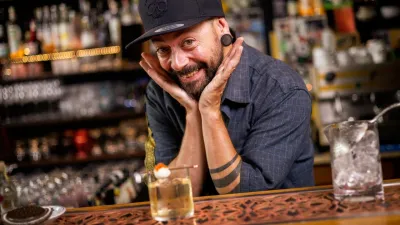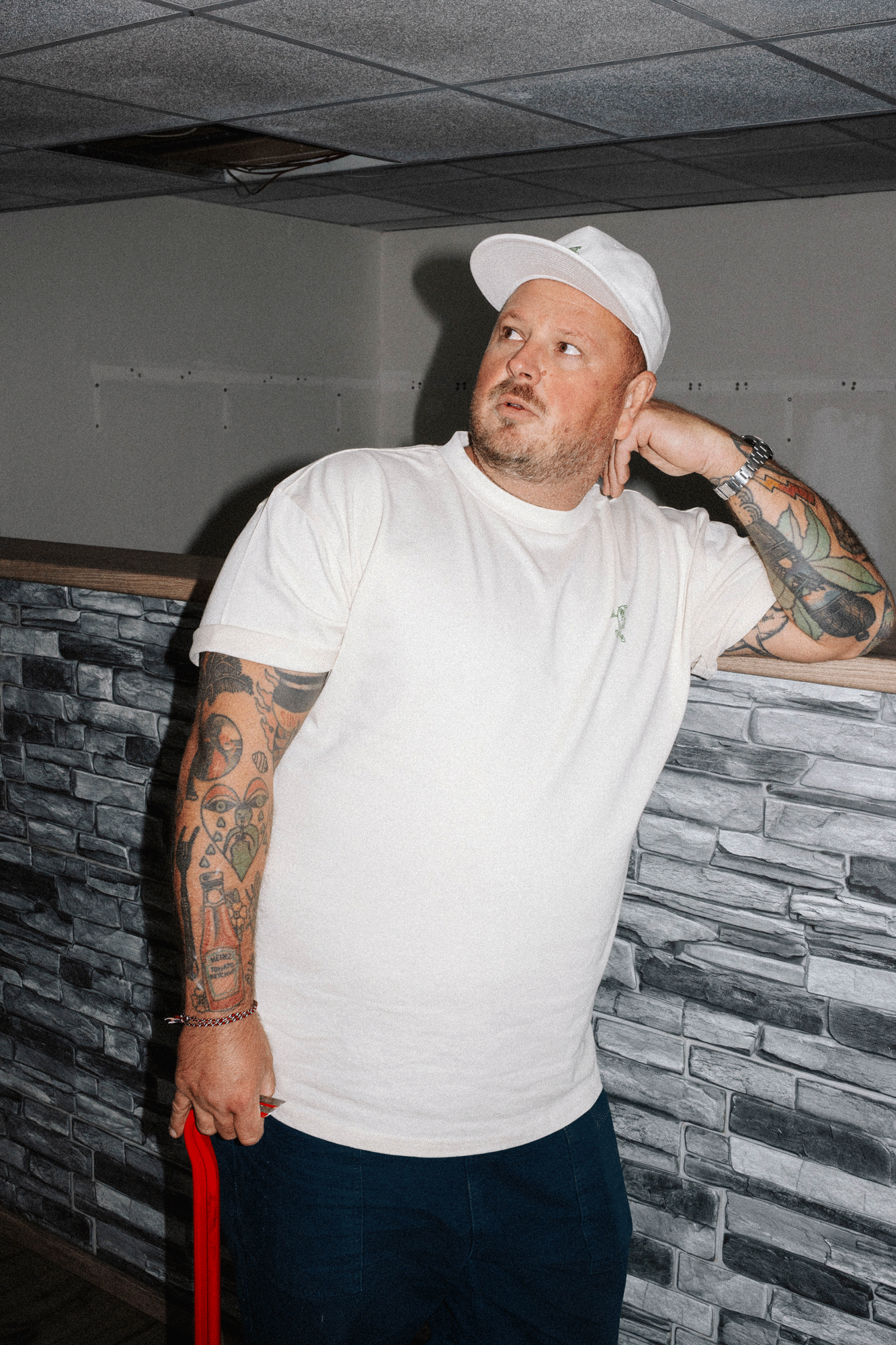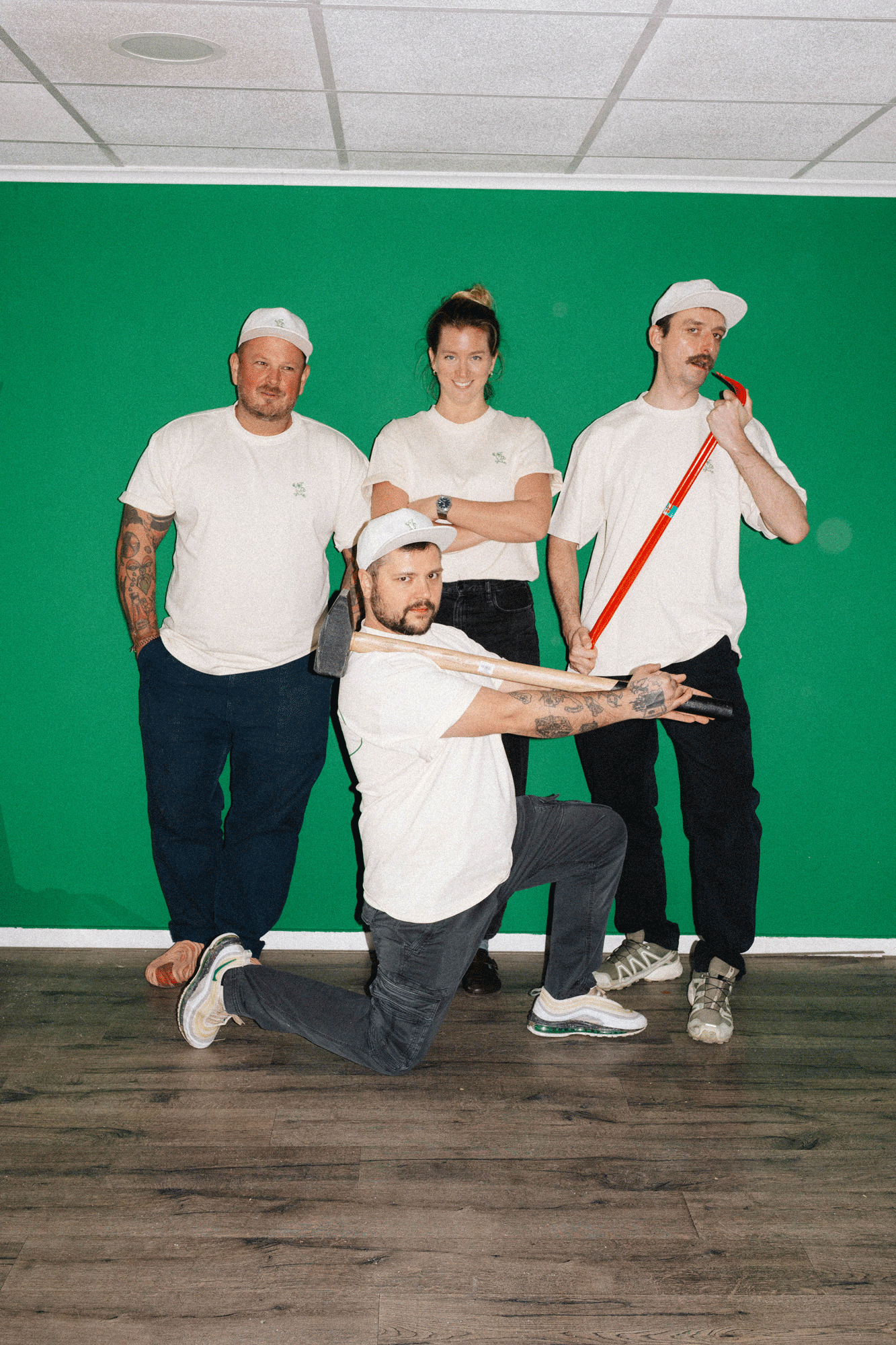

Following the flavour-packed Būcheck, which redefined the local street food scene, and the exquisite Dezertína, here comes a project that gets right to the heart of the matter. Pickle isn’t about inventing new flavours, but about an obsession with detail—from the bun to the very last slice of gherkin. A burger for 125 crowns, with no compromises, and the ambition to become a brand, not just another restaurant. “It’s an ordinary cheeseburger. We’ve just perfected it,” says Peter Szamuhel in an exclusive interview.
What was missing from Būcheck for you to build Pickle from scratch?
I think it’s mainly a matter of maturing—mine, ours. Realising where we are, what we’ve already achieved, and what we actually want to do next.
We could have gone down a completely different path. Opened a bistro or a restaurant, started doing something more sophisticated, perhaps more ‘fine’. But that’s not us. We’re still punks.
And after these ten years, it strikes me as the coolest thing to do something even simpler than before—but to do it absolutely down to the last detail. From A to Z. Not just the food, but the interior, the system, the ingredients, the whole process. So that it’s quick, good, cheap… and above all, so that we can stand behind it one hundred per cent.
Is it an evolution, or a completely new mindset?
It’s both: evolution and mindset. But at the same time, it’s funny that nothing has actually changed. It’s still us.
When did the moment come when you decided to make burgers—but in a completely different way?
That’s exactly it—yes and no.
We make them differently from others, but not by coming up with something crazy. Quite the opposite, actually. It seems to me that everyone today is trying to add more and more things, to combine, to invent…
But at the same time, they haven’t got the absolutely basic things right: the meat, the bun, the proportions, the packaging, how much sauce is in there, how it all holds together.
We spent a year and a half just working on this—quietly, with the team, without any big fuss. We really just did our own thing. And the goal was actually incredibly simple: to make the perfect cheeseburger.
What does that mean?
A completely ordinary, perfect cheeseburger. Nothing more. No tricks. No twists. And paradoxically, that’s perhaps the hardest thing.
Why don’t others have it?
Because they overcomplicate things. They make their own buns, fuss over the details, but then they put in a Znojmo gherkin, which is great with Znojmo roast, but simply doesn’t belong in a burger. Or they put in wholegrain mustard, which ruins the whole thing.
Those are exactly the moments where it all comes down to it.
So what’s the right way to do it?
American mustard. French’s. Ketchup—either Heinz, or ours, which is based on it. But you know what—I don’t want to give everything away.
It’s more about the principle. When you have something with three or four ingredients, every single one has to be absolutely spot on. Like with a Margherita. You can have ten pizzas and they’ll all be ‘good’. But one will be in a league of its own.
And that’s exactly what we were talking about: those little differences.
Why the name Pickle?
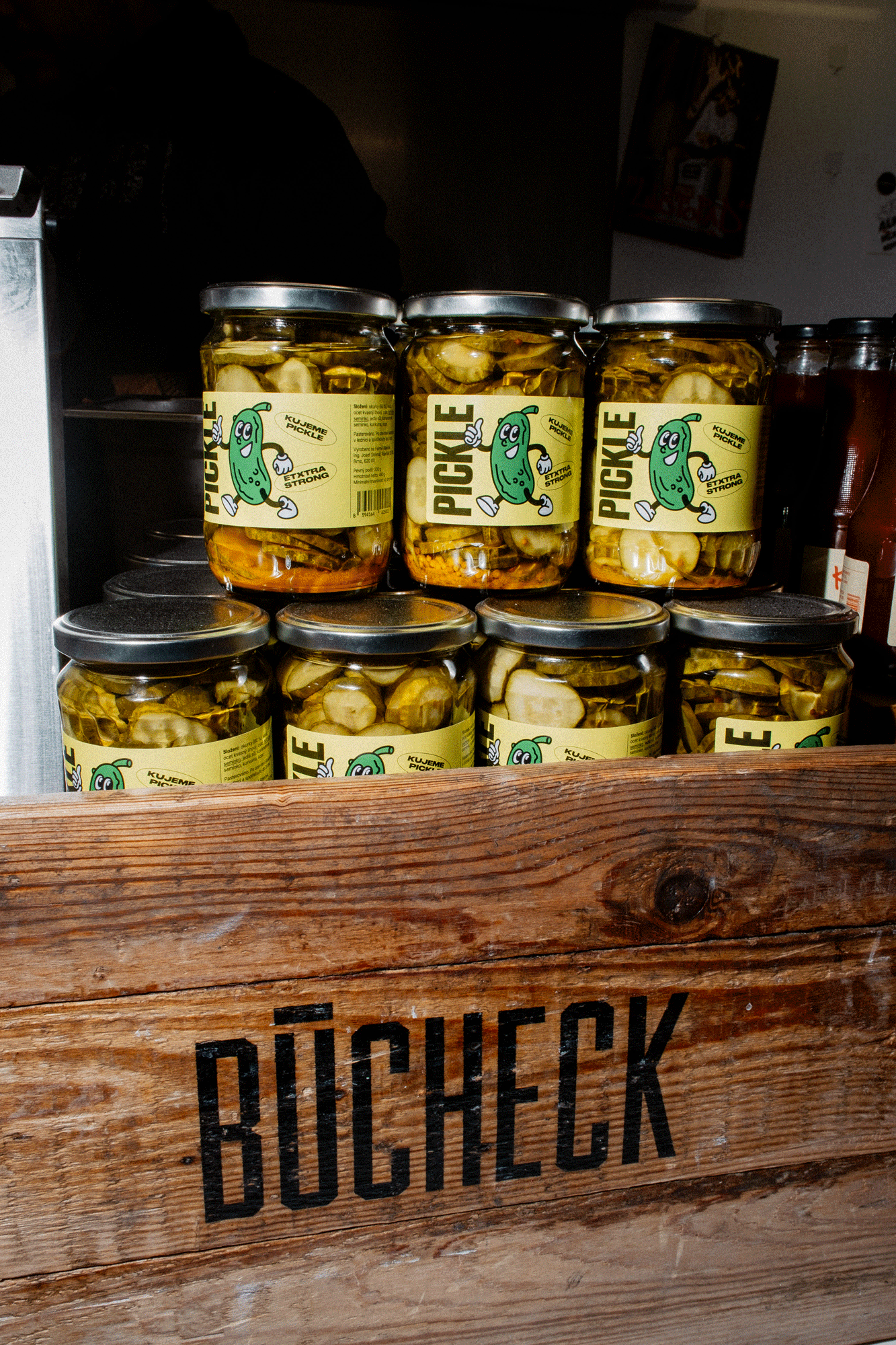
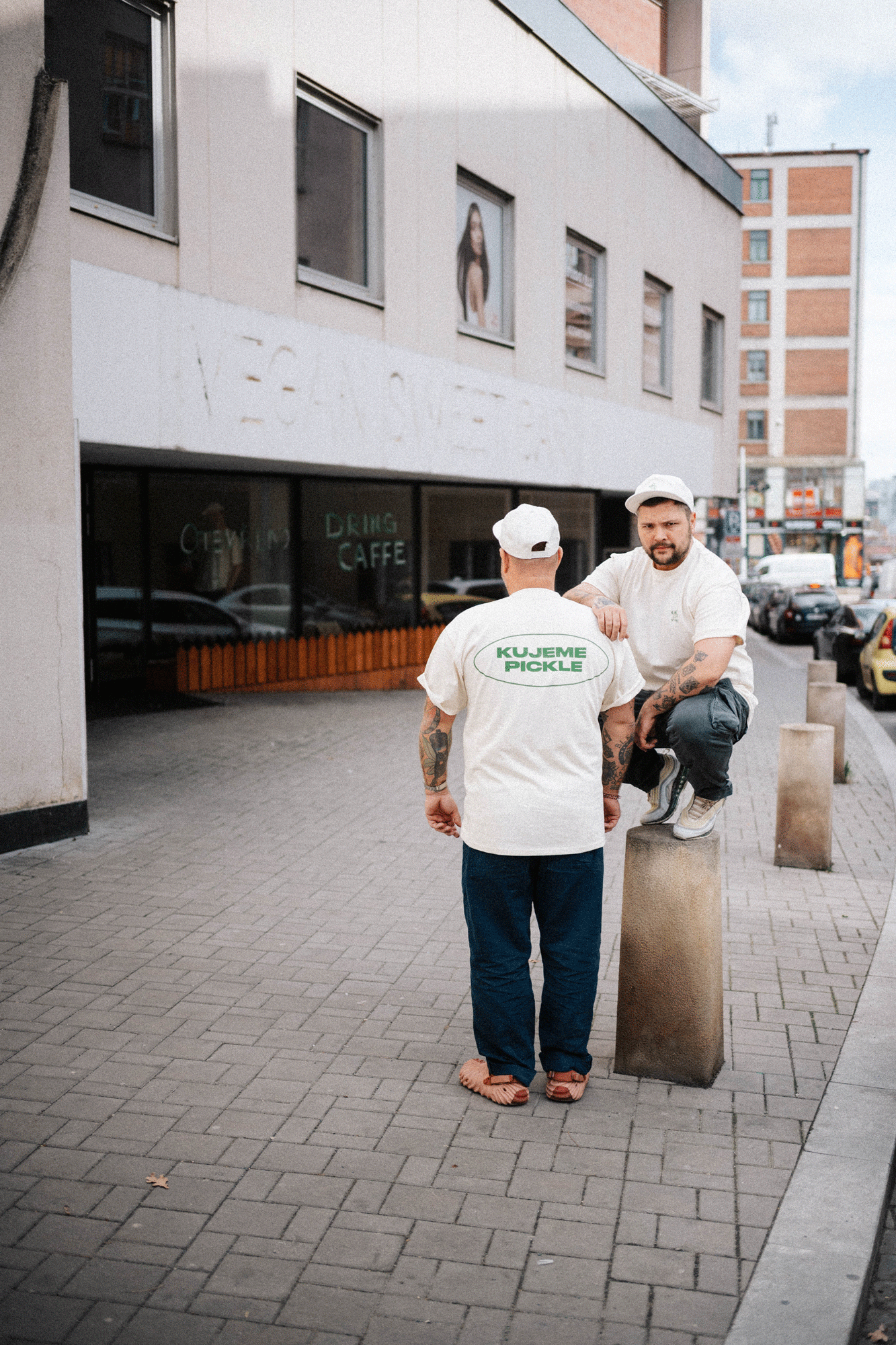
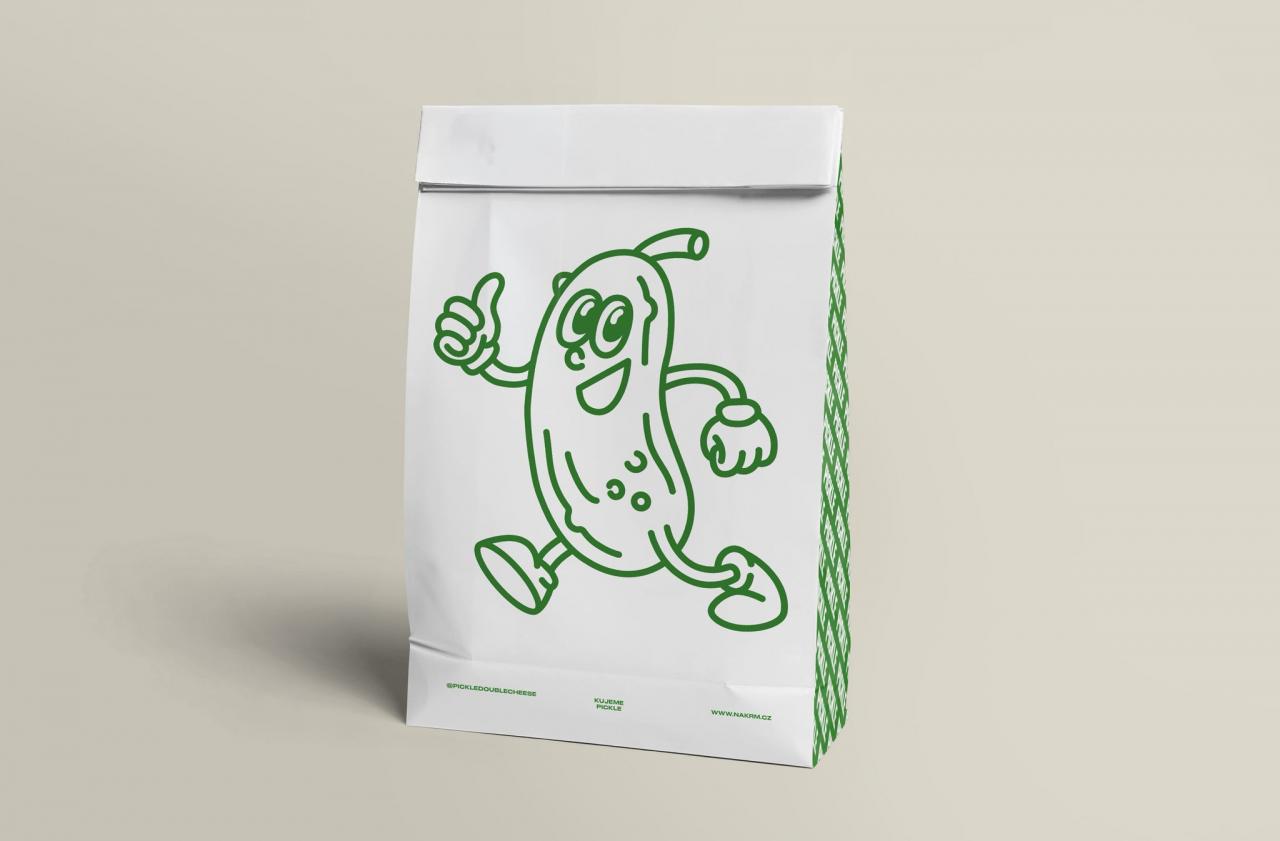
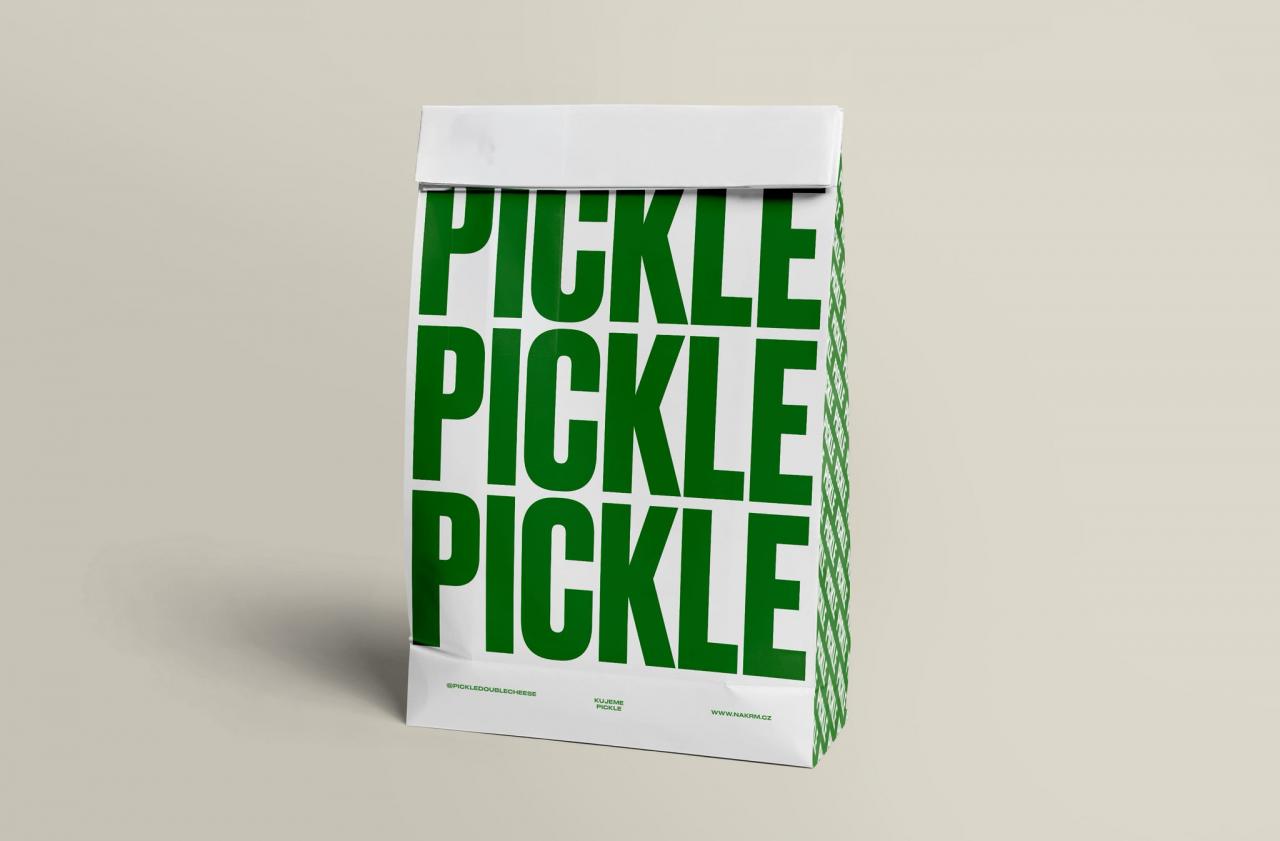
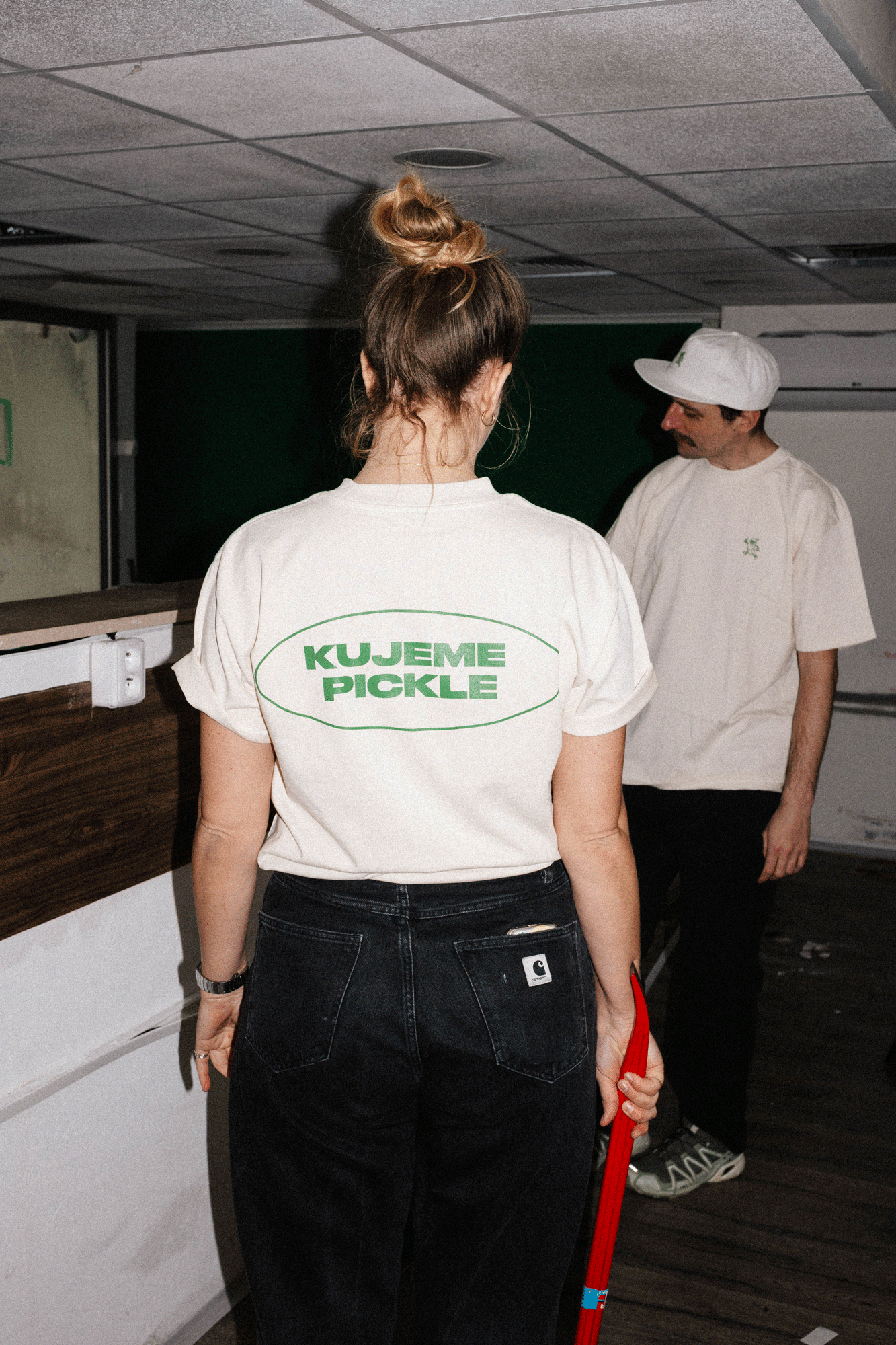
It came about very intuitively, as we always do. But at the same time, we thought about it more from a business perspective this time. Pickle first started out as a product—the pickles. And somewhere in the back of our minds, we already knew that one day a business might be called that. We liked that it had character, that it was likeable, that it worked visually. Those white and green colours; that it could be used on the product as well as in the space.
So the gherkins were actually the first step?
Exactly. We sent them out to people on quite a large scale and we had a laugh at the fact that people thought we were completely daft for starting to make pickles.
But it was intentional. We wanted the brand to get under people’s skin. We wanted them to start noticing it even before the business was launched. It was our ‘secret merch’.
What should a person feel when they hear ‘Pickle’?
A craving for a burger—one with Pickle gherkins in it.
But honestly, I think Pickle will be a bigger brand than the burger joint itself. We’ve got big plans for it. We want to sit down with the figures after a year and a half, look at the sales, and start taking it further.
If I had to describe the ideal scenario, it would be for it to one day be something like Five Guys. A love brand.
But without compromising on quality.
That’s absolutely crucial for me. Because we’ve seen places in Europe that have great visuals, brilliant branding, but then you have a burger and it’s actually rubbish. And that’s a massive let-down.
I don’t want that.
“Burgers for everyone.” What does that mean to you?
Absolutely everything.
It’s about price and attitude. It doesn’t matter who you are. Everyone should be able to have a burger. That’s why we set the price at 125 crowns: to make it affordable—so it’s not ‘just for some people’.
But at the same time, we haven’t compromised on the ingredients.
Is this even economically viable?
Yes. We haven’t compromised on quality. The only compromise is that we’ve cut into our profit margin. We’re banking on selling a lot of them.
How many is ‘a lot’?
In Brno, we’re aiming for somewhere between 300 and 500 burgers a day. And the target is a thousand.
And if it doesn’t work out?
Well, it simply won’t work out—and it will be our fault. This is a test: to see if we’re capable of pulling it off in terms of marketing, product development and overall execution so that it works.
What was the hardest part of the development?
Honestly, everything—but the bun most of all.
You mentioned that you spent nine months developing it.
Yeah. We ordered Martin’s Potato Rolls from America and tried to make them at home. It was a struggle. A really long one. The folks from the Křižák bakery and Mr Barvík, the technologist, helped us with it. And when we finally got it right for the first time—so that I was satisfied—I actually had tears in my eyes.
What’s the burger supposed to taste like?
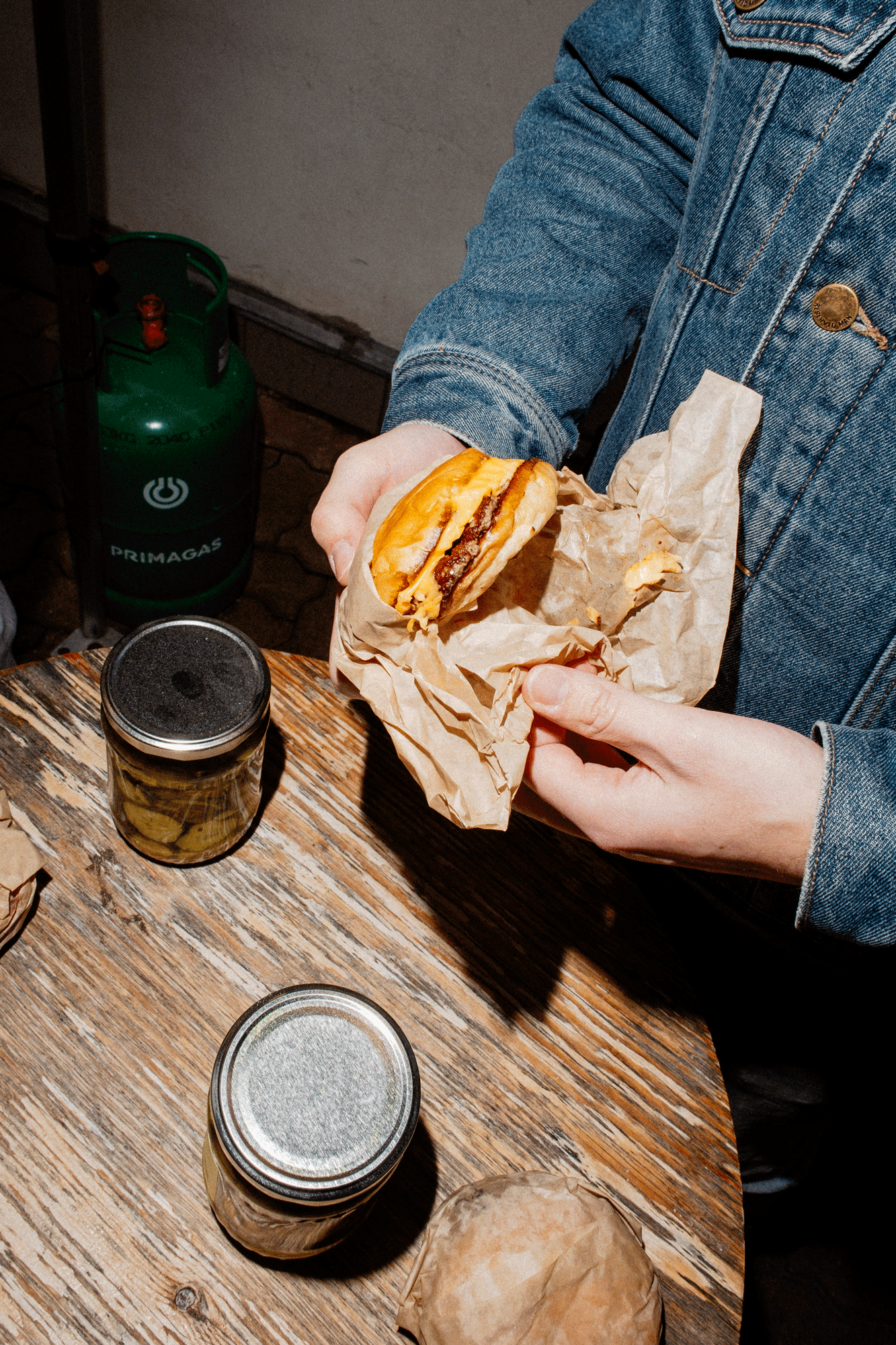
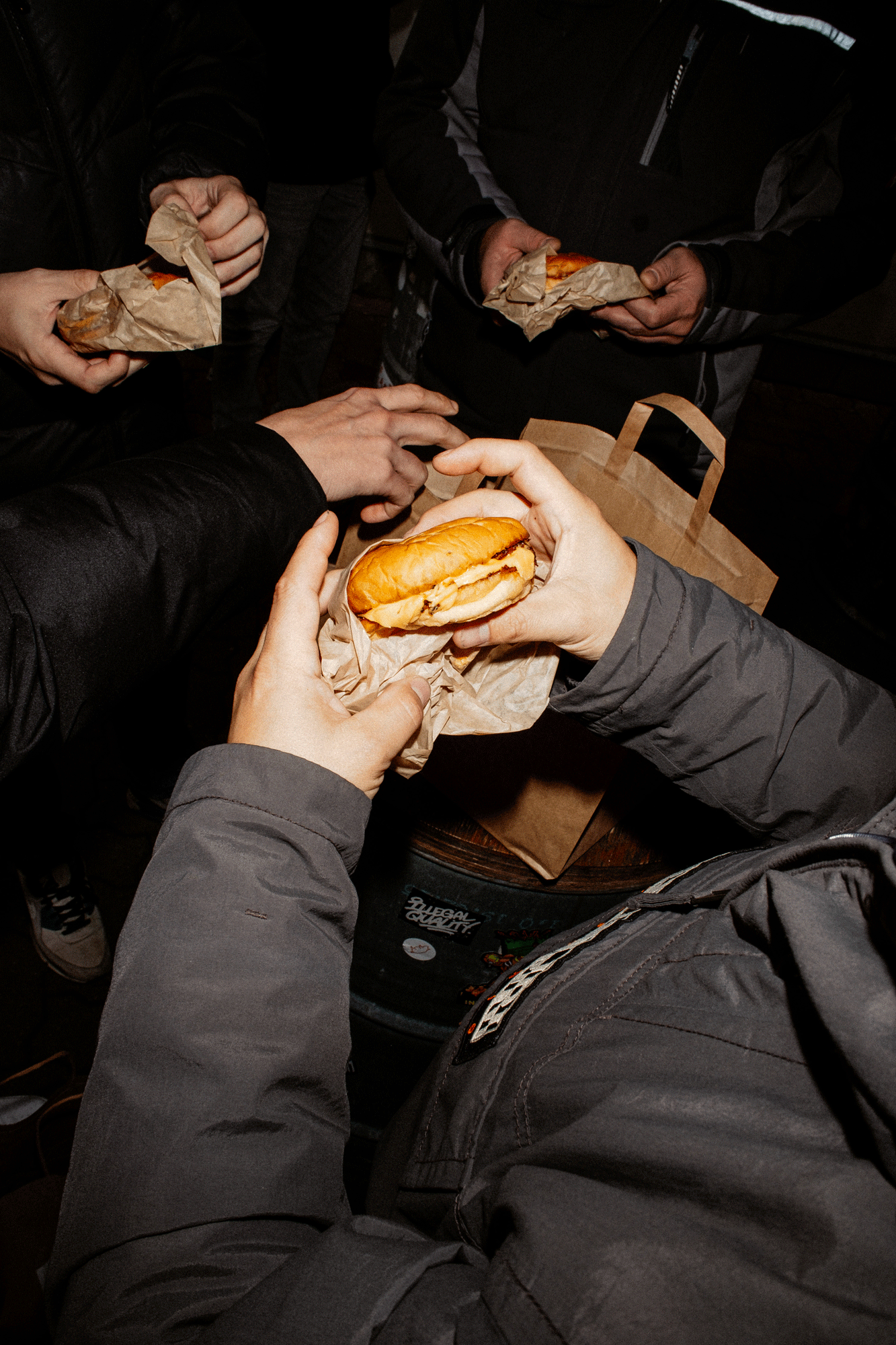
Imagine the perfect double cheese from McDonald’s. Now imagine swapping all those ingredients for high-quality ones. Good meat, good gherkins, our ketchup, American mustard.
In terms of flavour, we don’t actually want to stray too far from that. I think the base is brilliant. We’ve just swapped out the bits that don’t work.
Is there such a thing as a ‘Pickle moment’?
Yeah, but it’s not about the burger being sour. It’s about balance.
Our gherkins are extremely sour on their own. They’re not meant to be eaten on their own. But as soon as you put two slices in a burger, it all comes together perfectly. And that’s the moment.
Was meat from Maso Klouda the obvious choice?
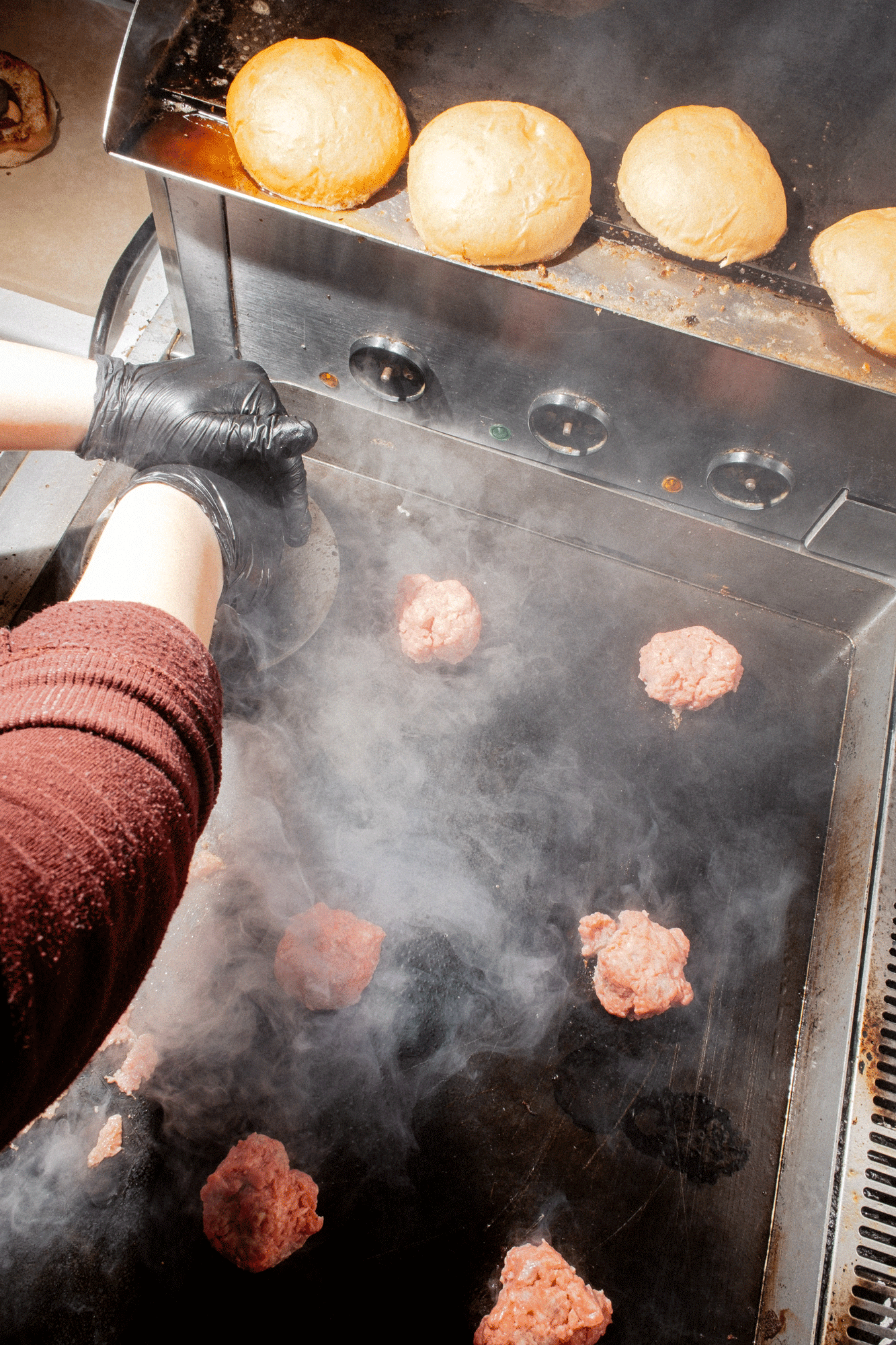
Absolutely. We didn’t even consider the price. We went for quality. The only thing we tweaked was the fat content and the coarseness of the mince.
Will you call it a smash burger?
No. I don’t like that word; I keep hearing it everywhere these days. People are always going on about ‘smash’. It’s just a regular cheeseburger. We’ve just perfected it down to the last detail.
And that ‘ordinary’ bit is the most important thing about it.
How important is the venue to you?
Honestly? Not at all. If it were a stall, it’s a stall. It’s about the product.
But you’re still focusing on the vibe.
Yes, we want it to be lively: people standing around, mingling, an open kitchen, rap, energy—so they feel like something’s happening.
And at the same time, it’s practical—people turn around quickly.
Is Pickle set up for franchising from the start?
Yes. That’s a big difference from Būcheck. Here, we’ve got everything worked out: the technology, the process, how the burger is assembled.
We want to keep Brno under our control. We want franchises elsewhere.
Is this your most mature venture?
I think so. But at the same time, we have one concern.
What is it?
That people might find it too simple. That they’ll say, ‘It’s just a burger.’ And they won’t see the work behind it. But we don’t want to explain it to anyone or force it on them. It just is what it is.
What would you say to people expecting a game-changer?
The Būcheck was a game-changer in its day. Pickle is something different. It’s exactly the kind of burger I look for myself when I’m abroad: simple, local, well-made.
And to those who don’t believe in the 125-koruna price tag?
That’s nonsense. It can be good. Maybe in three months’ time we’ll find out we’ve got it wrong. But I believe it’ll work out.
What should people take away from Pickle?
That it’s for everyone. And that it’s ordinary.