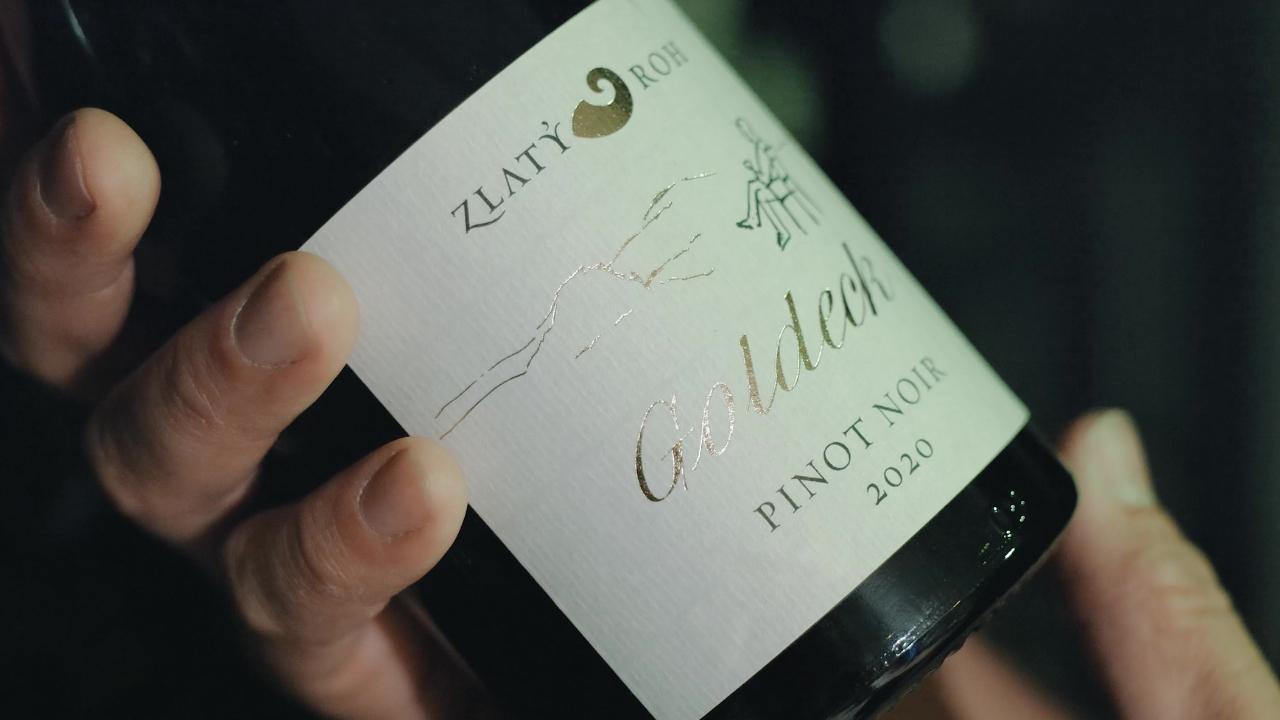



At first glance, Devín looks like a film set: a dramatic castle, the confluence of two rivers, the wind sweeping up the slopes of Devínská Kobyla. Yet it is precisely here, on the border between the Danube and the Morava, that a winery is taking shape – one that does not seek to be flashy, but rather precise. Precise in terms of its origins.
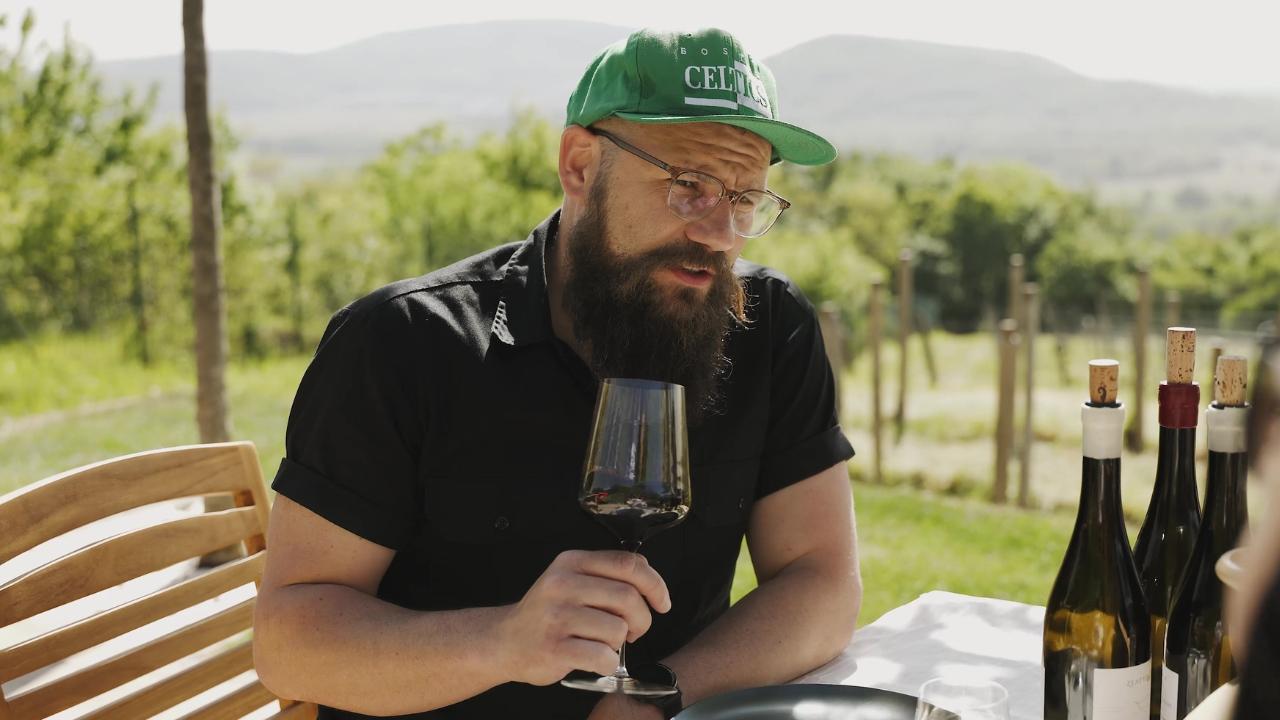
“Devín is an extremely distinctive place. It’s the confluence of two rivers, with a limestone subsoil. When I taste wines blind, this very place should immediately spring to mind,” says Filip Nagy, the winemaker behind the Zlatý Roh style of wines.
What sounds like an ambition is gradually becoming a method here. Devín is not just a geographical note on the label, but a fundamental framework for thinking. The south-west-facing slopes, limestone subsoil, long sunny days, and the warm, dry wind that flows between the rivers create conditions that Nagy describes without undue modesty: “The limestone subsoil gives the wines a character that is unmistakable. Some people confuse it with Burgundy, but the reality is that Devín is mistaken for Burgundy, not the other way round,” the winemaker smiles.
Elsewhere, such a statement might come across as hyperbole. Here, it is more of a manifesto. Zlatý Roh was not established as just another winery in the region, but as an attempt to bring viticulture back to the slopes where it had belonged for centuries. The gradual consolidation of plots and the restoration of vineyards is not a nostalgic gesture, but a conscious step towards ensuring the landscape once again functions as a whole.
Between authenticity and control
Nagy’s work in the cellar is just as firmly rooted as his connection to the place, yet at the same time he steers clear of the ideology that has often divided the wine world in recent years. For him, a low-intervention approach is not a dogma, but a tool.
“It’s like walking on thin ice. You have to learn how to walk on it so that the winemaker doesn’t fall through,” he says. In his view, this does not mean giving up on decision-making, but rather refining it. Wine does not come about on its own – it is always the result of a specific vision that the winemaker strives to realise in the most natural way possible.
That is why, in the cellar, they use bâtonnage, extended ageing on lees or skins, and the deliberate use of yeasts where necessary to support the wine’s structure. Interventions that some might perceive as a departure from ‘purity’ make sense here as part of the interpretation. “I regard all of this as natural interventions that do not compromise authenticity,” adds Nagy, noting that boundaries do exist – and that he has not yet had to cross them.
It is precisely in this tension between control and respect for the raw material that Zlatý Roh’s style takes shape: wines that are not flashy at first glance, but gradually reveal their structure, layers and, above all, the place from which they come.
Wine in context, not in isolation
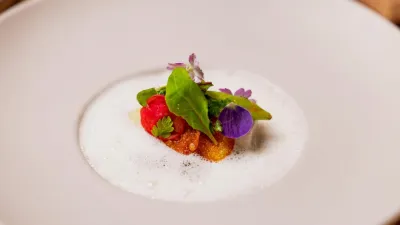
For the world of gastronomy, it is important that Zlatý Roh does not operate as a closed world. It is naturally linked to ECK Restaurant, which stands just a few metres away amongst the vineyards, but its presence on the scene does not end there. The wines are gradually appearing in other restaurants in Slovakia and abroad, where they are finding their place within the context of modern gastronomy.
“Our wines are very accessible in gastronomy. Whether someone is looking for contrast or synergy, both approaches work,” says Nagy. At the same time, however, he refuses to dictate how a chef or sommelier should work with them. In his view, the interpretation of wine belongs to those who serve it – not to those who produced it. It is perhaps a less controlled, but all the more open, approach. Here, wine is not the final product, but part of a dialogue.
In the broader context of the Slovak wine scene, Zlatý Roh stands out as one of the projects defining its current character – self-assured, yet still evolving. “Many strong wineries have emerged, and there is global demand for their wines. At the same time, however, we still lag behind European standards in some respects,” says Nagy, without attempting to idealise the situation.
When he looks back on his own work, he isn’t looking for a specific wine or vintage. Rather, he’s looking for a recurring thread. “The Devín stamp is an integral part of our wines,” he says. He immediately adds that constant doubt is just as important – the need to reassess, time and again, whether the interpretation is correct.
Zlatý Roh thus does not come across as a finished project, but as a process: an attempt to translate a specific place into wine, in the knowledge that this translation will never be definitive – only more precise with each successive vintage.