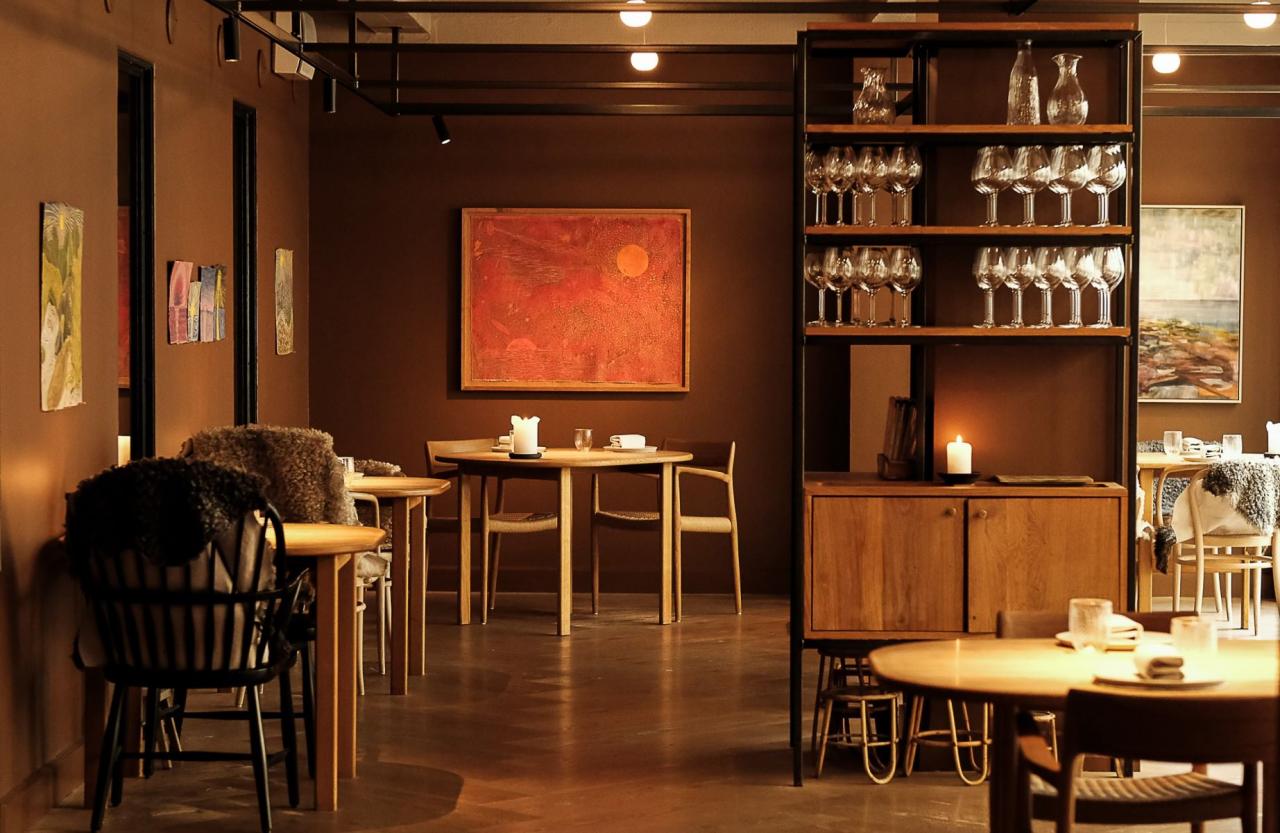

Just a few days ago, the Copenhagen restaurant Kadeau was among the most respected two-star establishments in Europe. Today, it ranks among the very best in the world. At the Michelin Guide Nordic Countries 2026 awards ceremony, held on 1 June in Copenhagen, Michelin promoted Kadeau Copenhagen from two to three stars. Under the leadership of head chef and co-owner Nicolai Nørregaard, the restaurant has joined the very elite of Nordic gastronomy.
For many, this came as no surprise. For several years, Kadeau has been considered one of the strongest contenders for the highest Michelin accolade. However, this year’s decision means more than just another star. At a time when a significant portion of the global fine dining scene is shifting towards techniques and technologies, performance, and multi-sensory experiences, Michelin has recognised a restaurant whose philosophy is rooted in the landscape, seasonality, and the gastronomic memory of a place.
The island of Bornholm is a language, not just a source of ingredients
If there is a restaurant that has managed to transform a specific piece of land into a gastronomic language, it is Kadeau. And this is despite the fact that the award-winning three-star restaurant is based in Copenhagen—Bornholm remains its ideological and ingredient-based foundation.
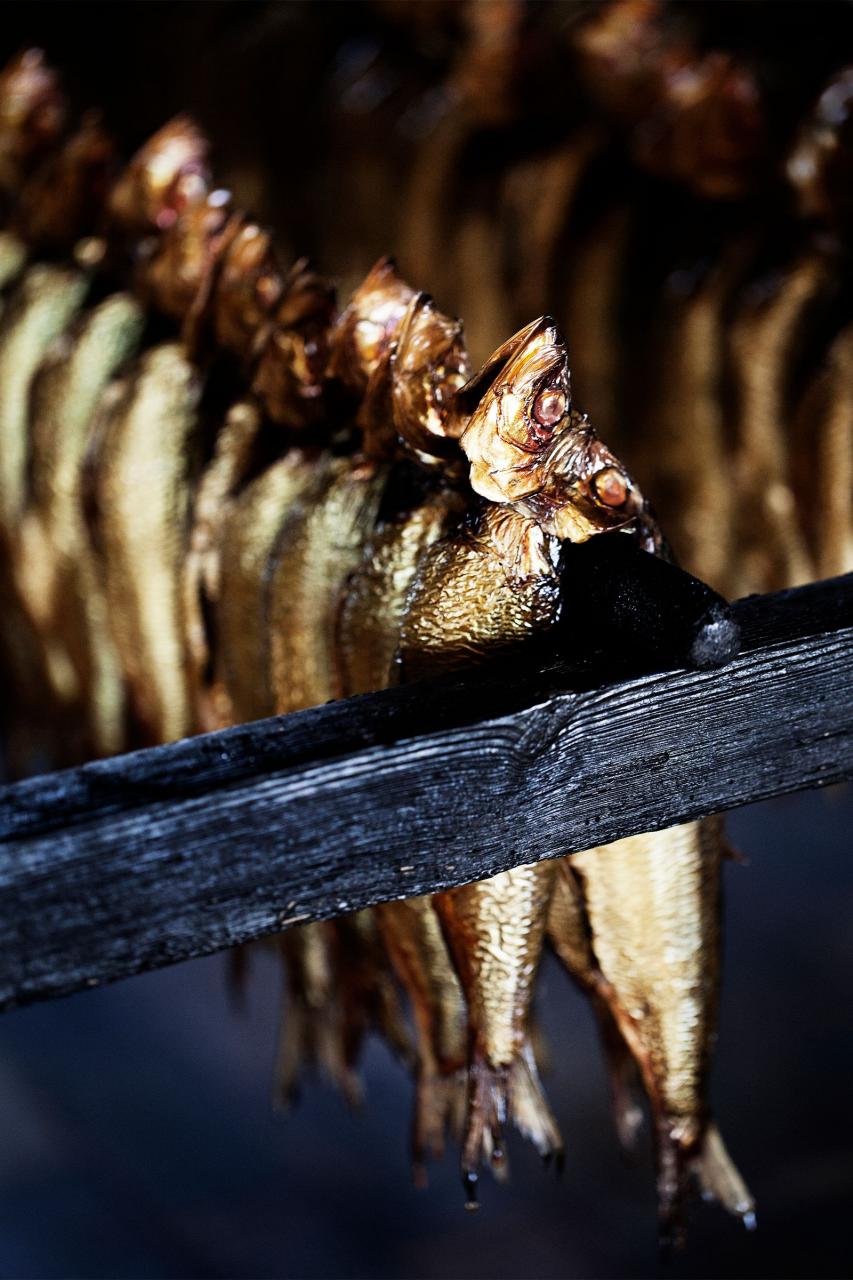
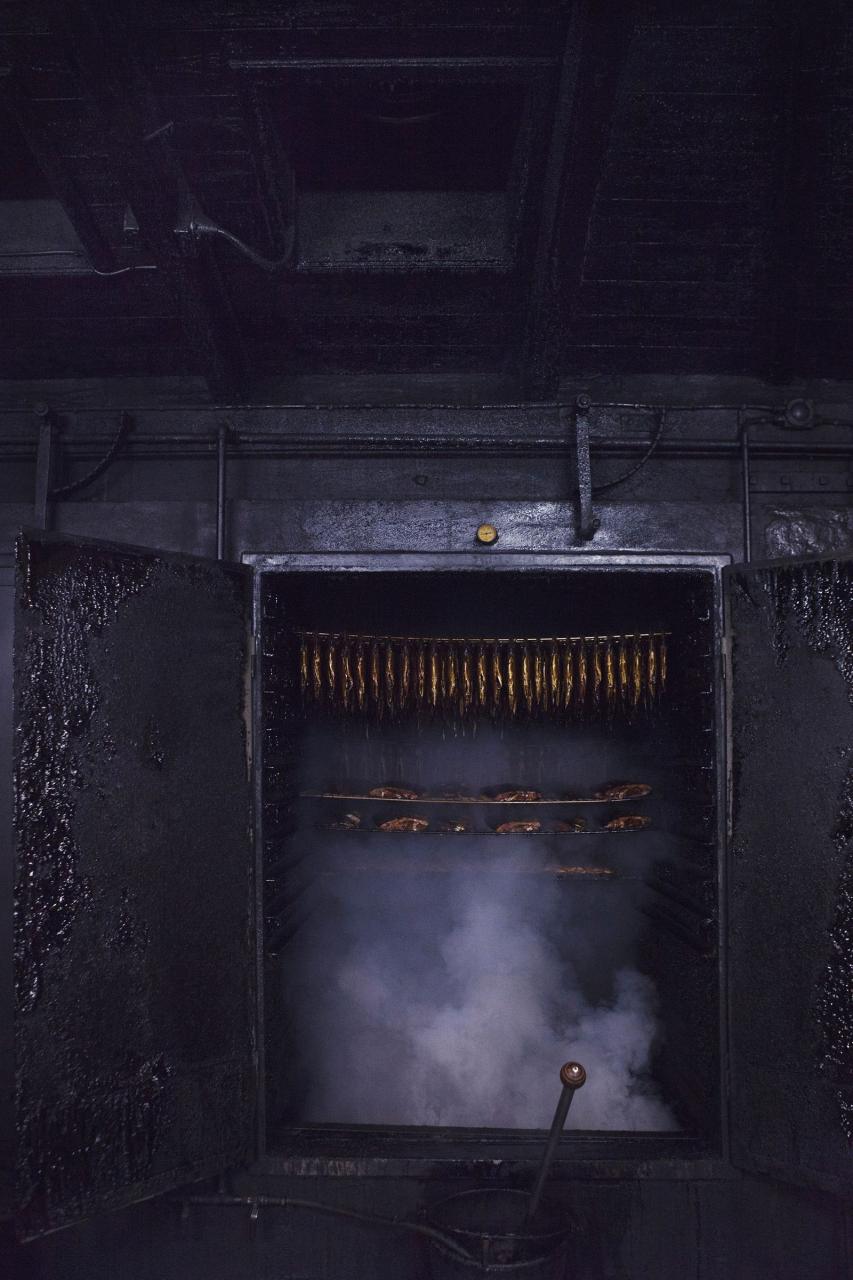
Michelin has long described the restaurant as an establishment whose heart lies in ingredients from the island of Bornholm. It is not merely about their origin, but also about the methods of preparation—drying, fermentation, pickling, maturing, or smoking. Techniques that were a necessity for survival on the island for generations are transformed here into tools of modern haute cuisine.
Yet Kadeau does not seek to reconstruct historical cuisine. According to the restaurant’s own philosophy, the aim is to capture the character of the island through a contemporary lens and to tell its story through food. It is not merely about local ingredients, but about the overall picture of the landscape, traditions, and rhythm of life associated with Bornholm.
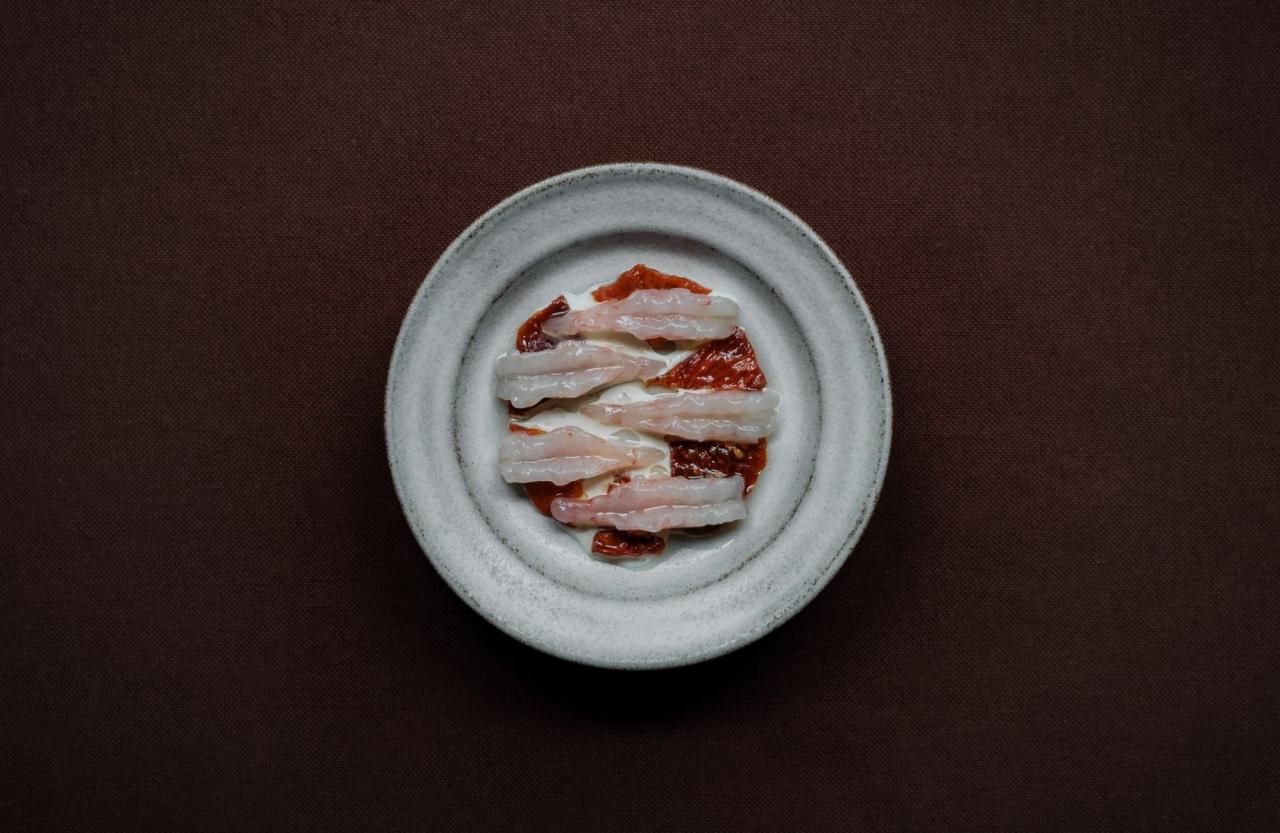
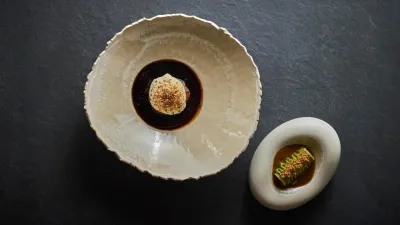
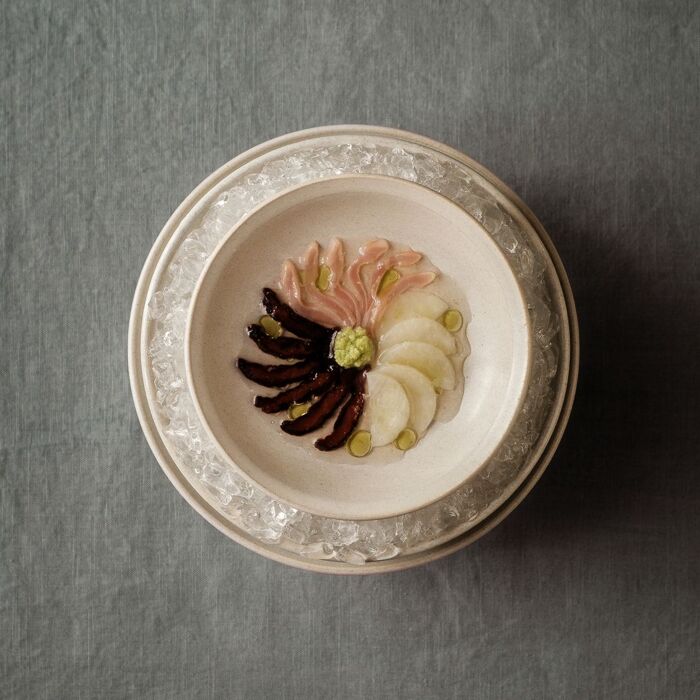
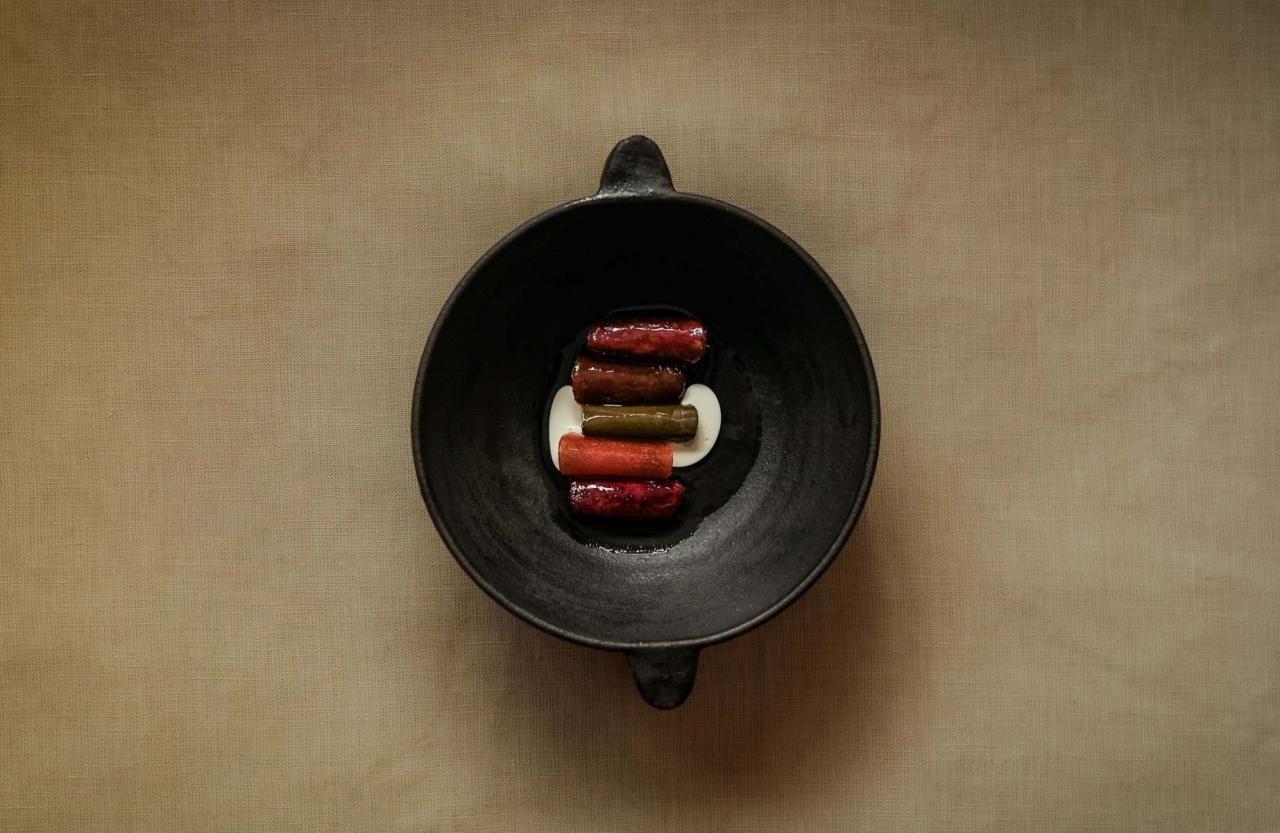
In its profile, Michelin describes the menu through specific combinations: tomatoes preserved from the previous season with figs and razor clams, raw prawns with mussels and aromatic magnolia, or a warm walnut cake with a delicate texture. Dishes that appear simple at first glance conceal extraordinary complexity and months of preparation.
Working with time is one of the key principles here. Although the final menu is served in Copenhagen, summer on Bornholm is not just the harvest season, but also a time when supplies for the whole year are built up. Herbs, fruits, flowers, and vegetables are fermented, dried, or otherwise preserved so that the flavours of Bornholm can be served even in winter.
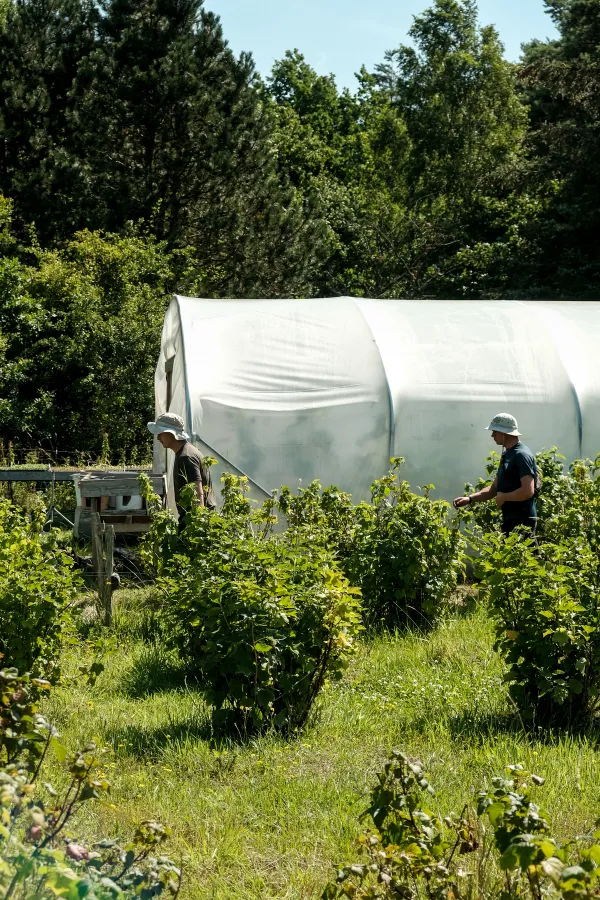
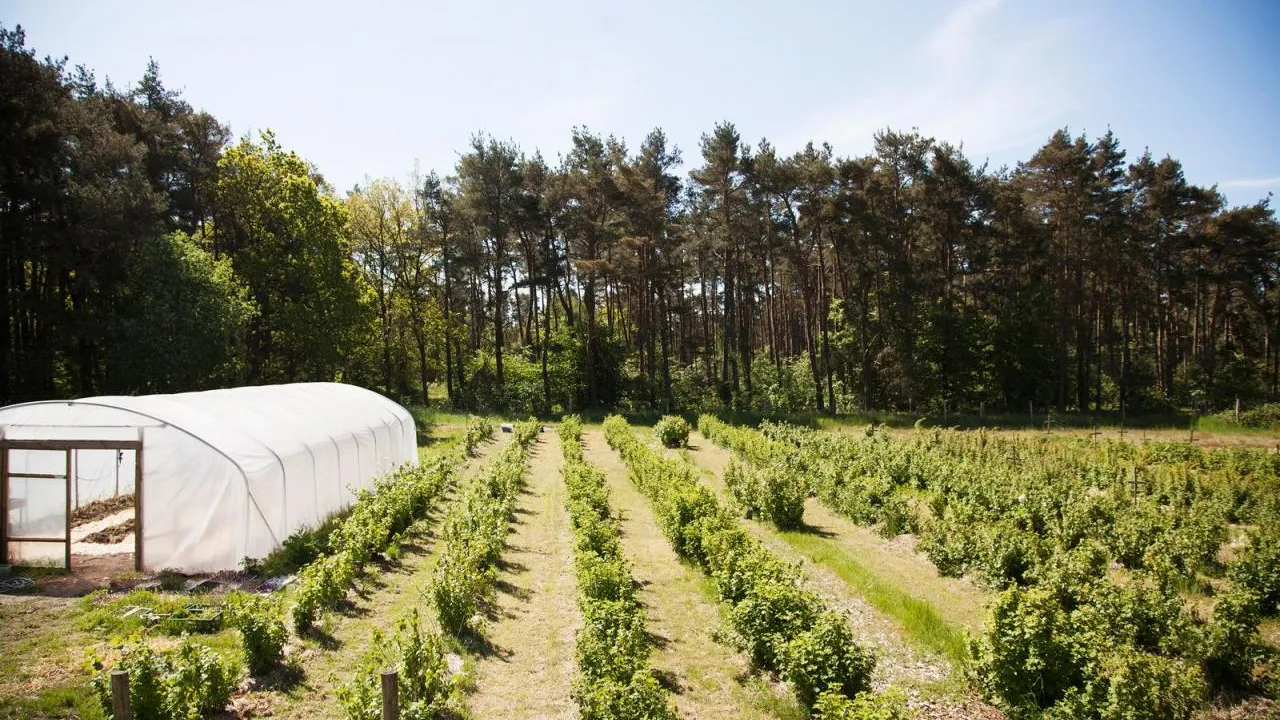
Moreover, many of the dishes are sourced from the restaurant’s own garden in Sømarken, established in 2012 by Nicolai’s father, Flemming Nørregaard. Today, it supplies the restaurant with herbs, fruit, vegetables, and honey, forming the foundation of the system upon which Kadeau has built its approach to seasonality.
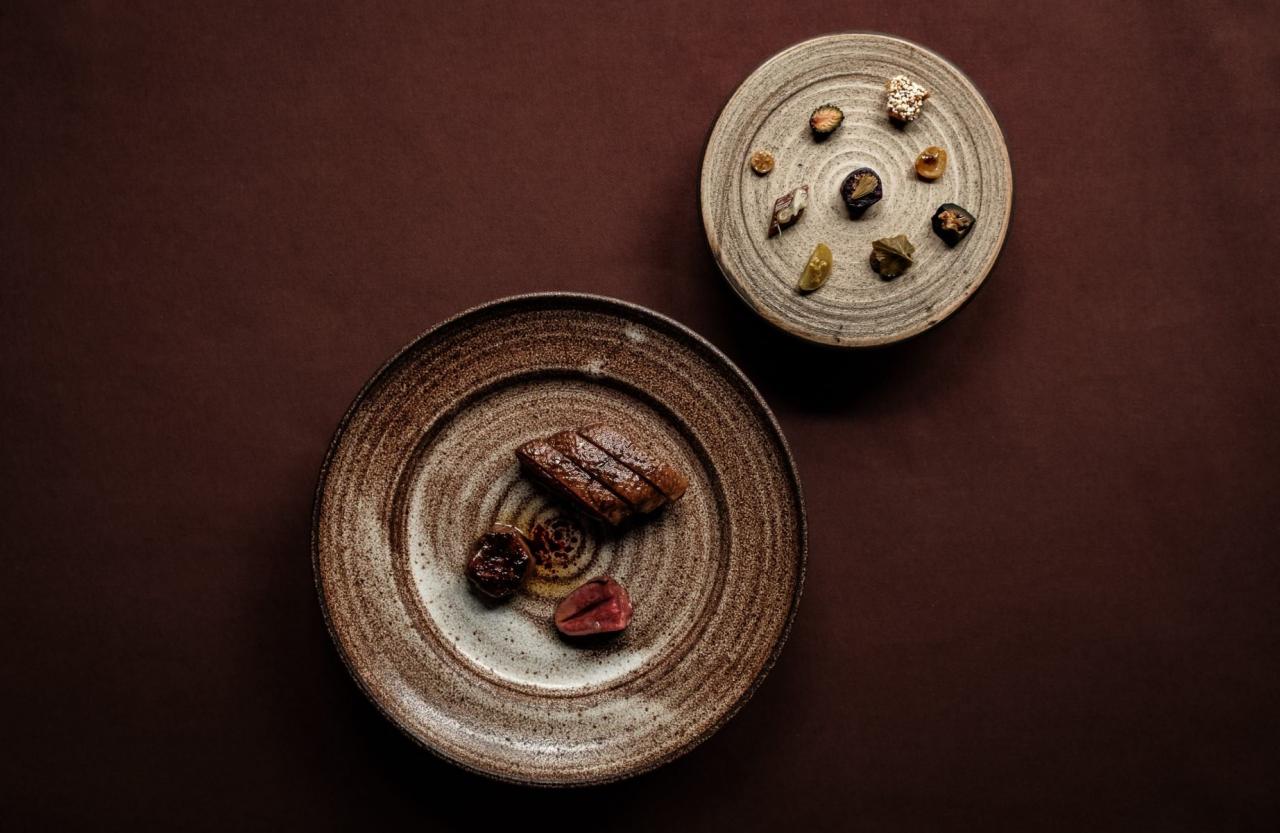
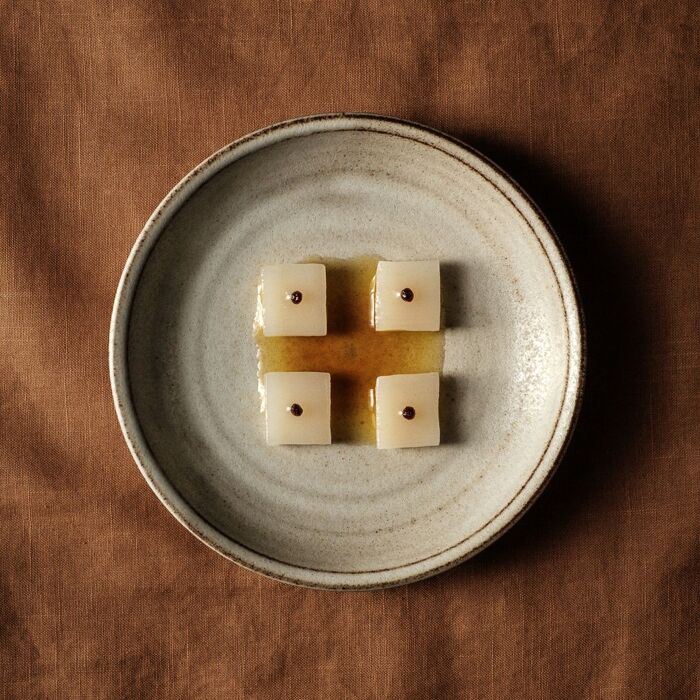
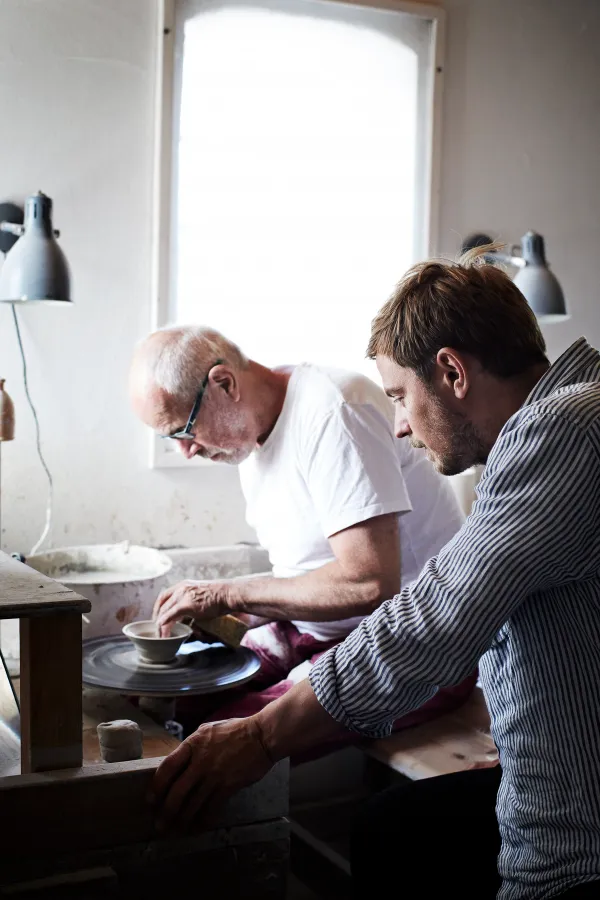
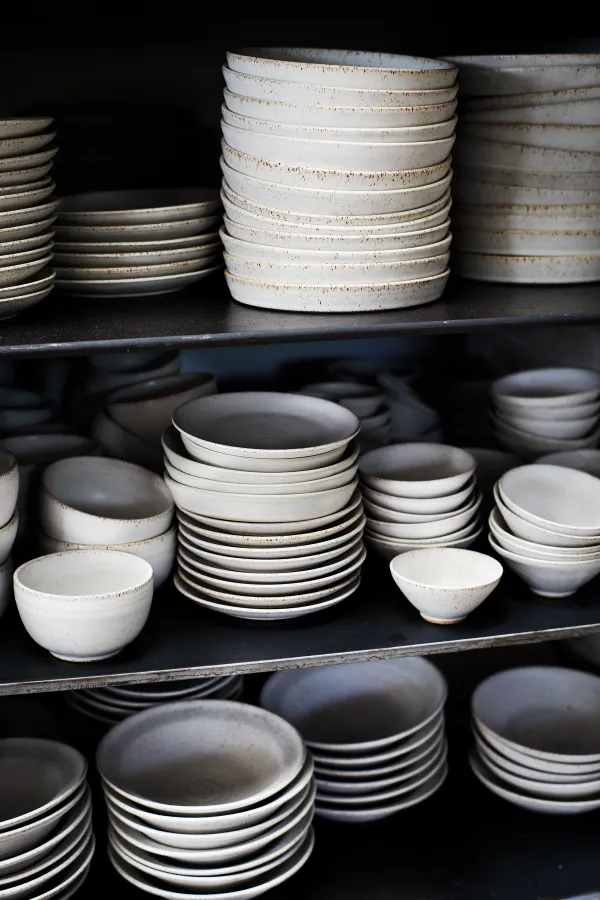
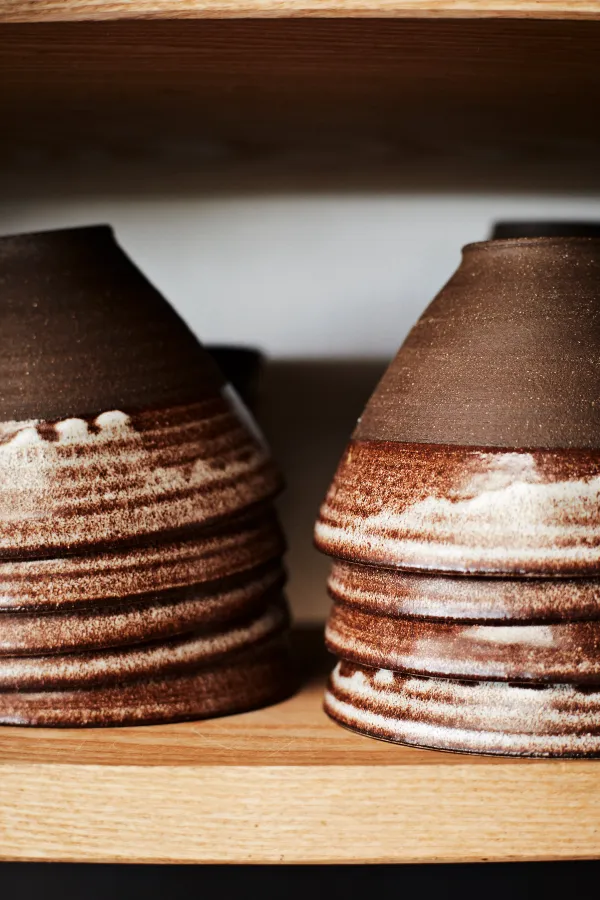
Bornholm isn’t just on the plate at Kadeau. The restaurant also works with ceramics created specifically for each season in collaboration with local potter Torben Love. The relationship between the dish and the tableware is so close that, in some cases, the ceramics inspire the design of new courses.
Nicolai Nørregaard – a chef somewhat outside the system
Perhaps the most interesting figure in the whole story is Nicolai Nørregaard himself. Unlike many contemporary chefs, he did not undergo a traditional culinary education. He grew up on Bornholm, where his grandfather grew vegetables, fished, and preserved food for the winter. It is precisely this way of life that has become the foundation of Kadeau’s philosophy.
“Sustainability has taken centre stage in our food production,” he told the Michelin Guide. For him, it is not about marketing, but a specific system for working with ingredients that combines seasonality, preservation, and respect for the local landscape.
In an interview with Vogue, he recalled his early days: “When the New Nordic food movement began, I went out and started looking for stuff,” he told Vogue. A simple sentence that captures the essence of his approach—observing the landscape and seeking its gastronomic expression.
According to him, a typical Kadeau dish is far more complex than it appears. “A typical Kadeau dish has a lot of ingredients. The idea is that they are very complex but look simple,” he said during a presentation at Madrid Fusión. The minimalist aesthetic thus often conceals dozens of components, fermentations, and layers of flavour.
The latest great triumph of terroir?
Kadeau’s recent third Michelin Guide star comes at an interesting moment. Contemporary fine dining is increasingly shifting towards complex, almost theatrical gastronomic experiences, technology, and scenography. Restaurants such as Alchemist are redefining gastronomy as a complex performance. Kadeau, however, is going in the opposite direction.
Its strength lies not in theatricality, but in concentration, precision, and the ability to transform the landscape into flavour. Michelin has long valued precisely this ability—to create cuisine that is deeply rooted in its place whilst achieving world-class standards. And this is where a question arises that goes beyond the award itself: is Kadeau the last restaurant to have earned a third star for pure terroir cuisine? For a cuisine whose ambition is not to dazzle, but to capture the character of a place with the utmost precision?
If so, then this year’s Michelin Guide decision represents more than just the elevation of a single restaurant. It is a reminder that even in an age of gastronomic spectacle, the greatest luxury may be the taste of the land, presented with extraordinary precision.
Summer 2026: the philosophy lives on
Moreover, the current menu confirms that even after earning its third star, Kadeau has not strayed from its philosophy. As part of this year’s ‘Growing Season’, the plates feature clams and seasonal vegetables, marinated cuttlefish with white asparagus and magnolia, herring tart, raw shrimp from northern waters, crab, aromatic herbs, and fig leaves.
At first glance, the individual courses appear almost ascetic, but beneath their apparent simplicity lies a complex interplay of textures, fermentation, maturation, and layered flavours—precisely the kind of cuisine that Michelin has long described as an exceptionally distinctive expression of the Bornholm terroir.