
Bratislava’s Mirror Bar has secured one of the first major accolades in the new Europe’s 50 Best Bars ranking. It has won the inaugural Michter’s Art of Hospitality Award, which recognises an exceptional approach to guests—from service to the overall experience.
There are bars that try to grab attention. And then there are those that create a world of their own. Bratislava’s Mirror Bar clearly belongs to the latter group.
The newly launched Europe’s 50 Best Bars project expands the influential 50 Best concept, which has been mapping bar scenes in Asia and North America for years. Europe is finally getting its own platform—and with it, a new perspective on what defines top-tier bar culture today. The result is decided by more than three hundred industry figures, ranging from bartenders and bar owners to journalists. It is not just about the technical quality of the drinks, but about the overall impact of the venue—how the bar functions as a living organism. And the first major accolade is heading to Slovakia.
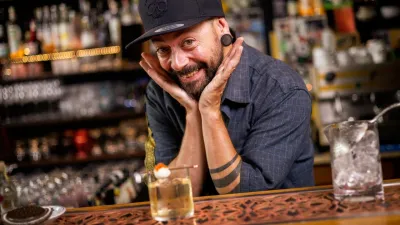
Since opening in 2019, within the historic Radisson Blu Carlton Hotel, Mirror Bar has been building a reputation that extends far beyond the drinks themselves. Under the leadership of Peter Marcina and Stanislav Harciník, an establishment has emerged that is built on a thoughtful combination of classic hospitality and subtly measured theatricality—never overt, always under control. In the context of Central Europe, this is a significant moment. A region long perceived as a ‘follower’ of trends from London, Paris or Barcelona is now increasingly finding its own voice. Mirror Bar is among the establishments helping to define it—not through noise, but through consistency.
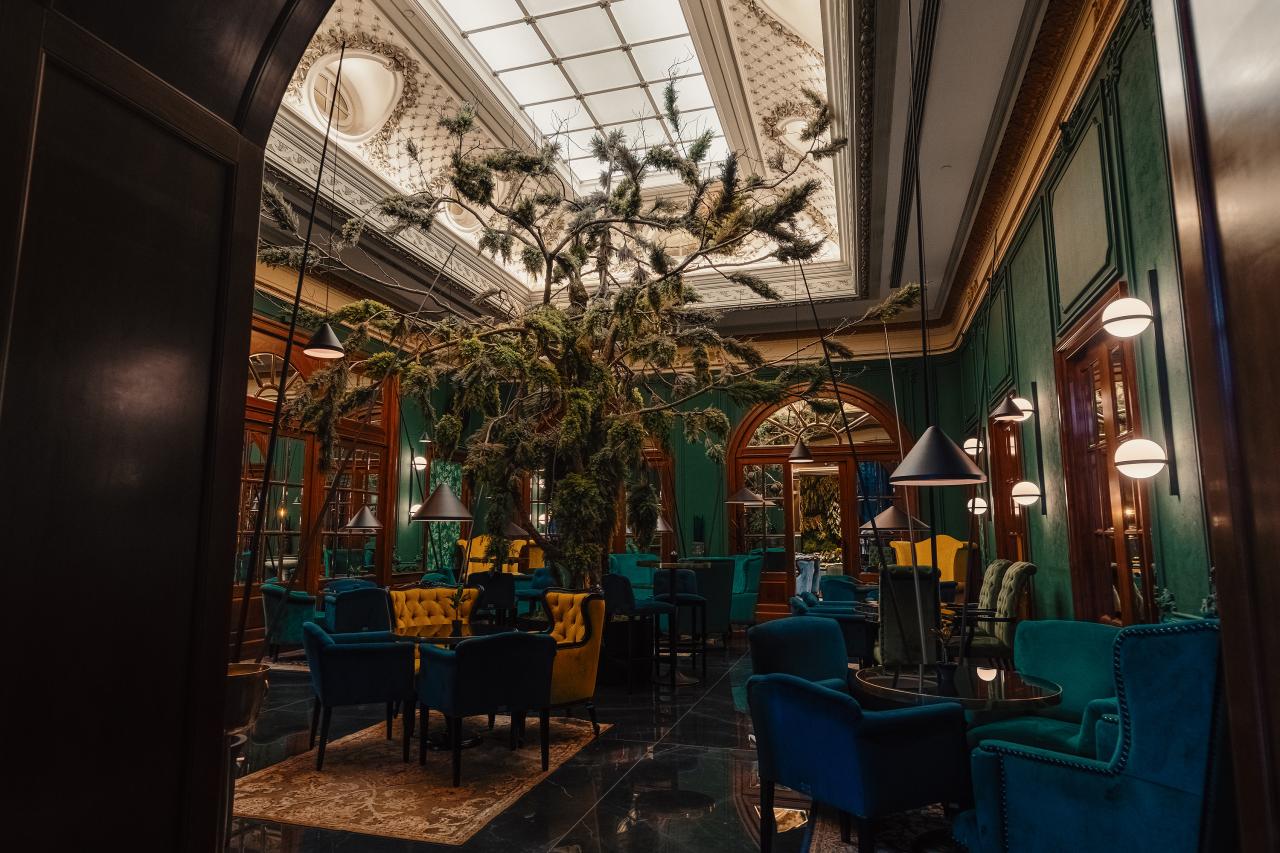
The principle on which it is based is simple, yet all the more challenging to execute: to create an environment that is immersive without feeling artificial. A place where every detail enhances the guest’s experience, rather than competing with it. One need only step inside to see this clearly. Dark green walls, velvet, wood, glass—and in the centre of the space, an almost surreal element: a life-size tree, as if the room had gradually grown around it. Hints of a cabinet of curiosities, echoes of a Victorian study, a sense of quiet discovery. Nothing shouts. Everything draws you in. But this approach isn’t just visual.
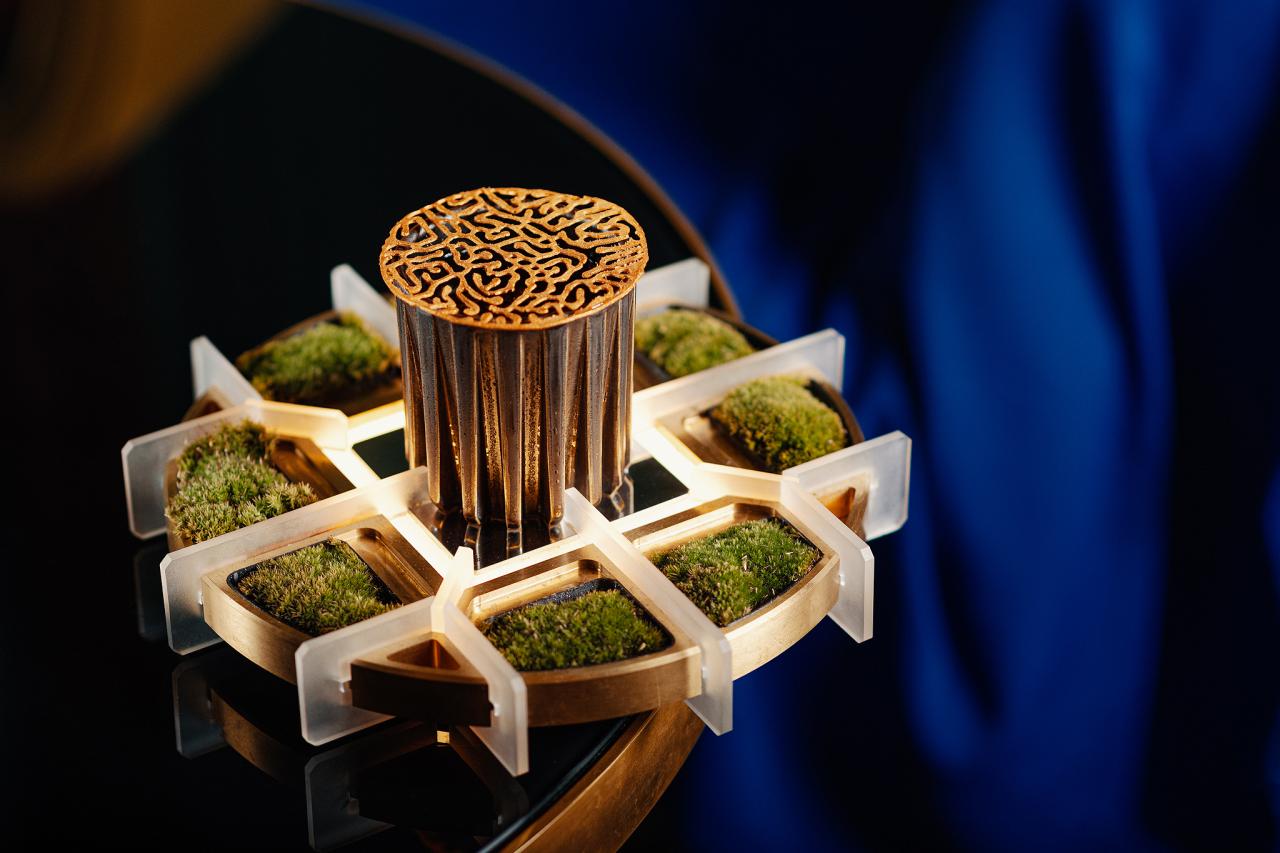
It is also reflected in the drinks menu. The current Essence of Design concept works with visual principles—form, line, texture or colour—without slipping into academicism. Instead, it translates these abstract concepts into cocktails that are precise, layered and often subtly playful. Every drink has a clear structure and a point. Presentation is important, but it never overpowers the flavour or balance.
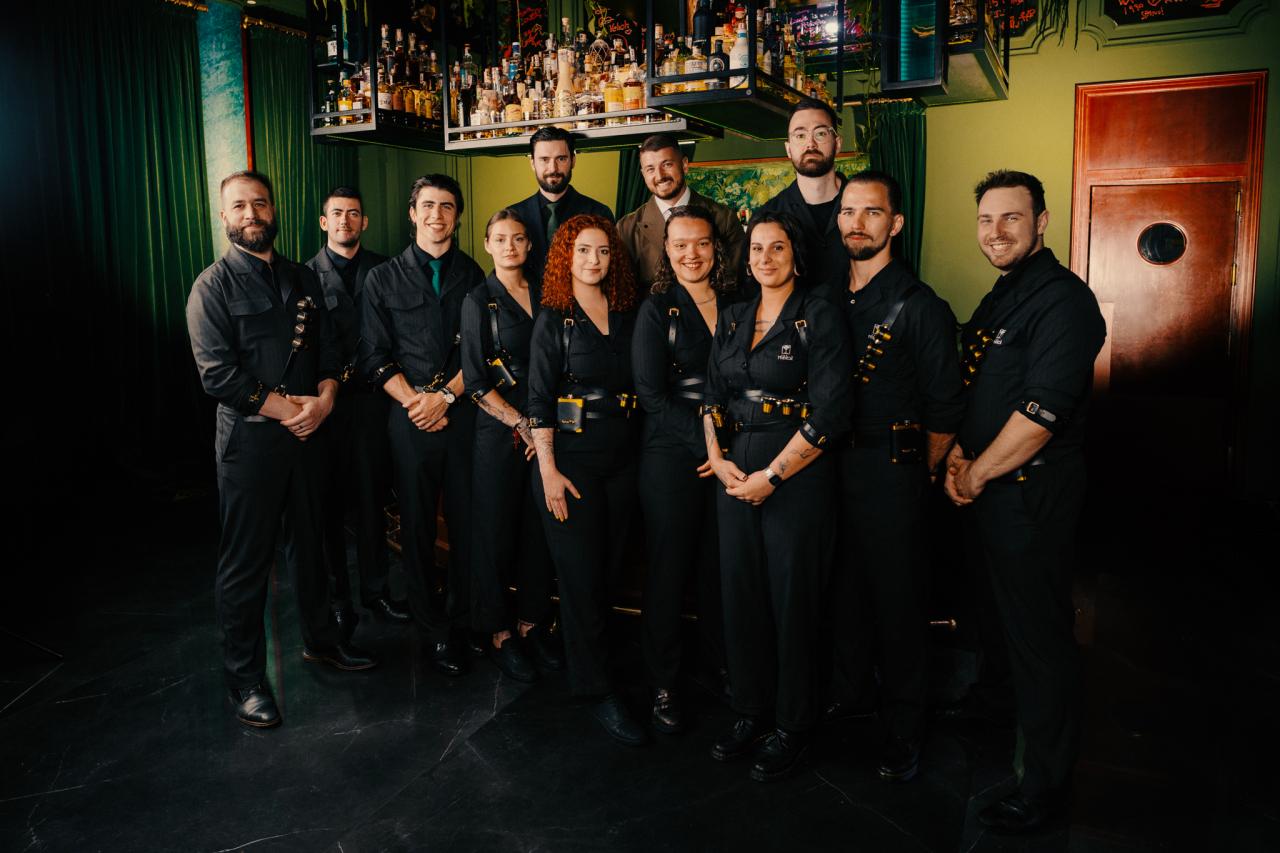
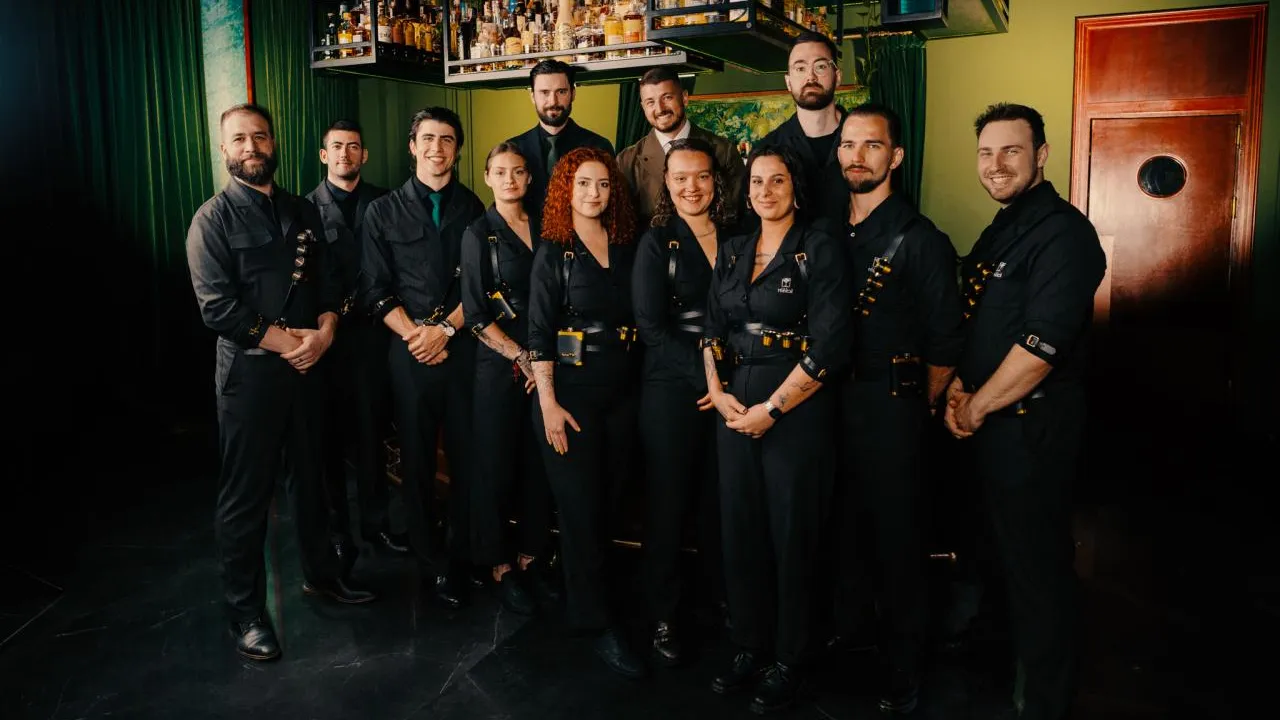
Behind it all is a team that operates with exceptional discipline—not only in technique, but also in its approach to guests. In an environment where part of the bar scene is increasingly focused on visual effects and the ‘wow moment’, Mirror Bar is systematically building something less ostentatious—but all the more enduring for it. Because what truly defines Mirror Bar is not aesthetics. It is the way it works with people.
Here, hospitality doesn’t feel like a performance. It is natural and attentive, yet unobtrusive. What matters is conversation, timing, and the ability to read both the guest and the atmosphere. The team doesn’t come across as actors on a stage, but as partners who guide the evening—unobtrusively, yet confidently. It is precisely this elusive quality—the feeling one takes away—that lies at the heart of the award the bar received this year.
At a time when part of the bar scene is drowning in spectacle, Mirror Bar offers a quieter, yet all the more compelling argument: true impact stems not from spectacle, but from how one feels.
But the award also has a broader significance. This June in Amsterdam, Europe’s 50 Best Bars will present the complete European ranking for the first time—and with it, a new map of bar culture across the continent. A map that no longer stops at traditional metropolises, but increasingly includes cities that until recently lay outside the mainstream spotlight.
For Harciník and his team, the award is not the goal, but a confirmation of the direction they are taking—proof that their interpretation of Slovak hospitality, thoughtful, precise and, above all, human, resonates even beyond the borders of Bratislava.
And perhaps that is precisely the essence of the whole story.
Not just that Mirror Bar has succeeded, but that the European bar scene is changing—and that cities like Bratislava are no longer on its periphery, but increasingly at its very heart.