

Prague’s Vallmo is entering a new era. Without any grand gestures, without any attempt to shock, but with a clearly discernible shift on the plate. The tasting menu at Vallmo today is not about everything that head chef Daniel Kukačka and his team are capable of. It is about everything they dare to leave out. And that is precisely where its strength lies.
The change at Vallmo is undeniable. In many restaurants, Martin Makovička’s departure would have meant either uncertainty or a demonstrative fresh start, intended to herald a new chapter at any cost. At Vallmo, however, something different is unfolding. Under the leadership of head chef Daniel Kukačka, the restaurant is taking neither of these paths. Instead, it appears more focused, more confident and, paradoxically, more daring precisely because it is not trying to be different at any cost. The tasting menu therefore does not function as a manifesto of change, but as its natural consequence.
Pairing to the full
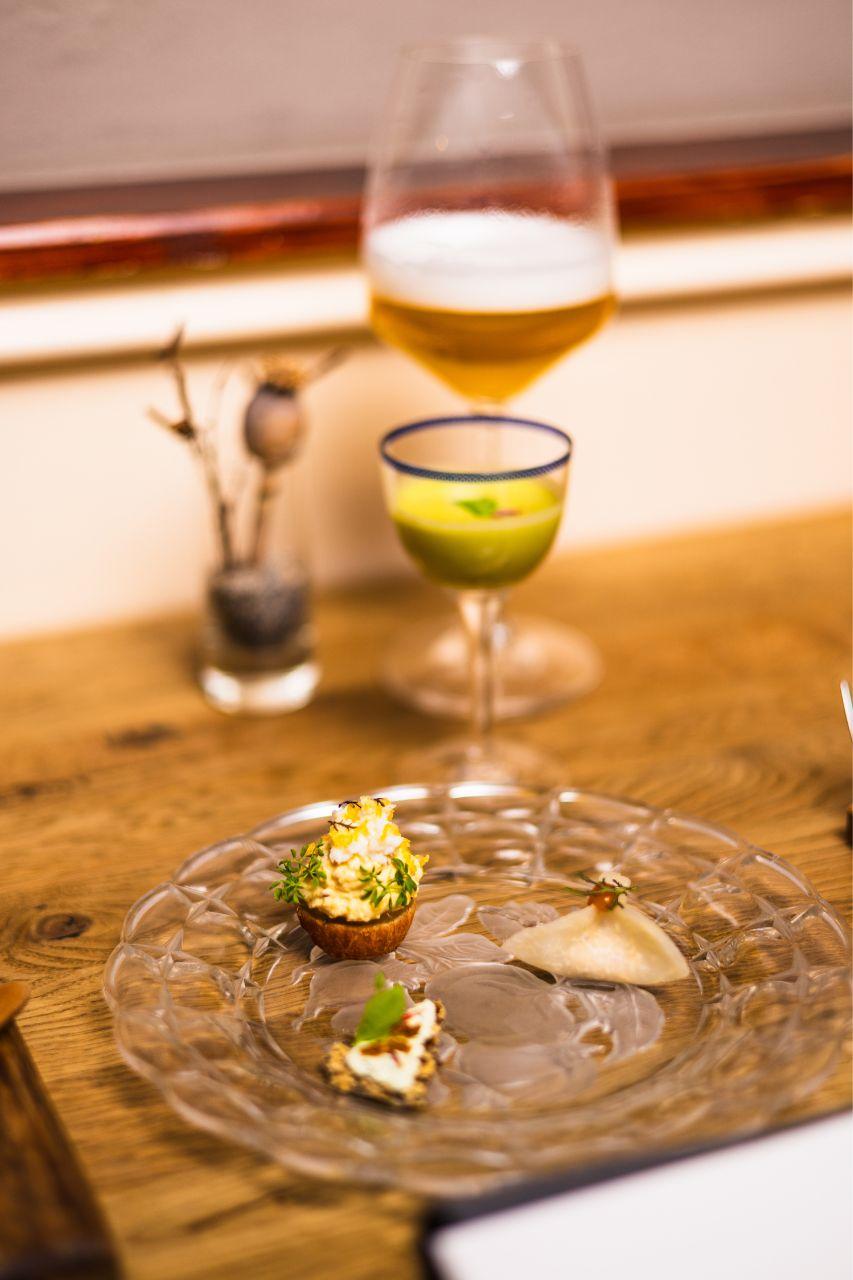
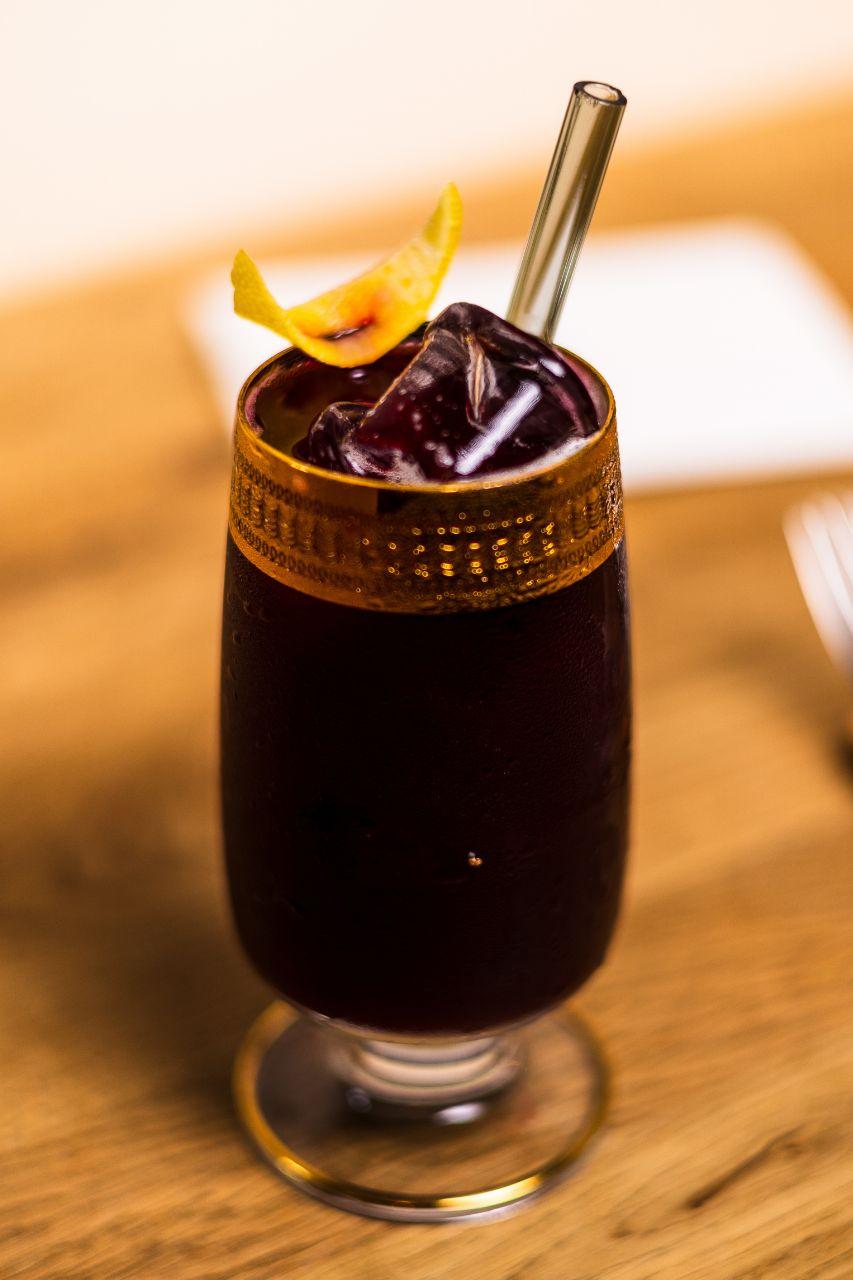
Vallmo is one of those establishments that an inspector from the prestigious Michelin Guide is likely to praise. The evening begins with a beer – something the representatives of the ‘red bible’ have long called for. This first course alone suggests that food-and-drink pairing here could be an integral part of the experience. A gose with rosemary, juniper, thyme, mint, coriander and a subtle saltiness serves as a dry, straightforward aperitif that prepares the palate while also setting the tone for the entire evening. As explained during service, “it’s something like an aperitif, very dry”, and it is precisely this straightforwardness that subsequently carries over into the food.
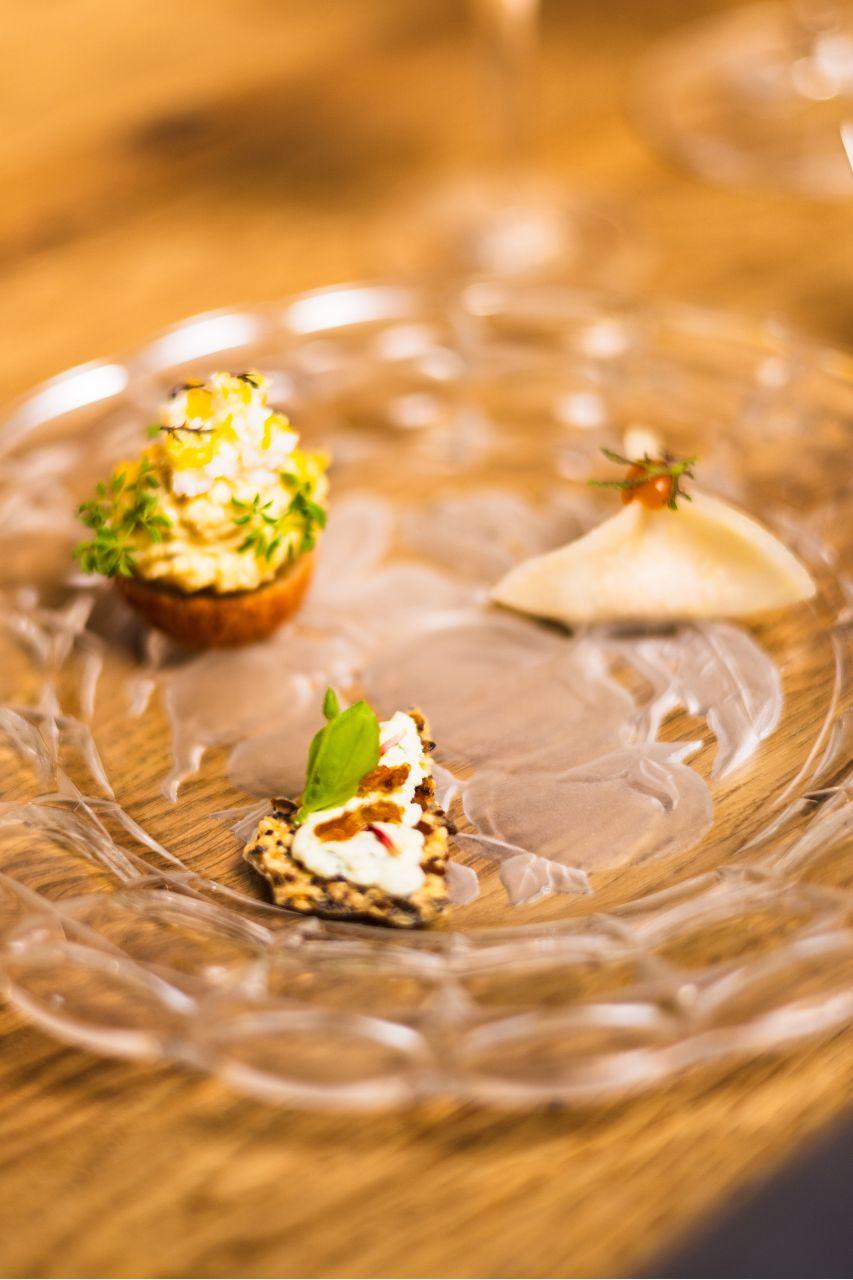
The snack bar that follows illustrates the kitchen’s fundamental principle. The green asparagus gazpacho with white asparagus and fried shallots comes across as clean and straightforward, while the ravioli made from pickled kohlrabi, filled with pork belly spread and apricot jam, plays on the contrast between acidity, fat and subtle sweetness. Knäckebrot with quark and chives brings the flavour back to simplicity, and a small doughnut with anguria and egg yolk cream adds a touch of playfulness that never feels gratuitous. The 2022 vintage sparkling wine, produced using the traditional method from six grape varieties, with higher acidity and a delicate effervescence, ties the individual flavours together and keeps them in balance.
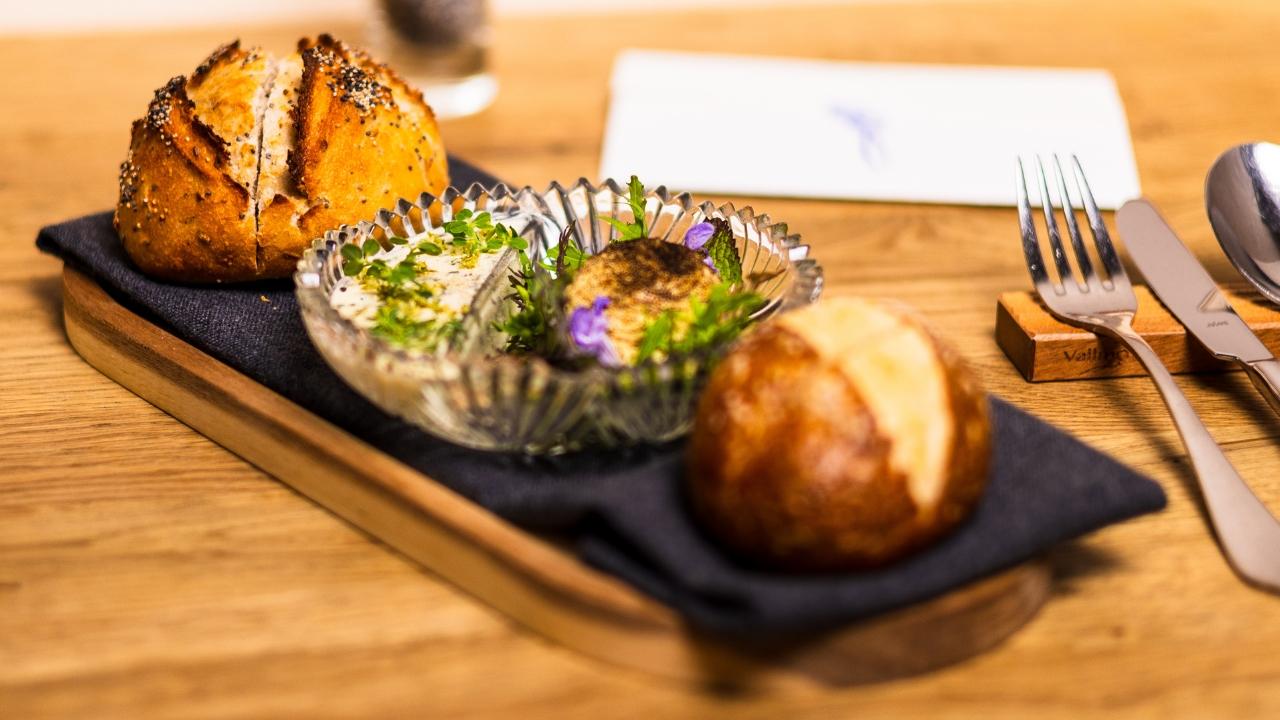
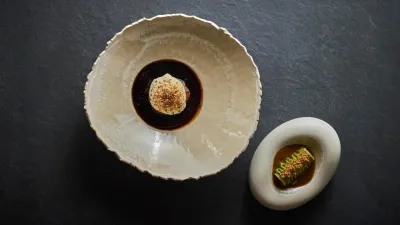
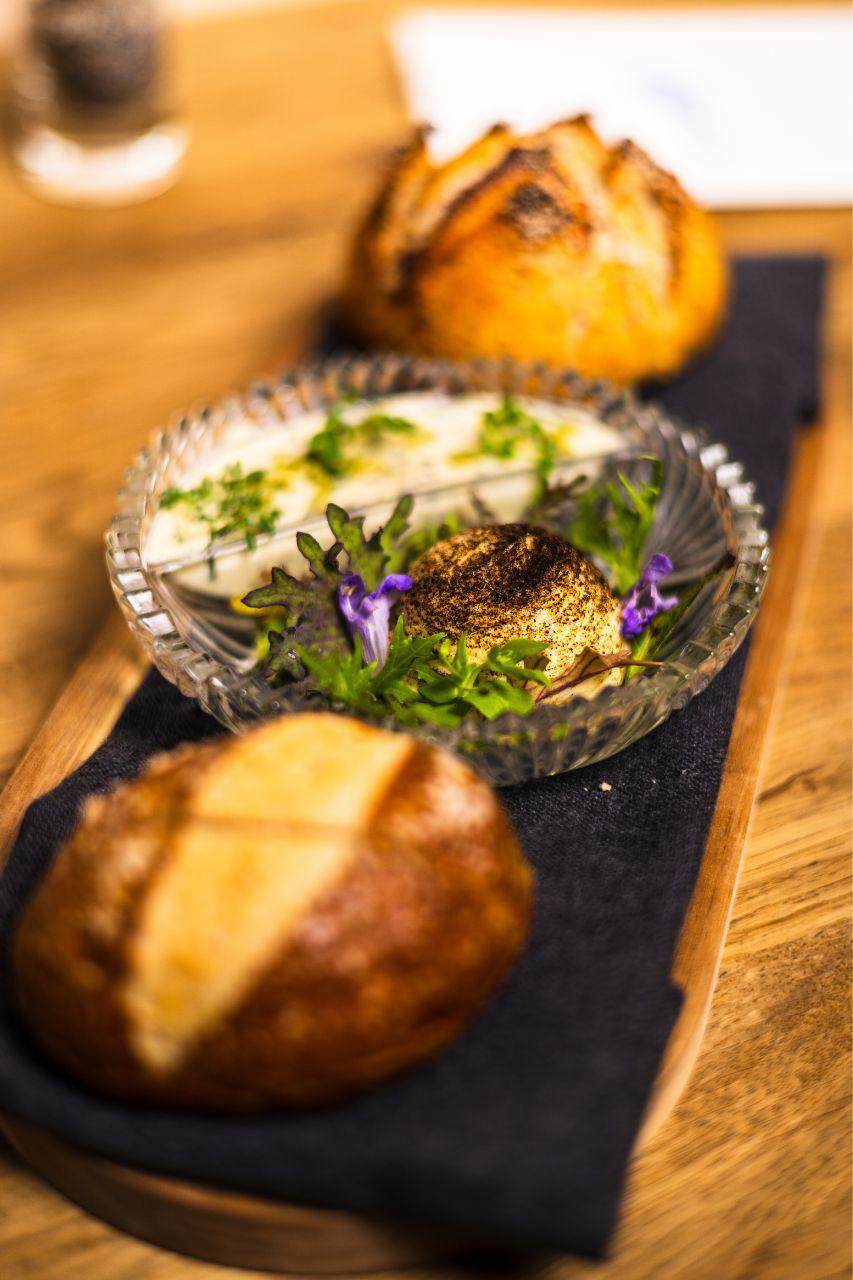
A key moment comes with the bread, butter and processed cheese made from matured Moravian cheese. The combination of onion powder, chive oil and a rich cheese base might seem almost banal, but it is precisely in its sincerity that Vallmo’s strength lies. It is a flavour that is intimately familiar, yet refined down to the last detail.
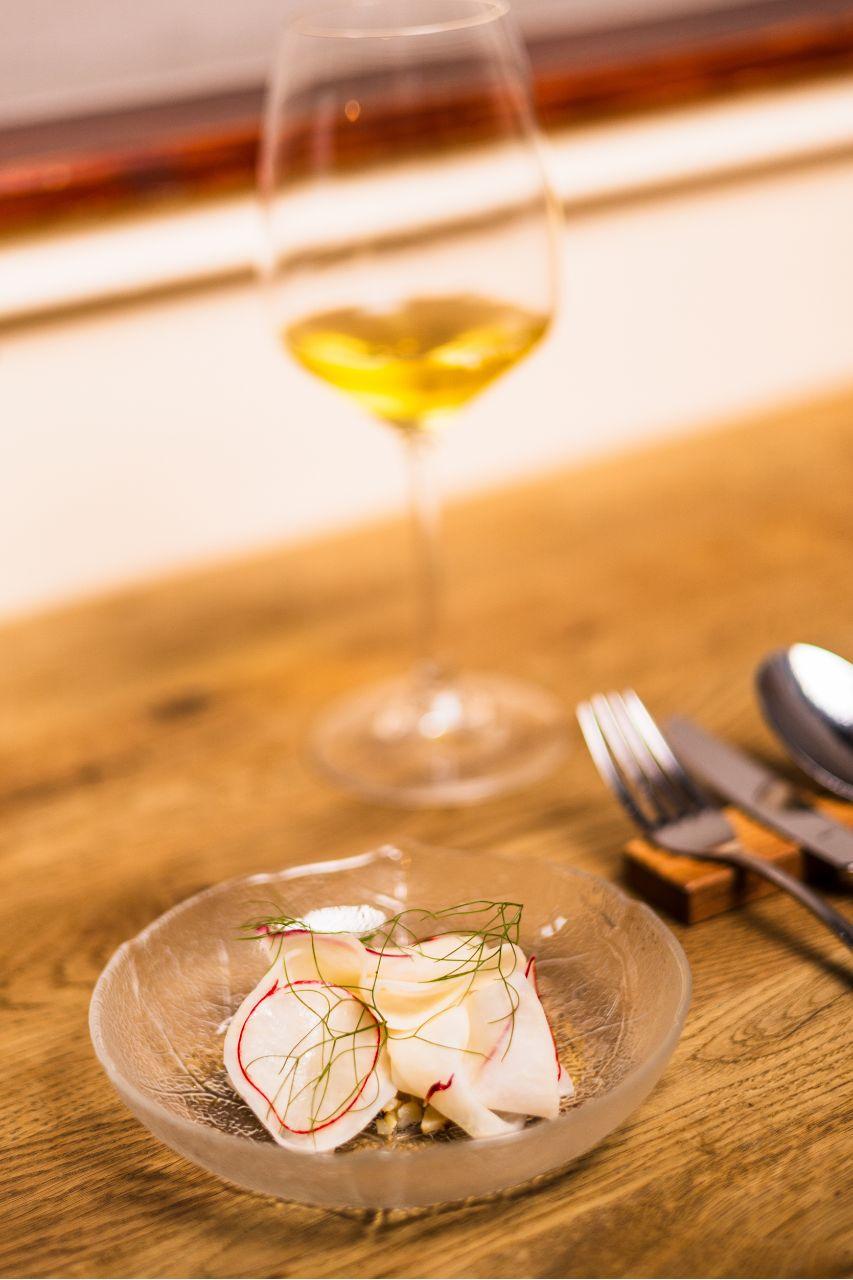
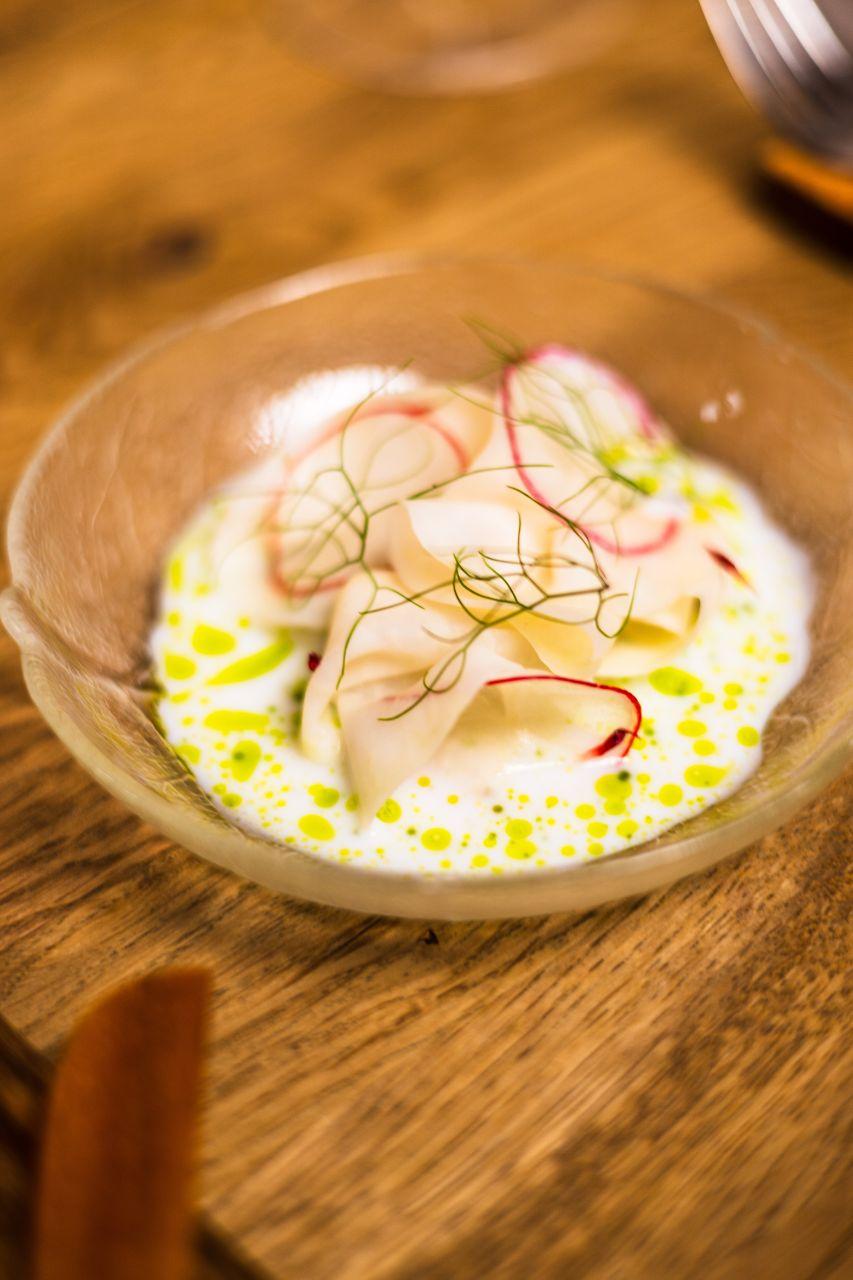
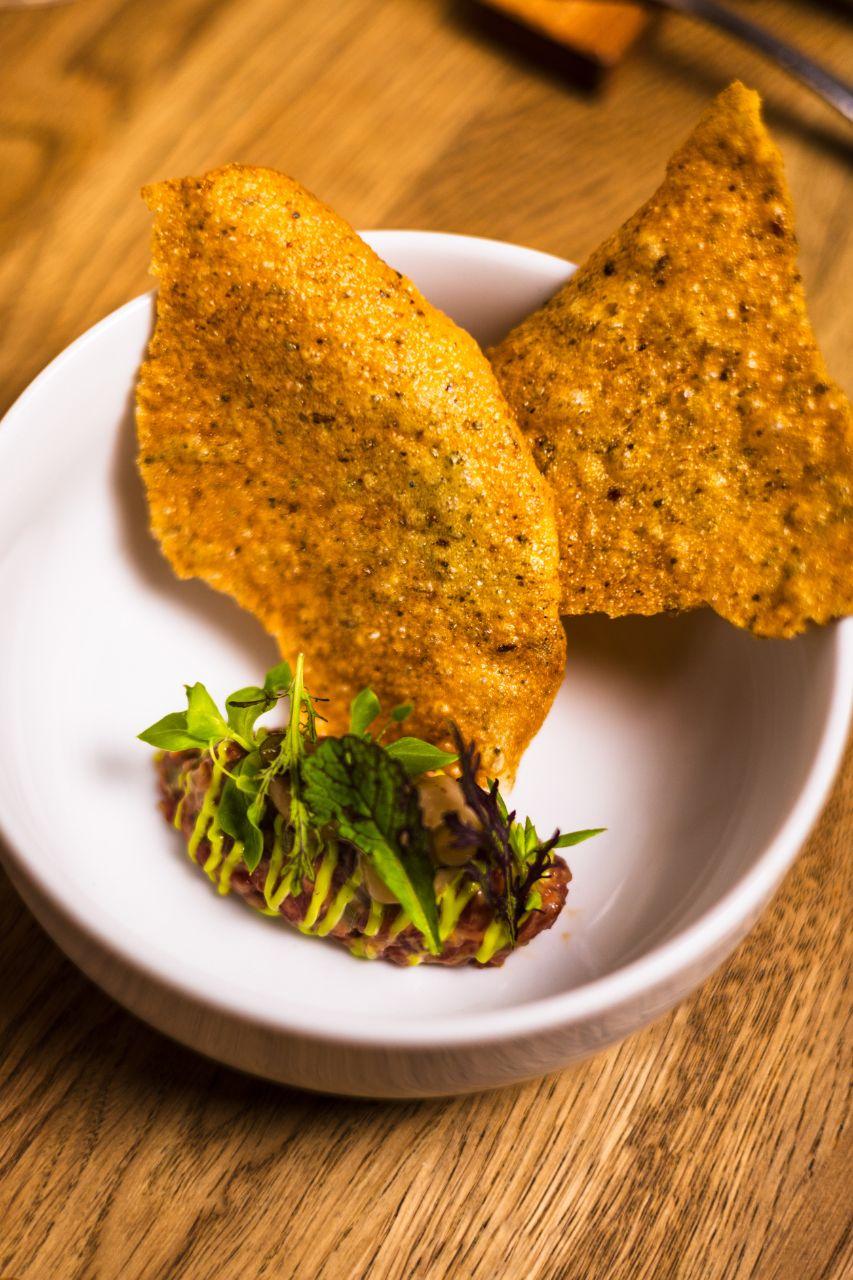
The menu unfolds gradually, without feeling the need to escalate excessively. Pickled kohlrabi with trout, served ceviche-style and paired with Filip Mlýnek’s Hibernal 2022, is fresh, mineral and slightly salty, with the wine perfectly highlighting its character. Beef tartare made from meat aged for thirty days, served with wild garlic mayonnaise, smoked bone marrow and Chester cheese, on the other hand, offers richness and depth that is balanced by a crispy potato fritter in the form of a chip.
Speaking to the guest through flavours
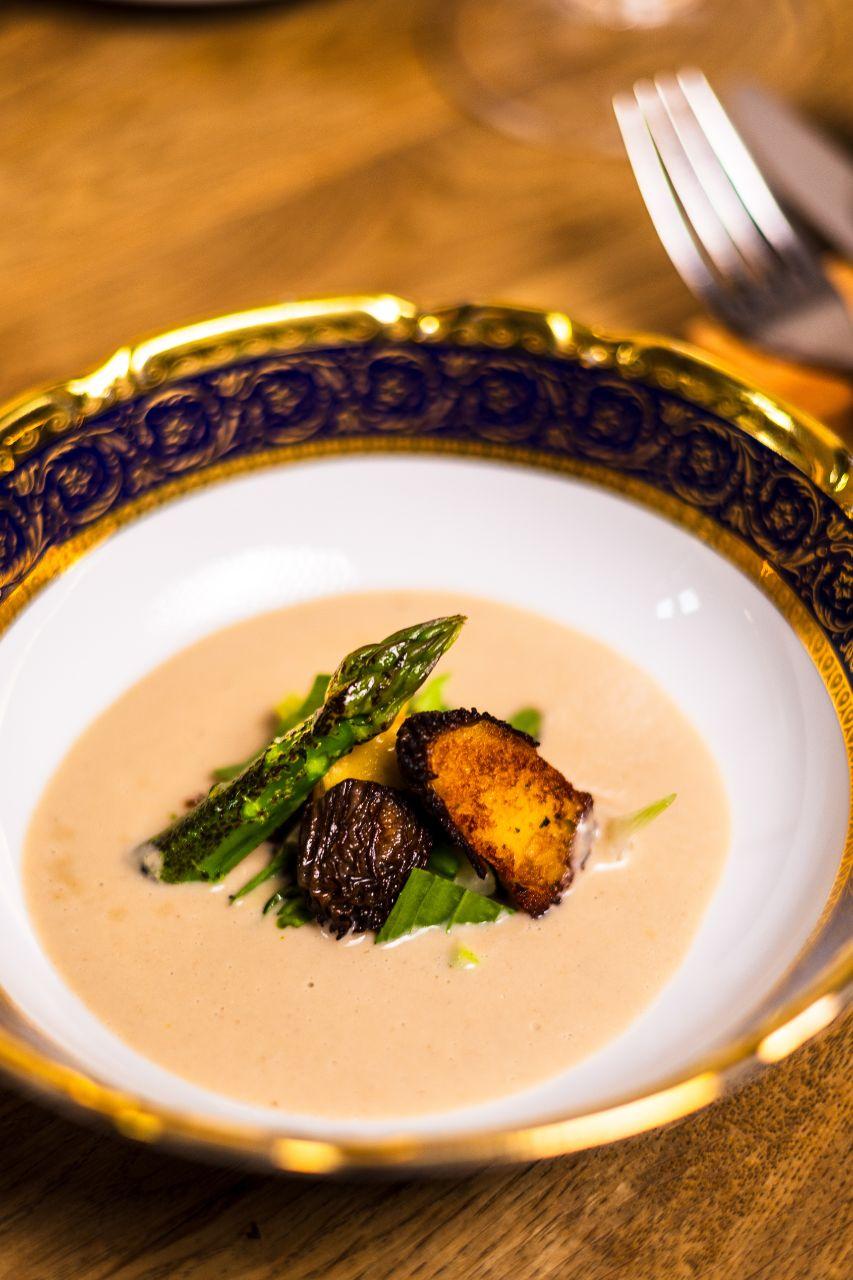
One of the evening’s most memorable moments is the morels, which appear as an extra on the menu – or rather, are served to us from the previous menu; you wouldn’t find them on the current menu today. The combination of a stuffing made from nettles and wild garlic, asparagus, shallots and a creamy mushroom sauce builds on earthiness and a subtle bitterness, brought together by a buttery base. The dark Shadow Fader beer, with notes of roasted malt and coffee, highlights this structure and adds another layer to the dish. It is here that it becomes clear how Vallmo uses flavour as its primary means of expression – without gimmicks, but with clear logic.
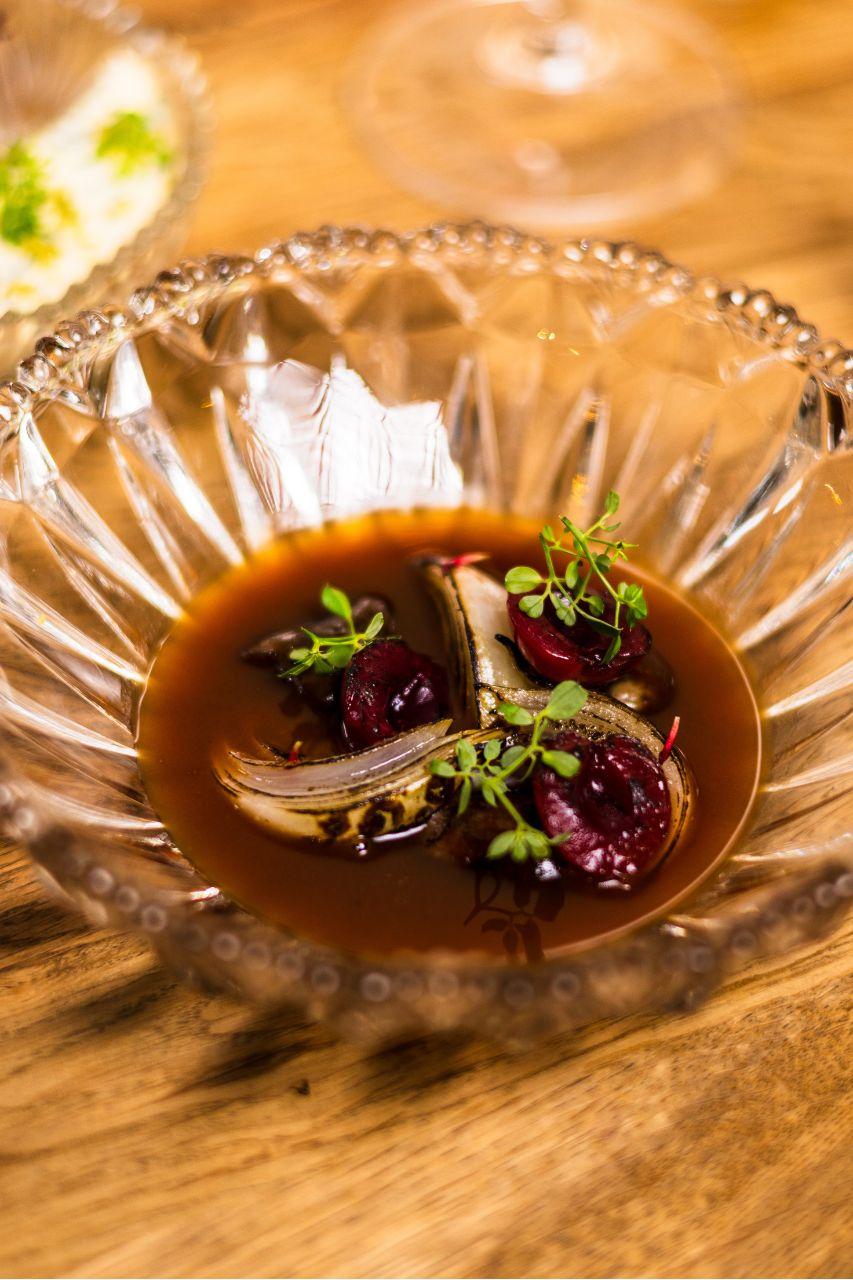
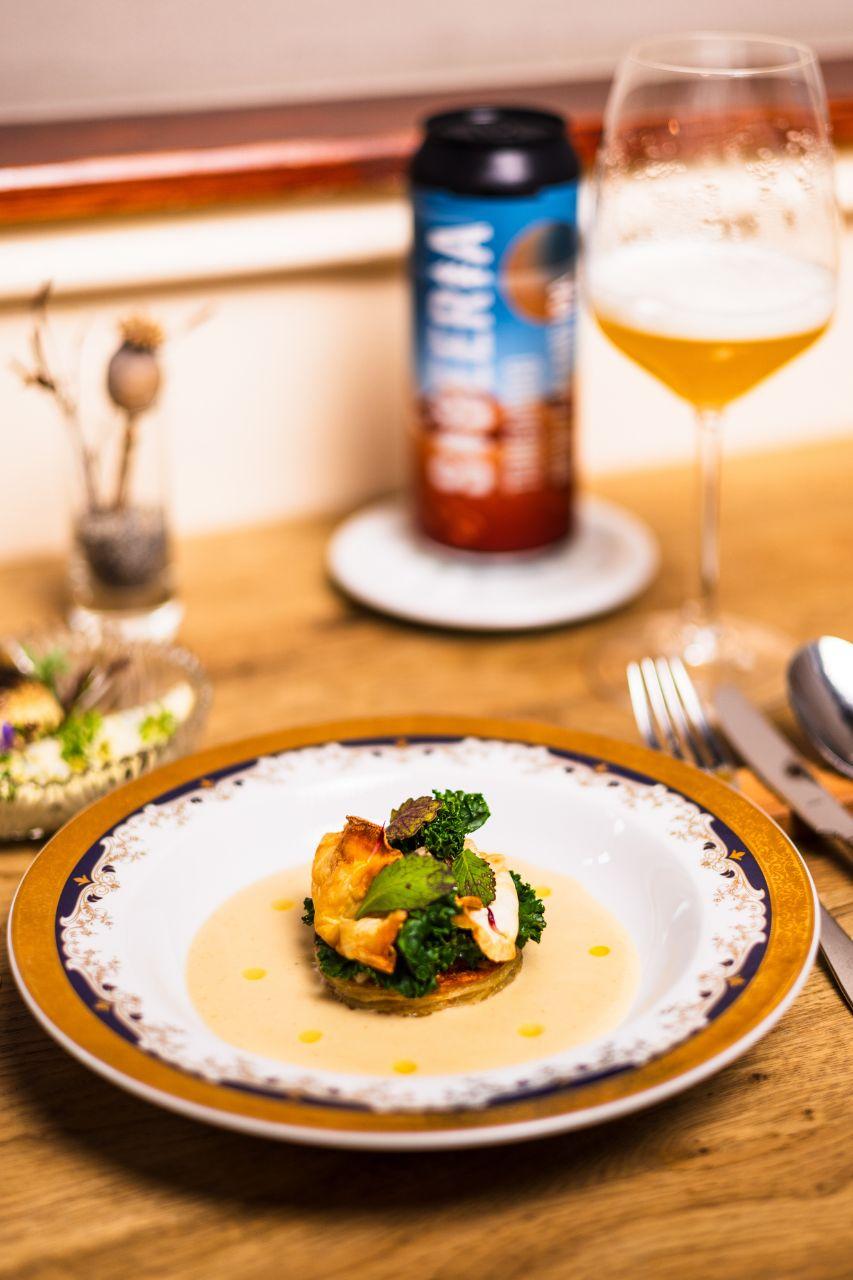
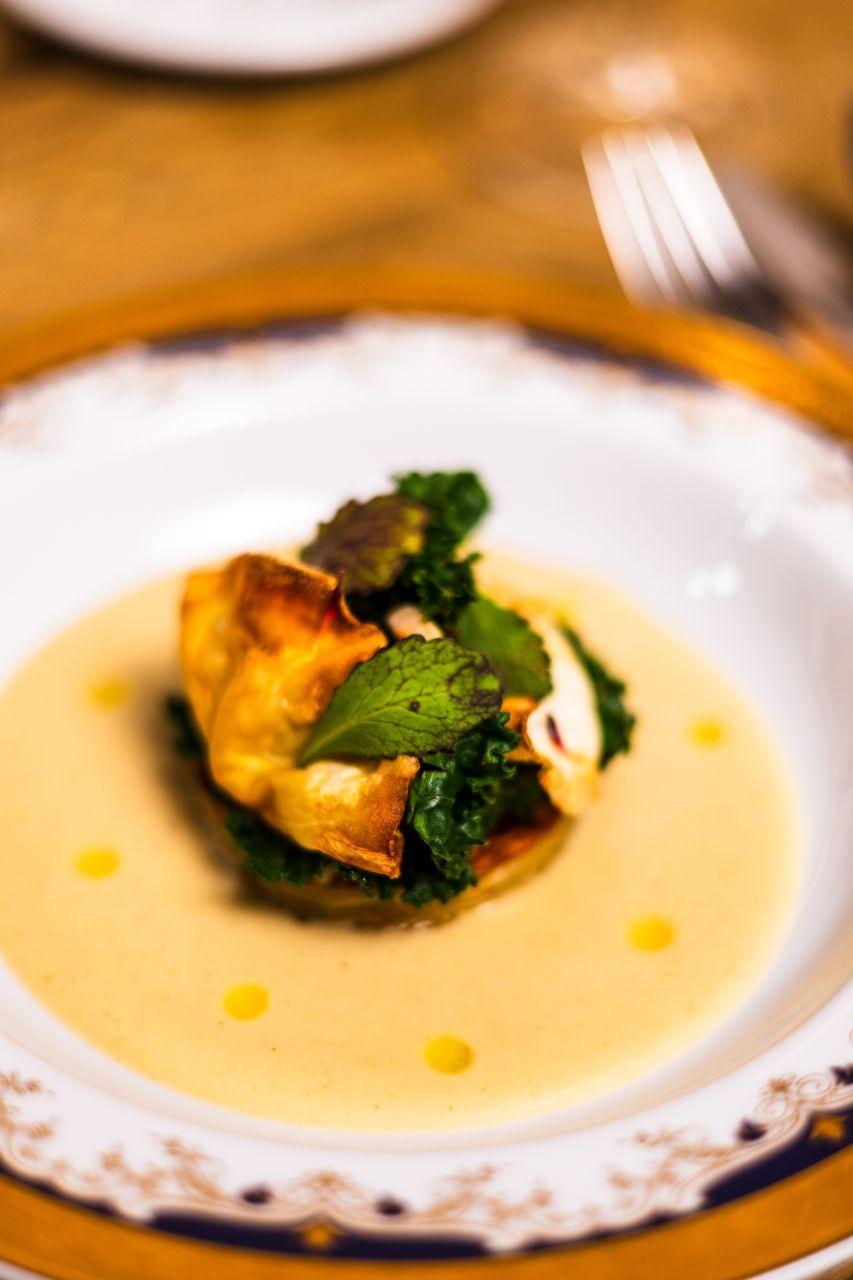
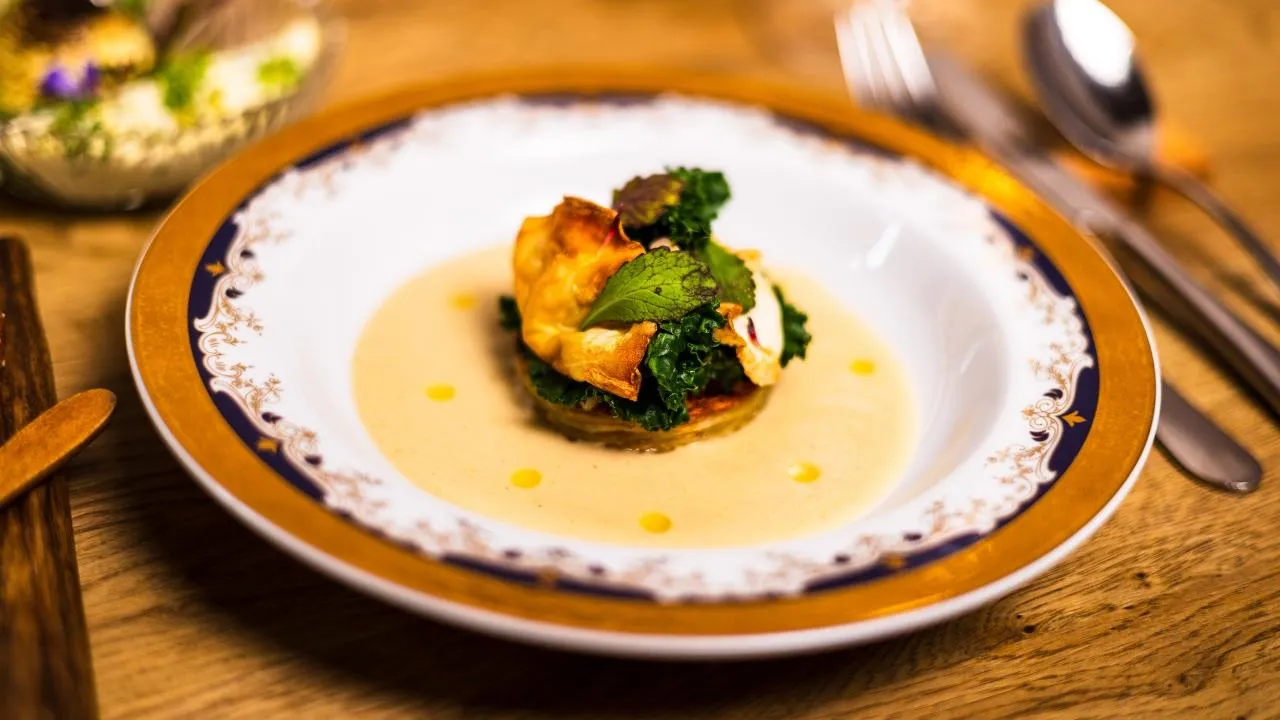
A variation on onion soup with duck hearts and cherries, paired with Václav Tadeáš’s Sangiovese 2024, works in a similar way. It is this dish that has replaced the morels on the menu. The depth of the onion, the texture of the meat and the acidity of the fruit blend together naturally, without any attempt to surprise at all costs. The celery Anna, prepared according to the French classic, then demonstrates technical precision in the combination of butter, nuts and the delicate sweetness of the celery, complemented by the freshness and acidity of the New Zealand IPA Tongariro from the Siberia brewery.
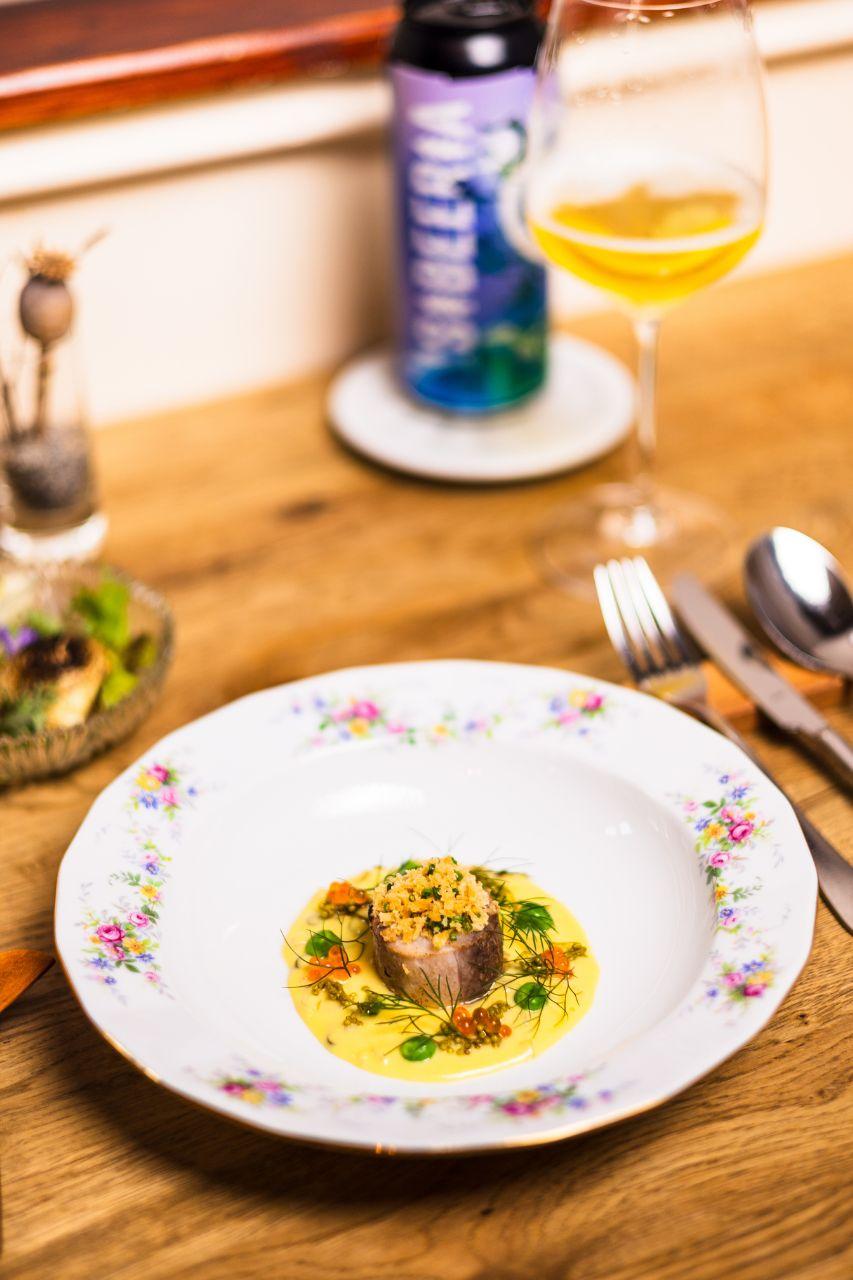
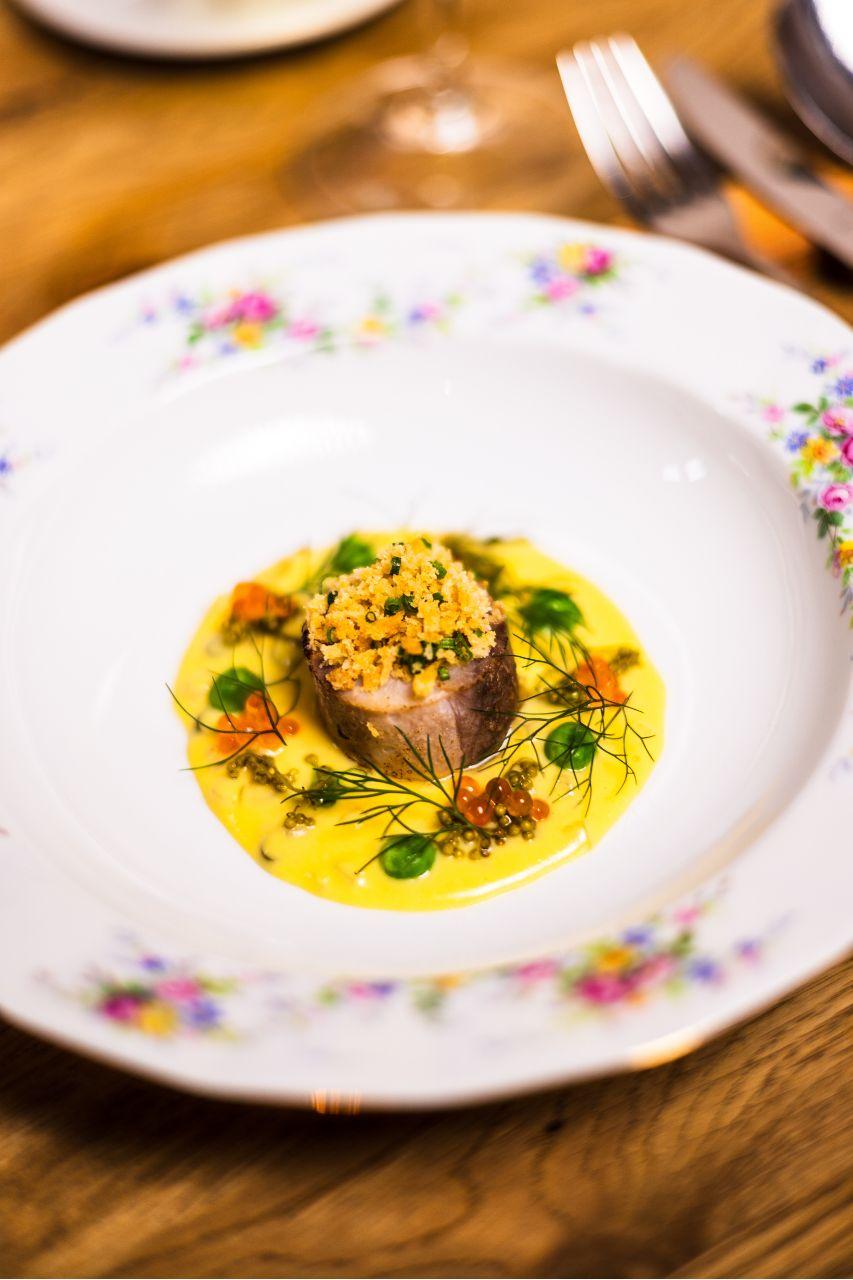
The highlight comes with the Czech carp, a dish that could easily have slipped into cliché. Mr Rybčák’s carp, served with breadcrumbs, dill, elderberry capers, peas and trout caviar, is based on a familiar flavour but presented with unusual clarity. The key element is a homemade warm tartar sauce made from boiled egg yolks, cream and fish stock, which ties the whole dish together. Cold IPA Via Karolina, created in collaboration between the Siberia brewery and Mahr’s Bräu, with its freshness and acidity, creates a surprisingly precise pairing that elevates the dish without overpowering it.
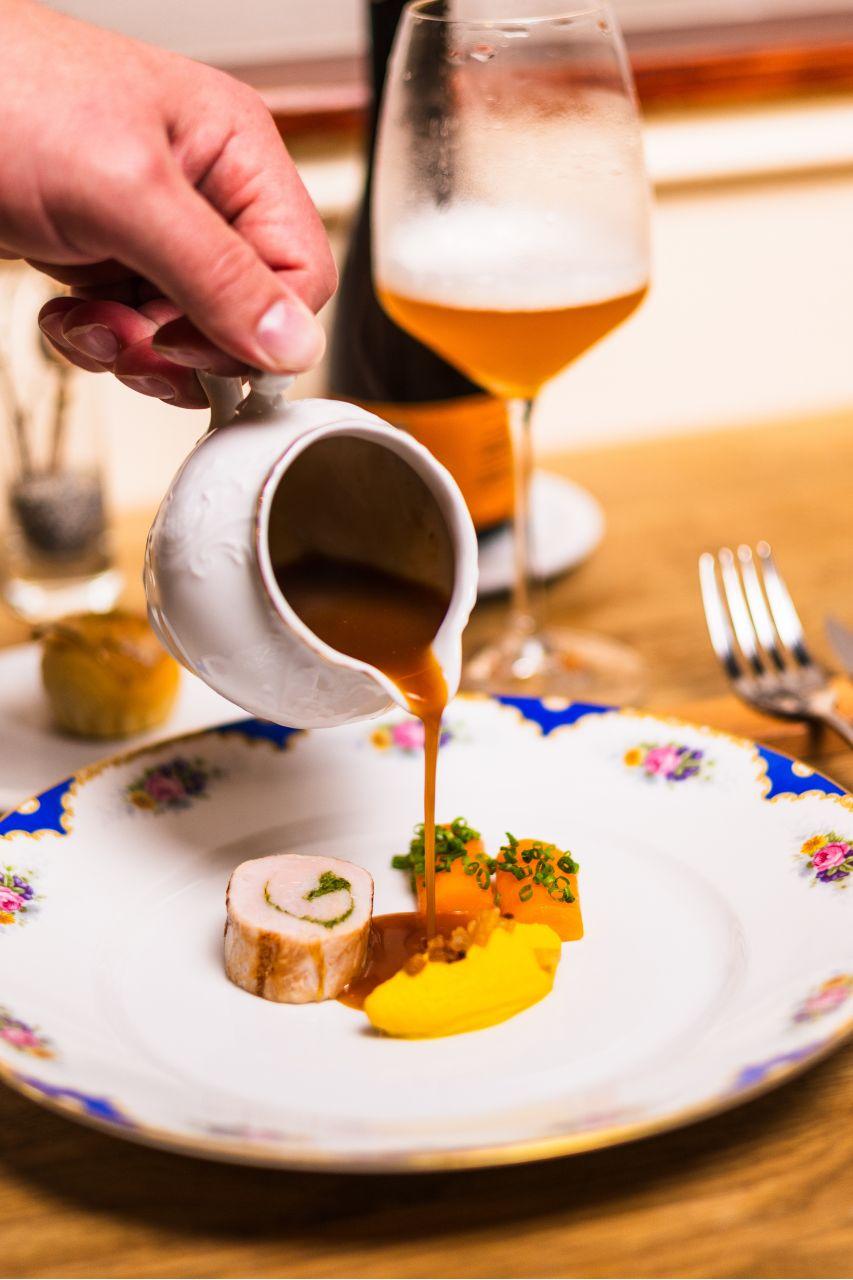
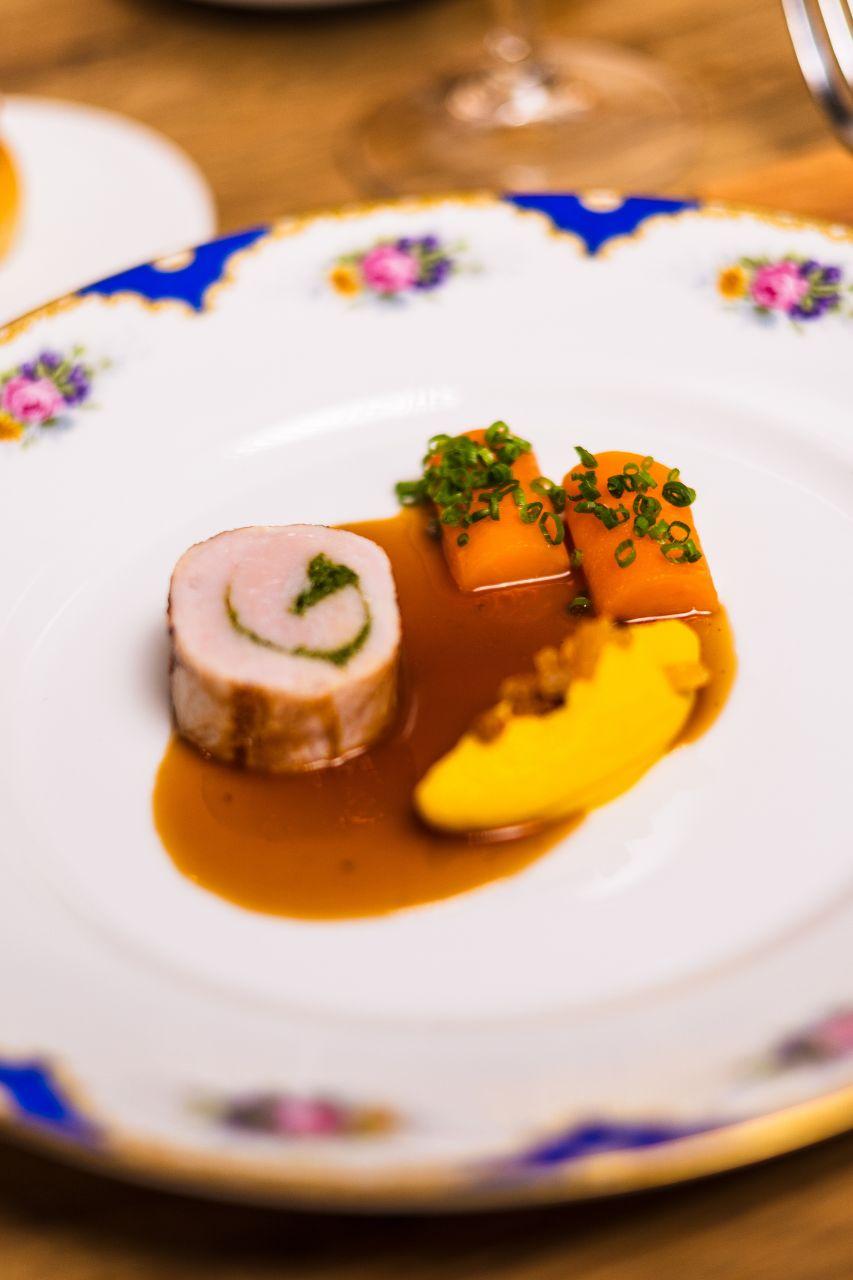
A pork chop rolled with chamomile, served with lard crackling and a glazed carrot, is perhaps the most daring combination of the evening. A Belgian Tripel, matured for two years in oak barrels previously used for Frankovka wine, with notes of elderflower and chamomile, adds another layer that balances sweetness, bitterness and herbal notes. It’s a fine line that might not work elsewhere, but here it holds together thanks to the precise balance of flavours.
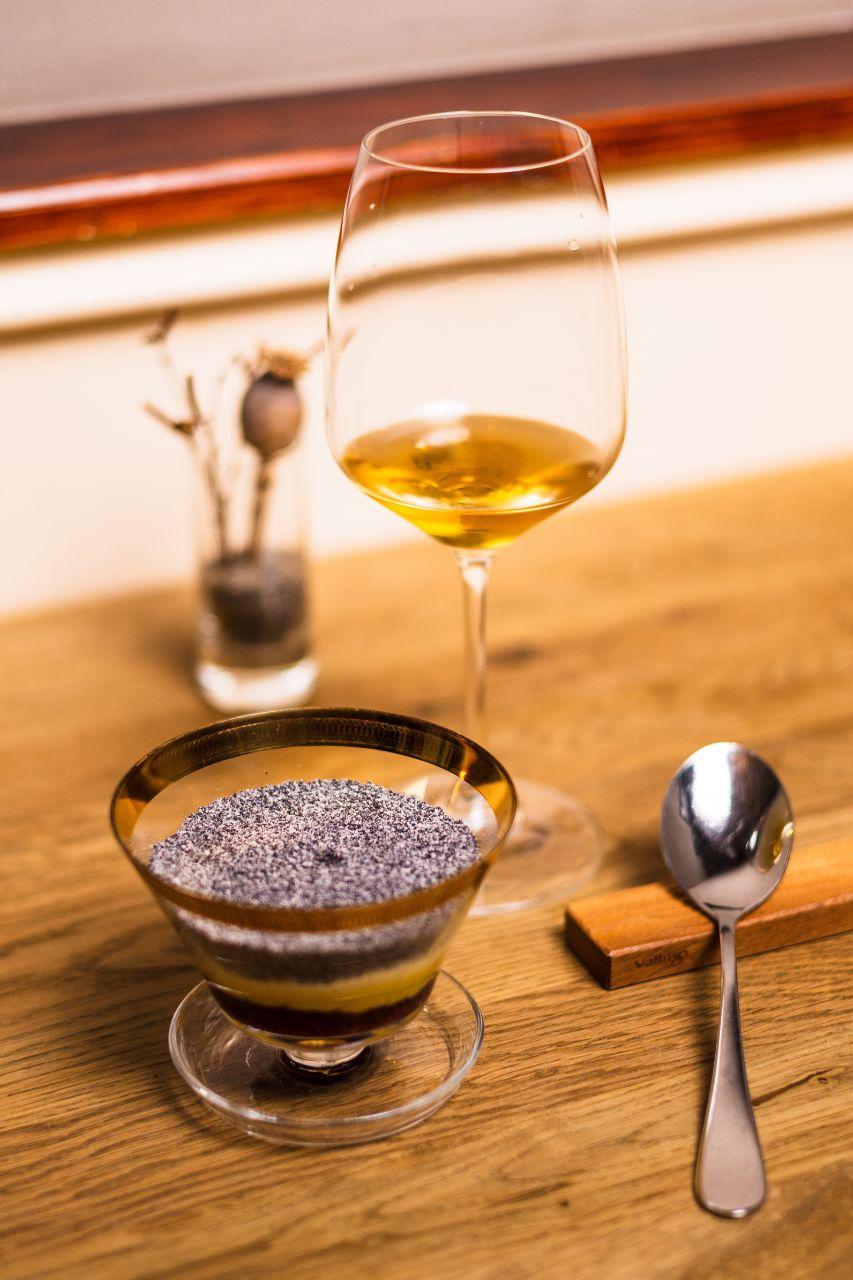
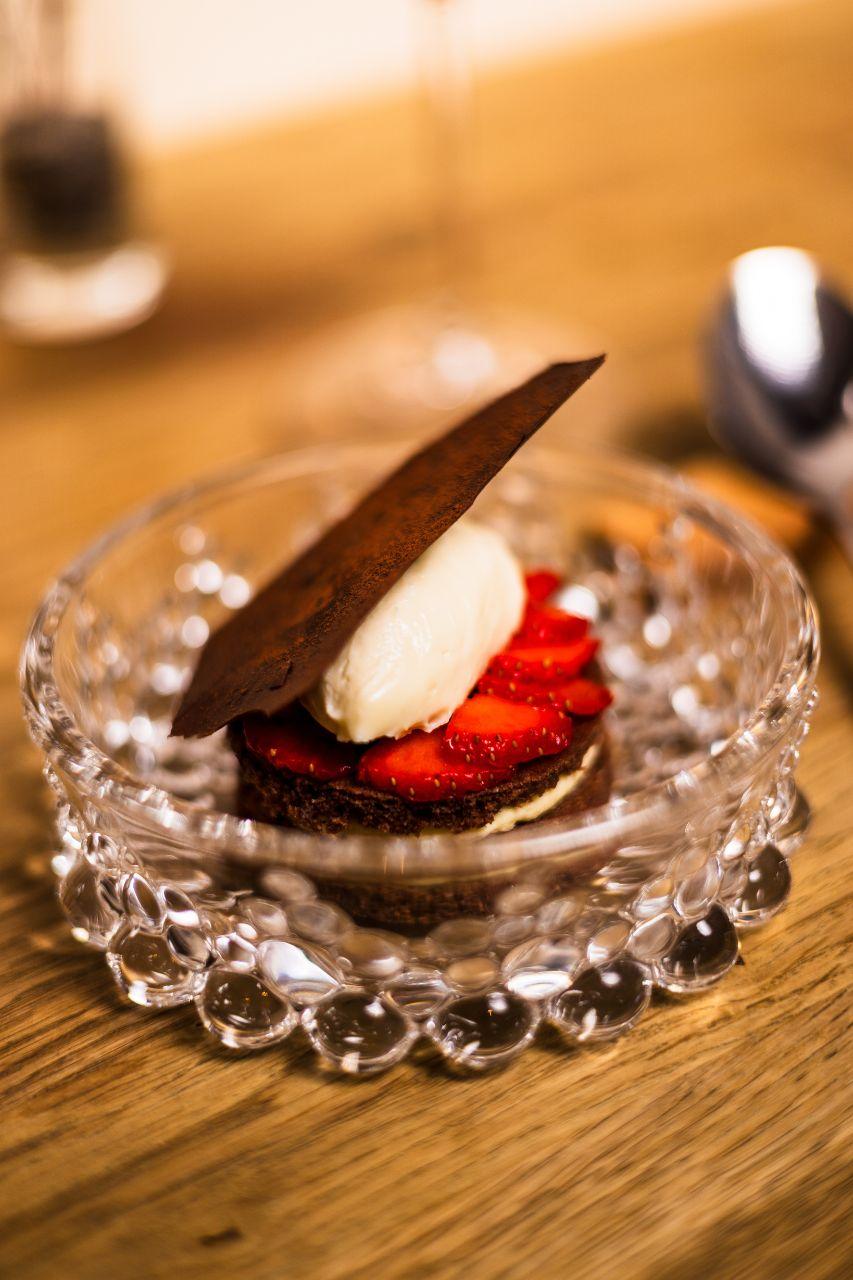
The desserts bring the menu back to its Czech roots without slipping into nostalgia. Škubánky, layered with pear and cherry jam, vanilla custard and savoury potato cream, and topped with poppy seeds and nut butter, come across as a thoughtful reinterpretation of a familiar flavour. A Pálava and Ryzlink vlašský, spontaneously fermented with higher residual sugar and pronounced minerality, elegantly rounds off the entire course. The ‘Míša’ dessert, featuring rhubarb, strawberries and white chocolate, paired with Filip Mlýnek’s 2022 Dornfelder, then offers a lighter, fruitier finish.
Today, Vallmo does not come across as a restaurant searching for a new direction. On the contrary, it comes across as a place that knows exactly what it doesn’t need to do. And that is precisely where its greatest shift lies. It is not about turning away from the past, but about refining it. It is about greater confidence in the ingredients, in flavour and in the guest. The result is a menu that does not rely on spectacle, but works in every detail - and that is precisely why it lingers in the memory longer than most more ambitious attempts.