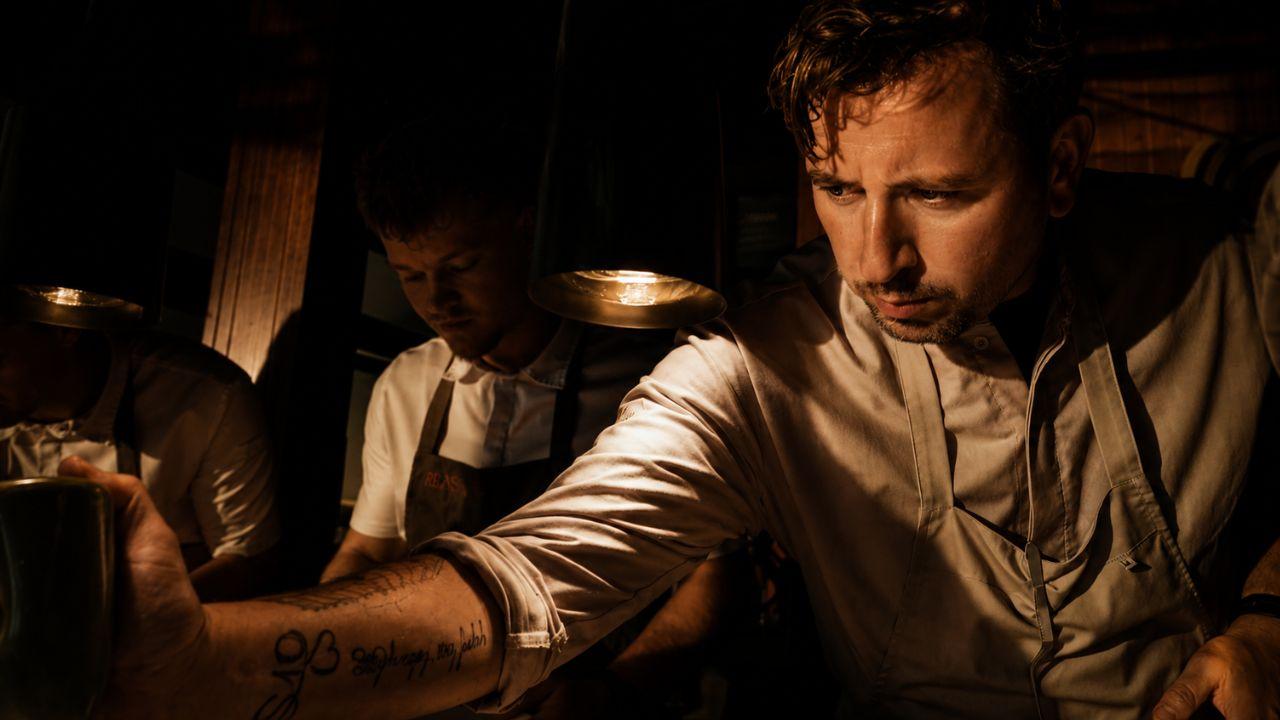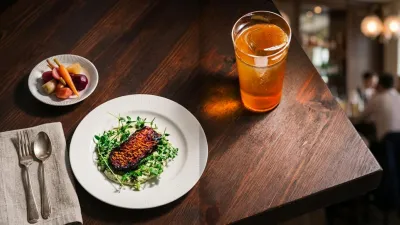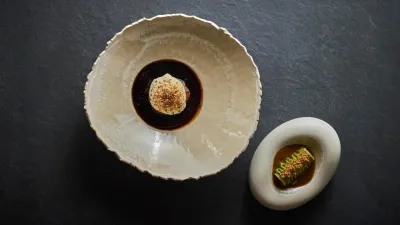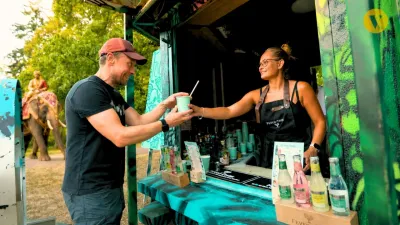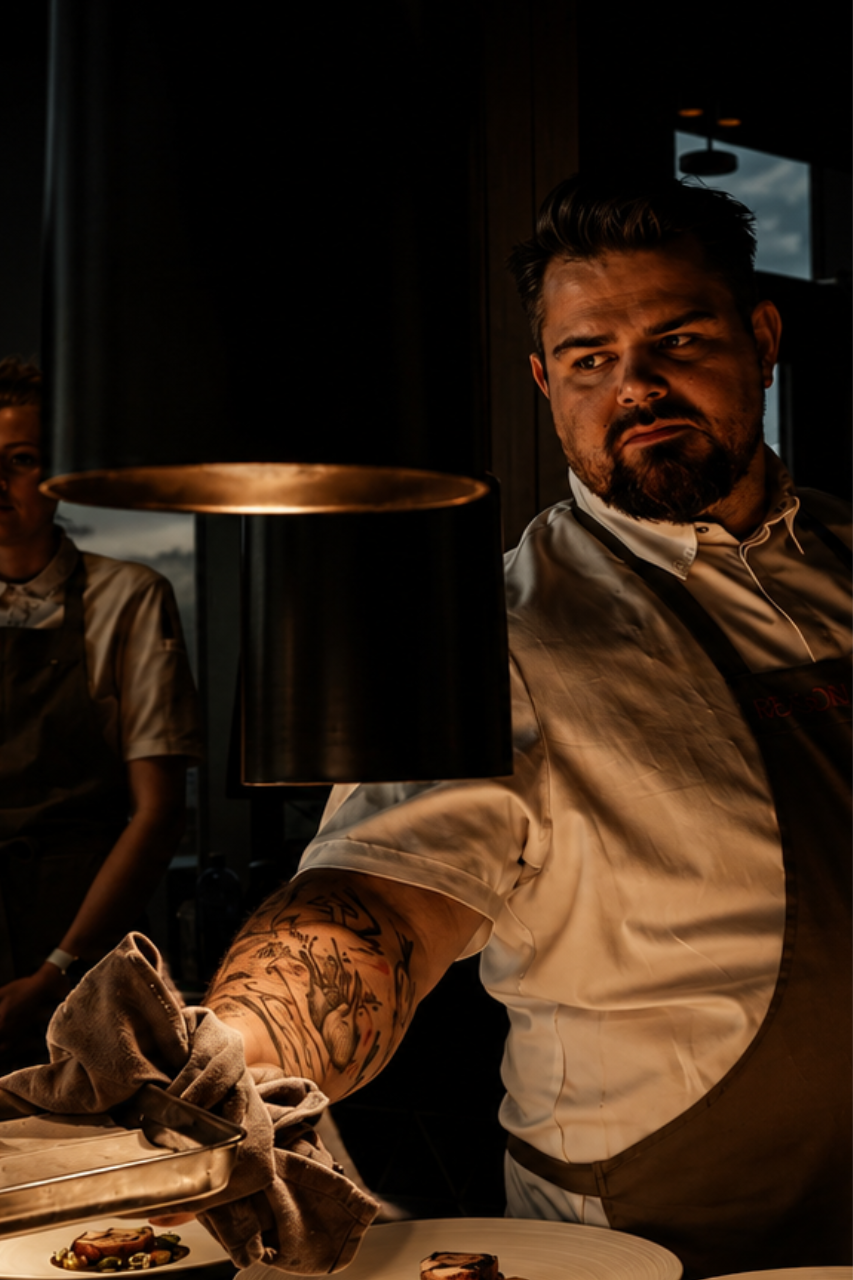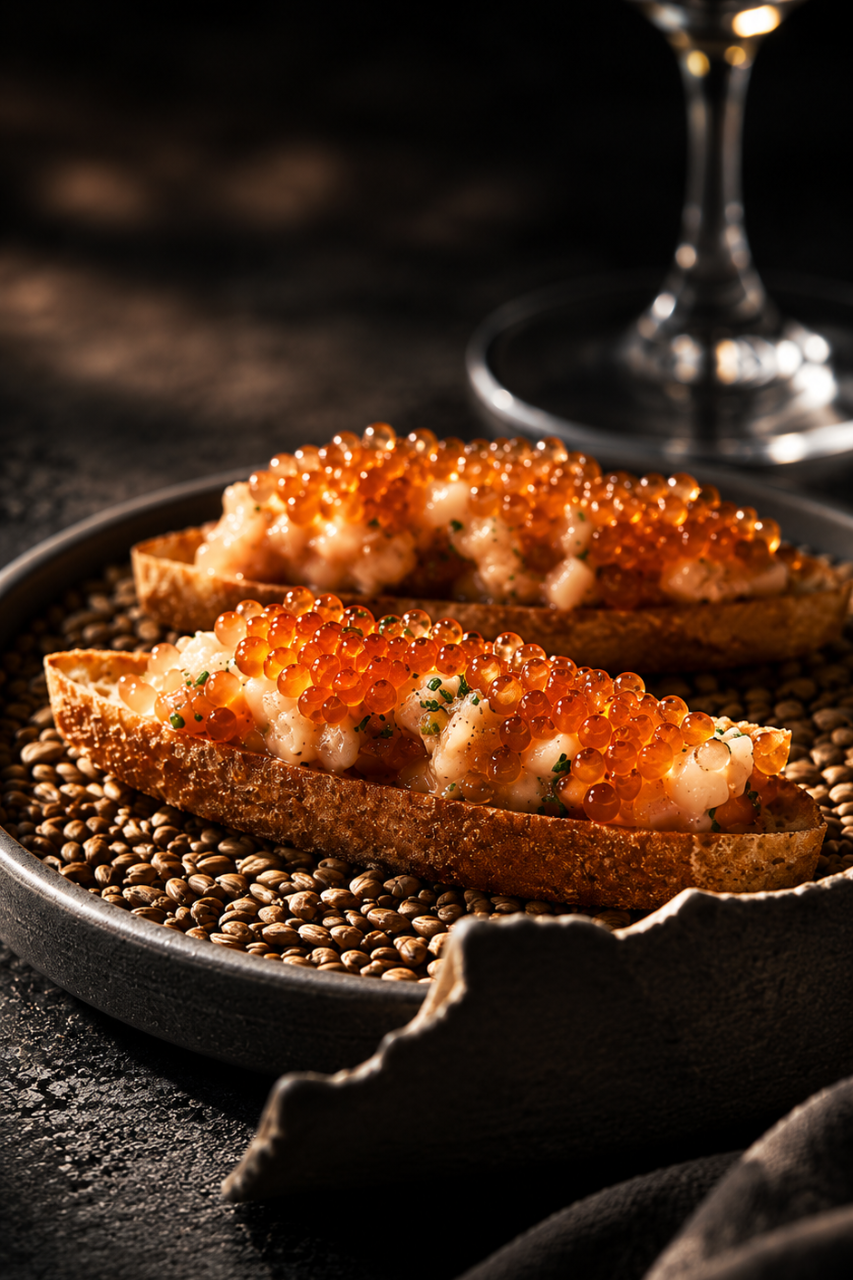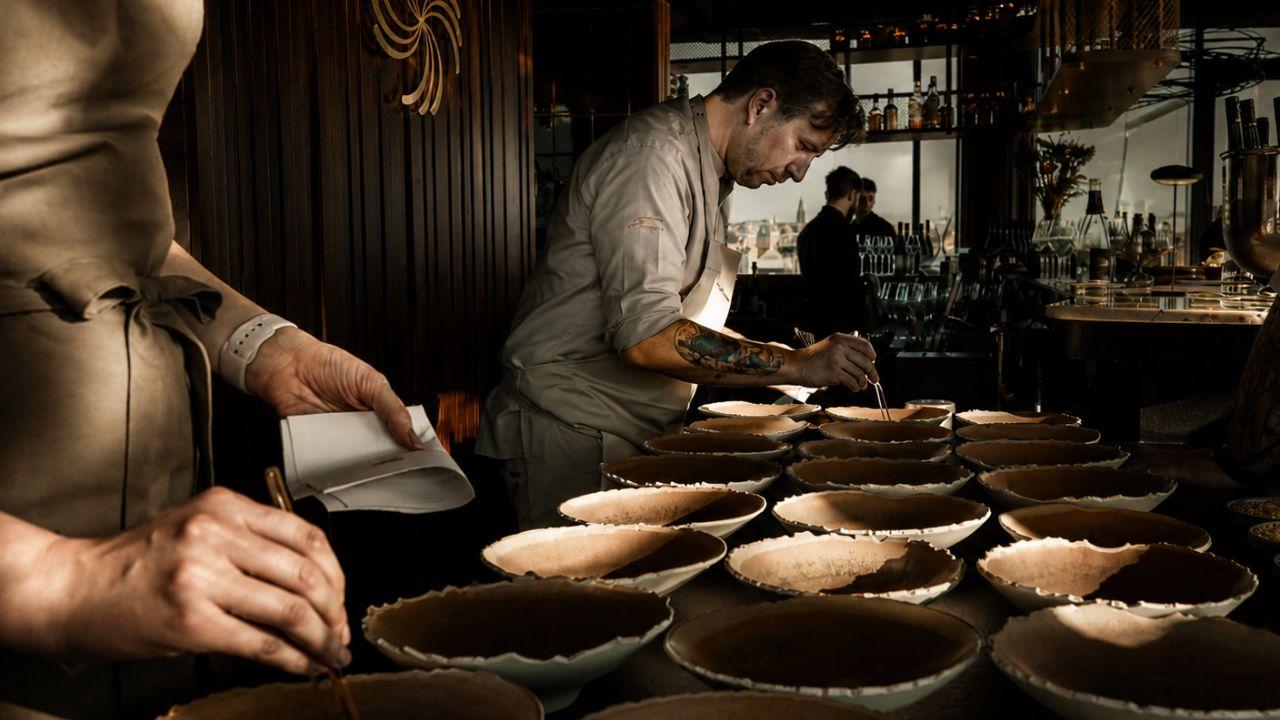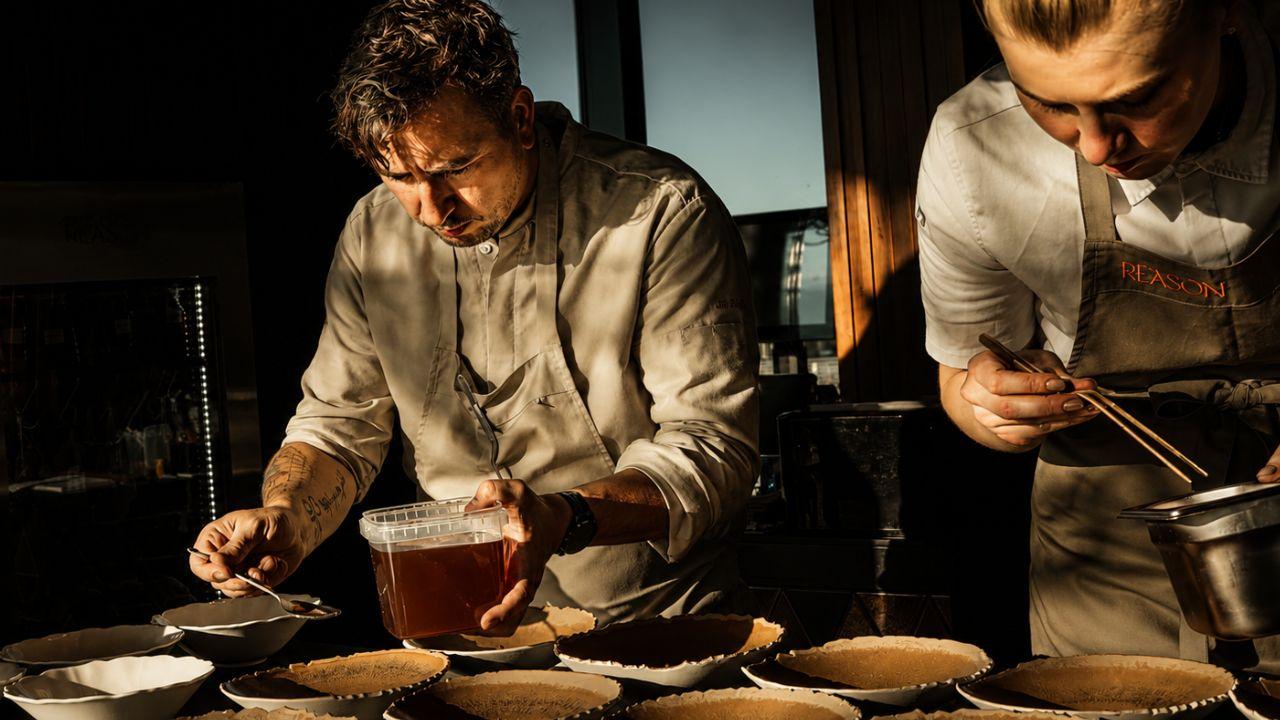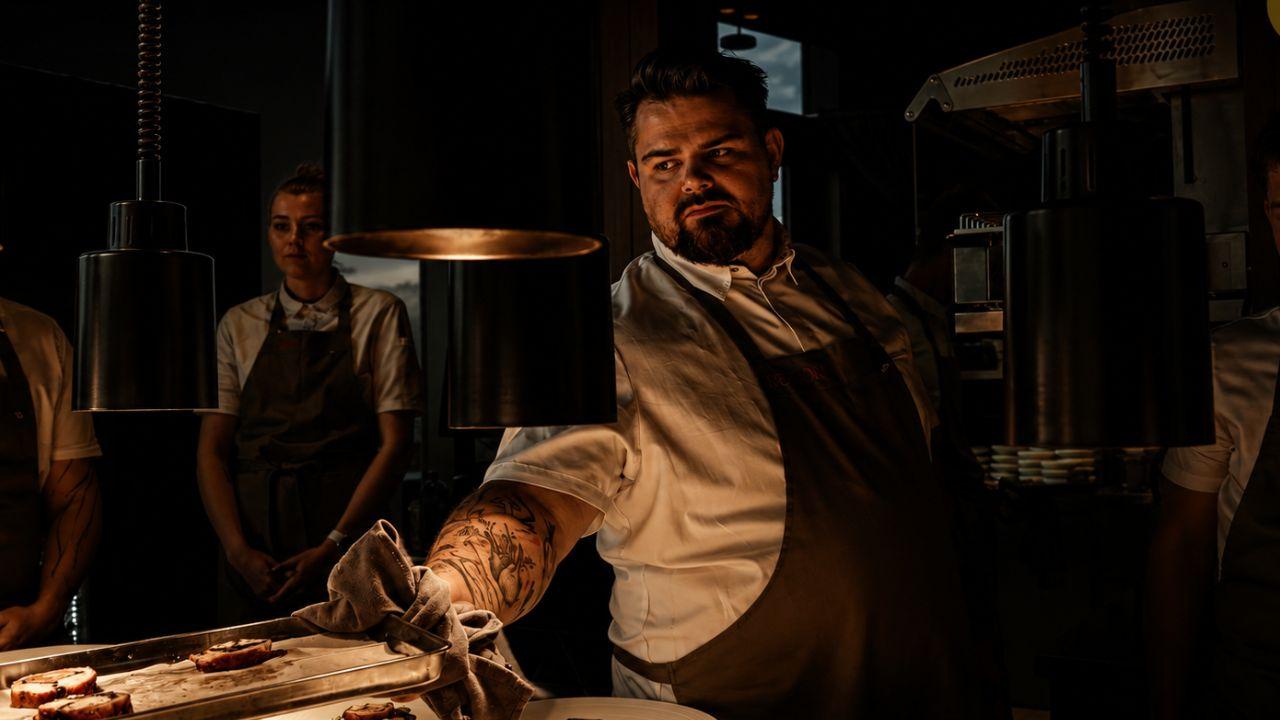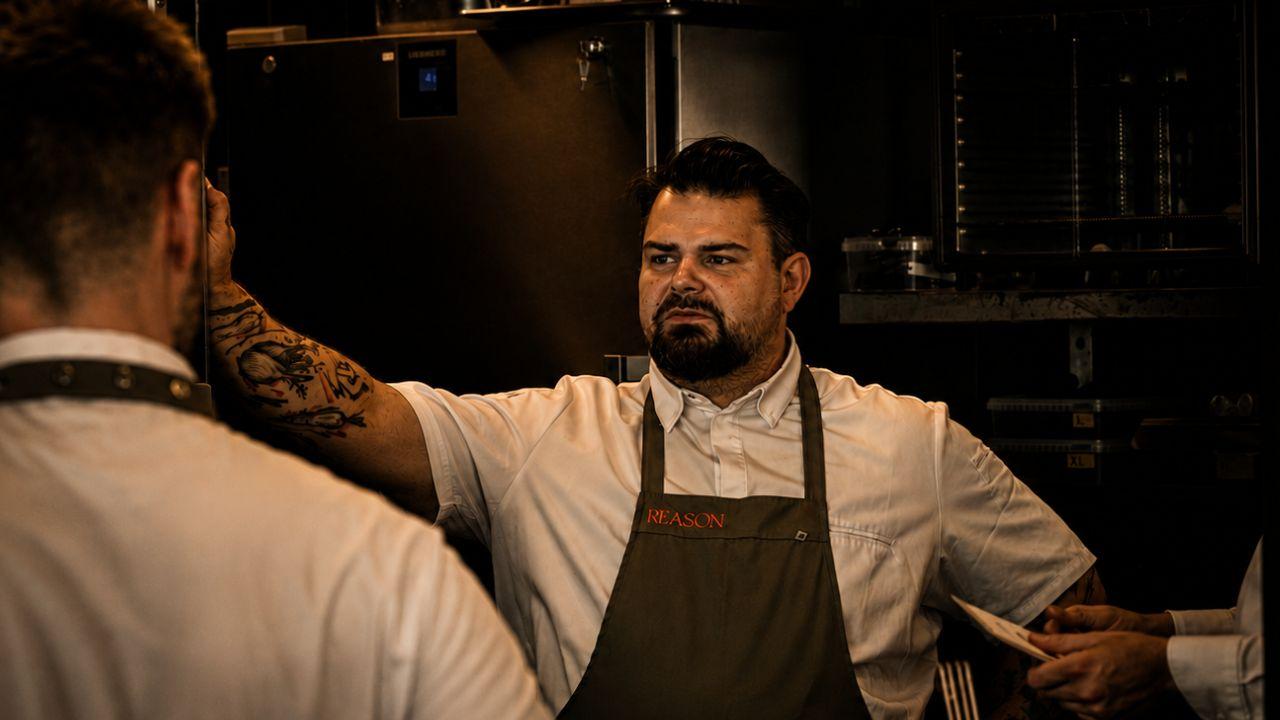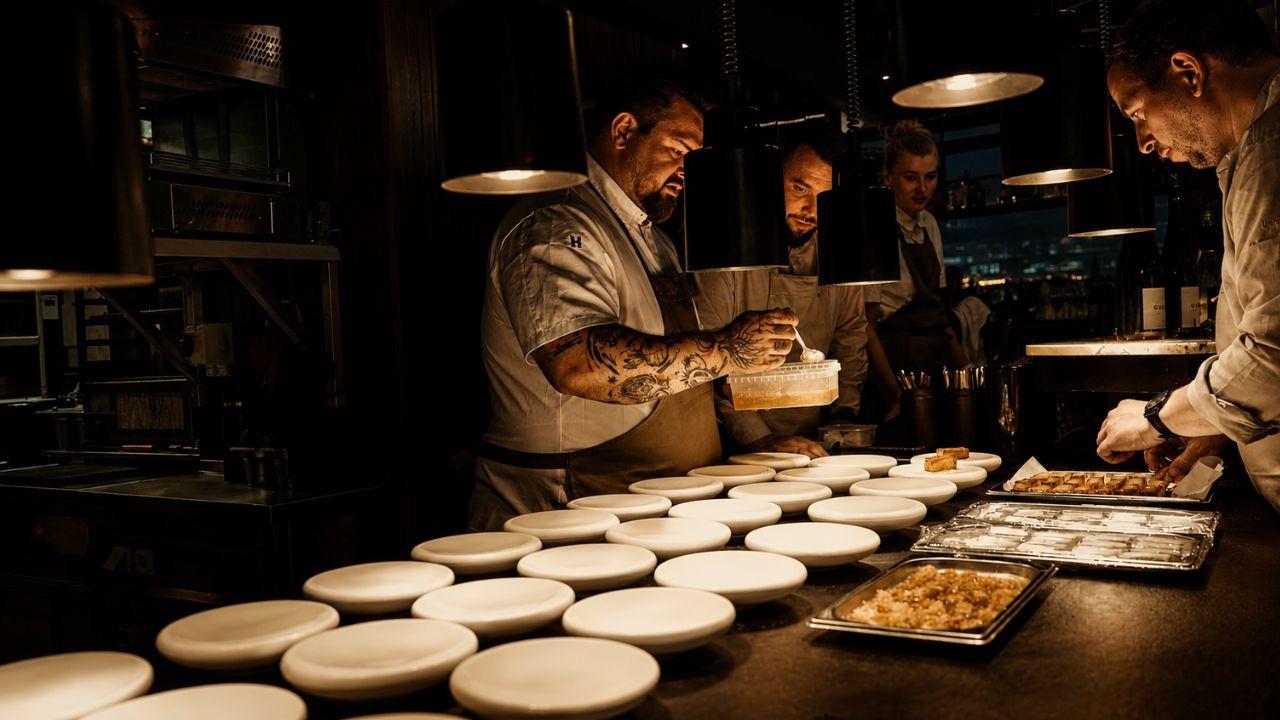

The first ‘four-hands’ dinner organised by the Reason restaurant and Gurdau Winery brought together two prominent figures in Czech gastronomy who share a similar approach to cooking. Jan Horák and Jiří Zajíček built the menu around fermentation, seasonality and bold flavours, whilst the sommeliers from both establishments created pairings that felt not merely like an accompaniment, but a natural part of each course.
A number of collaborations are emerging on the Czech gastronomic scene today, though not all of them go beyond the scope of an attractive marketing partnership. However, when Jan Horák and his team met with Jiří Zajíček from Gurdau in Moravia at Reason in Prague at the end of May, it was clear from the very first moments that this time it would be something different. Both establishments share a similar philosophy on gastronomy. Rather than presenting guests with flashy compositions, they aim to offer a story of the landscape, fermentation, time and precise craftsmanship. And throughout the evening, wine became not merely an accompaniment to the individual courses, but a natural part of them.
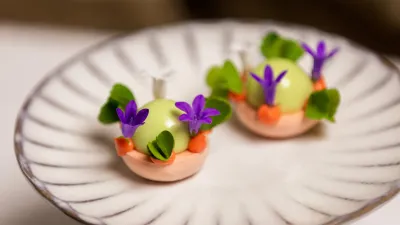
The evening began with a series of small amuse-bouches that set the tone for the whole night. A poppy seed tartlet with smoked Oštěpek cheese mousse by Jiří Zajíček offered a combination of the delicate sweetness of poppy seeds, the milky roundness of the cheese and smoky notes. Reason responded with its ethical foie gras served with a buckwheat crisp, honeysuckle gel and verjuice, in which the buttery texture blended with fruity acidity and fresh floral notes. This was followed by the now iconic ‘tatarka’ – free from both meat and fish. Rehydrated carrot, combined with four types of seaweed, created a surprisingly convincing illusion of a sea flavour. “There’s no fish in it, as we used to be accustomed to, but there are rehydrated carrots and four types of seaweed to create the flavour of the sea or the ocean,” said Jan Horák, describing one of the characteristic examples of Reason’s current philosophy. An onion cracker with beef carpaccio, horseradish and chives then rounded off the entire introduction with a more pronounced dose of umami and piquancy.
Fermentation as a common language
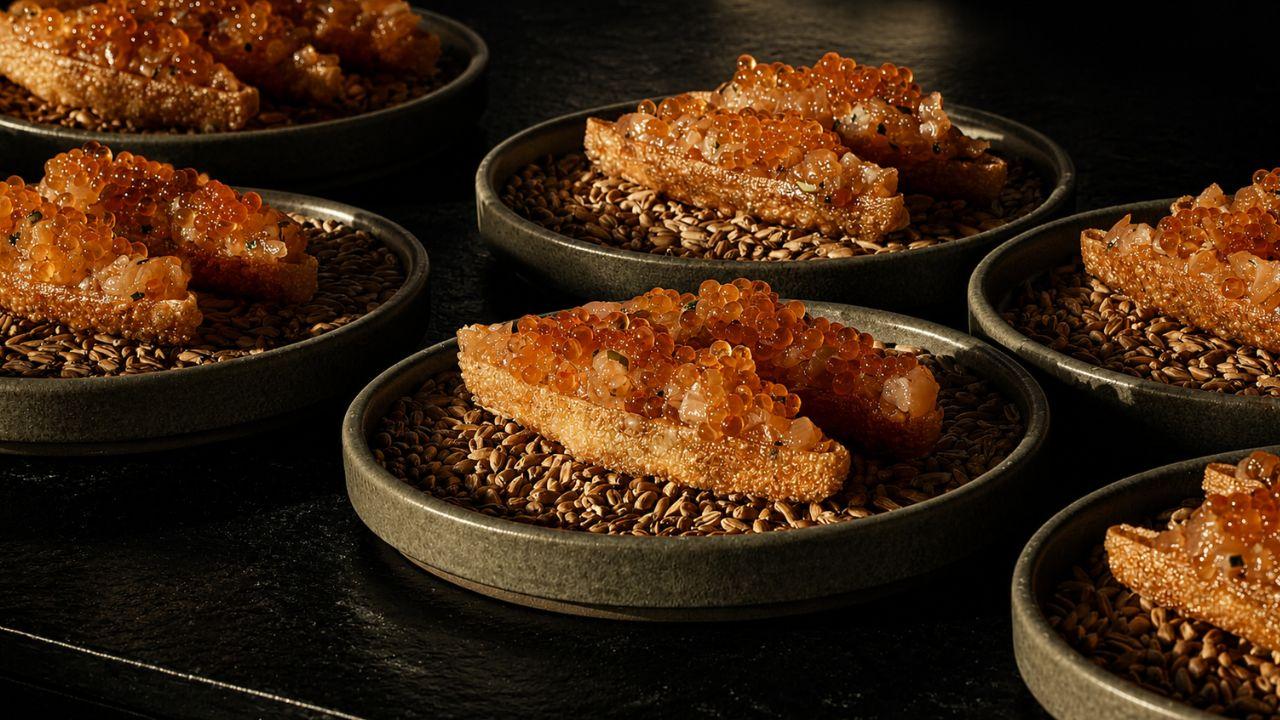
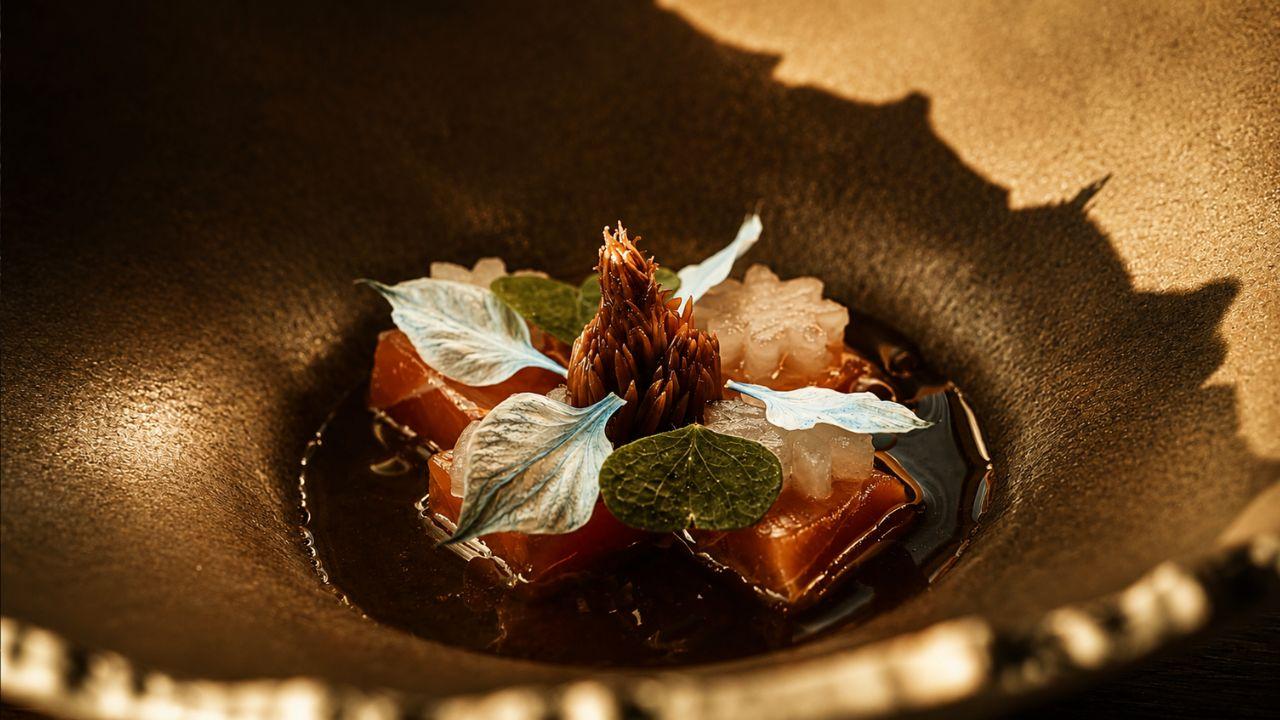
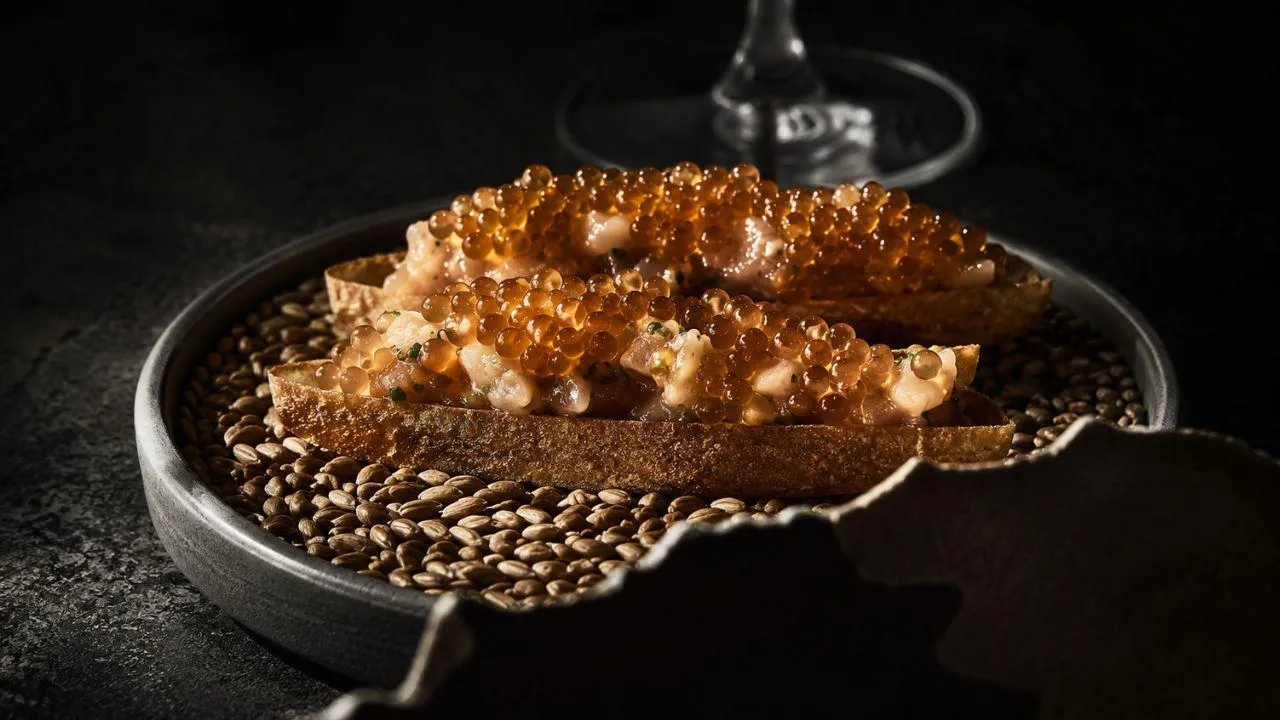
The first course served by Jiří Zajíček demonstrated just how extensively both teams are working with fermentation today. Marinated trout in buckwheat koji was accompanied by a clear sauce made from tomato water and magnolia, whilst trout roe added a subtle salinity. The result was not a superficial intensity, but a flavour built up in layers. The acidity, minerality and floral notes gradually unfolded, just like the 2022 Veltliner Vesnice Kurdějov that accompanied the dish.
This was followed by a dish that is now one of Reason’s signature creations – bread cavatelli made from stale bread. It was here that it became abundantly clear that sustainability need not be a compromise, but can form the very foundation of haute cuisine. “It’s very controversial. Lots of people have already told us that pasta made from stale bread sounds strange,” admitted Horák. However, any preconceptions vanished after the first bite. The concentrated porcini sauce, created by drying and then rehydrating the mushrooms, had an almost meaty depth, whilst the bread miso and the restaurant’s own bread marmite added another layer of fermented complexity. Sour caramelised hazelnuts provided crunch, pecorino added saltiness, and lemon juice perfectly balanced the whole dish. Paired with the Veltliner 18+20, it was arguably one of the most impressive pairings of the evening.
The seemingly ordinary interlude consisted of homemade bread. Yet even here, it became clear just how far the emphasis on in-house production extends. The bread from the in-house bakery was accompanied by butter made by fermenting unpasteurised milk from the Struhy farm. “It’s homemade cultured butter and nothing’s been added to it. It’s just as it is,” remarked Horák. Even this simple moment served as a reminder that top-class gastronomy often hinges on details that guests don’t usually pay attention to.
Each course had its own wine, and each wine had its own reason
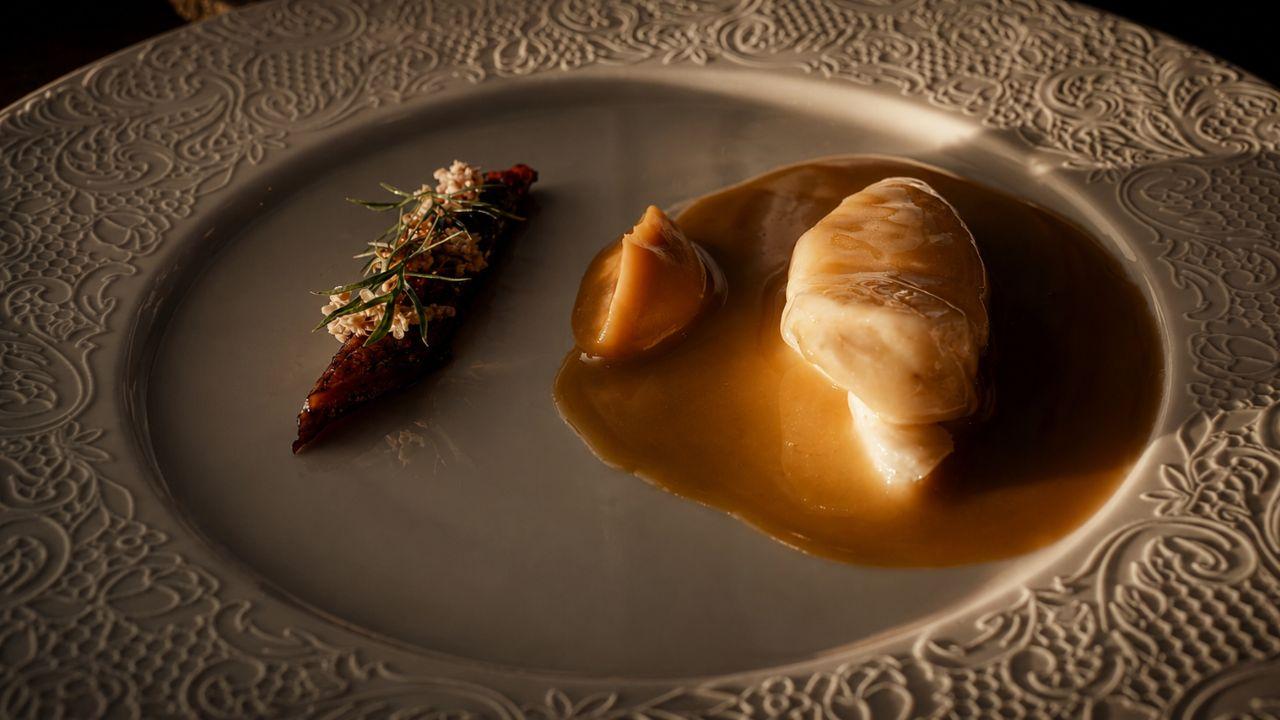
The zander, served with a delicate beurre blanc sauce, smoked carrots and elderflower, demonstrated just how precisely one can work with the contrast between buttery smoothness and a fresh, vegetable-driven flavour profile. The Pinot Blanc Vinohrádky 2023 did not overpower the fish or the sauce; on the contrary, it highlighted their delicate minerality and prolonged the finish.
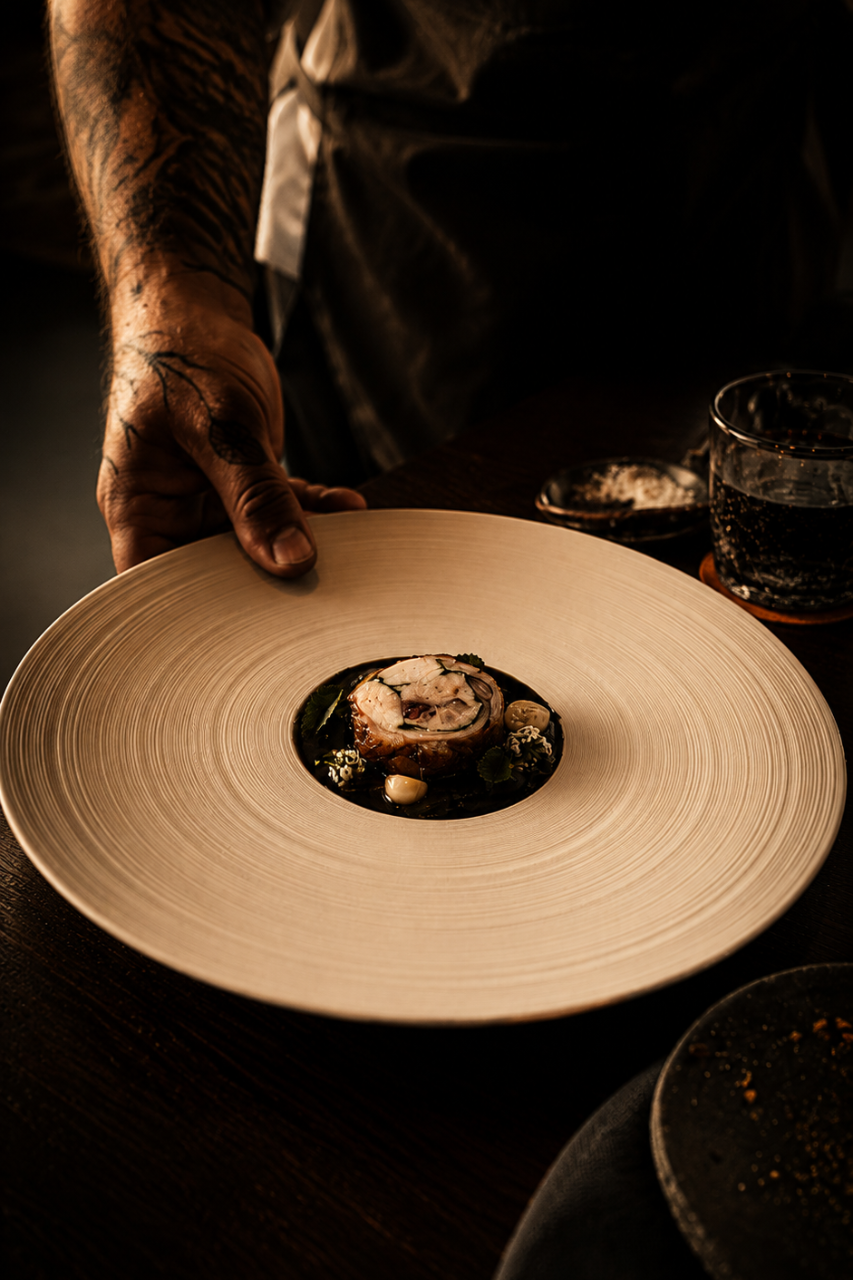
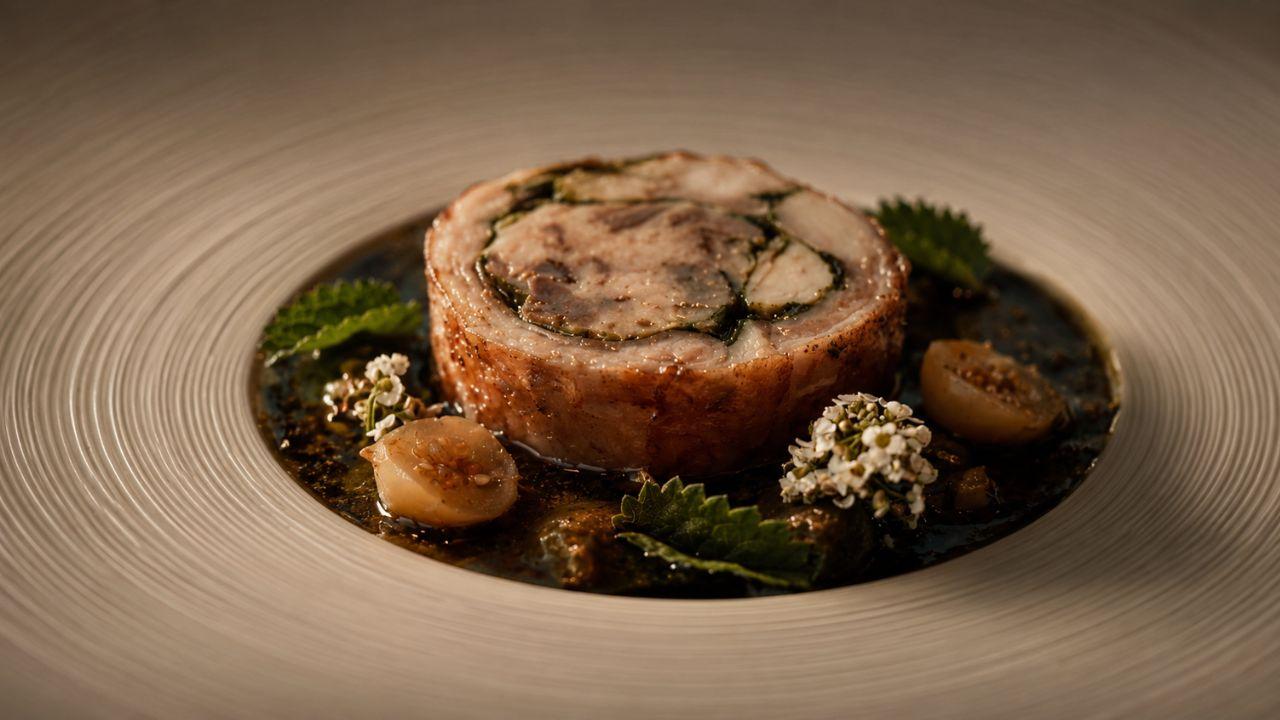
The meat course featured a rabbit ballotine with a cold herb salsa, which they call ‘Czech chimichurri’ at Reason. Instead of aggressive spiciness, the freshness of wild herbs – bloodroot, lovage and parsley – dominated, whilst pickled gooseberries replaced the usual tang of chilli and oregano. The creamed spinach gave the dish a velvety texture, and a miniature brioche brushed with chicken fat and topped with the restaurant’s own Czech togarashi rounded off the course with another layer of aroma. The paired wine, a Frankovka & Merlot 2023, offered plenty of structure without overpowering the delicate rabbit meat.
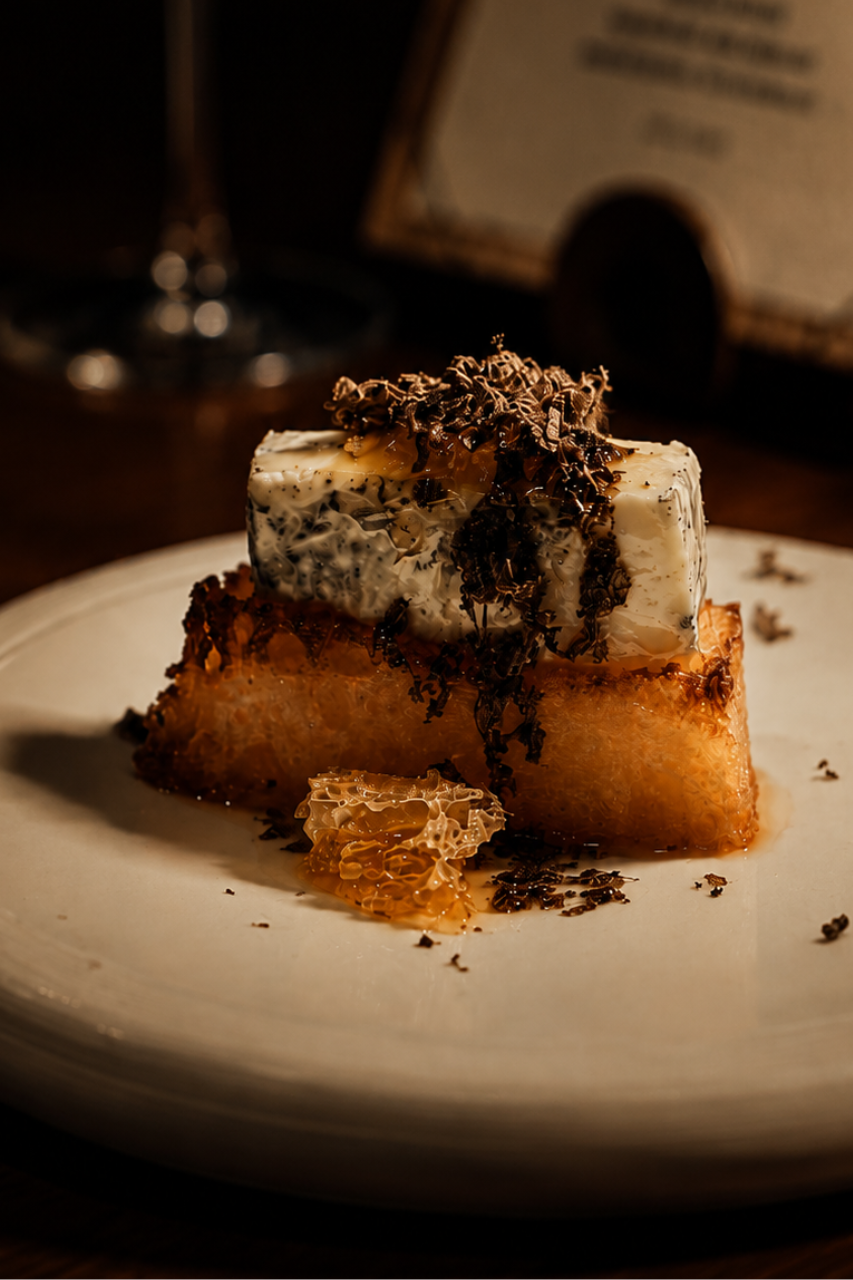
Another highlight of the evening was Zajíček’s savoury dessert. Aged Valençay goat’s cheese, ash-cured, was complemented by a baked brioche, fermented honey and freshly grated black truffle. The combination of milky richness, honeyed sweetness, the earthiness of the truffle and the lively acidity of the Stará hora 2022 Riesling created a harmony that is still a rare find at Czech wine tastings.
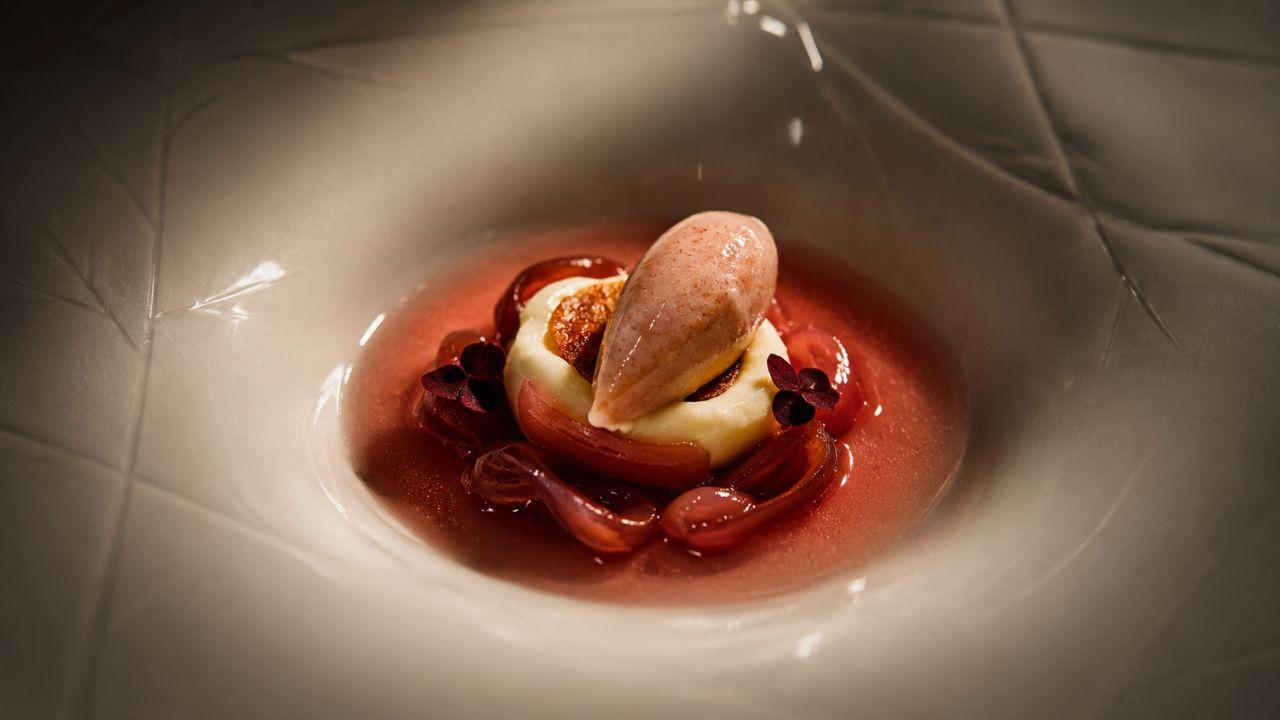
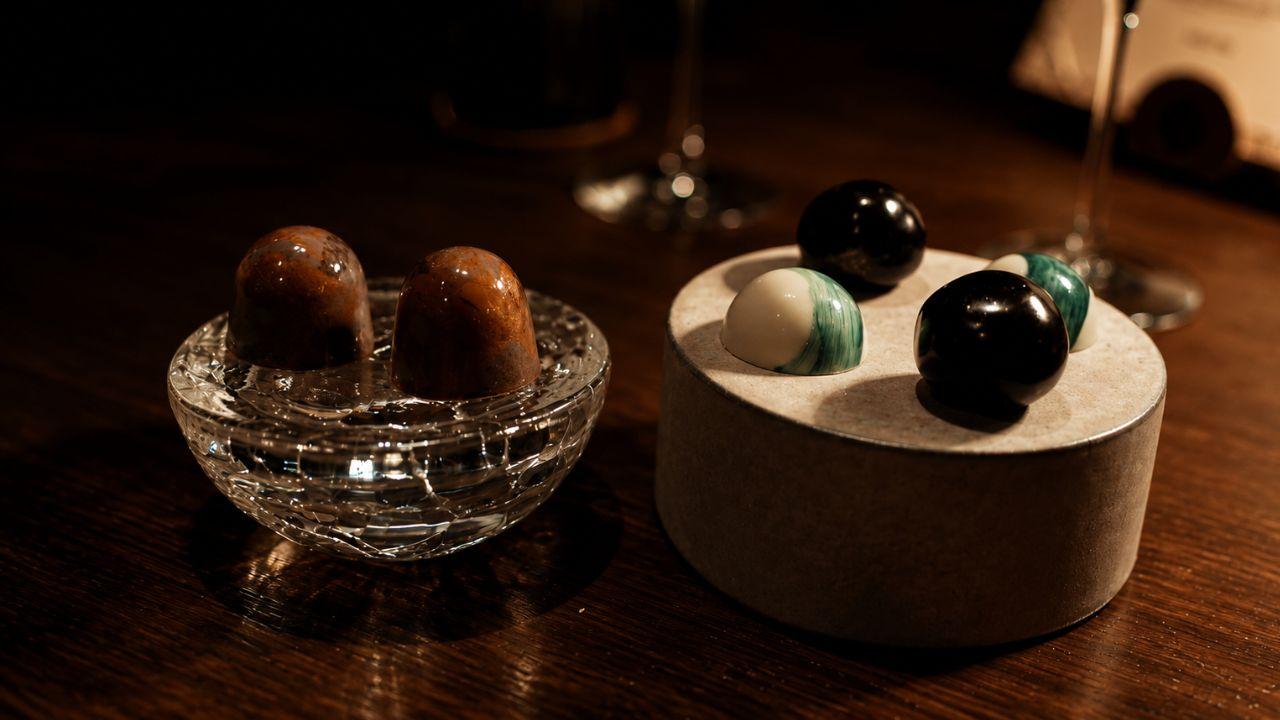
The sweet finale belonged to rhubarb. A lovage mousse, a hibiscus reduction, a rhubarb sorbet and a rhubarb nectar sauce came together to create a dessert that did not feel heavy, despite its complexity. Marinated rhubarb added juiciness, Gurdau sparkling wine lent a sense of lightness, and the raisin Riesling elegantly balanced sweetness with lively acidity. The petit fours then simply confirmed the consistency of the entire menu – from a white chocolate and Niva cheese bonbon, through a black garlic ganache, to buckwheat chocolate with lemon, made over thirteen hours right there in the restaurant.
The Reason × Gurdau evening offered no surprises in the form of flashy tricks or ostentatious gestures. Its strength lay in something far more substantial: the fact that the two teams worked from the same gastronomic vocabulary and did not view wine as an accompaniment, but as a fully fledged ingredient in the whole experience. In every pairing, it was clear that it hadn’t been conceived only after the menu was finalised, but developed alongside it. And that is precisely why everything felt so natural. It wasn’t about two brands at one table. It was about a single shared story told through food and wine.