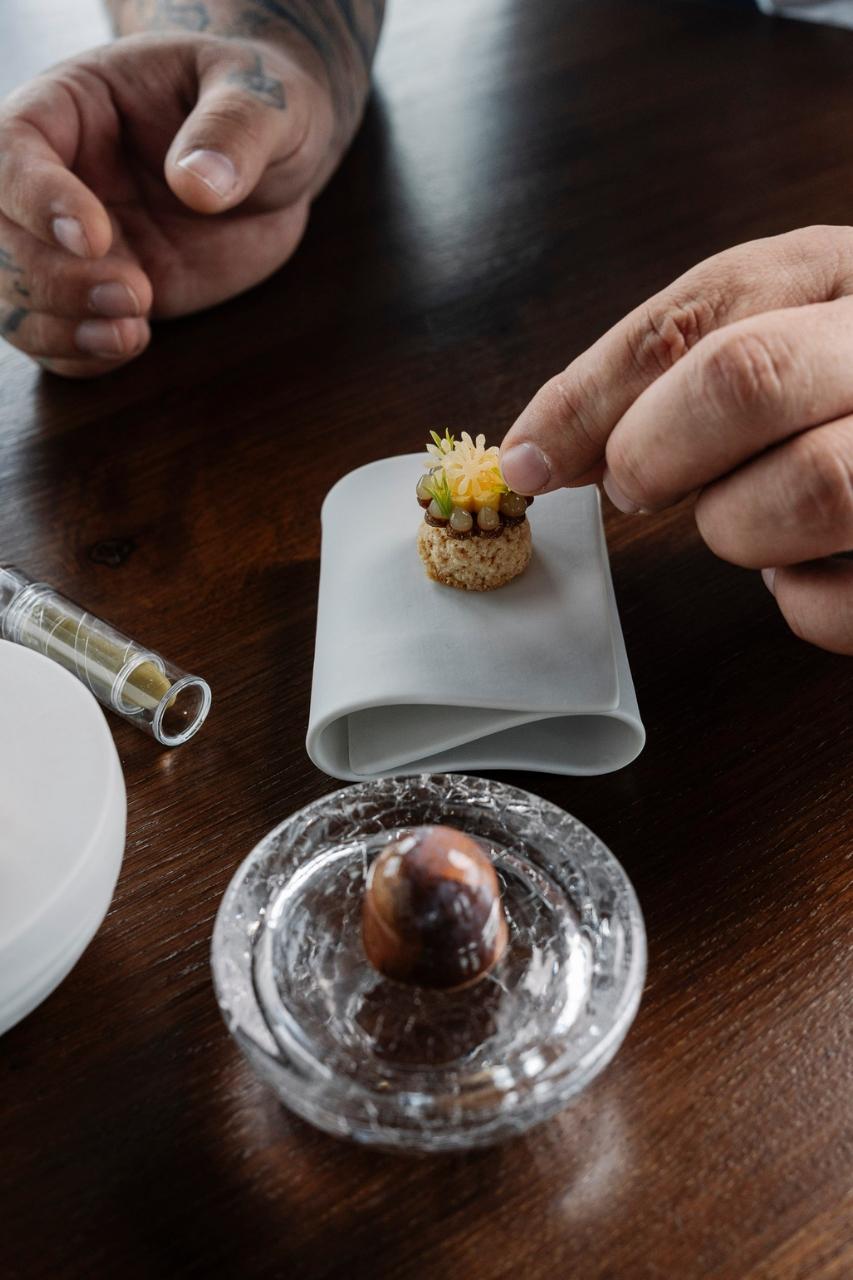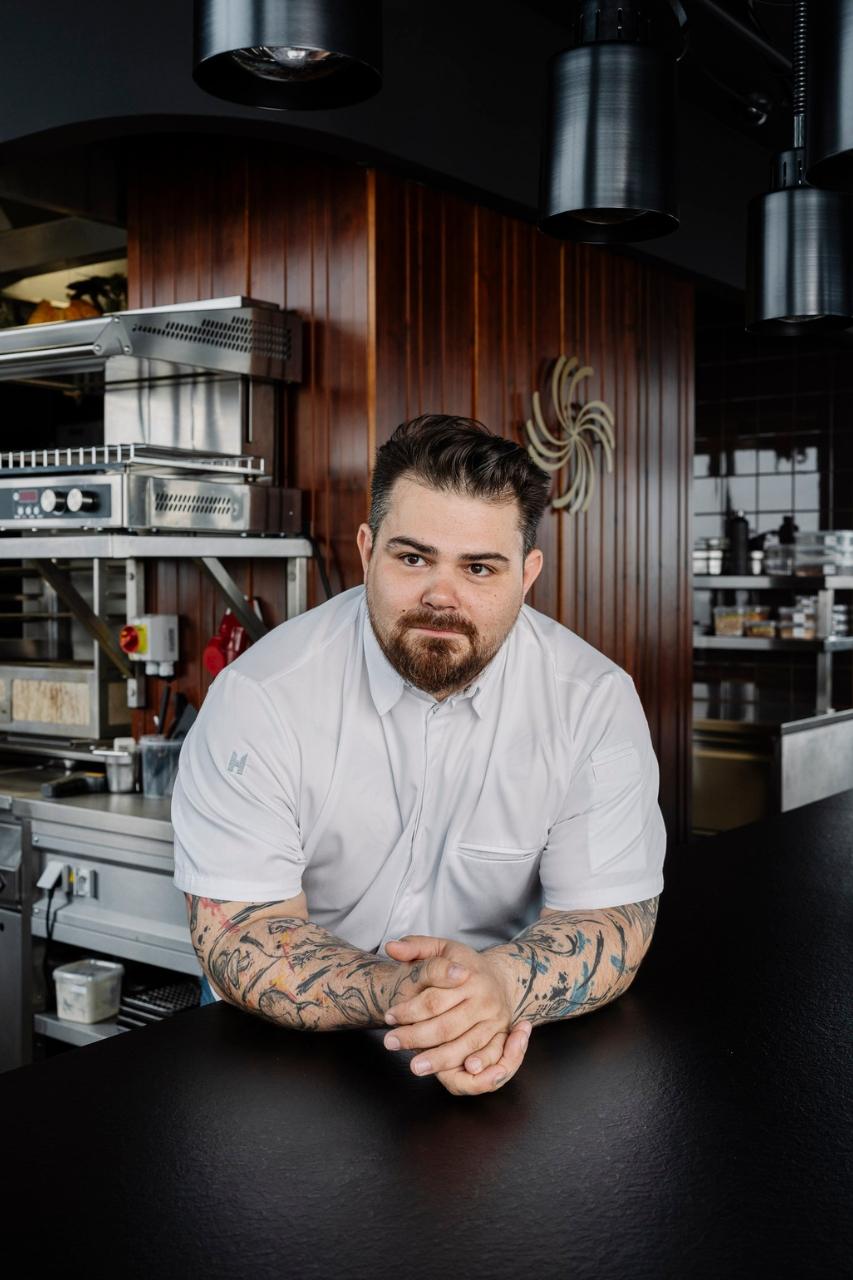


At Prague’s Reason restaurant, the spring menu is not just about what’s on the plate, but about the whole experience. Jan Horák’s menu blends food-and-drink pairings into a single whole, where drinks are not an afterthought but an integral part of every course.
The first impression on the roof of the iconic Masaryčka building is, surprisingly, not about the plate, but about defying expectations. Frerejean Freres champagne arrives at the table as a classic start to the evening, but it very quickly becomes clear that its role does not end in the glass. Part of the bottle, in fact, returns to the menu in the form of a house-made verjus -reduced, dealcoholised and transformed into a tool for working with acidity. “When the bubbles in the champagne run out, we don’t pour it away. We reduce it and use it as an acid,” says Jan Horák. At that moment, it becomes clear that this won’t be a menu about individual courses, but about a system that, in a way, creates its own rules.
A kitchen without citrus, acidity as a tool
One of the most fundamental principles underpinning the menu is the use of acidity beyond the traditional framework of citrus fruits. Here, acidity isn’t created by adding lemon or lime, but as a result of fermentation, reduction and extraction, which give the resulting flavours a different structure and a longer finish. “Tannin has a different flavour than lime juice,” says Horák, summarising an approach that is reflected in several courses.
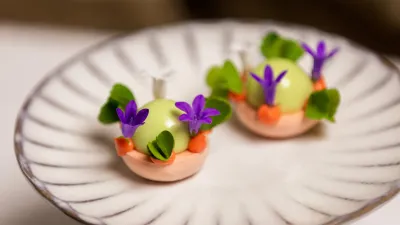
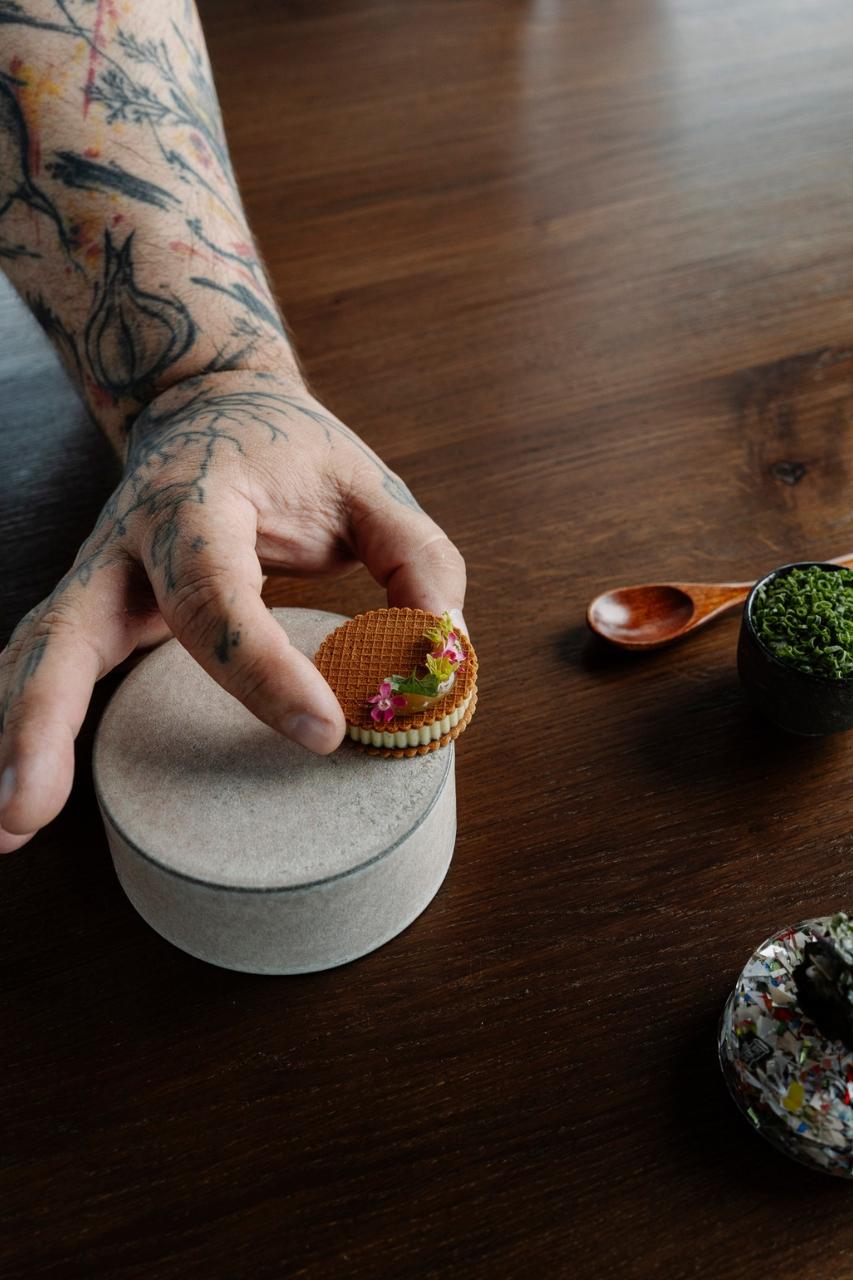
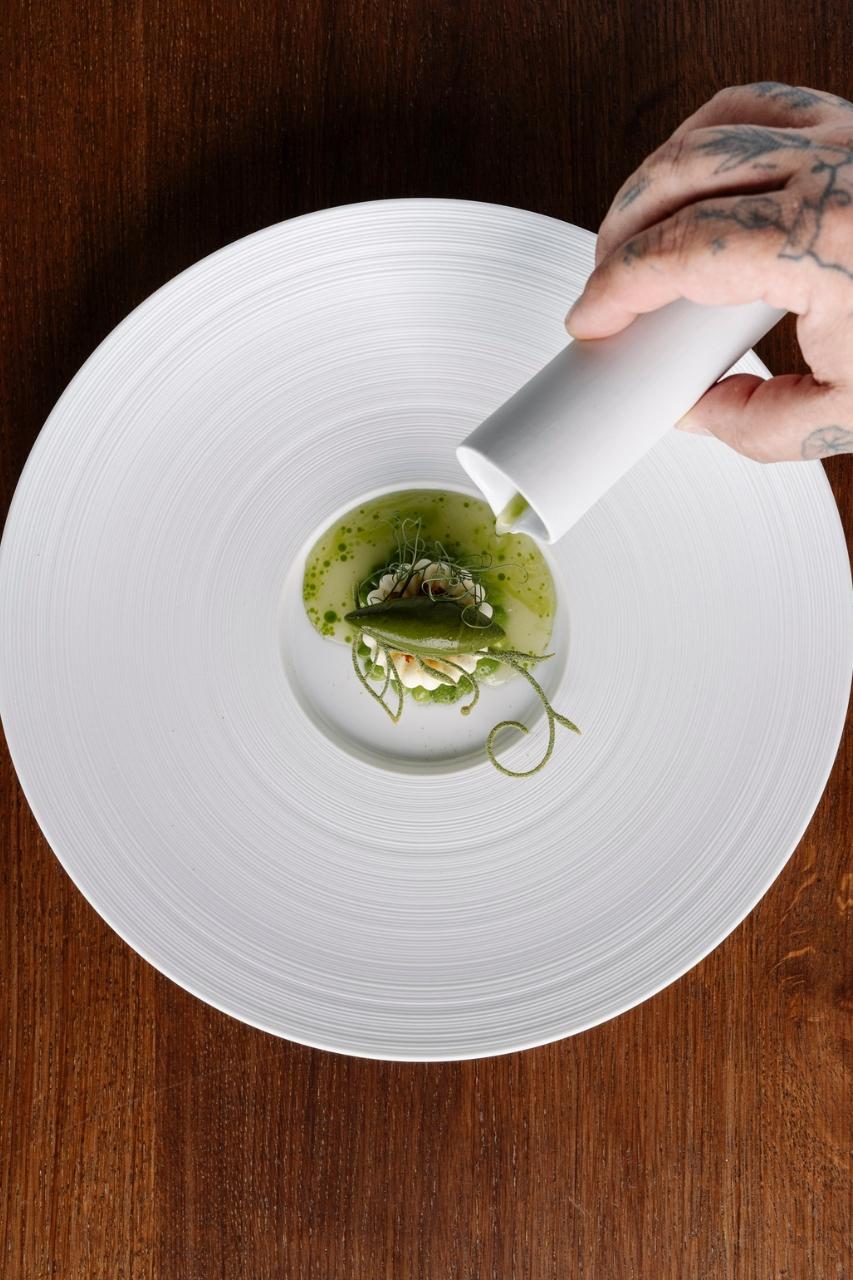
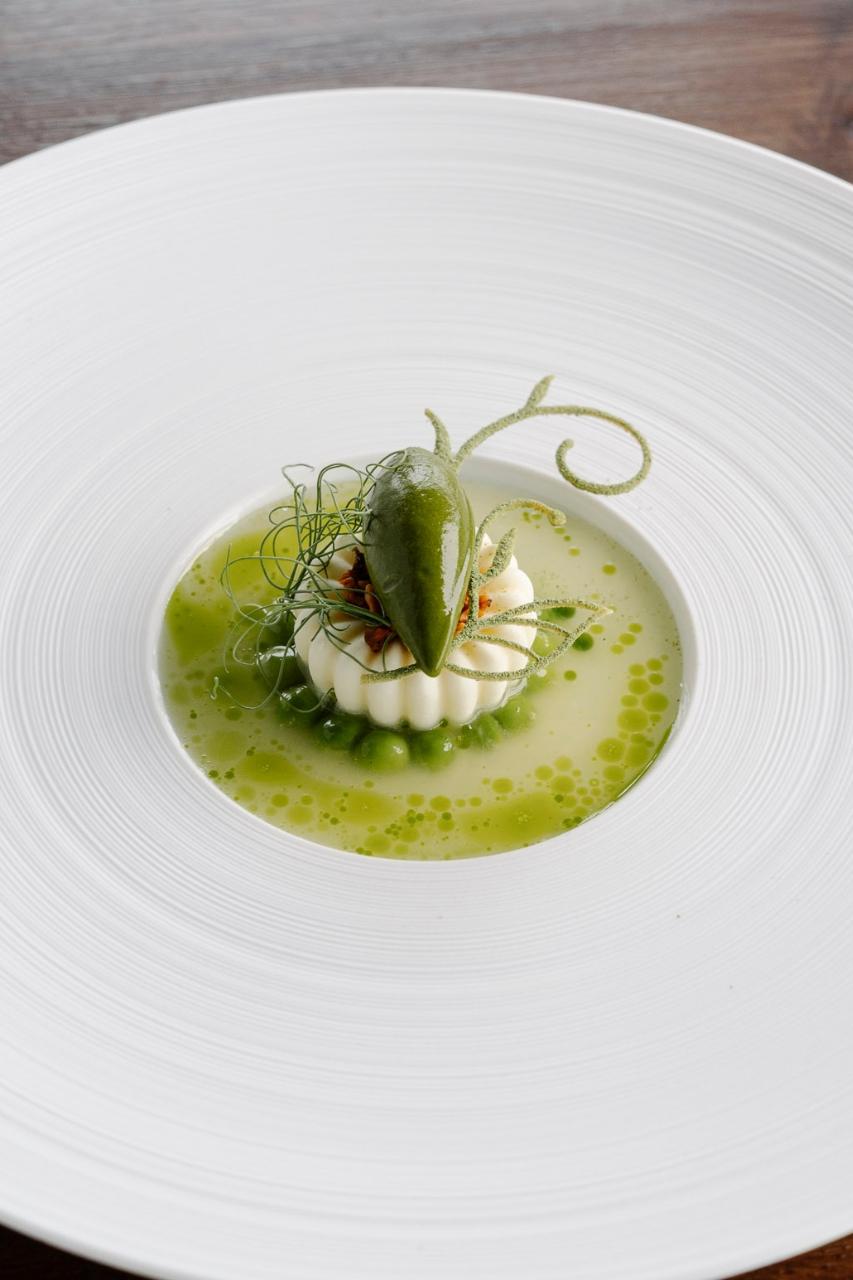
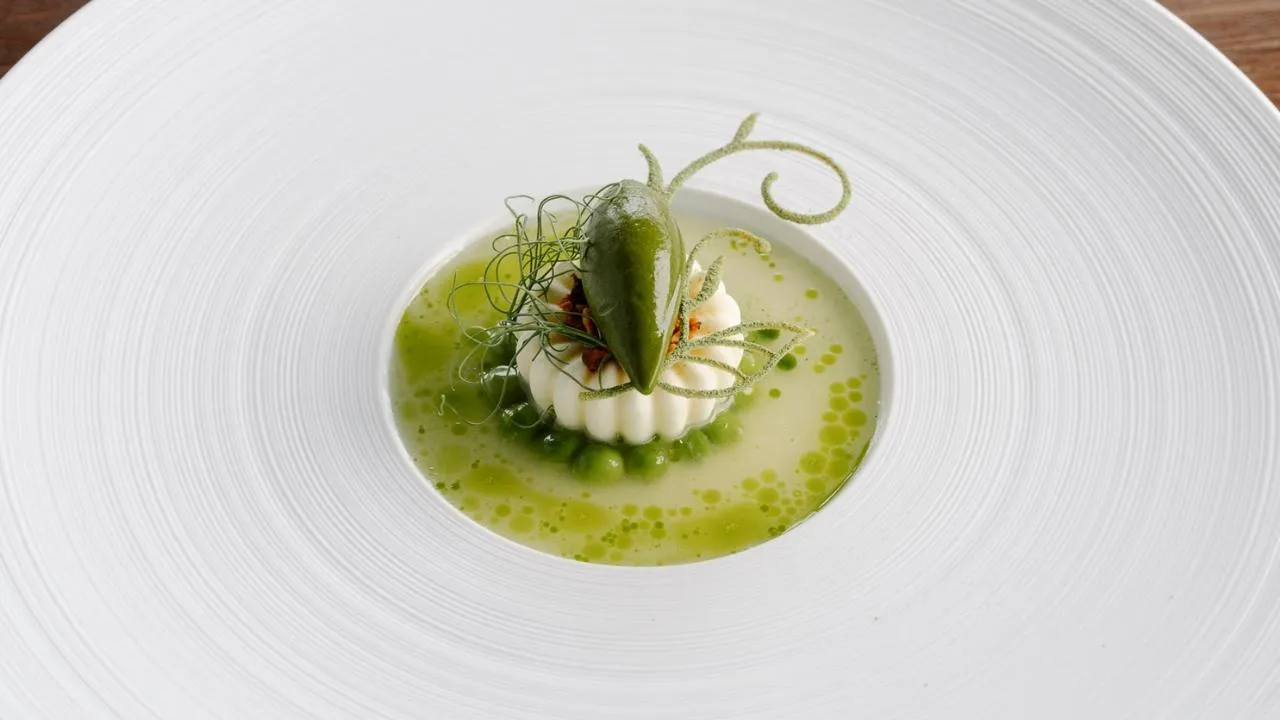
A typical example is the pea, which serves as a detailed study of a single ingredient. The focus is not merely on its sweetness and freshness, but on the whole plant, including the pods, which are macerated into a cordial. This is then incorporated into several layers of the final dish, binding the individual components together. The yoghurt semifreddo brings a delicate milky acidity; the pea ice cream and blanched peas maintain the green theme; and the reduced whey with bergamot adds depth and a slight bitterness. The flavour unfolds gradually in the mouth - first a sweet, almost childlike, pure pea note, immediately followed by acidity and a subtle bitterness that lingers on the palate long after the last bite. “After intense flavours, we move on to freshness and acidity,” explains Horák, but in reality it is more a different kind of concentration than the expected lightness.
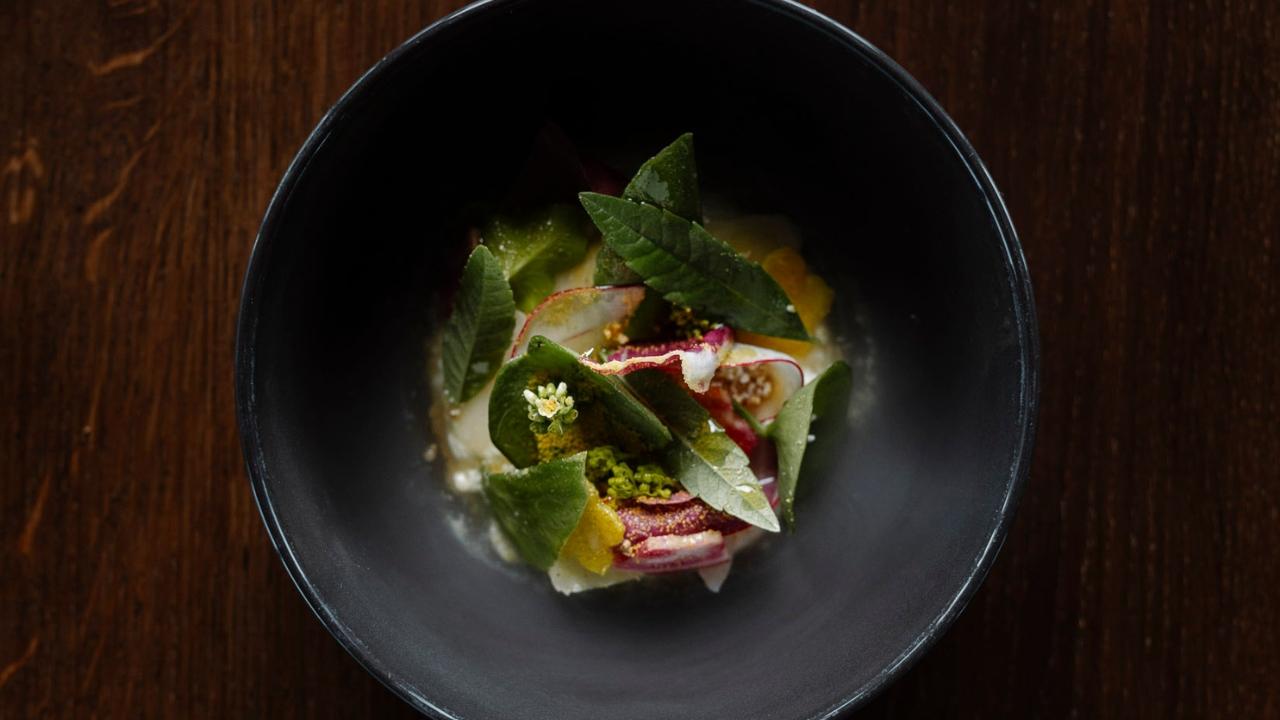
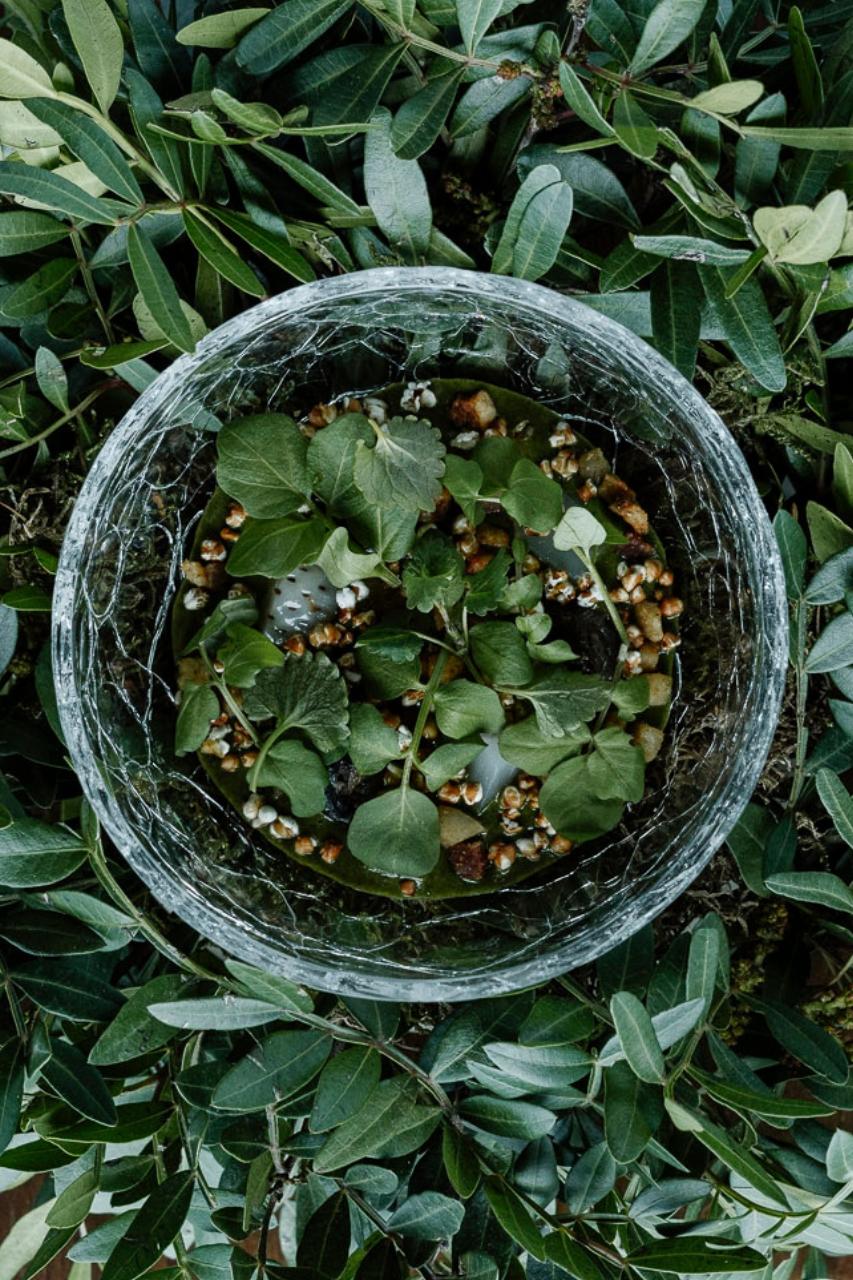
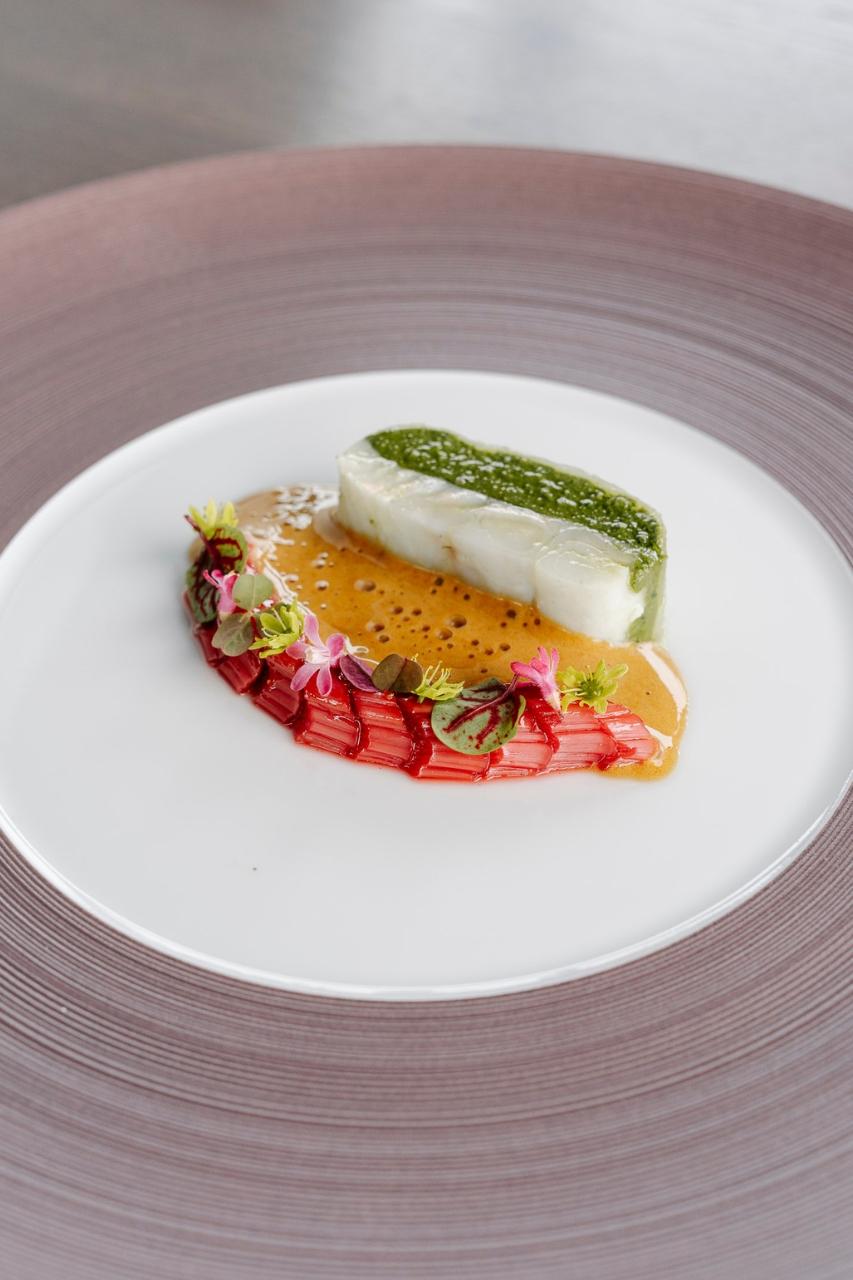
The turbot is similarly complex, with acidity playing a role throughout the course. The fish, poached in elderflower butter, has a delicate, almost sweet flavour, which Horák contrasts with rhubarb in several forms - confit, but also brushed with a rhubarb-vinegar reduction. A sauce made from elderflower miso and shellfish stock brings together sweetness, umami and a fermented note into a single whole. The liquid accompaniment, based on Balbin ester water and leaning towards the aromatic, also plays an important role here. “Ester water works more through the nose than through the tongue,” says Horák, confirming that the work here engages all the senses.
Pairing as a parallel cuisine?
Alongside this technical layer stands the second, no less important pillar of the menu - pairing. Reason remains firmly rooted in the world of great wines, yet at the same time is building its own system of non-alcoholic drinks that engage in a sort of dialogue with them - and very successfully. The Puligny-Montrachet Chardonnay from Étienne Sauzet (2019) offers a classic Burgundian structure: barrel work, maturity and still-lively acidity that can hold its own against more complex, creamier dishes. The Aloxe-Corton Premier Cru (2011) then showcases Pinot Noir in its more mature form, with notes of damp forest, moss and a subtle animality that resonates with more substantial meat dishes. The Riesling from Egon Müller (2022) adds another dimension - higher residual sugar balanced by mineral acidity, which acts as a bridge between sweetness and saltiness.
Crucially, however, these wines are not the only possible pairing here. Each course has its own parallel pairing, often based on cordials, fermentation or herbal extracts.
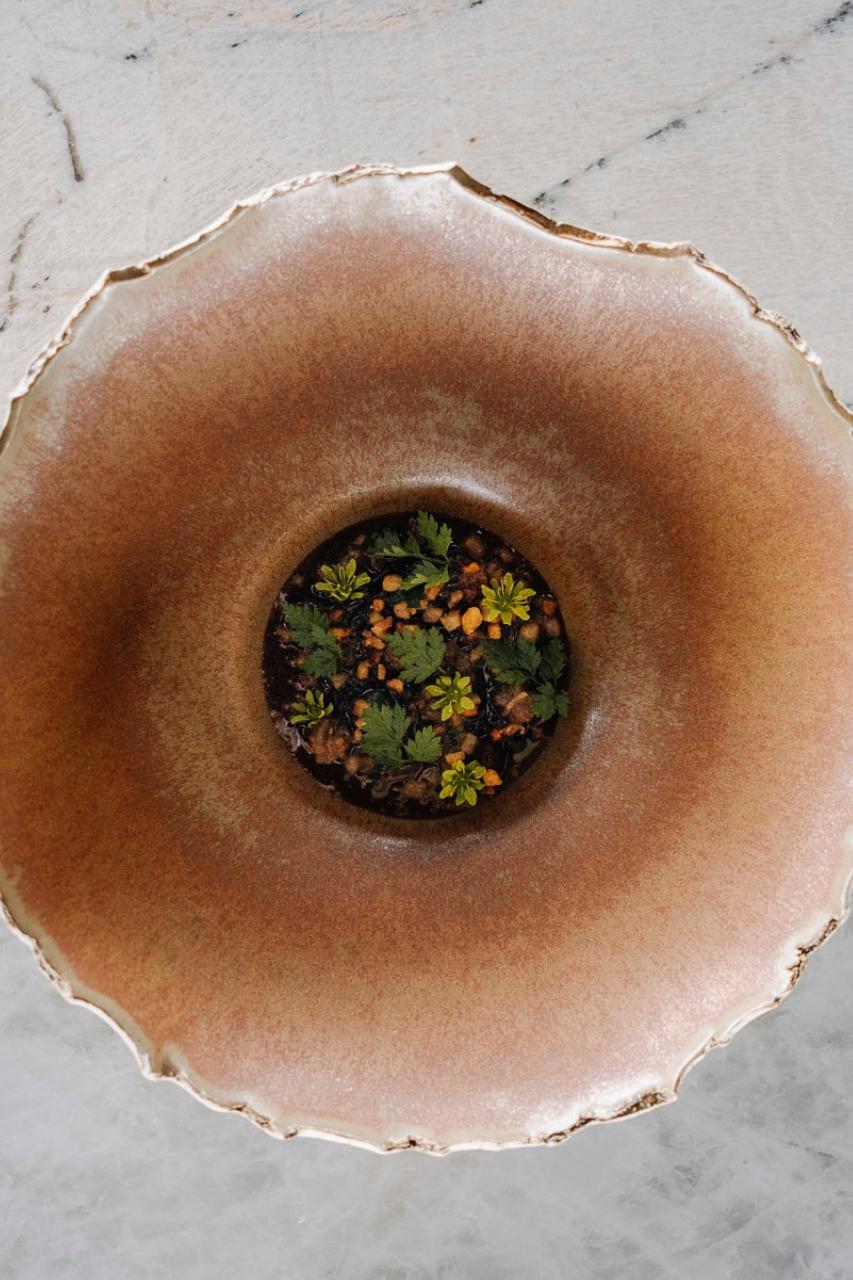
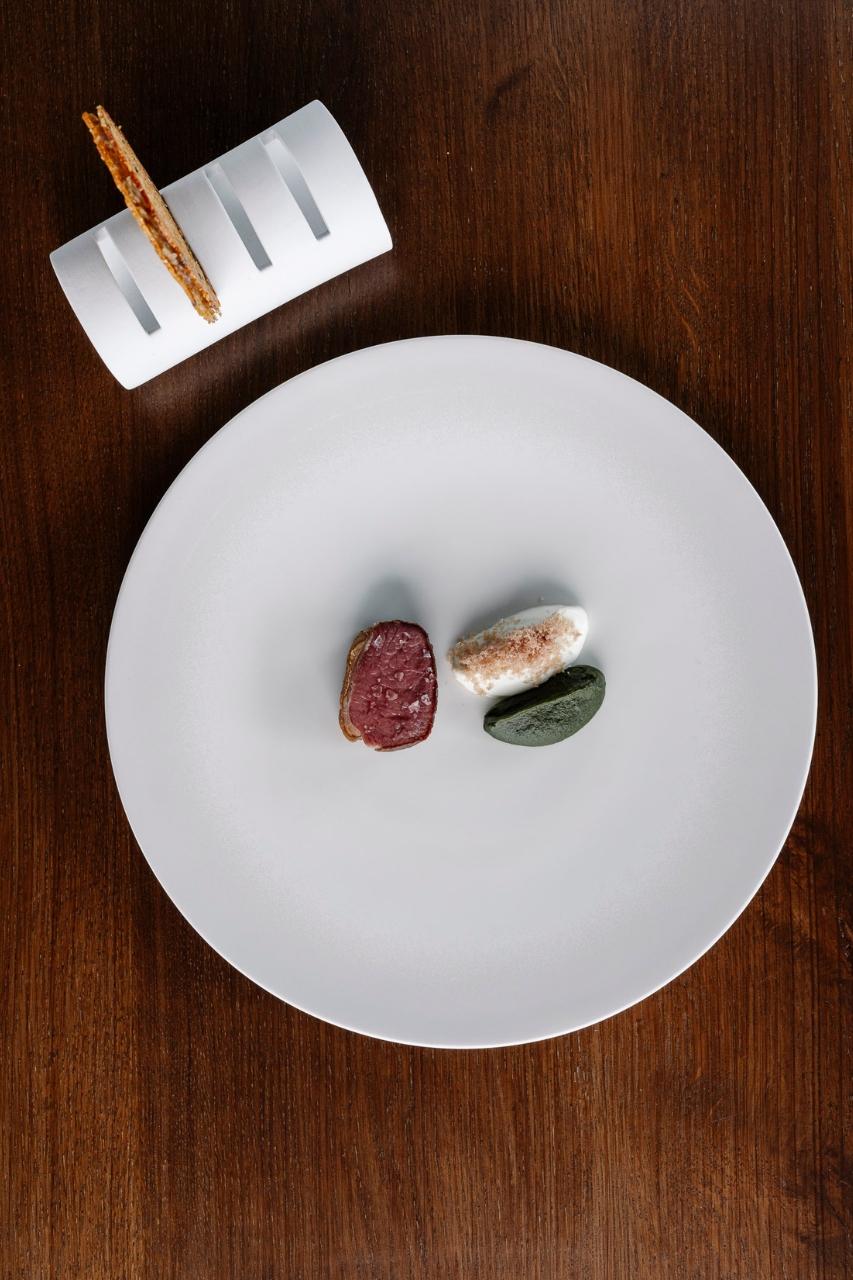
This is most evident with the rabbit and morels. Alongside the classic pairing with Pinot Noir, a non-alcoholic alternative emerges that mimics the character of red wine. The combination of mulberry cordial and morels creates a deep, slightly sweet yet tart profile that responds beautifully to the texture of both the meat and the sauce. The flavour is reminiscent of a lightly reduced red wine: initially a fruity roundness, which quickly gives way to an earthy, almost forest-like aftertaste that returns to the meat. “When you combine mulberries and morels, you get the taste of red wine,” says Horák. The dish itself is based on a reinterpretation of the classic Albufera sauce - instead of foie gras, there is a terrine of rabbit liver, and the fat is replaced by Prague ham, creating a similar texture but a different flavour profile.
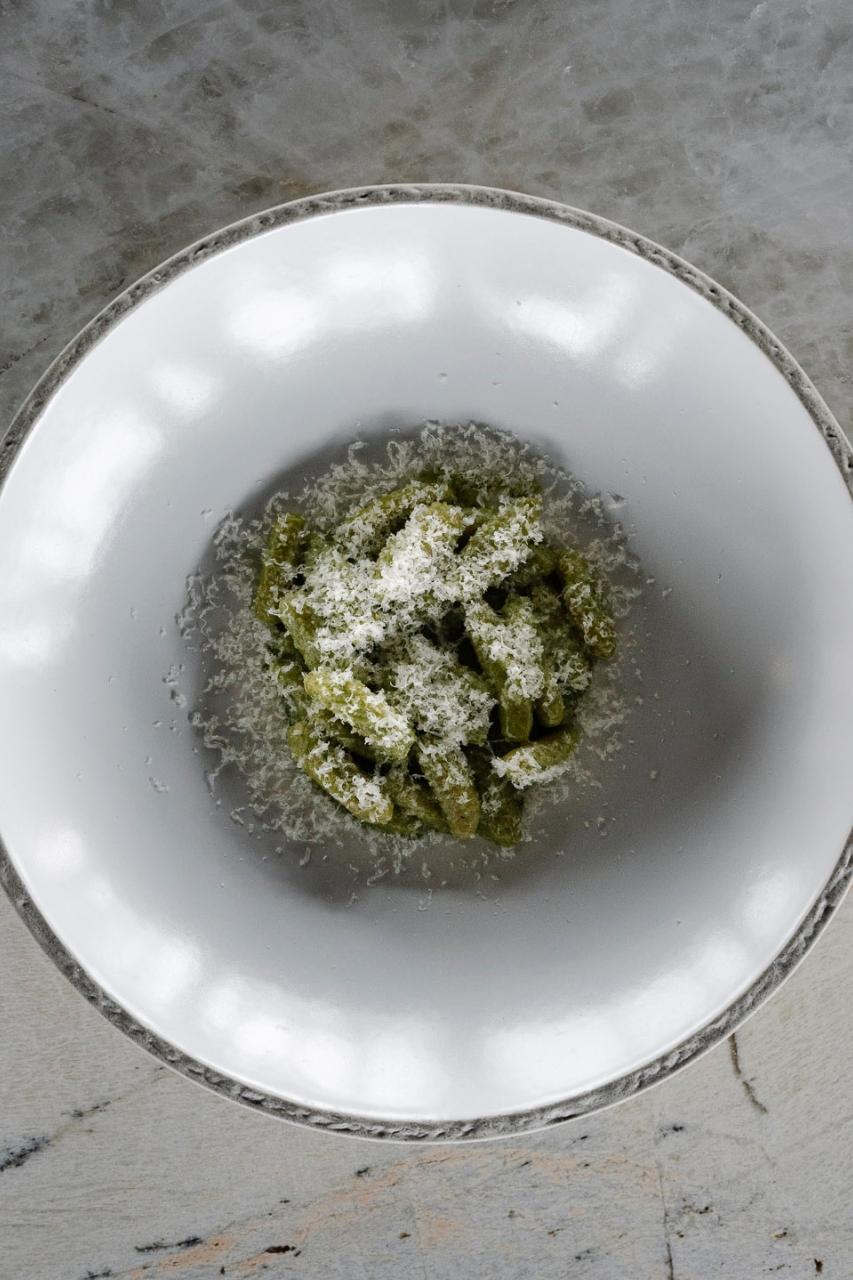
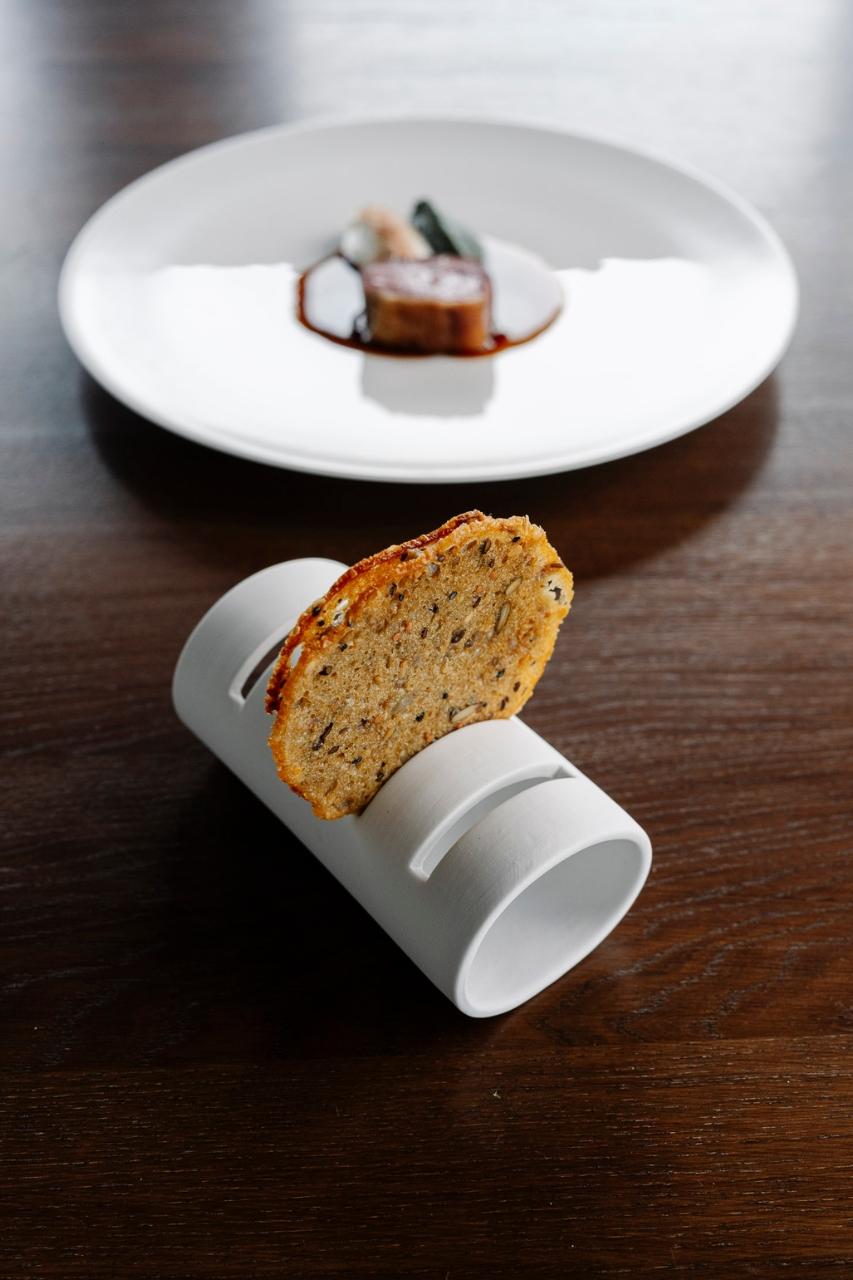
The dish based on bread takes things even further, serving as an interesting demonstration of the connection between the kitchen and the bar. Here, stale bread is transformed into cavatelli, while its flavour is simultaneously extracted into the base of a drink that the barman mixes with caraway spirit or its non-alcoholic variant. On the plate, this is accompanied by wild garlic pesto, bread butter and fermented Marmite, which add further layers of umami. “It’s a test of stale bread on the spring menu,” comments Horák on the restaurant’s signature dish, but the result feels more like a manifesto: even a seemingly mundane ingredient can convey complex flavours and ideas.
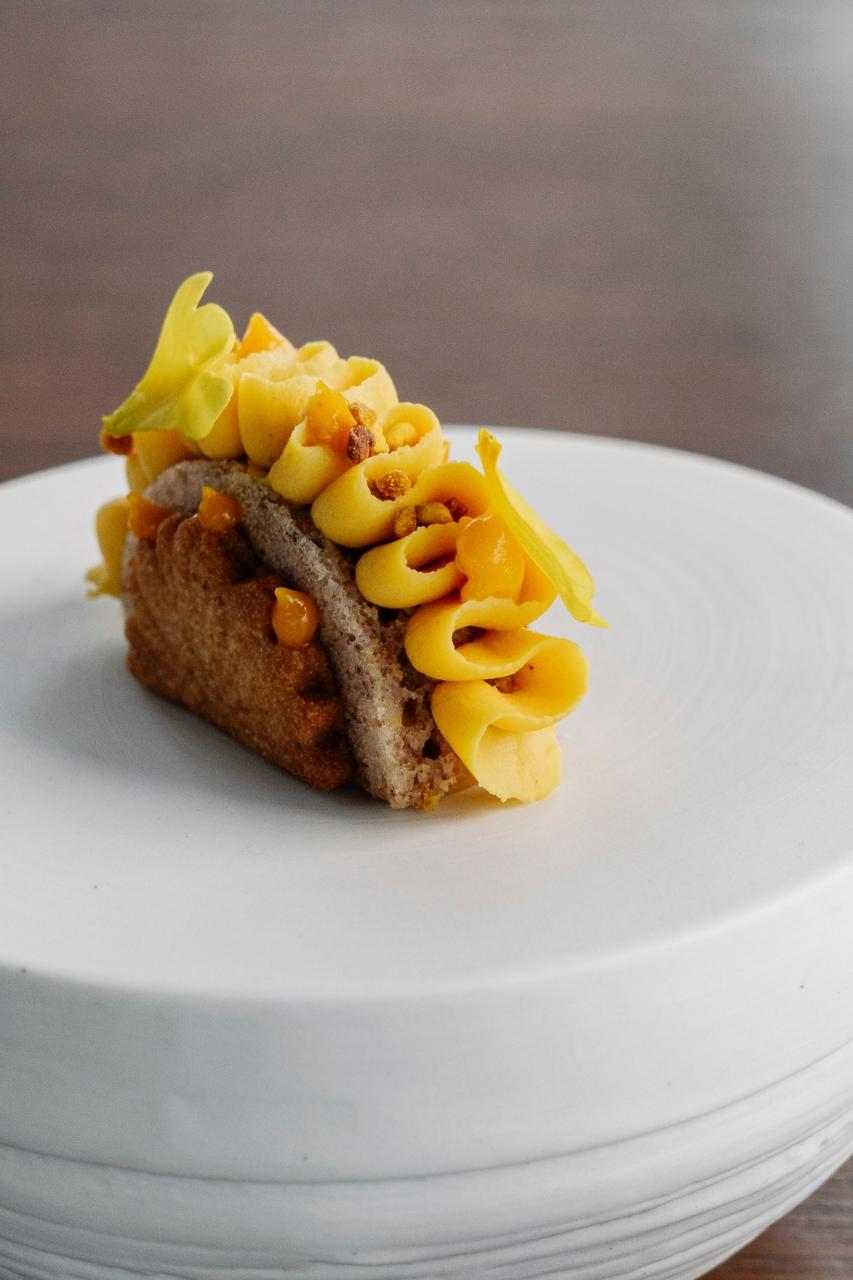
In the guest’s eyes, the entire menu can function as a dialogue between two worlds. On one side are classic wines, which bring terroir, structure and historical context. On the other, a distinct language of drinks emerges, working with the same precision yet using different ingredients. The desserts by the talented local pastry chef Anežka Popková do not feel like a sweet finale, but rather the logical culmination of the entire menu. Instead of sugar, the focus is on pleasant acidity, aromatics and the play of textures. Buttermilk with hibiscus and rhubarb offers a fresh, slightly tart profile that gradually unfolds and lingers on the palate far longer than one might expect. The apple, combined with celery and parsley, plays on the purity of flavours and a subtle green note that takes the dessert beyond the traditional framework. Popková thus confirms that even the conclusion of the menu can be just as well thought-out and original as its beginning.
The menu at Reason is therefore not about individual dishes, but about a way of thinking: a kitchen that creates its own ingredients, its own techniques and its own rules—and manages to weave them together into a single, cohesive whole.